
TL;DR
Many solar panel owners wonder if they should wash their panels. Experts confirm that in most cases, rain keeps panels clean enough, but manual cleaning can improve efficiency in dusty or polluted areas. The decision depends on local conditions and panel performance.
Solar panel owners frequently ask whether they should wash their panels to maintain optimal efficiency. Experts confirm that in most cases, regular rain naturally cleans panels, reducing the need for manual cleaning. However, in areas with high dust, pollution, or minimal rainfall, cleaning may improve energy output, making this a relevant consideration for many users.
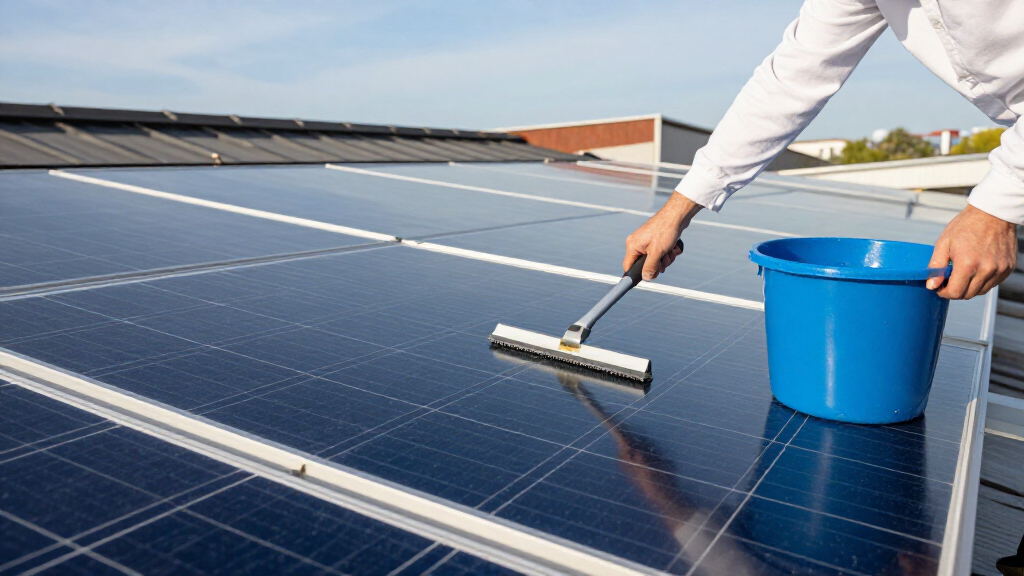
According to industry experts, rainfall typically suffices to keep solar panels clean, minimizing the need for manual washing. The Solar Energy Industries Association (SEIA) states that “most panels remain sufficiently clean after regular weather patterns”. Nonetheless, in regions with persistent dust, pollution, or dry climates, panels can accumulate grime that reduces their efficiency. In such cases, a gentle wash with water or a soft brush can restore performance.
Research from recent studies indicates that cleaning can increase energy output by up to 5-10% in heavily soiled panels, but the cost and effort of cleaning should be weighed against the potential gains. Experts advise that owners monitor their panels’ performance and consider cleaning only if they notice a significant drop in energy production.
Why Deciding to Wash Solar Panels Matters for Efficiency and Cost
Understanding whether to wash solar panels impacts both energy efficiency and cost management. Proper maintenance can ensure maximum power generation, especially in specific environments, but unnecessary cleaning may waste resources and water. Clear guidance helps owners make informed decisions, optimizing their investment and environmental benefits.

Buyplus 30FT Reach Solar Panel Cleaning Brush Kit with 5-24FT Telescoping Pole, Water Fed Window Cleaner Tool with 20" Brush, Soap Dispenser, Cobweb Duster, Squeegee for Roof, RV, Gutter, Deck,Orange
- Water Fed Pole Length: 5-24 ft extendable pole for high reach
- Wide Cleaning Brush: 20-inch solar panel cleaning brush
- High-Flow Nozzles: Four nozzles for extensive water coverage
As an affiliate, we earn on qualifying purchases.
As an affiliate, we earn on qualifying purchases.
Recent Trends and Expert Opinions on Solar Panel Maintenance
Over the past decade, solar panel technology has advanced, with many systems designed to withstand environmental elements. Industry guidelines generally recommend relying on natural cleaning from rain. However, as more installations are placed in dusty, polluted, or arid regions, questions about manual cleaning have increased. Recent studies and expert opinions suggest that cleaning is beneficial primarily in specific conditions rather than as routine maintenance.
“Most residential solar panels do not require frequent cleaning, especially in regions with regular rainfall.”
— SEIA spokesperson

Yardeen Outdoor Repellent for Yard Motion Activated with Solar Panel Water Spray Garden Sprinkler Irrigation System
- Outdoor motion-activated sprinkler: Deters animals to protect your yard
- Suitable for high flower beds: Includes stand-pipe extension for elevated placement
- Adjustable sensor sensitivity: Coverage from 1 to 10 meters, up to 100 sqm
As an affiliate, we earn on qualifying purchases.
As an affiliate, we earn on qualifying purchases.
Unclear Whether Regular Cleaning Offers Long-Term Benefits
It is not yet definitively established how frequently panels should be cleaned for optimal long-term performance, especially in varying environmental conditions. More research is needed to quantify the benefits versus costs of routine cleaning across different climates and pollution levels.

Solar Panel Cleaning Robot – Auto Dry/Wet | 130cm Tracked Brush with 360° Spinning | 20m/Min Speed | 15° Slope Capacity | Includes 45A Battery, 100m Hose & Scraper Kit
- Wide Rotating Brush: 130cm cleaning width with 360° rotation
- High-Pressure Water Pump: 45-60L/min for effective cleaning
- Long-Range Remote Control: Operates up to 100m distance
As an affiliate, we earn on qualifying purchases.
As an affiliate, we earn on qualifying purchases.
Monitoring Panel Performance to Guide Cleaning Decisions
Owners should regularly check their solar system’s output and consider cleaning if a noticeable decline occurs. Future studies and technological advancements may provide clearer guidelines, but currently, site-specific conditions remain the key factor in maintenance decisions.

Datanly 2 Pcs 10 Inch Solar Panel Soft Brush Cleaner Head, Bristles Scrub Brush with Rubber Protective Pads Prevent Scratches, for Solar Panels, Cars, RV, Trucks, Boats, Facades of Houses(Blue)
- Package Includes: 2 blue soft bristled cleaning brushes
- Optimal Size: 25.5 x 11 x 10 cm for broad coverage
- Durable Construction: Made with TRP lining, PVC wire, and PP shell
As an affiliate, we earn on qualifying purchases.
As an affiliate, we earn on qualifying purchases.
Key Questions
Does rain usually clean solar panels effectively?
Yes, in most cases, rainwater is sufficient to keep solar panels clean, reducing the need for manual washing.
When should I consider washing my solar panels?
If your panels are in a dusty or polluted area and you notice a decrease in energy output, cleaning may help restore efficiency. Monitor your system’s performance to decide.
Can cleaning damage my solar panels?
Cleaning with gentle water and soft brushes is generally safe. Avoid harsh chemicals or abrasive tools that could damage the surface.
How often should I clean my panels?
Frequency depends on local conditions. In rainy regions, cleaning is rarely needed; in dry, dusty areas, it may be beneficial every few months or as needed based on performance.
Is professional cleaning necessary?
Not usually. Many owners can clean panels themselves safely, but professional services are available for difficult or large installations.
Source: hn