
TL;DR

Get home appliances delivered free — and shop member deals
- Fast, free delivery on millions of items
- Access to Prime Big Deal Days deals on October 6–7
- Prime Video, Amazon Music and more included
Apartment Therapy published a decluttering guide naming nine categories of household items long-term homeowners should remove after ten or more years in a home, including old paperwork, expired perfumes, orphaned food containers, and unused charging cables. The guide notes most items don’t need replacing, so purging them adds storage space at little cost.
Apartment Therapy has published a new decluttering guide identifying nine categories of household items that homeowners should remove after living in the same home for a decade or longer — from expired perfume and orphaned food-storage lids to old paperwork and coiled-up charging cables. Written by freelance real estate and home-improvement writer Barbara Bellesi Zito, the report frames the list as a way to reduce the mental load of decluttering while reclaiming storage space, noting that most items on the list do not need to be replaced.
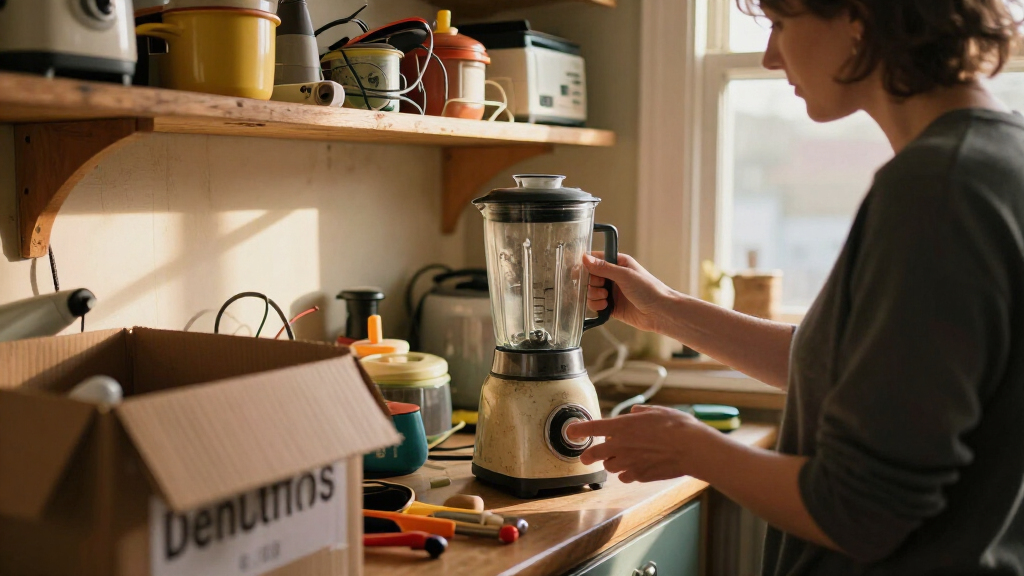
The nine categories in the guide are: unused home decor, perfumes, food storage containers, old paperwork, costumes and uniforms, untouched hobby and craft supplies, charging cables, children’s clothing, toys, and gear, and anything still in its original packaging. Zito writes from personal experience, describing how she and her husband filled “every last closet, corner, and cabinet” over nearly a decade in their own home, with some items untouched since move-in day.
Several recommendations come with practical caveats. On fragrance, the guide states that most perfumes last three to five years once opened, though some high-end perfumes can last longer; bottles kept out of sunlight and temperature swings may still be fine. On paperwork, Zito points to IRS guidance that tax returns can generally be discarded after the three-year mark, while recommending that readers keep hard copies of documents like birth certificates, marriage licenses, and home deeds and shred outdated bills and expired insurance policies instead.
The guide also suggests repurposing and recycling routes rather than outright disposal: damaged food containers can become pantry organizers or spoon rests, craft supplies can go to scout troops, schools, or community centers, and old cables and wires can be dropped at electronics recycling centers or retailers such as Best Buy, some of which offer trade-in programs that return cash or store credit. Children’s sports uniforms and outgrown costumes are flagged as donation candidates for kids who can still use them.
Why Long-Term Homeowners Feel Clutter Most
The guide speaks to a common pattern among long-term homeowners: storage that felt generous at move-in gradually fills with items that are never used again. Zito writes that some things in her own coat closet have likely sat in the same corner since the day she moved in, and that sentimental items and the “I might need this someday!” category are the hardest to purge — even when the owner concedes they probably never will use them.
The practical appeal of the list is that most of the nine categories don’t require replacement spending. Unlike decluttering advice that leads into purchases of organizing products, this guide positions the payoff as added breathing room in the home at essentially no cost. For households preparing to downsize, remodel, or simply reclaim closet and cabinet space, the list offers a low-friction starting point that avoids the most emotionally difficult category — keepsakes and heirlooms — altogether.
A Decluttering Market Built on Storage Guilt
Apartment Therapy is a home and lifestyle publisher whose coverage regularly includes decluttering and organizing content, often with affiliate commerce links; the article itself discloses that the site may earn a commission on linked products. The author, Barbara Bellesi Zito, is a Staten Island-based freelance writer covering real estate and home improvement, with a debut novel due out this year according to her biography.
The guide arrives amid sustained consumer interest in decluttering, a trend popularized over the past decade by organizers and television shows and reinforced by the growth of resale platforms and retailer take-back programs. The article’s references to electronics recycling at stores like Best Buy and to retailer trade-in programs reflect how disposal and resale options have become mainstream parts of the decluttering process, rather than an afterthought.
“To lighten the mental load of decluttering, I’ve made a list of household items that you can sell, discard, donate, or recycle if you’ve been in your home for a decade or longer (without losing any sleep over!).”
— Barbara Bellesi Zito, Apartment Therapy
Where the Guide Is Thin on Evidence
The article is a first-person service piece, not a research report, and several claims are presented without cited sources. The statement that most perfumes last three to five years once opened is offered as general knowledge rather than attributed to a fragrance industry body or laboratory testing, and the exception for high-end perfumes lasting “double digits” is likewise unsourced. The IRS three-year guidance on tax returns is accurately referenced as applying “in most situations,” but readers with unusual circumstances — such as unreported income or unresolved audits — may need to retain records longer, a nuance the guide does not explore.
The guide also does not address local recycling rules, which vary widely by municipality, particularly for plastics and electronics. Its advice on children’s items omits safety considerations, such as checking whether older car seats, strollers, or cribs have been recalled or no longer meet current safety standards before donating them.
How Readers Can Act on the List
Readers following the guide can act category by category, starting with the lowest-friction items — the shredder pile for old paperwork and the recycling drop-off for stray cables — before moving to donation-heavy categories like children’s gear and craft supplies. Retailer trade-in and recycling programs, including those the article identifies at technology stores, can handle electronics disposal responsibly.
The article also points readers to additional Apartment Therapy resources on sorting paper clutter. Households with large volumes of children’s equipment or electronics may want to verify donation-acceptance policies and recall status with local charities and the Consumer Product Safety Commission before handing items off.
Key Questions
How long do opened perfumes typically last, according to the guide?
Apartment Therapy states that most perfumes last three to five years once opened, though some high-end fragrances can last into double digits. Bottles kept sealed and away from sunlight and temperature fluctuations may last longer; if a fragrance still smells good and doesn’t irritate skin, the guide says it’s fine to keep.
How long should I keep old tax returns before shredding them?
The guide cites IRS guidance that tax returns can generally be discarded after the three-year mark. It recommends keeping hard copies of permanent documents — birth certificates, marriage licenses, home deeds — while shredding outdated bills, old tax statements, and expired insurance policies.
What should I do with old charging cables and electronics?
The guide recommends taking cords, cables, and wires to a local electronics recycling center or a technology retailer that recycles them, naming Best Buy as an example. Some retailers also offer trade-in programs that return cash or usable tech.
Do the items on the list need to be replaced after decluttering?
According to the author, most do not. Food storage containers are the main exception — the guide suggests replacing warped, stained, or lid-less sets with one higher-quality set — but the other categories can simply be removed to free up space.
Where can I donate craft supplies and children’s items mentioned in the guide?
The article suggests scout troops, schools, art stores, and community centers for craft and hobby supplies, and donating outgrown children’s clothing, costumes, and sports uniforms to kids who can still use them.
Source: rss
NFL season / tailgating Picks
team gear
As an affiliate, we earn on qualifying purchases.