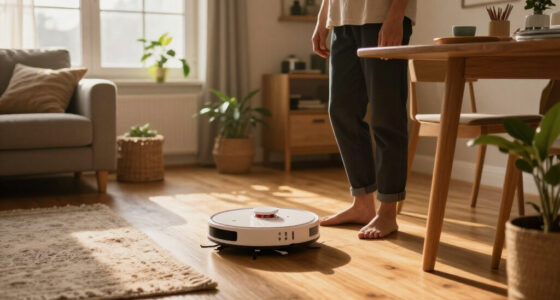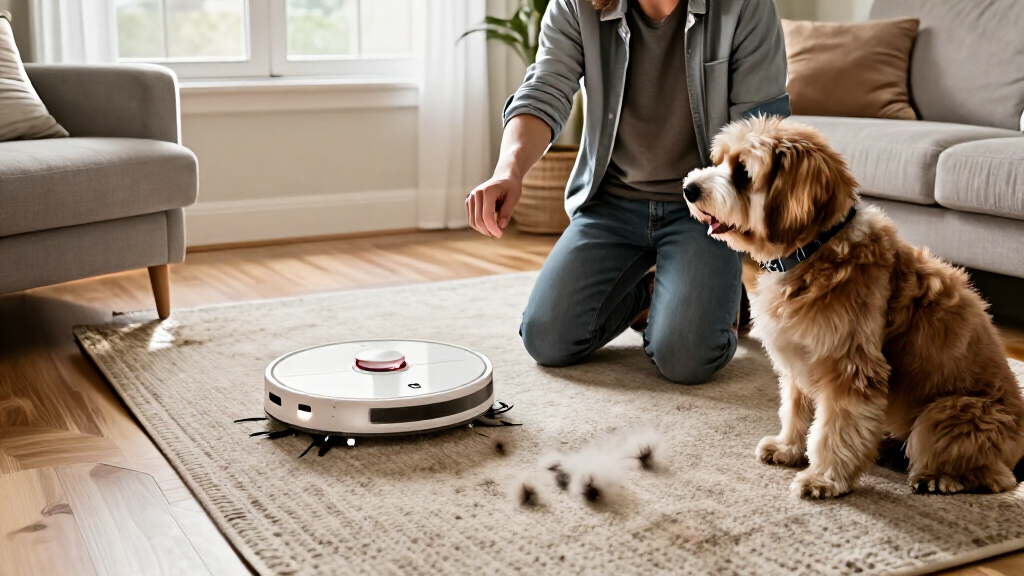

Among these robot vacuums for pet hair, I’d put the Shark AV2501AE AI Robot Vacuum with XL HEPA Self-Empty Base first for homes that want strong everyday fur pickup and less frequent bin emptying. The Roborock Qrevo S Pro stands out for buyers who want a more capable vacuum-and-mop setup, while the ILIFE V2 is a simpler choice for shoppers who mainly need help with loose hair on floors. The main tradeoffs are brush maintenance, dock convenience, navigation, and the added upkeep of mopping. A self-emptying base can reduce daily chores, but it does not remove the need to clean brushes or handle pet hair around furniture. Read on for the full comparison and guidance on matching a model to your pets, floors, and cleaning routine.

Get home appliances delivered free with Prime
- Fast, free delivery on millions of items
- Prime Video, Amazon Music and more included
- Member-only deals all year
Complete the kit


Key Takeaways
- The Shark AV2501AE is my overall pick because its XL HEPA self-empty base puts fur containment and fewer manual bin emptyings at the center of the choice.
- The Roborock Qrevo S Pro serves a different need: it pairs vacuuming with mopping, making it a stronger fit for homes where tracked-in dirt and hard-floor messes matter alongside pet hair.
- Dock features are not interchangeable. Self-emptying reduces how often you empty the robot, but buyers should still check what dock maintenance remains and whether its size suits their home.
- Simple models can be the better match for narrow needs. The ILIFE V2 emphasizes tangle-free suction and vacuuming without the added complexity of a mop-and-dock system.
- Several lineup options combine vacuuming and mopping, but a mop feature should not outweigh brush design, floor compatibility, or hair-handling needs when pet fur is the main problem.
| Shark AV2501AE AI Robot Vacuum with XL HEPA Self-Empty Base |  | Best for Allergy-Sensitive Pet Homes | Model: AV2501AE | Navigation: 360° LiDAR with Matrix Clean Navigation | Self-empty base capacity: Up to 60 days | VIEW LATEST PRICE | See Our Full Breakdown |
| D13S MAX Robot Vacuum and Mop with Self-Emptying Base |  | Best for Heavy Shedding and Mixed Floor Care | Suction power: 11,500 Pa | Self-emptying capacity: Up to 90 days | Navigation: LiDAR with smart mapping | VIEW LATEST PRICE | See Our Full Breakdown |
| iRobot Roomba 105 Robot Vacuum |  | Best for Straightforward, Vacuum-Only Cleaning | Cleaning system: Three-stage | Navigation: ClearView LiDAR | Suction levels: 4 | VIEW LATEST PRICE | See Our Full Breakdown |
| Roborock Qrevo S Pro Robot Vacuum and Mop |  | Best Premium Dock for Pet-Focused Floor Care | Suction power: 18,500 Pa | Dust bag capacity: 2.7 L | Battery life: 180 minutes | VIEW LATEST PRICE | See Our Full Breakdown |
| Airzeen Q20 Ultra Bagless Self-Emptying Robot Vacuum and Mop |  | Best Bagless, Multi-Map Option | Model: Q20 Ultra | Suction: Up to 6,000 Pa | Runtime: Up to 150 minutes in ECO mode | VIEW LATEST PRICE | See Our Full Breakdown |
| Kilgone Robot Vacuum and Mop with Self-Emptying Dock | 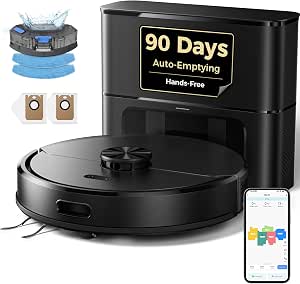 | Best for Multi-Map Homes | Model: SDL40 | Navigation: LiDAR mapping; up to 5 maps | Debris bag capacity: 2.5 L; listed for up to 90 days | VIEW LATEST PRICE | See Our Full Breakdown |
| Tikom G8000 Max Robot Vacuum and Mop Combo |  | Best Value for Vacuum-and-Mop Runs | Suction power: 5,000 Pa | Dustbin capacity: 450 ml | Water tank capacity: 300 ml | VIEW LATEST PRICE | See Our Full Breakdown |
| iRobot Roomba 105 Combo Robot Vacuum and Mop with AutoEmpty Dock |  | Best for Keeping Rugs Dry | Navigation: LiDAR mapping | Cleaning modes: Vacuum, mop, or vacuum and mop | Auto-empty capacity: Up to 75 days of debris | VIEW LATEST PRICE | See Our Full Breakdown |
| Shark AV2501S AI Ultra Robot Vacuum with Matrix Clean and Self-Empty Base |  | Best for Systematic Hair Coverage | Navigation: Matrix Clean and 360° LiDAR mapping | Surface compatibility: Carpets and hard floors | Base capacity: Up to 30 days of dirt and debris | VIEW LATEST PRICE | See Our Full Breakdown |
| ILIFE V2 Robot Vacuum Cleaner, Tangle-Free Suction, White |  | Best Simple Pick for Pet Hair | Runtime: Up to 120 minutes | Dustbin capacity: 300 ml | Height: 2.99 inches | VIEW LATEST PRICE | See Our Full Breakdown |
| iRobot Roomba 115X Combo Robot Vacuum & Mop with AutoEmpty Dock |  | Best for Long Gaps Between Emptying | Suction power: 15,000 Pa | Battery life: 173 minutes | Navigation: ClearView LiDAR | VIEW LATEST PRICE | See Our Full Breakdown |
| Q10 PRO Robot Vacuum and Mop with Self-Emptying Station |  | Best for Larger Low-Pile-Carpet Layouts | Suction power: 8,000 Pa | Runtime: Up to 150 minutes in quiet suction mode | Navigation: 360° LiDAR and SLAM mapping | VIEW LATEST PRICE | See Our Full Breakdown |
| iRobot Roomba Plus 415X Robot Vacuum and Mop Combo |  | Best Premium Pet-Hair and Mop-Care Combo | Suction power: 20,000 Pa | Brushes: Tangle-free rubber brushes and extending edge brushes | Dock: AutoWash Dock with debris emptying, water refilling, and mop-pad washing and drying | VIEW LATEST PRICE | See Our Full Breakdown |
| Shark AI Ultra Robot Vacuum with 60-Day Self-Emptying Base, AV2511AE |  | Best Vacuum-Only Pick for Pet Hair | Navigation: 360° LiDAR | Listed battery life: 120 minutes in specifications; description also states 90 minutes | Self-emptying base: Bagless; advertised for up to 60 days of debris | VIEW LATEST PRICE | See Our Full Breakdown |
| ROPVACNIC Robot Vacuum and Mop Combo |  | Best Simple, Low-Maintenance Brush Design | Suction power: 5,200 Pa | Battery life: 120 minutes | Battery type: Lithium-ion | VIEW LATEST PRICE | See Our Full Breakdown |
| robot vacuums for pet hair | Navigation | Controls |
|---|---|---|
| Shark AV2501AE AI Robot Vacuum | 360° LiDAR with Matrix Clean Navigation | App and voice control; compatible with Amazon Echo and Google Home |
| D13S MAX Robot Vacuum and Mop | LiDAR with smart mapping | — |
| iRobot Roomba 105 Robot Vacuum | ClearView LiDAR | App, buttons, and compatible voice assistants |
| Roborock Qrevo S Pro Robot Vac | LiDAR with obstacle avoidance | — |
| Airzeen Q20 Ultra Bagless Self | LiDAR mapping; supports up to 5 maps | — |
| Kilgone Robot Vacuum and Mop w | LiDAR mapping; up to 5 maps | — |
| Tikom G8000 Max Robot Vacuum a | — | App, remote, voice, and buttons |
| iRobot Roomba 105 Combo Robot | LiDAR mapping | App, voice assistant, or robot buttons |
| Shark AV2501S AI Ultra Robot V | Matrix Clean and 360° LiDAR mapping | App, Amazon Alexa, and Google Home |
| ILIFE V2 Robot Vacuum Cleaner | — | — |
| iRobot Roomba 115X Combo Robot | ClearView LiDAR | — |
| Q10 PRO Robot Vacuum and Mop w | 360° LiDAR and SLAM mapping | — |
| iRobot Roomba Plus 415X Robot | LiDAR mapping and obstacle recognition | App and voice control |
| Shark AI Ultra Robot Vacuum wi | 360° LiDAR | App, Amazon Alexa, and Google Assistant |
| ROPVACNIC Robot Vacuum and Mop | — | App, remote, touchpad, and voice |
More Details on Our Top Picks
Shark AV2501AE AI Robot Vacuum with XL HEPA Self-Empty Base
The AV2501AE makes the strongest case for pet owners who want hair pickup with less dust handling. Its bagless base holds up to 60 days of debris, and the HEPA filter is specified to capture 99.97% of dust and allergens down to 0.3 microns—useful when emptying a bin can stir up fine pet debris. LiDAR mapping and Matrix Clean Navigation give it an organized approach across carpet and hard floors, while Recharge and Resume helps cover larger areas despite the 120-minute maximum runtime. Compared with the iRobot Roomba 105, this Shark adds a substantial self-emptying base and HEPA filtration; the Roomba is a simpler choice if you do not need that base. The tradeoff is that this model does not mop, and its stated runtime may require a recharge during longer cleaning jobs.
Pros:- XL bagless base holds up to 60 days of debris
- HEPA filtration captures specified fine dust and allergens
- LiDAR mapping and Matrix Clean Navigation support organized cleaning
- App, voice control, and Recharge and Resume add scheduling flexibility
Cons:- Does not offer mopping for homes seeking a combined floor-care device
- Up to 120 minutes of runtime may be limiting for larger homes
- The included surface recommendation emphasizes carpet rather than detailing performance across different floor types
Best for: Pet owners who want scheduled vacuuming, less frequent bin emptying, and HEPA filtration for fine dust and allergens.
Not ideal for: Households that need one robot to vacuum and mop, or large homes where a 120-minute maximum run may mean interrupted cleaning.
- Model:AV2501AE
- Navigation:360° LiDAR with Matrix Clean Navigation
- Self-empty base capacity:Up to 60 days
- Filter:HEPA; captures 99.97% of dust and allergens down to 0.3 microns
- Runtime:Up to 120 minutes
- Cleaning path width:5.67 inches
- Surface compatibility:Carpet and hard floors
- Controls:App and voice control; compatible with Amazon Echo and Google Home
Our verdict“Choose the AV2501AE if reducing dust exposure and emptying chores matters more than having a mop function.”
D13S MAX Robot Vacuum and Mop with Self-Emptying Base
For pet homes where hair pickup and mop coverage both matter, the D13S MAX pairs a stated 11,500 Pa suction with an anti-tangle brush and vacuuming, sweeping, and mopping. That makes it a more all-in-one option than the Shark AV2501AE, which focuses on vacuuming and HEPA-filtered dust collection rather than wet cleaning. Its LiDAR mapping, room targeting, and no-go zones let owners direct cleaning around pet bowls or litter areas, and the base is listed to hold up to 90 days of debris. I would treat the unusually listed 1,800-hour battery life as unclear rather than a dependable runtime figure. The 70 dB noise specification may also be noticeable, and its mop and water tank add upkeep that a vacuum-only pick avoids.
Pros:- 11,500 Pa stated suction and an anti-tangle brush are aimed at pet hair
- LiDAR mapping supports no-go zones and room-specific cleaning
- Combines vacuuming, sweeping, and mopping
- Self-emptying base is listed for up to 90 days of debris
Cons:- Listed battery life of 1,800 hours is unclear and should not be treated as a reliable runtime
- Specified 70 dB noise may be disruptive during cleaning
- Mopping components add water-tank and mop maintenance
Best for: Owners of shedding pets who want strong stated suction, targeted room cleaning, and vacuuming plus mopping in one machine.
Not ideal for: Noise-sensitive households or buyers who want a clearly specified runtime and a simple, vacuum-only setup.
- Suction power:11,500 Pa
- Self-emptying capacity:Up to 90 days
- Navigation:LiDAR with smart mapping
- Cleaning functions:Vacuum, sweep, and mop
- Water tank capacity:230 ml
- Dustbin capacity:240 ml
- Base capacity:3.5 liters
- Noise level:70 dB
Our verdict“Pick the D13S MAX if you want a pet-hair-focused vacuum and mop with room controls, and can accept unclear runtime information.”
iRobot Roomba 105 Robot Vacuum
The Roomba 105 is the uncomplicated pick in this group for pet owners who want mapped vacuuming without a mop or a bulky self-emptying station. Its three-stage cleaning system, multi-surface brush, and edge-sweeping brush are intended for carpet and hard floors, while ClearView LiDAR supports room targeting and keep-out zones. It also recharges and resumes, which helps it finish a job after a battery break. Compared with the Shark AV2501AE, the Roomba offers useful app controls and mapping but lacks the Shark’s XL HEPA self-empty base; expect to handle the collected hair and dust yourself. Its four suction settings allow adjustment, though the advertised 70X comparison is against Roomba 600 series robots, not a direct measure against the other picks here. Wi-Fi is limited to 2.4 GHz.
Pros:- ClearView LiDAR supports room targeting and keep-out zones
- Three-stage system includes multi-surface and edge-sweeping brushes
- Recharge and Resume can continue an unfinished cleaning task
- Works on carpet and hard floors with four suction levels
Cons:- No self-emptying base, so pet hair and debris require manual bin emptying
- Does not include a mop function
- Wi-Fi operation is limited to 2.4 GHz
Best for: Pet owners who want a mapped, vacuum-only robot with room controls and are comfortable emptying its bin themselves.
Not ideal for: People who want self-emptying, HEPA-filtered base disposal, mopping, or 5 GHz Wi-Fi compatibility.
- Cleaning system:Three-stage
- Navigation:ClearView LiDAR
- Suction levels:4
- Surface recommendation:Carpet and hard floor
- Connectivity:2.4 GHz Wi-Fi
- Controls:App, buttons, and compatible voice assistants
- Special features:Anti-fall sensors, dirt detection sensor, and eco mode
- Bin:Bagless
Our verdict“Choose the Roomba 105 for mapped, uncomplicated pet-hair vacuuming if you do not need the Shark’s self-emptying and HEPA setup.”
Roborock Qrevo S Pro Robot Vacuum and Mop
The Qrevo S Pro is the most dock-centered option here: its station empties dust, washes and dries the mops, and refills water, cutting down on chores after both hair pickup and mopping. The stated 18,500 Pa suction and anti-tangle brushes target pet debris, while dual liftable spinning mops rise 10 mm over carpet to help keep wet pads away from rugs. Compared with the D13S MAX, this Roborock adds automated mop washing and warm-air drying, making it better suited to frequent mixed-floor cleaning; the D13S MAX lists a longer self-empty interval and a less elaborate dock. Tradeoffs include a 2.4 GHz-only Wi-Fi connection and conflicting noise figures of 55 dB and 60 dB in the supplied information. The washable filter also means filter care remains part of upkeep.
Pros:- 18,500 Pa stated suction and anti-tangle brushes address pet hair
- Dock self-empties, washes and dries mops, and refills water
- Liftable spinning mops rise 10 mm for carpet transitions
- LiDAR navigation and obstacle avoidance support mapped cleaning
Cons:- Wi-Fi support is limited to 2.4 GHz
- Supplied noise figures conflict between 55 dB and 60 dB
- Mop washing, drying, and water handling add dock maintenance
Best for: Pet households with mixed hard floors and carpet that want frequent vacuuming and mopping with fewer dock-related chores.
Not ideal for: Buyers who need 5 GHz Wi-Fi, want a clearly stated noise level, or prefer a simpler vacuum-only machine.
- Suction power:18,500 Pa
- Dust bag capacity:2.7 L
- Battery life:180 minutes
- Navigation:LiDAR with obstacle avoidance
- Mop system:Dual liftable spinning mops
- Mop lifting height:10 mm
- Dock functions:Dust emptying, mop washing and drying, and water refilling
- Wi-Fi:2.4 GHz only
Our verdict“Choose the Qrevo S Pro if you want a premium pet-hair vacuum and mop whose dock handles much of the post-cleaning work.”
Airzeen Q20 Ultra Bagless Self-Emptying Robot Vacuum and Mop
The Q20 Ultra stands apart for owners who want self-emptying without buying replacement dust bags: its reusable, rinseable dust cup keeps the base bagless. LiDAR mapping supports up to five maps, a practical match for multi-level homes, and its 150-minute ECO-mode runtime plus recharge-and-resume can help it cover more than one room per run. Its stated 6,000 Pa suction is below the D13S MAX and Roborock Qrevo S Pro figures, so I would favor those models for buyers prioritizing the highest listed suction and more advanced mop care. The Q20 Ultra still combines vacuuming and mopping, but its mop holder must be removed before carpet cleaning, adding a manual step for mixed floors. It supports hard floors and low-pile carpets, not every carpet type.
Pros:- Reusable, rinseable dust cup avoids disposable dust bags
- LiDAR mapping supports up to five maps and customizable no-go zones
- Vacuuming and mopping can run in the same cleaning routine
- Up to 150 minutes in ECO mode with automatic recharge and resume
Cons:- Mop holder must be removed before cleaning carpets
- Up to 6,000 Pa suction is lower than the stated figures for the D13S MAX and Roborock Qrevo S Pro
- Surface guidance is limited to hard floors and low-pile carpets
Best for: Multi-level pet households that want bagless self-emptying, room maps for several floors, and routine mopping on hard floors.
Not ideal for: Homes with substantial or high-pile carpeting, or buyers who want the strongest stated suction and an automatic mop-care dock.
- Model:Q20 Ultra
- Suction:Up to 6,000 Pa
- Runtime:Up to 150 minutes in ECO mode
- Navigation:LiDAR mapping; supports up to 5 maps
- Cleaning modes:Vacuum, sweep, mop, and self-empty
- Dust cup:Reusable, bagless
- Surfaces:Hard floors and low-pile carpets
- Controls and Wi-Fi:App, buttons, and voice; 2.4 GHz Wi-Fi only
Our verdict“Pick the Q20 Ultra for bagless self-emptying and multi-floor maps, provided your carpets are low-pile and you accept manual mop-holder changes.”
Kilgone Robot Vacuum and Mop with Self-Emptying Dock
The Kilgone SDL40 is a good fit for pet owners who want mapped cleaning and less frequent debris handling. Its anti-tangle brush is aimed at hair pickup, while the 2.5 L self-emptying bag is listed to hold up to 90 days of debris, easing daily upkeep compared with the Shark AV2501S, whose base holds up to 30 days. LiDAR can save up to five maps, a useful distinction for multi-level homes or households with separate cleaning zones. The robot also offers room targeting and no-go zones through its app, plus Alexa and Google Assistant control. The tradeoff is a 300 ml onboard dustbin, so the dock does not remove the need for regular emptying if hair or debris builds up during a run. Mopping is light floor maintenance, not a substitute for scrubbing.
Pros:- Anti-tangle brush is designed to reduce pet-hair buildup.
- Self-emptying dock bag is listed to hold up to 90 days of debris.
- LiDAR mapping supports up to five saved maps and room targeting.
- HEPA filtration and Alexa or Google Assistant controls.
Cons:- The robot’s 300 ml dustbin is small between dock-emptying cycles.
- Mopping is described as light cleaning, despite three water settings.
Best for: Pet-owning households with multiple floors or mapped zones that want scheduled hair pickup and a large-capacity self-emptying dock.
Not ideal for: Buyers who need a large onboard bin, deep carpet cleaning claims, or a robot to scrub dried-on messes.
- Model:SDL40
- Navigation:LiDAR mapping; up to 5 maps
- Debris bag capacity:2.5 L; listed for up to 90 days
- Robot dustbin:300 ml
- Runtime:Up to 150 minutes
- Cleaning coverage:Up to about 1,615 sq ft per clean
- Filter:HEPA
- Mopping:3 water levels
Our verdict“Choose the Kilgone if multi-map navigation and reduced dock maintenance matter more than a large onboard bin or intensive mopping.”
Tikom G8000 Max Robot Vacuum and Mop Combo
The Tikom G8000 Max combines vacuuming and mopping in one pass, making it a practical pick for homes where pet hair and everyday hard-floor dust are both on the chore list. Its 5,000 Pa suction gives it a stated performance point for hair pickup, and the 450 ml dustbin is larger than the Kilgone SDL40’s 300 ml bin. It also stands out for its 2.99-inch profile, which can reach under furniture that taller mapping-focused models may miss. Controls include an app, remote, voice, and onboard buttons, so it suits households that prefer several ways to start a clean. The tradeoff is less emphasis on automated mapping and self-emptying than the Kilgone or iRobot Roomba 105 Combo. Its 150-minute figure applies to quiet mode, and carpet use is specified for short- and medium-pile rugs.
Pros:- Listed 5,000 Pa suction and a 450 ml dustbin for routine hair pickup.
- Can vacuum and mop simultaneously.
- Slim 2.99-inch body can reach beneath low furniture.
- App, remote, voice, and button controls offer flexible operation.
Cons:- The 150-minute runtime is specified for quiet mode only.
- Carpet suitability is limited in the description to short- and medium-pile carpets.
- No self-emptying dock or LiDAR mapping is listed.
Best for: Pet owners with mostly hard floors, low furniture, and short- or medium-pile rugs who want vacuuming and light mopping in the same run.
Not ideal for: Households with thick carpets or buyers who want a self-emptying dock and LiDAR room mapping.
- Suction power:5,000 Pa
- Dustbin capacity:450 ml
- Water tank capacity:300 ml
- Runtime:Up to 150 minutes in quiet mode
- Height:2.99 inches
- Cleaning modes:Spot, Edge, Zig-zag, and Manual
- Controls:App, remote, voice, and buttons
- Sensors:Anti-collision and anti-fall
Our verdict“Pick the Tikom for slim, simultaneous vacuum-and-mop cleaning on hard floors, but choose a mapped self-emptying model for less hands-on upkeep.”
iRobot Roomba 105 Combo Robot Vacuum and Mop with AutoEmpty Dock
The Roomba 105 Combo is the clearest choice here for pet owners who want vacuuming and mopping in one machine but need extra care around rugs. Carpet detection helps keep rugs dry during mop runs, while LiDAR mapping supports more organized coverage than the simpler Tikom G8000 Max, which focuses on simultaneous cleaning rather than mapped room plans. The AutoEmpty dock is listed to hold up to 75 days of debris, reducing bin chores compared with the Shark AV2501S’s 30-day base. Selectable vacuum-only, mop-only, and combined modes also let owners adapt cleaning to a room or mess. Its limits are practical: connectivity is 2.4 GHz Wi-Fi only, and the listed suction comparison is relative to the Roomba 600 series rather than an absolute figure. Compatible cleaning solutions are restricted to specified products.
Pros:- Carpet detection helps keep rugs dry during mopping.
- LiDAR mapping and selectable room-cleaning modes support planned coverage.
- AutoEmpty dock is listed to hold up to 75 days of debris.
- Offers vacuum-only, mop-only, and combined cleaning modes.
Cons:- Wi-Fi connectivity is limited to 2.4 GHz.
- Compatible cleaning solutions are limited to specified products.
- Suction is described comparatively against the Roomba 600 series, not as an absolute measurement.
Best for: Pet households with a mix of hard floors and area rugs that want mapped cleaning, dry-rug protection, and an auto-empty dock.
Not ideal for: Buyers with 5 GHz-only Wi-Fi or those seeking broadly compatible mopping solutions or a stated suction figure in Pa.
- Navigation:LiDAR mapping
- Cleaning modes:Vacuum, mop, or vacuum and mop
- Auto-empty capacity:Up to 75 days of debris
- Suction:70X more power-lifting suction compared with Roomba 600 series
- Mopping:Microfiber pad, adjustable water flow, and SmartScrub
- Carpet handling:Carpet detection helps keep rugs dry while mopping
- Connectivity:2.4 GHz Wi-Fi
- Controls:App, voice assistant, or robot buttons
Our verdict“Choose the Roomba 105 Combo if rug protection and flexible mapped cleaning matter more than broad Wi-Fi or cleaning-solution compatibility.”
Shark AV2501S AI Ultra Robot Vacuum with Matrix Clean and Self-Empty Base
The Shark AV2501S puts its emphasis on systematic coverage for homes with pet hair across carpets and hard floors. Its Matrix Clean pattern and 360° LiDAR mapping are designed to guide the robot through mapped cleaning, while the self-cleaning brushroll targets hair pickup with less brush maintenance. Compared with the ILIFE V2, which favors simple remote operation and a tangle-free suction design, the Shark adds app and voice controls, mapping, and a self-emptying base. That base is bagless and listed for up to 30 days of debris, so it reduces frequent bin handling but does not match the longer capacity claims of the Kilgone SDL40 or Roomba 105 Combo. Recharge and Resume helps extend coverage beyond one charge, though the stated runtime is up to 120 minutes. Buyers should also expect to empty the base periodically.
Pros:- Matrix Clean and 360° LiDAR mapping support systematic floor coverage.
- Self-cleaning brushroll is designed for pet-hair pickup.
- Bagless self-emptying base holds up to 30 days of debris.
- Recharge and Resume can continue cleaning after recharging.
Cons:- Runtime is listed at up to 120 minutes per charge.
- The base still needs periodic debris disposal.
- This is a vacuum-only model, unlike the Tikom and Roomba combo options.
Best for: Pet owners who want mapped, systematic vacuuming across carpet and hard floors, plus a self-cleaning brushroll and reduced bin chores.
Not ideal for: Buyers prioritizing a long-capacity dock, an included mop function, or the simplest low-tech controls.
- Navigation:Matrix Clean and 360° LiDAR mapping
- Surface compatibility:Carpets and hard floors
- Base capacity:Up to 30 days of dirt and debris
- Filtration:HEPA
- Runtime:Up to 120 minutes
- Brushroll:Self-cleaning brushroll
- Controls:App, Amazon Alexa, and Google Home
- Battery:Lithium-ion
Our verdict“Choose the Shark for mapped pet-hair vacuuming and brushroll upkeep, but skip it if you want mopping or a longer-capacity dock.”
ILIFE V2 Robot Vacuum Cleaner, Tangle-Free Suction, White
The ILIFE V2 keeps pet-hair cleaning straightforward: its tangle-free suction, remote control, and 2.99-inch profile focus on everyday pickup without app setup or Wi-Fi. That makes it a simpler alternative to the Shark AV2501S, which adds LiDAR mapping, voice controls, and a self-emptying base but also brings more connected features. The ILIFE’s low height can help it reach under beds and sofas where fur gathers, and its 120-minute runtime with automatic dock return supports scheduled routine cleaning. The tradeoffs are a single power level and a 300 ml dustbin, which may be limiting when hair accumulates quickly or carpets need stronger pickup. Its sponge filter also differs from the Kilgone SDL40’s HEPA filtration, so buyers seeking that stated filtration type should look elsewhere.
Pros:- Tangle-free suction is designed for pet-hair pickup.
- 2.99-inch height helps it clean beneath low furniture.
- Remote control and scheduling work without Wi-Fi.
- Up to 120 minutes of runtime with automatic dock return.
Cons:- One power level offers limited adjustment for thick carpets.
- The 300 ml dustbin may need frequent emptying in high-shedding homes.
- No app, Wi-Fi, smart-home integration, or self-emptying dock is listed.
Best for: Pet owners who want a low-profile, scheduled vacuum for routine hair pickup on hard floors and carpets without app or Wi-Fi setup.
Not ideal for: Households with thick carpets, heavy daily shedding, or a need for smart-home control, HEPA filtration, or a self-emptying dock.
- Runtime:Up to 120 minutes
- Dustbin capacity:300 ml
- Height:2.99 inches
- Filter:Sponge
- Control:Remote control
- Power levels:1
- Noise level:69 dB
- Surface recommendation:Hard floor, pet hair, and carpet
Our verdict“Pick the ILIFE V2 for uncomplicated, low-profile pet-hair maintenance, but choose the Shark or Kilgone for mapped cleaning and automated debris handling.”
iRobot Roomba 115X Combo Robot Vacuum & Mop with AutoEmpty Dock
For pet owners who want vacuuming and light mopping with less frequent bin maintenance, the Roomba 115X Combo is a strong fit. Its 15,000 Pa suction and anti-hair-wrap brushes target everyday fur, while the 2.5 L AutoEmpty dock is advertised to hold debris for up to 90 days. LiDAR mapping helps it follow a repeatable route, and the washable pad handles hard-floor touch-ups during the same run.
Compared with the Roomba Plus 415X, this model has less suction and a simpler dock: it does not wash and dry its mop pad. Its carpet-avoidance setup also needs manual no-mop zones, so rug-heavy homes may need some configuration. The stated coverage is up to 900 square feet per charge, and replacement AllergenLock bags add an ongoing supply requirement.
Pros:- Anti-hair-wrap brushes are designed to reduce fur tangles.
- 15,000 Pa stated suction supports pickup of everyday debris and pet hair.
- 2.5 L self-emptying bag is advertised for up to 90 days of debris storage.
- LiDAR mapping and a washable mop pad support planned cleaning on mixed hard-floor layouts.
Cons:- Coverage is stated at up to 900 square feet per charge, which may mean recharging in larger homes.
- Self-emptying requires proprietary AllergenLock bags.
- No-mop zones must be configured manually to protect rugs and carpets.
Best for: Pet owners with mostly hard flooring who want scheduled fur pickup, occasional mopping, and fewer trips to empty the robot.
Not ideal for: People with large homes, many rugs, or a preference for a dock that washes and dries mop pads automatically.
- Suction power:15,000 Pa
- Battery life:173 minutes
- Navigation:ClearView LiDAR
- Coverage per charge:Up to 900 sq ft
- Dust capacity:2.5 L AllergenLock bag
- Pet-hair brush:Anti-hair-wrap brushes
- Mop pad:Washable microfiber
- Controls and Wi-Fi:App, voice, or button; 2.4 GHz Wi-Fi
Our verdict“Choose the Roomba 115X if you want a mapped pet-hair vacuum with a long-capacity dock and can manage bag replacements and rug zones.”
Q10 PRO Robot Vacuum and Mop with Self-Emptying Station
The Q10 PRO stands out for households that want mapped cleaning across a larger floor plan without stepping up to the more elaborate dock on the Roomba Plus 415X. It pairs 360° LiDAR and SLAM mapping with recharge-and-resume cleaning, and its stated coverage reaches 2,000 square feet. The 3.3 L station is advertised for up to 60 days of hands-free cleaning, while a HEPA filter and adjustable suction give pet owners some control over routine fur pickup.
Its 8,000 Pa suction is below the Roomba 115X’s stated 15,000 Pa, so buyers prioritizing maximum listed suction may prefer that model. This Q10 PRO is recommended for hard floors and low-pile carpet, not plush rugs. Mopping also calls for removing the holder or setting a no-go zone around carpets, so mixed-floor homes need to plan its route.
Pros:- LiDAR and SLAM mapping support room-based routes and no-go zones.
- The 3.3 L self-emptying station is advertised for up to 60 days of use.
- Recharge-and-resume and stated coverage up to 2,000 square feet suit larger layouts.
- HEPA filtration and three suction levels allow adjustment for routine pet debris.
Cons:- Its 8,000 Pa stated suction is lower than the Roomba 115X’s 15,000 Pa.
- Surface recommendations stop at low-pile carpet.
- Mop setup requires removing the holder or marking carpet areas as no-go zones.
Best for: Pet owners in larger homes with hard floors and low-pile rugs who want room mapping, scheduled cleaning, and automatic recharge-and-resume.
Not ideal for: Homes with thick carpet or owners who want the robot to switch between mopping and carpet cleaning without manual setup.
- Suction power:8,000 Pa
- Runtime:Up to 150 minutes in quiet suction mode
- Navigation:360° LiDAR and SLAM mapping
- Maximum stated coverage:Up to 2,000 sq ft
- Station capacity:3.3 L
- Advertised hands-free period:Up to 60 days
- Filter:HEPA
- Recommended surfaces:Wood and hard floors, low-pile carpet
Our verdict“Pick the Q10 PRO for mapped cleaning across a larger hard-floor or low-pile home, but skip it if thick carpet or effortless mop-and-carpet switching is a priority.”
iRobot Roomba Plus 415X Robot Vacuum and Mop Combo
Among these five, the Roomba Plus 415X has the most elaborate setup for owners who want pet-hair vacuuming and regular hard-floor mopping handled together. Its listed 20,000 Pa suction and tangle-free rubber brushes are aimed at fur pickup, while DualClean pads and SmartScrub add a more involved mop routine than the microfiber pad on the Roomba 115X. The AutoWash Dock empties debris, refills water, and washes and heat-dries the pads, cutting down on direct mop maintenance.
Automatic mop lifting and obstacle recognition make it more suited to mixed flooring than the Q10 PRO, which requires manual mop-holder removal or no-go zones around carpet. The tradeoff is dock upkeep: water and debris still need attention, and the supplied product details do not establish independent cleaning results. Choose it for automation, not for a maintenance-free dock.
Pros:- Tangle-free rubber brushes are designed to limit pet-hair tangles.
- AutoWash Dock empties debris, refills water, and washes and heat-dries mop pads.
- Automatic 10 mm mop lift helps keep wet pads off rugs.
- Multiple cleaning modes support vacuum-only, mop-only, and combined routines.
Cons:- The dock still needs water and debris management.
- The product details provide no independent evidence for cleaning performance.
- More dock functions mean a more involved setup than the Roomba 115X’s simpler self-emptying arrangement.
Best for: Pet-owning households with mixed hard floors and rugs that want a dock to handle debris emptying and mop-pad care.
Not ideal for: Buyers who want a simple vacuum-only robot, minimal dock upkeep, or independently documented cleaning performance.
- Suction power:20,000 Pa
- Brushes:Tangle-free rubber brushes and extending edge brushes
- Dock:AutoWash Dock with debris emptying, water refilling, and mop-pad washing and drying
- Advertised debris emptying:Up to 90 days
- Mop-pad drying temperature:113°F
- Mop lift:10 mm
- Navigation:LiDAR mapping and obstacle recognition
- Controls:App and voice control
Our verdict“Choose the Plus 415X if you want a pet-hair-focused vacuum and mop with automated pad care and accept ongoing dock maintenance.”
Shark AI Ultra Robot Vacuum with 60-Day Self-Emptying Base, AV2511AE
For pet owners who care more about fur pickup than mopping, the Shark AI Ultra AV2511AE keeps the job focused: it combines a self-cleaning brushroll with Matrix Clean grid-pattern passes across carpets and hard floors. Its bagless self-emptying base avoids the replacement-bag requirement of the Roomba 115X, and LiDAR mapping with recharge-and-resume supports scheduled whole-home runs. App and voice controls also allow targeted cleaning without adding a mop system to maintain.
The tradeoff is uncertainty in the supplied details: runtime is listed as both 90 and 120 minutes, and the description mixes vacuum-only and vacuum-and-mop information. I would treat this AV2511AE as a vacuum-only option unless the exact package confirms otherwise. Compared with the Roomba Plus 415X, it gives up mop-pad care and water handling, but its simpler floor-care focus may suit homes where carpet fur is the main concern.
Pros:- Self-cleaning brushroll and Matrix Clean passes are designed for pet hair and repeated floor coverage.
- Bagless base is advertised to hold up to 60 days of debris.
- LiDAR mapping, obstacle avoidance, and recharge-and-resume support scheduled cleaning.
- Works on both carpets and hard floors, with app and voice control.
Cons:- Provided runtime figures conflict: the description says 90 minutes and the specifications say 120 minutes.
- Mopping capability is unclear in the product details.
- The stated capacity is 0.27 gallons, smaller than the Q10 PRO’s listed 3.3 L station capacity.
Best for: Pet owners with a mix of carpet and hard flooring who want a bagless self-emptying vacuum and do not need mopping.
Not ideal for: Buyers who need confirmed mop functionality, a stated longer runtime, or a dock that uses a sealed replacement bag.
- Navigation:360° LiDAR
- Listed battery life:120 minutes in specifications; description also states 90 minutes
- Self-emptying base:Bagless; advertised for up to 60 days of debris
- Listed capacity:0.27 gallons
- Brush system:Self-cleaning brushroll
- Cleaning pattern:Matrix Clean grid-pattern passes
- Recommended surfaces:Carpets and hard floors
- Controls:App, Amazon Alexa, and Google Assistant
Our verdict“Choose the Shark AI Ultra if you want a bagless, vacuum-focused pet-hair cleaner for carpet and hard floors, but verify the exact package if mopping matters.”
ROPVACNIC Robot Vacuum and Mop Combo
The ROPVACNIC is the most straightforward fit here for pet owners who want a basic vacuum-and-mop routine without a self-emptying station. Its brush-free design and dual side brushes are intended to collect fur while avoiding the central-brush tangles that can call for frequent cleanup. Adjustable mopping, three suction levels, and app, remote, and voice controls add flexibility for everyday hard-floor maintenance.
Its 5,200 Pa stated suction is well below the 8,000 Pa Q10 PRO and the higher-listed Roomba models, so it is a more modest choice for heavy shedding or deep carpet pickup. The product is recommended for hardwood and low-pile carpets, which rules it out for plush flooring. Unlike the Shark AI Ultra, it has a mop function, but there is no self-emptying dock listed, so the dustbin remains part of routine upkeep.
Pros:- Brush-free design is intended to reduce pet-hair tangles.
- Combines vacuuming with adjustable mopping for hard-floor upkeep.
- App, remote, touchpad, and voice controls offer several ways to start cleaning.
- Returns to its dock to recharge and supports obstacle avoidance.
Cons:- 5,200 Pa stated suction is lower than the Q10 PRO and the Roomba options in this lineup.
- Recommended only for hard floors and low-pile carpets.
- No self-emptying station is listed, so routine dustbin emptying remains necessary.
Best for: Pet owners in smaller homes with mostly hard floors who want a simple, brush-free vacuum-and-mop robot with several control options.
Not ideal for: Households with heavy shedding, large carpeted areas, or anyone who wants a self-emptying station to reduce bin maintenance.
- Suction power:5,200 Pa
- Battery life:120 minutes
- Battery type:Lithium-ion
- Brush design:Brush-free with dual side brushes
- Cleaning modes:Vacuuming and adjustable mopping
- Power levels:3
- Recommended surfaces:Hardwood floors and low-pile carpets
- Controls:App, remote, touchpad, and voice
Our verdict“Pick the ROPVACNIC for a simple brush-free vacuum-and-mop routine on hard floors, but choose a stronger self-emptying model for heavy shedding or carpet-heavy homes.”

How We Picked
I ranked these models around the problems pet owners are trying to solve: daily fur pickup, hair tangles, dust and dander handling, and the effort required to keep the robot ready to clean. I gave greater weight to useful pet-hair features such as a self-emptying base, tangle-conscious brush or suction design, and clear floor-care capabilities than to broad feature lists. I also considered how vacuum-and-mop combinations may help with hard-floor messes, while recognizing that a mop adds setup and maintenance that some homes do not need.
The order reflects fit for the stated use, not a claim that one specification guarantees better cleaning in every home. The Shark AV2501AE leads for its pet-focused combination of an XL HEPA self-empty base and robot vacuum format; the Roborock Qrevo S Pro follows as a more versatile vacuum-and-mop choice. Models with simpler feature sets, smaller-scope use, or less emphasis on pet-hair convenience sit lower for buyers seeking an all-round pet-hair solution. Carpet type, shedding level, floor plan, and the maintenance a household will actually do can change which pick makes the most sense.
Factors to Consider When Choosing Robot Vacuums For Pet Hair
Choosing a robot for pet hair is less about chasing the longest feature list and more about matching its cleaning routine to your home. I’d start with the type of fur and flooring you have, then weigh dock upkeep, navigation, and whether mopping solves a real problem for you.
Match the brush and suction design to your pet’s coat
Long, fine fur can wrap around brushes, while short hair may collect along edges and in carpet pile. A tangle-conscious design can cut down on brush cleanup, but no robot should be treated as maintenance-free when pets shed. Check how the brush can be removed and cleared before buying; awkward access can turn a small chore into a reason to postpone cleaning. Carpet also asks more of a robot than smooth flooring, so think about where fur settles rather than relying on a suction figure alone. If your pet sheds heavily, prioritize routine cleaning and easy brush access over extra modes you may rarely use.
Treat self-emptying as a convenience feature, not a maintenance-free promise
A self-emptying dock can reduce how often you handle a bin full of fur, which is especially useful in homes with multiple pets. It does not eliminate emptying or cleaning altogether: dust bags or collection compartments still need attention, and hair can collect on the robot’s brush and wheels. Consider where the dock will sit, whether you can reach it easily, and whether its ongoing upkeep fits your routine. A larger base may offer less frequent intervention but take up more floor space. If you prefer fewer consumables, compare bagless designs with docked systems while checking how each handles dust when emptied.
Choose navigation around the messiest parts of your floor plan
Pet hair tends to gather under furniture, near feeding stations, and in rooms where animals rest. A robot that can follow a repeatable route is more useful for targeted daily cleanup than one that wanders unpredictably, especially in a multiroom home. Look at whether the model supports useful scheduling or room control, and think about cables, toys, and pet bowls that can interrupt a run. A complicated floor plan may justify more capable navigation, while a small open space can work well with a simpler robot. Avoid paying for advanced mapping if you will run the vacuum in one clear area and rarely change its route.
Buy a mop only if it addresses a real household mess
Mopping can help with paw prints and everyday residue on hard floors, but it is not a substitute for picking up fur. A combination robot adds another component to fill, wash, or maintain, and its use depends on the surfaces in your home. If you have carpets, check how the model handles them during a mopping run so a damp pad does not cross a rug. Homes that are mostly carpet may get more value from a dedicated vacuum. For mixed flooring, weigh the convenience of one machine against the extra attention a mop system needs.
Balance filtration with how you handle dust and dander
Fur is visible, but fine dust and dander can also matter to households with allergies or sensitivities. A sealed or HEPA-oriented collection setup may be appealing, though filtration does not replace regular cleaning or guarantee relief from symptoms. Think about the moment you empty the dock: a system that contains debris during routine collection may be more comfortable than one that releases dust during manual emptying. Check replacement and cleaning needs before settling on a filtration feature. If allergies are a primary concern, pair the robot choice with broader home-cleaning habits rather than expecting the vacuum to solve the problem alone.
Set expectations for daily runs, thresholds, and pet behavior
Frequent short cleaning runs can keep loose fur from building up, but the robot still needs clear paths and a safe place to operate. Low furniture, doorway lips, loose rugs, and scattered toys can limit where it can go, so map those obstacles before buying. Some pets ignore a running vacuum; others may avoid it or interfere with its dock, making scheduling and access more important than extra suction modes. Keep cords and small objects out of the route, and give the robot a clear path back to its base. A model that fits your home’s layout and your pet’s routine is more useful than one with features you cannot use consistently.
Frequently Asked Questions
Is a self-emptying robot vacuum worth it for a home with one shedding pet?
It can be worthwhile if fur fills the robot’s bin quickly or you want to run it often without emptying it after every cycle. For one pet with moderate shedding, a standard bin may be manageable, particularly in a small home. A self-emptying base shifts some of the work to occasional dock maintenance rather than removing it entirely. Compare the base’s footprint and collection setup with how often you expect to clean. If you do not mind emptying a smaller bin, a simpler model may be a better fit.
Should I choose a robot vacuum and mop or a vacuum-only model for pet hair?
Choose based on your floors and the mess you want the robot to handle. Fur pickup is the main job, so a mop does not automatically make a combo model better for shedding. A mop can add value on hard floors if pets track in dirt or leave paw marks, but it brings extra filling and cleaning tasks. In carpet-heavy homes, a vacuum-focused model may be easier to maintain and better matched to the daily problem. For mixed flooring, check how the robot avoids wetting carpets during mop runs.
Can a robot vacuum handle long pet hair without constant brush cleaning?
No robot should be assumed to stay tangle-free with long hair, even when its design is intended to limit wraps. Long strands can wind around brush rolls, axles, or wheels, and the amount of cleanup depends on the pet’s coat and shedding. Look for a brush that is easy to remove and inspect, then plan to check it regularly. Running the robot more often may help prevent large clumps from building up, but it does not replace brush care. If maintenance is your main concern, favor accessible, tangle-conscious designs over a feature count.
Do HEPA filtration and a self-emptying dock help with pet dander?
They can help contain collected debris during routine cleaning, which may be useful for households concerned about dust and dander. The Shark AV2501AE is the clearest match in this lineup for shoppers seeking an XL HEPA self-empty base. Filtration labels alone do not show how a household will experience emptying or how well the robot covers its rooms. Check the dock’s handling and maintenance requirements, and keep up with filters and other cleaning tasks. A robot is one part of a home-cleaning plan, not a guarantee of allergy relief.
Which features matter most if I have both carpet and hard floors?
Start with reliable vacuuming across the surfaces where your pet sheds, then check how a combo model handles rugs during mopping. Hair embedded in carpet makes brush access and regular cleaning especially relevant, while hard floors can benefit from frequent pickup and, in some homes, a mop. Mixed flooring also makes navigation and clear room routines more useful. Do not let a mop feature take priority if most of your fur sits in carpet. Match the robot’s floor-care approach to the area that creates the most work for you.
Conclusion
For most pet owners looking for a balanced, pet-focused setup, I’d start with the Shark AV2501AE: its XL HEPA self-empty base makes it my best overall pick in this lineup. For a broader hard-floor routine that includes mopping, the Roborock Qrevo S Pro is my best premium-style choice, while shoppers seeking a simpler vacuum-first option can look to the ILIFE V2. The best value depends on which features you will use; I’d compare the straightforward ILIFE with the self-emptying picks before paying for a dock or mop you do not need. For beginners, choose the model whose controls and maintenance feel easiest to manage, rather than the one with the most modes. For homes focused on fur containment and less frequent bin emptying, prioritize the Shark’s dock; for hard floors and paw messes, favor a vacuum-and-mop model. Match the final choice to your flooring, shedding level, and willingness to maintain the robot.