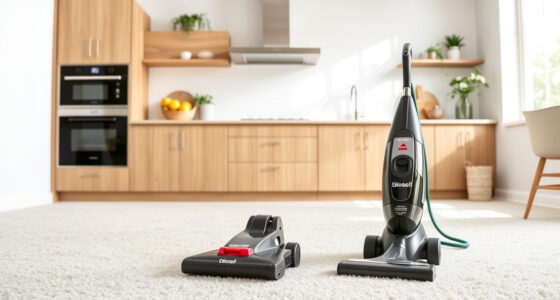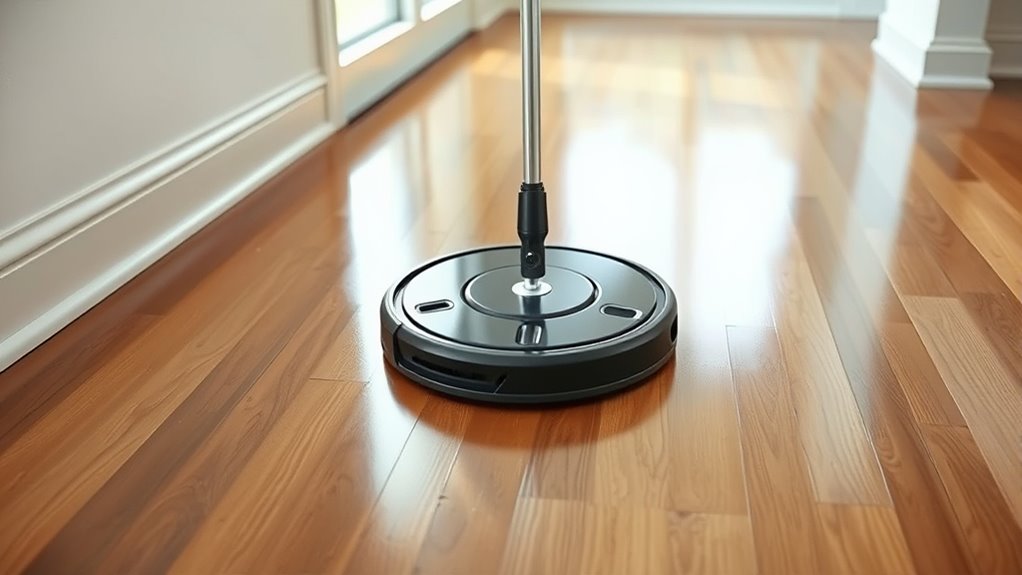

To prevent your robot mop from leaving streaks, clean the pads, brushes, and sensors regularly, and avoid buildup of dirt or soap residue. Use gentle, pH-balanced cleaning solutions tailored to your floor type, and don’t overfill the water tank. Updating the firmware guarantees the best performance, while adjusting cleaning modes per surface can reduce streaks. Consistent maintenance keeps your floors streak-free, and exploring these tips further can help you achieve perfect results.
Key Takeaways
- Regularly clean and replace pads, brushes, and sensors to maintain optimal cleaning performance.
- Use appropriate, pH-balanced cleaners suitable for your floor type to prevent streaks.
- Avoid overfilling the water tank and use distilled water to minimize mineral deposits.
- Keep firmware updated to enhance sensor calibration and cleaning algorithms.
- Adjust cleaning settings based on floor type and ensure sensors are clean for accurate operation.

If your robot mop leaves streaks on your floors, it’s frustrating to see your efforts spoiled by streaky surfaces. The good news is that many streak issues can be prevented through proper robot mop maintenance and paying attention to your floor type considerations. First, regularly cleaning your robot mop is essential. Wipe down the mop’s pads, brushes, and sensors after each use to remove dirt, debris, and soap residue. Dirty pads or sensors can cause uneven cleaning, leading to streaks or missed spots. Use a damp cloth or a gentle cleaning solution recommended by the manufacturer to keep these components in top shape. This routine ensures your robot operates smoothly and prevents streaking caused by buildup or malfunction.
Regularly clean your robot mop’s pads, brushes, and sensors to prevent streaks and ensure optimal performance.
Next, consider the specific floor type you’re cleaning. Different floors require different cleaning approaches. For example, hardwood floors are sensitive to excess moisture, so avoid using too much water or harsh cleaning solutions. Instead, opt for a light mist of a gentle, pH-balanced cleaner designed for wood. Tile or vinyl floors, on the other hand, can handle a bit more moisture but still benefit from a careful choice of cleaning solution. Using the wrong cleaning products or too much liquid can leave streaks or cause damage, so always follow the manufacturer’s recommendations and choose appropriate cleaning agents. Some robot mops come with adjustable settings for different floor types, so make sure you select the right mode before starting.
Another important aspect of robot mop maintenance is ensuring the water tank is clean and free of mineral deposits or mold. Regularly empty and rinse the tank, especially if you notice streaks or residue after cleaning. Using distilled water instead of tap water can also reduce mineral buildup that contributes to streaks. Additionally, periodically inspecting and replacing worn-out pads or brushes will help maintain ideal cleaning performance. Worn pads tend to leave streaks or streaky patches, so keeping these components in good condition is key. Furthermore, integrating regular firmware updates can optimize the robot’s cleaning algorithms and sensor calibration, further reducing streaks and improving efficiency.
Finally, always check the app or control panel for any firmware updates or maintenance alerts. Manufacturers often release updates that improve cleaning algorithms and sensor accuracy, reducing streaks and enhancing overall performance. By combining diligent robot mop maintenance with an understanding of your floor type considerations, you’ll minimize streaks and enjoy sparkling, streak-free floors every time. Proper care and awareness of your flooring’s needs ensure your robot mop works efficiently, saving you time and frustration while keeping your home beautifully clean.
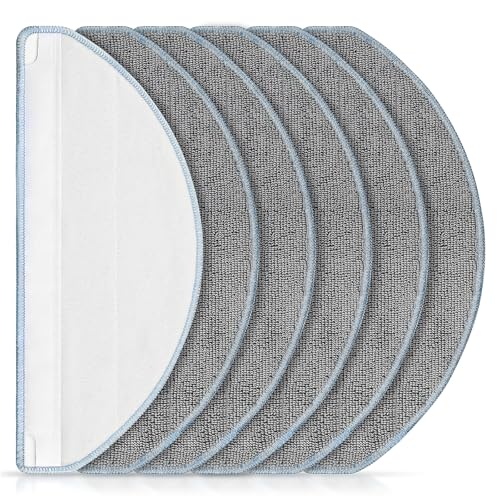
6 Pack Mop Replacement for iRobot Roomba 105 Combo & Essential Robot Vacuum
- Compatible Models: Fits specific iRobot Roomba models
- Effective Stain Removal: High-quality microfiber for deep cleaning
- Works on All Sealed Floors: Suitable for various floor types
As an affiliate, we earn on qualifying purchases.
As an affiliate, we earn on qualifying purchases.
Frequently Asked Questions
Can Changing the Mop Pad Reduce Streaks Effectively?
Yes, changing the mop pad can substantially reduce streaks. Opt for a mop pad made of soft, absorbent material like microfiber, which cleans more evenly. Additionally, choosing a suitable cleaning solution helps prevent residue that causes streaks. Regularly replacing worn or dirty pads ensures a cleaner, streak-free floor, as fresh pads and proper cleaning solutions work together to improve your robot mop’s performance and leave floors spotless.
Do Robot Mop Brands Differ in Streak Prevention Features?
Yes, robot mop brands differ in streak prevention features thanks to varying robot mop technology. When you do a brand comparison, you’ll see some brands incorporate advanced sensors and smarter navigation to reduce streaks, while others may lack these features. Look for models with features like adjustable mopping modes and better water control. Selecting a brand with superior streak prevention technology helps guarantee your floors stay spotless without streaks.
How Often Should I Replace the Mop Pad for Optimal Cleaning?
You should replace your robot mop pad every 2 to 3 months for peak cleaning, depending on your cleaning schedule and mop pad longevity. If you notice reduced cleaning effectiveness or streaks, it’s time for a new pad. Regularly check the pad for dirt buildup or wear, especially if you clean frequently. Replacing it on schedule ensures your floors stay streak-free and your robot works efficiently.
Are There Specific Floor Types More Prone to Streaks?
Imagine your floors whisper secrets—they’re more prone to streaks if they have a delicate floor finish or if moisture levels are too high. Hardwood and laminate floors often show streaks more than tile or vinyl, especially when excess water is used. To keep them gleaming, adjust your robot mop’s settings based on your floor type, ensuring proper moisture levels, and avoid overly wet mops to prevent streaks and damage.
Does the Robot Mop’s Software Update Impact Streak Prevention?
Yes, software updates can impact streak prevention. When your robot mop receives updates, manufacturers often improve cleaning algorithms, which helps reduce streaks. Make sure you keep your device’s software current to benefit from these enhancements. Regular updates optimize how the mop distributes water and cleans, minimizing streaks. You’ll notice a smoother finish and cleaner floors, ensuring your robot performs at its best in streak prevention with each software upgrade.

WoldoClean Wood Floor Cleaner for Robot Mops 25.36 fl.oz – pH-Neutral & Streak-Free, Compatible with Roborock, Dreame, Roomba, Tineco, Hardwood & Laminate Concentrate
- pH-Neutral Formula: Compatible with popular robot mops
- Gentle on Wood: Protects natural grain and prevents damage
- Quick-Dry Formula: Leaves floors streak-free and residue-free
As an affiliate, we earn on qualifying purchases.
As an affiliate, we earn on qualifying purchases.
Conclusion
By following these simple tips, you’ll notice your robot mop leaves fewer streaks, making your floors look spotless. Sometimes, it’s funny how a quick change—like switching to a different cleaning solution—coincides with a streak-free shine. Just stay attentive to your device’s needs, and you’ll enjoy gleaming floors without extra effort. After all, the little adjustments you make today can surprisingly turn into your biggest cleaning wins tomorrow.

Steam & Go Demineralized Water for Steam Mop – Clean Ocean Scent, 128 fl oz (1 gal) | Scented Floor Cleaner Solution, Ready-to-Use, Compatible with Any Steam Cleaner
- Prevents Limescale Buildup: Stops mineral deposits from clogging your steam mop
- PVC-Free Formula: Safe for all sealed hard floors and surfaces
- Ocean Scented: Naturally freshens rooms without harsh chemicals
As an affiliate, we earn on qualifying purchases.
As an affiliate, we earn on qualifying purchases.

Robot Vacuum and Mop Combo, 90-Day Self Emptying, 10000Pa Strong Suction, dToF Laser Navigation Smart Mapping, 160Min Runtime, Anti-Tangle Robotic Vacuum Cleaner for Hard Floor, Pet Hair, Carpet
- Self-Emptying Dustbin: 3.5L capacity for 13 weeks of debris
- Strong Suction Power: 10,000Pa for thorough cleaning
- Multiple Suction Modes: Power, Standard, Quiet modes
As an affiliate, we earn on qualifying purchases.
As an affiliate, we earn on qualifying purchases.