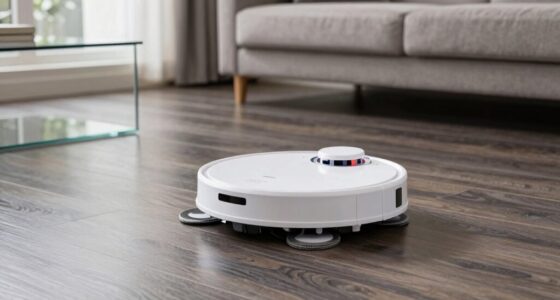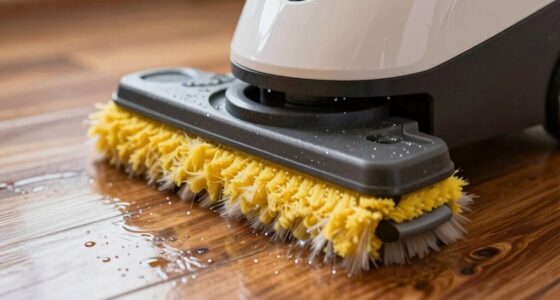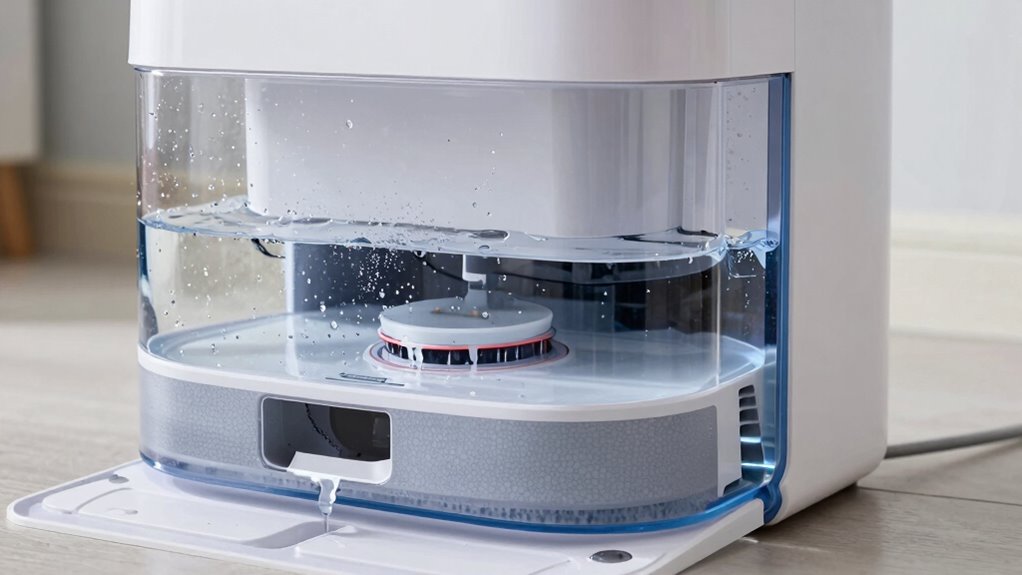
To keep your robot mop’s water tank clean and fresh, empty the tank after each use and rinse it thoroughly with warm water. Use a mild soap or vinegar if recommended, then rinse well to remove any residue. Regularly inspect for mold or buildup, and disinfect weekly with a vinegar or gentle disinfectant solution. Store the device in a dry, ventilated space. To discover more tips on maintaining your device’s performance, keep exploring the best cleaning practices.

Get home appliances delivered free — and shop member deals
- Fast, free delivery on millions of items
- Access to Prime Big Deal Days deals on October 6–7
- Prime Video, Amazon Music and more included
Key Takeaways
- Empty and rinse the water tank after each use to prevent stagnation and buildup.
- Perform weekly deep cleaning with vinegar or disinfectant to eliminate bacteria and mold.
- Regularly inspect and clean nozzles, filters, and seals for blockages or damage.
- Use filtered or distilled water to reduce mineral deposits and prolong tank cleanliness.
- Store the mop in a dry, well-ventilated area to prevent moisture accumulation and bacterial growth.
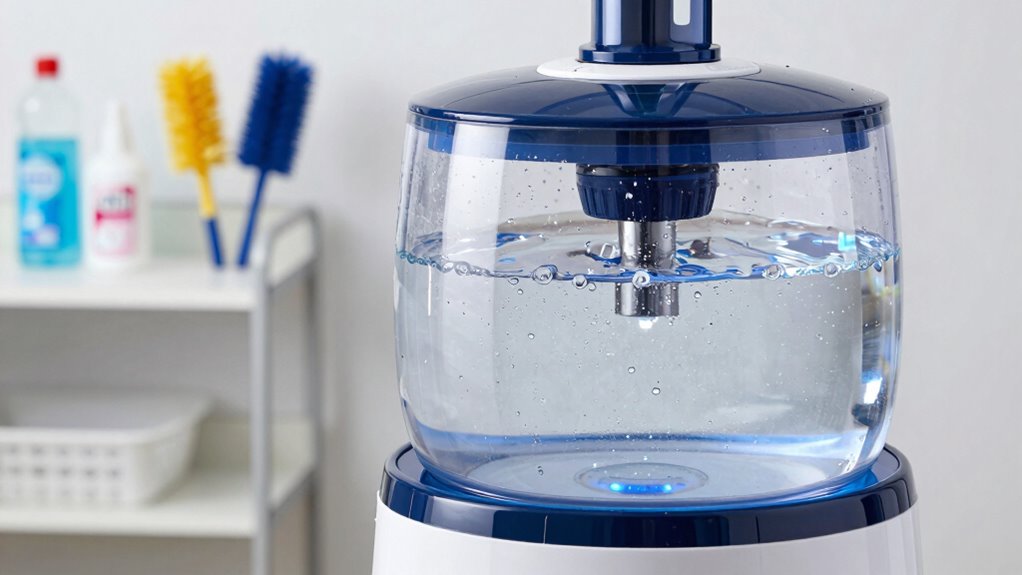
Keeping your robot mop’s water tank clean and fresh is essential for maintaining ideal cleaning performance and ensuring your home stays hygienic. Regular robot mop maintenance isn’t just about the device’s appearance; it directly impacts how well it cleans and how long it lasts. One of the most critical parts to focus on is the water tank, which can quickly become a breeding ground for bacteria, mold, and unpleasant odors if neglected. To keep it in top shape, you need to prioritize water tank sanitation.
Start by emptying the water tank after each use. Leaving water sitting inside can lead to stagnation, mold growth, and foul smells. Rinse the tank thoroughly with warm water, making sure to remove any debris or residue. If your manufacturer recommends, you can add a small amount of mild soap or a vinegar solution to help disinfect and break down mineral deposits. Be sure to rinse thoroughly afterward to remove any soap or vinegar remnants, preventing streaks or buildup that could interfere with cleaning performance.
Empty and rinse the water tank after each use; disinfect weekly with vinegar or mild soap for optimal performance.
When it comes to robot mop maintenance, regular sanitation of the water tank is key. You should aim to deep clean the tank at least once a week—especially if you use the mop frequently or clean areas with high moisture levels. To do this, fill the tank with a mixture of water and white vinegar or a gentle disinfectant, then run the mop over a hard surface to distribute the solution. This process helps eliminate bacteria and mold spores that may linger inside. Afterward, empty the tank and rinse it thoroughly with clean water, ensuring no residue remains.
Another tip is to check the water inlet and outlet regularly for blockages or buildup. Clogged nozzles or filters can prevent proper water flow and reduce cleaning efficiency. Keeping these parts clean ensures your robot mop functions smoothly and that the water tank sanitation process is effective. Additionally, ensure the water tank lid seals tightly to prevent contamination and evaporation, which can lead to stale water and unpleasant odors. Incorporating water quality practices, such as using filtered or distilled water, can also help reduce mineral deposits and extend the lifespan of your device. Regularly inspecting your water tank for signs of buildup or mold can help catch issues early before they become more difficult to address.
A proper cleaning routine can significantly extend the lifespan of your robot mop and improve its overall performance. Proper ventilation and storage practices are equally important to keep the device free from excess moisture and bacteria growth. Using appropriate cleaning solutions can further help prevent bacterial growth and maintain the tank’s cleanliness.
Finally, store your robot mop in a dry, cool place when not in use. This helps prevent mold and bacteria growth, keeping the device ready for optimal performance when you need it. By making water tank sanitation part of your routine maintenance, you extend the life of your robot mop and keep your home cleaner and healthier. Regularly caring for your water tank isn’t complicated; it just requires consistent attention to prevent issues before they start.
As an affiliate, we earn on qualifying purchases.
Frequently Asked Questions
How Often Should I Replace the Water in My Robot Mop?
You should replace the water in your robot mop daily or after each use for effective water filtration and tank maintenance. Regularly empty and refill the tank to prevent buildup of dirt and bacteria. This routine ensures your robot operates efficiently and keeps your floors clean. By maintaining the water tank properly and performing routine tank maintenance, you extend your robot’s lifespan and guarantee it performs at its best every time.
Can I Use Cleaning Solutions in the Water Tank?
You can’t really add cleaning solutions to your robot mop’s water tank, as it affects cleaning frequency and solution compatibility. Stick to plain water for *best* results and to keep your device in top shape. Using the right approach ensures your mop works efficiently without risking damage or residue buildup. It’s best to follow manufacturer recommendations, maintaining a regular cleaning routine to keep your floors fresh and your robot happy.
What Are Signs My Water Tank Needs Cleaning?
You’ll notice your water tank needs cleaning if you see mold, foul odors, or cloudy water, indicating buildup. The tank material, like plastic or stainless steel, influences how often you should clean—plastic tanks may require more frequent attention. Typically, cleaning frequency depends on usage, but a good rule is to rinse and disinfect every one to two weeks to prevent bacteria and residue from accumulating.
Is It Safe to Use Vinegar in the Water Tank?
In the days of yore, folks used vinegar for cleaning, and it’s still safe for your robot mop water tank. Vinegar safety is generally good, but avoid overly concentrated solutions to prevent damage. For cleaning alternatives, consider mild dish soap or specialized robot mop cleaners. Always rinse thoroughly afterward to keep your tank fresh and extend its lifespan. Remember, moderation is key when using vinegar in your cleaning routine.
How Do I Prevent Mold Buildup in the Tank?
To prevent mold buildup in your robot mop water tank, focus on regular tank maintenance. After each use, empty and dry the tank thoroughly to eliminate moisture. Use a mixture of water and a small amount of vinegar to clean the interior weekly. Store the tank in a dry, well-ventilated area. These mold prevention steps will keep your tank clean, fresh, and free of mold, ensuring peak cleaning performance.
As an affiliate, we earn on qualifying purchases.
Conclusion
By regularly rinsing and drying your robot mop’s water tank, you’re inviting a new, sparkling clean to your floors with every use. Imagine each splash of water as a breath of crisp mountain air, washing away lingering dirt and odors. When you keep that tank pristine, your robot’s cleaning power stays strong, and your home feels vibrant and inviting. It’s a simple step that transforms your cleaning routine into a invigorating, revitalizing experience.
As an affiliate, we earn on qualifying purchases.
robot mop nozzle and filter cleaning kit
As an affiliate, we earn on qualifying purchases.
As an affiliate, we earn on qualifying purchases.
Fall yard work Picks
leaf blowers
As an affiliate, we earn on qualifying purchases.