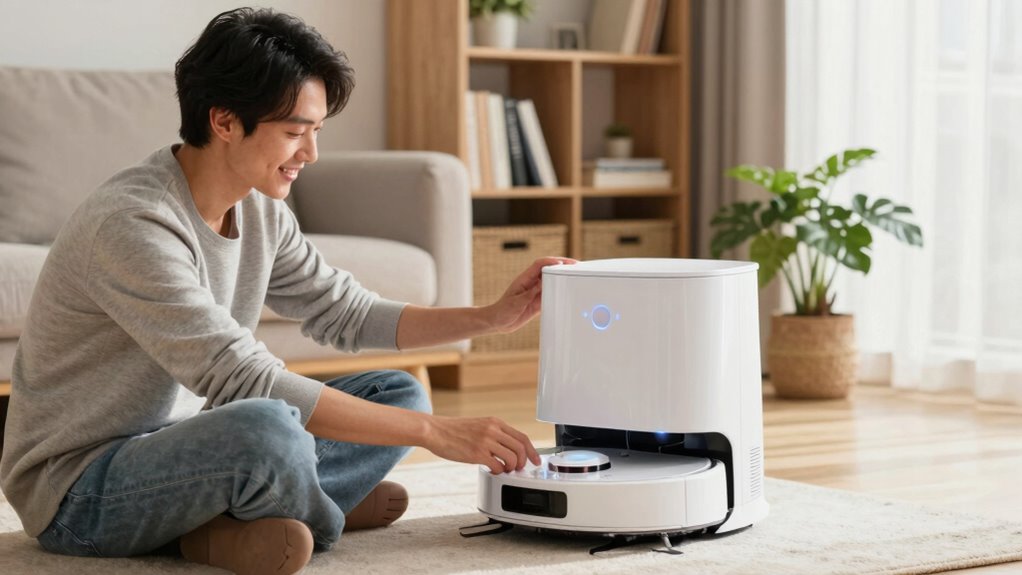
To pick your first household robot, start by identifying what you need it to do—cleaning, chores, or companionship—so you can focus on models that suit those tasks. Consider how the robot fits into your daily routine and lifestyle preferences, including ease of use and maintenance. Check if it integrates with your smart home system and review privacy policies. By weighing these factors, you’ll find a device that balances features, costs, and security—more tips ahead can help you make the best choice.
Key Takeaways
- Identify your primary needs, such as cleaning, chores, or companionship, to select the most suitable robot type.
- Research models’ features, ease of use, and compatibility with your home environment and smart systems.
- Consider maintenance requirements and choose a device that aligns with your willingness to perform upkeep.
- Review privacy policies and privacy controls to ensure data security and protect your household’s information.
- Evaluate long-term costs, support options, and how well the robot integrates into your lifestyle and existing technology.

Are you considering adding a household robot to your daily routine? If so, you’re stepping into a world where convenience and technology meet, but it’s essential to choose wisely. The first thing to think about is how well a robot will fit into your lifestyle. Do you want a device that primarily cleans, helps with chores, or provides companionship? Clear goals will help narrow your options. Once you’ve identified your needs, researching different models becomes vital. Look into their features, ease of use, and compatibility with your home environment.
Assess your needs first—cleaning, chores, or companionship—to choose the right household robot for your lifestyle.
When evaluating a potential robot, don’t overlook the importance of robot maintenance. Some models require regular cleaning of sensors and brushes, software updates, or hardware checks. Consider how much effort you’re willing to put into upkeep. A more advanced robot might need frequent maintenance, which could be inconvenient if you prefer a set-it-and-forget-it device. Conversely, simpler models often demand less attention but might have limited capabilities. Balancing these factors helps guarantee your investment remains functional and reliable over time.
Privacy concerns are another essential aspect when choosing a household robot. Many modern robots come equipped with cameras, microphones, or sensors that collect data to improve functionality or provide tailored services. Before purchasing, scrutinize the manufacturer’s privacy policies. Ask yourself whether you’re comfortable with the amount of data the robot gathers and how it’s stored or shared. Some devices offer extensive privacy controls, allowing you to disable cameras or microphones when not in use, but others might not be as flexible. Protecting your family’s privacy should be a top priority, especially if the robot will be in sensitive areas of your home. Understanding privacy policies can help you make an informed decision. Additionally, researching emerging trends in data security can keep you ahead of potential vulnerabilities. Staying informed about data collection practices helps ensure your privacy expectations are met.
Furthermore, think about how the robot connects to your existing smart home system. Compatibility issues can lead to frustrations or security vulnerabilities. Make sure the device integrates seamlessly with your Wi-Fi and other smart gadgets, and consider changing default passwords to prevent unauthorized access. Additionally, understanding the security implications of connected devices can help safeguard your home network.
Lastly, consider the long-term costs. Beyond the initial purchase price, factor in potential expenses for replacement parts, updates, and maintenance. A good plan for ongoing support can save you headaches later. Choosing your first household robot involves balancing features, ease of maintenance, privacy safeguards, and cost. When you take the time to evaluate these aspects carefully, you’ll find a device that genuinely enhances your daily life without compromising your security or peace of mind.
best household robot for cleaning
As an affiliate, we earn on qualifying purchases.
As an affiliate, we earn on qualifying purchases.
Frequently Asked Questions
How Long Do Household Robots Typically Last Before Needing Replacement?
Household robots typically last around 3 to 7 years before needing replacement, depending on robot durability and usage. If you take good care of your robot, keep it clean, and follow maintenance tips, it can stay functional longer. Frequent replacement might be necessary if the robot experiences constant heavy use or if new technology offers better features. Regularly checking for software updates helps extend its lifespan too.
Can Household Robots Be Customized for Specific Household Needs?
Did you know that over 60% of household robot owners customize their devices? Yes, household robots can be tailored to your specific needs through personalization options and user-specific programming. You can program them for tasks like cleaning schedules, grocery reminders, or even pet care. This customization makes your robot more efficient and aligned with your lifestyle, ensuring it genuinely becomes a helpful, personalized assistant in your home.
What Safety Features Should I Look for in a Household Robot?
You should look for safety sensors that detect obstacles, prevent collisions, and monitor your environment. These sensors guarantee the robot operates safely around children and pets. Also, check for an emergency shutdown feature, which instantly halts the robot if needed. These safety features protect your household, giving you peace of mind while your robot performs tasks. Prioritize these options to ensure a safe and reliable addition to your home.
Are Household Robots Compatible With Smart Home Systems?
Yes, household robots are often compatible with smart home systems through robot integration. You should check the system compatibility before purchasing, ensuring the robot can seamlessly connect with your existing smart devices. Look for models that support popular platforms like Alexa, Google Assistant, or Apple HomeKit. This way, you can control your robot effortlessly via voice commands or smartphone apps, making your home smarter and more efficient.
How Much Maintenance Do Household Robots Require Regularly?
Maintenance for household robots is like tending a garden—you need consistent care for vibrant results. You’ll regularly check battery life, ensuring your robot’s energy doesn’t wane. Cleaning routines involve wiping sensors and emptying dustbins, like clearing debris from a path. Typically, you’ll perform these tasks weekly or bi-weekly, depending on usage. Proper upkeep keeps your robot running smoothly, so it can work tirelessly as your dependable household helper.
As an affiliate, we earn on qualifying purchases.
Conclusion
As you stand on the brink of a new era, choosing your first household robot isn’t just about technology—it’s about transforming your daily life. Think of it as inviting a new family member who adapts to your rhythm, your needs, your world. Remember, the perfect robot isn’t just a gadget; it’s a partner in your journey toward simplicity and efficiency. Embrace the future—you’re not just buying a robot, you’re welcoming a new chapter.
As an affiliate, we earn on qualifying purchases.
smart home compatible household robot
As an affiliate, we earn on qualifying purchases.
As an affiliate, we earn on qualifying purchases.