
TL;DR

Get home appliances delivered free with Prime
- Fast, free delivery on millions of items
- Prime Video, Amazon Music and more included
- Member-only deals all year
An Ideal Home reporter found temperatures behind closed curtains were higher than in the room after sunset, with the largest measured difference—2°C—behind thermal curtains. The report says drawing curtains near dusk may slow heat loss through windows, but it gives no measured energy-bill savings and results depend on the home and window coverings.
An Ideal Home reporter says closing curtains around dusk made areas behind the coverings warmer than the room, with a reported 2°C difference behind thermal curtains. The test illustrates how curtains may help slow heat loss through windows, but it did not measure a reduction in household energy use or bills.
The reporter said they measured temperatures in front of and behind several types of window coverings after sunset. The largest reported difference was 2°C behind thermal curtains and blinds; wooden blinds showed a difference of just under 1°C, while standard curtains and fabric blinds showed about half a degree. These are the reporter’s observations in one home, not results from a controlled study.
Stuart Middleton, So Energy’s consumer energy expert, said windows can be a source of heat loss and that curtains add a layer that can slow heat escaping. He said thick, well-fitting or thermally lined curtains may be particularly effective. The report says the impact varies with the windows, curtains and insulation, and does not provide a specific estimate of energy or money saved.
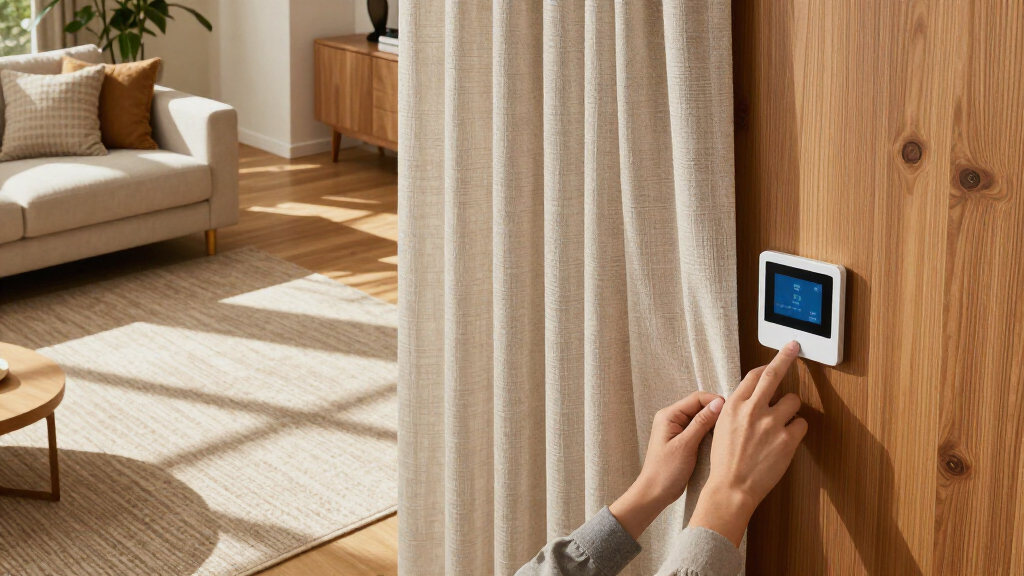
The article recommends closing curtains just before sunset, rather than earlier in the day, so daylight can contribute warmth before the coverings are drawn. Its author described setting a reminder based on the local sunset time. The report also discusses motorised curtain devices that can follow a schedule, but does not establish that buying one would pay for itself through energy savings.
Curtains May Reduce Evening Heat Loss
For households trying to limit heating use, closing curtains is a no-cost habit that may make rooms feel warmer by reducing heat loss near windows. If that comfort means someone can delay turning on heating or avoid extending its use, the habit could affect energy consumption. The report, however, presents that as a possible consequence, not a measured outcome.
The distinction matters: a warmer pocket of air behind a curtain is not itself proof of a lower heating bill. The reported temperature differences came from one home and do not show how much energy a household would save. Homes with different glazing, draughts, heating controls or curtain coverage may see different results.
Products Worth Considering

Sonos Era 100 Wireless Smart Speaker, Black

LEVOIT Vital 200S-P Smart Air Purifier for Large Rooms

Philips Hue Bridge Pro Smart Lighting Hub
As an affiliate, we earn on qualifying purchases.
A Household Test, Not a Bill Study
The Ideal Home article frames the practice against colder weather and rising energy costs, and notes that Martin Lewis has advised people to close curtains at sunset. Its main evidence is the author’s recent experience and temperature checks in their own home, where different window treatments were available for comparison.
The report also cites advice from So Energy’s Stuart Middleton about curtains acting as an extra insulating layer. It describes one automation option, SwitchBot Curtain 3, and quotes Ideal Home digital editor Becky on using its schedule feature. These examples show how curtains can be closed when residents are away; they do not establish independent product performance or verified bill savings.
“Windows can be a source of heat loss, so drawing your curtains creates an additional layer of insulation that helps slow the rate at which heat escapes.”
— Stuart Middleton, So Energy consumer energy expert
No Verified Energy Savings Figure
The report does not say how much energy or money the author saved, or whether heating use was tracked before and after the test. It also does not give details about thermometer accuracy, measurement duration or whether readings were taken under comparable conditions. The 2°C reading is a reported temperature difference in one home, not a forecast for other households.
It remains unclear how much the effect changes with specific window construction, curtain fit, room layout and outdoor conditions. The report’s discussion of energy prices also does not establish that closing curtains changes a household’s tariff or overall bills by a particular amount.
Try the Habit Before Buying Devices
Readers who want to test the approach can note their local sunset time and close curtains shortly beforehand, as the report suggests. Comparing how comfortable a room feels may offer a practical indication for that household, but it should not be treated as a precise measure of energy savings. The source gives no scheduled follow-up test or independent verification of the reported results.
Those considering automated curtain devices can compare their cost and features with their needs; the article does not show that a device is necessary for the basic habit. Any future claim about financial savings would need measured energy use and a clear comparison period to establish the effect.
Key Questions
Does closing curtains early save energy?
It may help slow heat loss through windows and could reduce the need for heating, but the Ideal Home report did not measure energy consumption or bills. Any savings will depend on the home and its window coverings.
When does the report recommend closing curtains?
The report recommends closing them just before sunset, after daylight has had a chance to warm the home.
Which window coverings performed best in the reported test?
The author reported the largest temperature difference, 2°C, behind thermal curtains and blinds. The observation came from one home and is not a general performance guarantee.
How much money can closing curtains save?
The report gives no specific amount. So Energy expert Stuart Middleton said savings depend on the windows, curtains and insulation, making an exact figure difficult to provide.
Source: rss