
TL;DR

Get home appliances delivered free with Prime
- Fast, free delivery on millions of items
- Prime Video, Amazon Music and more included
- Member-only deals all year
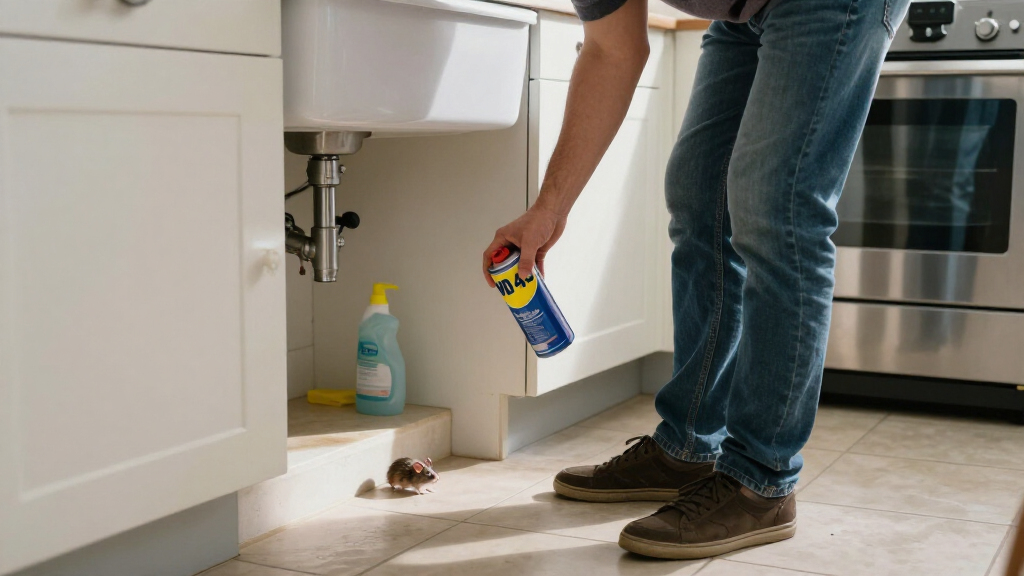
Pest-control experts cited by Hunker say WD-40 has no reliable evidence of repelling mice, and its smell is not a dependable barrier. They recommend sealing entry points, removing food and water sources, and using traps or professional help when there are signs of an infestation.
WD-40 is not a proven way to repel mice, according to pest-control experts quoted in a Hunker report, and spraying it around a home may bring added safety and cleanup concerns. The experts recommend focusing instead on blocking entry points and removing food and water sources, with traps or professional pest control if mice are already inside.
Josh Petro, operations manager at Truly Nolen Pest Control, told Hunker there is no reliable, evidence-based proof that WD-40 discourages mice or other rodents. He said spraying the product around a home’s perimeter is unlikely to create a barrier that keeps mice or rats out. The idea behind the hack appears to be that rodents dislike the lubricant’s strong petroleum and solvent odor, but Petro said that odor fades.
The product also has risks unrelated to whether it deters mice. Petro described WD-40 as a flammable aerosol containing petroleum-based hydrocarbons and warned that its vapors or mists can irritate the respiratory system and may cause dizziness or other nervous-system effects. Exposure can also irritate or dry the skin and eyes. Spraying it on doors and windows may leave a sticky residue that collects dirt and debris.
Petro’s recommended do-it-yourself approach is exclusion and removing attractants, rather than relying on a scent-based repellent. That means sealing gaps, reducing access to food and water, and using traps if mice have entered. Jim Fredericks, a board-certified entomologist and senior vice president of public affairs at the National Pest Management Association, also advised sealing cracks and holes, repairing loose mortar and weather stripping, keeping firewood away from the house, and storing food in sealed containers.
Why a Spray Is Not a Mouse Barrier
The advice matters for homeowners who may be tempted by a quick, inexpensive household fix. Hunker reports that pest-control visits commonly average $100 to $300, but the experts say WD-40 is not a reliable substitute for measures that prevent rodents from entering or deal with mice already inside.
Rodents can contaminate food and damage property. Fredericks told Hunker that they spread more than 35 diseases, including hantavirus, lymphocytic choriomeningitis and plague, and can chew electrical wires, increasing fire risk. These figures and warnings are attributed to Fredericks; the report does not provide independent data or further detail about the estimates.
Using WD-40 as a deterrent could also create a separate hazard because it is flammable and its spray or vapors may cause irritation. A failed deterrent can leave the underlying infestation unaddressed, while spraying around windows and doors adds residue and cleanup. The reported guidance is to focus on access, food and water, then seek qualified help when signs point to a larger problem.
As an affiliate, we earn on qualifying purchases.
How the WD-40 Claim Took Hold
The Hunker report describes WD-40 as a modern pest-control myth that appears to rely on mice’s strong sense of smell and the product’s powerful odor. But a strong smell alone does not establish that a substance repels rodents, and Petro said there is no dependable evidence that WD-40 forms an effective perimeter barrier.
Mice seek warmth, shelter and food inside homes, according to the report. Fredericks said more than 21 million homes are invaded by mice each winter; the report does not specify the underlying data source or measurement method. The practical advice from both specialists is preventive: make the home harder to enter and less attractive, rather than coating the exterior with a lubricant.
Fredericks also advised keeping firewood at least 20 feet from the home and five feet off the ground. If mice are already present, signs cited in the report include droppings, gnaw marks and dark grease marks along floors. The source offers expert guidance, not a controlled test comparing WD-40 with other deterrents.
“The safest and most reliable DIY approach is not really a ‘repellent’. It is exclusion plus removing attractants, with traps only if mice are already inside.”
— Josh Petro, speaking to Hunker
As an affiliate, we earn on qualifying purchases.
What the Report Does Not Establish
The source does not describe a controlled study testing WD-40 against mice, nor does it provide the methods behind the experts’ assessment. Its conclusion is that reliable evidence for repellency is lacking, not that every mouse will react identically to the odor. The report also does not establish how often homeowners use this method or whether it has any short-term effect in a particular setting.
The figures about disease spread, winter home invasions and typical pest-control costs are presented in the report without detailed supporting datasets. They should be understood as figures attributed to the source or its experts, not as independently verified findings within the supplied material. The scale of any specific infestation also cannot be determined from a single sign; the report advises professional assessment when there is substantial evidence of activity or damage.
rodent-proof food storage containers
As an affiliate, we earn on qualifying purchases.
As an affiliate, we earn on qualifying purchases.
Steps for Homes With Mouse Signs
Homeowners can start by sealing cracks and gaps, repairing worn weather stripping or loose mortar, storing food in sealed containers, and limiting access to water and shelter. The report advises keeping firewood away from the house and raised off the ground. These steps reduce opportunities for rodents to enter or find resources, though they are not a guarantee that mice will never appear.
If mice are already inside, traps may be part of a response, but signs such as repeated sightings, droppings, gnawing, food contamination or damage to wiring call for more than a scent-based remedy. Fredericks and Petro recommend contacting a qualified pest-control professional when activity is extensive or creates safety concerns, and Petro cautions against do-it-yourself treatments that require potentially hazardous chemicals.
professional pest control services
As an affiliate, we earn on qualifying purchases.
As an affiliate, we earn on qualifying purchases.
Key Questions
Does WD-40 repel mice?
There is no reliable evidence cited in the Hunker report that WD-40 repels mice. Pest-control expert Josh Petro says spraying it around a home is unlikely to form a barrier.
Why do people think WD-40 might keep mice away?
The proposed explanation is that mice dislike the product’s strong petroleum and solvent odor. Petro told Hunker that the odor fades and that the assumption does not make WD-40 a dependable rodent repellent.
What should I do instead of spraying WD-40?
Experts cited by Hunker recommend sealing entry points and removing food and water sources. Store food in sealed containers, repair gaps and use traps if mice are already inside.
When should I call a pest-control professional?
Contact a qualified professional if you see multiple mice, substantial droppings or damage, or signs of food contamination or chewed wiring. The report also advises professional help when a do-it-yourself treatment would involve potentially hazardous chemicals.
Source: rss
Fall yard work Picks
leaf blowers
As an affiliate, we earn on qualifying purchases.