
TL;DR

Get home appliances delivered free with Prime
- Fast, free delivery on millions of items
- Prime Video, Amazon Music and more included
- Member-only deals all year
A dehumidifier size calculator estimates the daily moisture removal needed, factoring in room volume, dampness, and environment. Matching capacity prevents mold and dampness, saving energy and money.
Size based on moisture load, not just square footage.
Room volume matters more with high ceilings or uneven spaces.
Understand the difference between removal capacity and tank size.
Use the same capacity rating standard—don’t mix old and new tests.
Over-sizing slightly can speed up drying but avoid extreme excess to save energy and reduce noise.
What Exactly Is a Dehumidifier Size Calculator?
A dehumidifier size calculator estimates how much moisture your space generates and how much a unit must remove daily. It’s more than just room size—think of it as a moisture load map. By inputting factors like room volume, dampness, and environment, you get a tailored capacity recommendation. This ensures you pick a unit that keeps humidity in check without wasting energy or space.
30 pint dehumidifier for small rooms
As an affiliate, we earn on qualifying purchases.
As an affiliate, we earn on qualifying purchases.
How to Use a Dehumidifier Size Calculator Step-by-Step
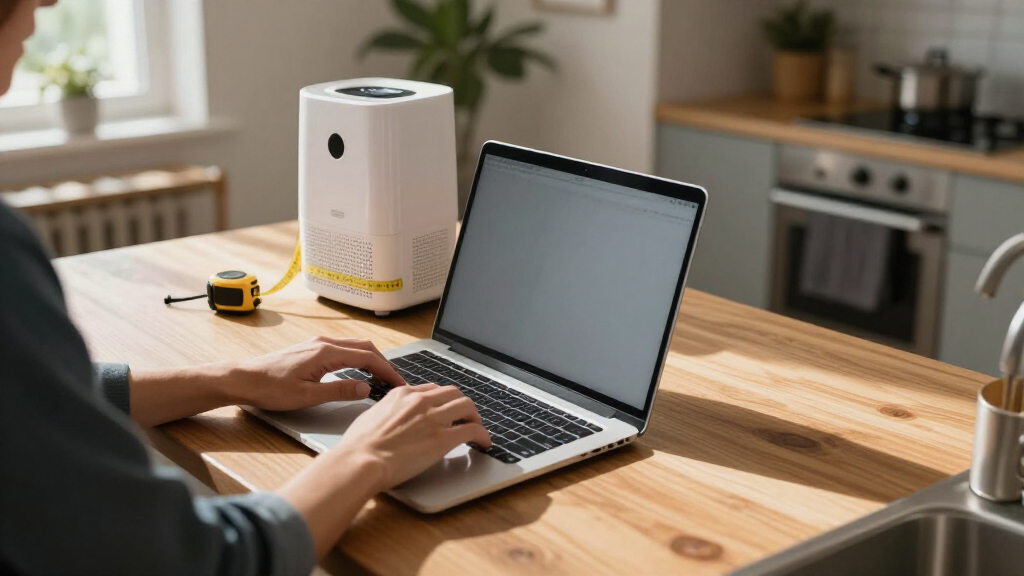
- Calculate your room’s volume: multiply length, width, and ceiling height.
- Assess the dampness level: moderate, damp, very damp, or wet.
- Estimate the moisture load: match your dampness level to a capacity range.
- Add extra capacity for high ceilings or moisture sources like laundry or leaks.
- Round up to the next available size for reliable performance.
- Review the result as a capacity range, not an exact number.
basement dehumidifier 50 pint capacity
As an affiliate, we earn on qualifying purchases.
As an affiliate, we earn on qualifying purchases.
Compare Common Dehumidifier Sizes: Which One Fits Your Space?
| Size | Best For | Room Size | Moisture Level |
|---|---|---|---|
| 30 Pint | Small bedrooms, bathrooms | up to 300 sq ft | Moderate dampness |
| 40 Pint | Medium rooms, basements | 300-500 sq ft | Moderate to damp |
| 50 Pint | Larger basements, open spaces | up to 700 sq ft | Very damp or high moisture sources |
As an affiliate, we earn on qualifying purchases.
Why Size Matters More Than Tank Capacity
Many assume that a bigger tank means a more powerful dehumidifier. Not true. Capacity — measured in pints per day — tells you how much moisture it can remove in a 24-hour period. For instance, a 50-pint unit with a small bucket might need frequent emptying, especially in high humidity environments. Conversely, a smaller-capacity unit with a large tank could run longer without interruption but might struggle to keep up in very damp conditions. Choosing the right size involves balancing removal capacity with practical considerations like drainage options and noise levels. If you select a unit too small, it will run constantly, possibly leading to frustration and inconsistent humidity control. Too large, and it might cycle infrequently, wasting energy. The goal is matching capacity to your space’s moisture production—think of it like choosing the right engine size for a car: too small, and it struggles; too big, and it’s inefficient.
Understanding why size matters so much helps you avoid common pitfalls. An undersized unit will run nonstop, leading to excessive wear and inconsistent humidity levels—think of it as trying to cool a room with a tiny fan when a larger one is needed. Overly large units, while seemingly better, can cycle infrequently, wasting energy and causing temperature swings. The tradeoff lies in finding a balance: selecting a unit that can handle your moisture load comfortably without cycling too often or running constantly. This balance ensures energy efficiency, longevity, and effective moisture control—key factors for maintaining a healthy indoor environment.
high capacity dehumidifier for damp spaces
As an affiliate, we earn on qualifying purchases.
As an affiliate, we earn on qualifying purchases.
What a Size Calculator Can’t Do (But You Should Know)
A calculator can’t see hidden leaks, mold inside walls, or structural issues. For example, if a basement has a hidden water leak behind a wall, the moisture load will be much higher than what calculations suggest. Similarly, if your home has poor insulation allowing outdoor humidity to seep in, the actual moisture problem is more severe. External factors like outdoor humidity swings—say, during rainy seasons—can also impact your needs unexpectedly. If you have a swimming pool indoors or frequent laundry loads, these sources dramatically increase moisture levels, making a standard calculation less reliable. In these cases, professional assessment—using moisture meters, infrared cameras, or detailed inspections—is crucial. Think of the calculator as a helpful starting point, but for complex or severe issues, a thorough evaluation from a specialist ensures you select the right equipment and address root causes effectively.
Recognizing the limitations of a calculator is essential because real-world conditions often vary significantly from theoretical estimates. For example, a calculation might suggest a certain size, but if your basement experiences seasonal flooding or persistent leaks, the actual moisture load can be much higher. Ignoring these factors can lead to undersized units that can’t keep up, resulting in persistent dampness and mold. Conversely, overestimating needs can lead to unnecessary expense and energy use. The implication is that while a calculator provides a good baseline, it should be supplemented with on-site inspections or professional advice when dealing with complex moisture issues. This comprehensive approach ensures you select a dehumidifier that truly meets your needs, preventing long-term problems and costly replacements.
Quick Tips for Accurate Sizing and Best Results
- Always measure room height—ceilings over 8 feet mean more air to dehumidify, which can influence capacity needs.
- Use a hygrometer to check actual humidity, not just guess. For example, a room that feels damp might have a humidity level of 60%, requiring a higher-capacity unit.
- Round up your capacity estimate—better to have a little extra than too little. For instance, if calculations suggest 45 pints, opt for a 50-pint model to ensure consistent performance.
- Address moisture sources—fix leaks, improve ventilation, and seal cracks to reduce the load on your dehumidifier.
- Place your dehumidifier in the center of the space for even coverage, especially in larger rooms where airflow can be uneven.
Frequently Asked Questions
How do I know what size dehumidifier I need?
Start with your room’s volume and dampness level. Use a calculator to estimate capacity, then choose a unit rated slightly higher. Factors like moisture sources or high ceilings can increase your needs.Is a larger dehumidifier always better?
Not necessarily. Oversized units cycle less, but they can be noisier and less energy-efficient. Aim for a size that matches your load—slightly above if unsure. Proper airflow and placement matter too.Can I use a 50-pint dehumidifier in a small bedroom?
Yes, but it might be more capacity than needed. Use a hygrometer to set the humidity level, and consider a smaller unit if noise or space is a concern. Properly sized units keep humidity in check without excess energy use.Do I need professional help to size my dehumidifier?
For most homes, a good calculator and some measurements are enough. But if you have persistent dampness, flooding, or mold issues, a professional assessment can provide more precise sizing and solutions.How often should I empty the dehumidifier bucket?
It depends on capacity and humidity level. In very damp environments, expect multiple emptyings daily. Using continuous drainage with a hose or pump can simplify operation.Conclusion
A well-sized dehumidifier makes moisture control effortless. Remember: match capacity to your actual moisture load, not just room size. When in doubt, go a size up—your home’s health depends on it. Think of your dehumidifier as the silent guardian against mold, mustiness, and dampness.Dehumidifier Size Calculator
Estimate daily pint capacity from room size and how damp the space feels.
Your room likely starts in the 20 to 30 pint range. Compare compact dehumidifiers for smaller spaces.
See compact dehumidifier matchesYour room points to a 35 to 40 pint unit. Compare mid-size dehumidifiers and check drainage options.
See mid-size dehumidifier matchesYour conditions call for a 50 pint or larger unit. Compare larger dehumidifiers and confirm room moisture sources.
See larger dehumidifier matchesEstimate only. Check product specs, local rates, and site conditions before buying or planning around these numbers.
Halloween Picks
halloween
As an affiliate, we earn on qualifying purchases.