Across the globe, countries are quickly adopting home cleaning robots, driven by technological progress and rising demand. North America and Europe focus on integrating these devices into smart home systems, enhancing convenience and efficiency. Japan and South Korea’s emphasis on cleanliness and tech fosters high adoption, with advanced features like obstacle avoidance. Meanwhile, China’s market grows through affordable, multi-functional models, and emerging regions begin embracing sophisticated options. If you want to understand how these trends unfold worldwide, there’s more to explore.

Get home appliances delivered free with Prime
- Fast, free delivery on millions of items
- Prime Video, Amazon Music and more included
- Member-only deals all year
Key Takeaways
- Consumer demand for cleaning robots is rapidly expanding worldwide, driven by technological advancements and lifestyle adaptations.
- North America and Europe focus on integrating robots into smart home ecosystems with AI, sensors, and voice control.
- Japan and South Korea lead in adoption due to cultural emphasis on cleanliness and advanced technological integration.
- China experiences significant growth by offering affordable, multifunctional robots with improved navigation and features.
- Emerging markets are transitioning from basic to sophisticated, app-controlled, multifunctional cleaning robots fueled by economic growth.

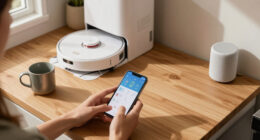
As technology advances, home cleaning robots are becoming more popular worldwide, transforming how people maintain their living spaces. This surge is driven by the rapid robot market growth, which reflects increasing consumer demand and the expanding capabilities of these devices. Countries across the globe are adopting and adapting these innovations to suit their unique lifestyles and technological environments. You’ll notice that in regions like North America and Europe, the focus often leans toward integrating smart home ecosystems, making cleaning robots part of a broader network of connected devices. Here, technological innovations are pushing boundaries, with robots now equipped with advanced sensors, AI-driven mapping, and voice control features that enhance user convenience and efficiency. Additionally, the ongoing development of connected home technology is further facilitating seamless integration of cleaning robots into modern smart homes. In Japan and South Korea, the embrace of home cleaning robots is heavily influenced by cultural preferences for cleanliness and technology. These countries are quick to adopt the latest innovations, leveraging their robust tech industries to improve robot functionalities. You might find that robots in these markets are highly sophisticated, capable of multi-surface cleaning and obstacle avoidance, thanks to continuous technological advancements. The robot market growth in these regions is also bolstered by consumer trust in robotics and a willingness to invest in cutting-edge solutions to maintain spotless homes with minimal effort. Meanwhile, in China, the market is experiencing rapid expansion fueled by a large population enthusiastic for affordable, feature-rich options. Here, companies are pushing technological innovations to make robots more accessible and versatile. As a result, you’ll see a variety of models that combine vacuuming, mopping, and even air purification, often at competitive prices. The Chinese market’s aggressive growth is a reflection of how technological progress—such as improved battery life, smarter navigation, and better user interfaces—is making home cleaning robots more practical and appealing to a broad audience. In emerging markets across Southeast Asia, Africa, and Latin America, the trend is shifting from basic models to more advanced, multifunctional robots. As these regions experience economic growth and increased internet connectivity, the adoption of innovative cleaning solutions accelerates. You’ll find that technological innovations, like app control and automated scheduling, are making it easier for households to incorporate these robots into daily routines. The ongoing global trend of technological innovation ensures that, regardless of where you are, the evolution of home cleaning robots is making domestic chores more manageable, efficient, and even enjoyable, reinforcing their position as essential household tools worldwide.
As an affiliate, we earn on qualifying purchases.
Frequently Asked Questions
How Do Cultural Differences Influence Robot Cleaning Preferences?
You’ll find cultural acceptance and cleaning rituals shape how you prefer robot cleaning devices. In some cultures, where manual cleaning is traditional, you might hesitate to trust robots, while others embrace them for convenience. Your cleaning rituals influence whether you see robots as helpful or intrusive. If your culture values high-tech solutions, you’re more likely to adopt robot cleaners quickly. Ultimately, your attitude toward these devices reflects your cultural background and daily habits.
What Are the Environmental Impacts of Widespread Robot Vacuum Adoption?
When you adopt robot vacuums widely, you help improve energy efficiency by using less power compared to traditional cleaners. However, you also need to take into account waste management, as discarded robots contribute to electronic waste. To minimize environmental impacts, opt for energy-efficient models and recycle old devices properly. Your choices can promote sustainability, reducing the ecological footprint of cleaning technology while maintaining a clean home.
How Do Cost Variations Affect Accessibility Across Countries?
Cost variations substantially impact your ability to access home cleaning robots worldwide. Pricing disparities mean that in some countries, these devices remain expensive, creating affordability challenges for many households. You might find that higher prices limit options for budget-conscious consumers, while lower costs in other regions make these robots more accessible. Ultimately, these differences influence how broadly people can incorporate cleaning robots into their daily routines, affecting overall adoption rates.
What Are Privacy Concerns Related to Home Cleaning Robots?
You might worry about privacy concerns with home cleaning robots, especially regarding data security and user privacy. These devices often collect images, room layouts, and usage patterns, which could be vulnerable if not properly safeguarded. It’s essential to review privacy policies and ensure your robot has strong security measures. By doing so, you can enjoy the convenience without compromising your personal information or facing potential data breaches.
How Do Local Regulations Shape Robot Deployment Strategies?
You should understand that local regulations considerably influence your robot deployment strategies. Regulatory compliance and legal frameworks dictate where and how you can use home cleaning robots, ensuring safety and privacy standards are met. By staying informed about these rules, you can avoid fines or restrictions, adapt your deployment plans accordingly, and ensure your robots operate smoothly within legal boundaries. This proactive approach helps maintain trust and operational efficiency.
robot vacuum cleaner with obstacle avoidance
As an affiliate, we earn on qualifying purchases.
As an affiliate, we earn on qualifying purchases.
Conclusion
As you watch the world embrace home cleaning robots, it’s like witnessing a global symphony of innovation and convenience. Countries are weaving their unique notes into a harmonious future where chores become effortless dance moves. Embracing these smart helpers means stepping into a new era — a future where technology sweeps away your worries and leaves you more time to enjoy what truly matters. The world’s cleaning revolution is just getting started, and you’re right in the heart of it.
multi-function home cleaning robot
As an affiliate, we earn on qualifying purchases.
As an affiliate, we earn on qualifying purchases.
As an affiliate, we earn on qualifying purchases.
Fall Picks
fall essentials
As an affiliate, we earn on qualifying purchases.