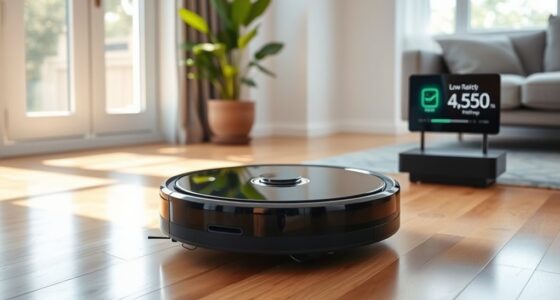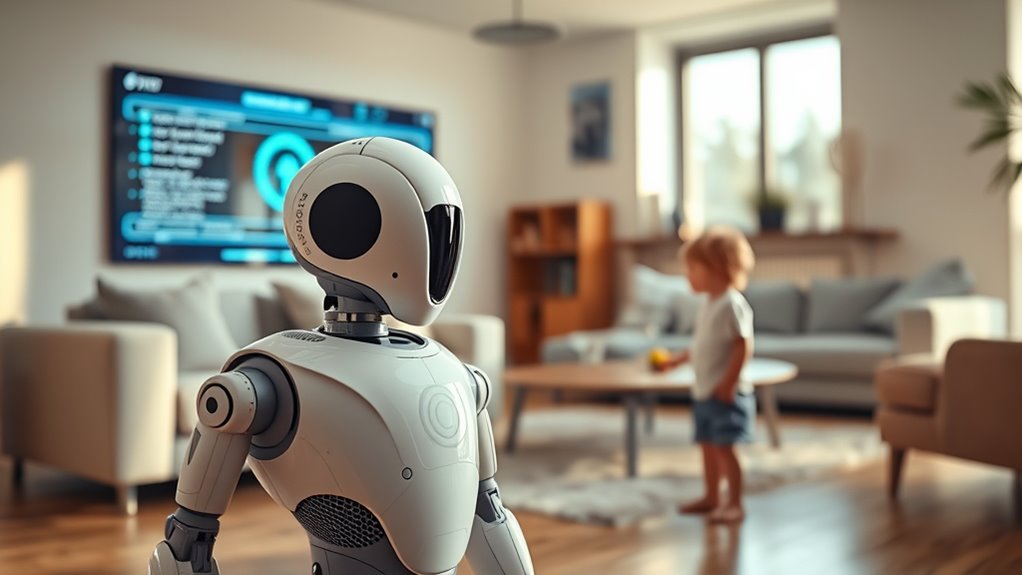
Home robots collect data like your voice commands, facial recognition info, and environmental details such as temperature and obstacles to provide personalized help and seamless interactions. Many devices offer privacy controls, local or cloud storage options, and options to limit data sharing with third parties. While concerns about privacy exist, understanding how your data is used and managed can ease fears. Exploring more will reveal practical ways to protect your personal information.
Key Takeaways
- Home robots collect voice commands, facial recognition data, and environmental info to improve interaction and safety features.
- Privacy settings allow users to control data collection, storage location, and sharing preferences, including local or cloud storage options.
- Data shared with third parties poses privacy risks like targeted advertising or breaches; transparency is essential.
- Security measures such as encryption, strong authentication, and regular updates protect collected data from unauthorized access.
- Future privacy practices focus on data minimization, local processing, and transparent controls to build user trust.
Types of Data Collected by Home Robots

Home robots collect a wide range of data to perform their functions effectively. When you give a voice command, the robot records and processes your speech to understand and respond accurately. This data helps improve interaction, making commands more natural over time. Facial recognition is another key data type; the robot scans your face to identify family members or authorized users. This allows personalized responses and access control. The robot’s sensors also gather environmental data, like room temperature, humidity, and obstacles, to navigate safely and maintain comfort. All this data helps the robot operate smoothly, but it also raises questions about privacy. Understanding what data is collected is the first step in addressing your concerns about home robot privacy.
How Home Robots Use Your Personal Information

The personal information collected by home robots is often used to personalize your experience and improve device functionality. Voice recognition allows your robot to understand commands more accurately, enabling seamless interactions. Facial mapping helps the device identify you and recognize family members, making responses more relevant and tailored. This data can enhance features like customized routines or safety alerts. For example, the robot might greet you by name or adjust settings based on who is present. However, understanding how your data is used can help you decide what information to share. While these features aim to make your smart home more efficient, it’s important to stay informed about how your personal data is processed and protected.
Privacy Settings and Customization Options
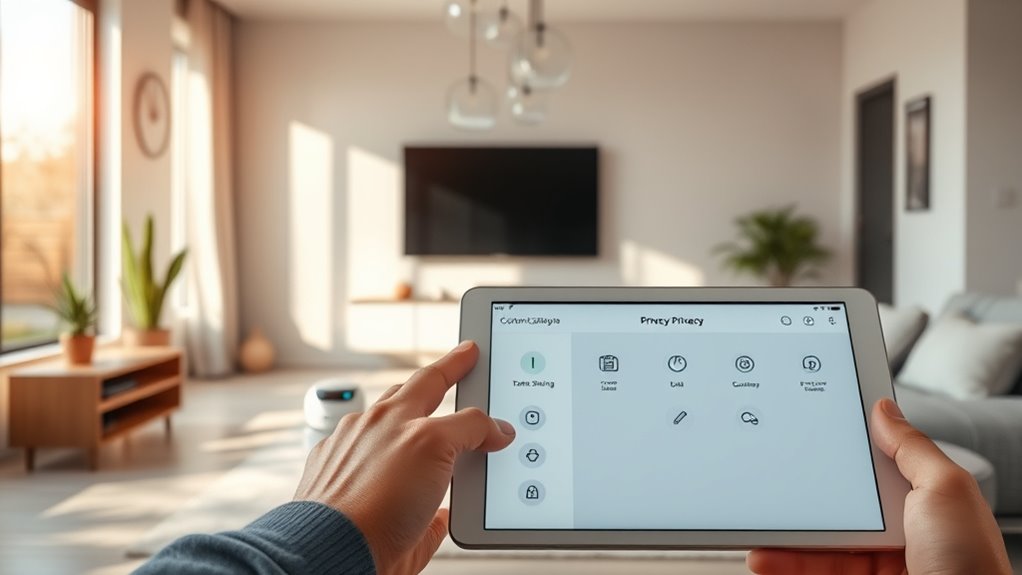
To protect your privacy while using home robots, it’s essential to understand and customize their privacy settings. Most devices offer options to control what data is collected, stored, and shared. You can typically adjust privacy settings through a dedicated app or device interface, allowing you to limit access to sensitive information. Customization options often include disabling certain features, turning off microphones or cameras when not in use, and setting preferences for data sharing. Taking these steps helps ensure that your personal information stays secure and that you maintain control over your privacy. Regularly reviewing and updating these settings keeps your home robot aligned with your comfort level and privacy expectations. Don’t overlook these options—they’re key to safeguarding your personal space.
Data Storage: Cloud vs. Local

Choosing between cloud and local data storage impacts your privacy and how much control you have over your information. Cloud storage often offers convenience and automatic updates, but it relies on external servers, making data encryption essential to protect your privacy. Local storage keeps data on your device, giving you direct control and reducing exposure risks. When selecting a home robot, consider how it handles user consent—does it clearly explain what data is stored and how?
| Storage Type | Pros | Cons |
|---|---|---|
| Cloud | Easy access, updates | Privacy concerns, reliance on internet |
| Local | Full control, privacy | Limited access, manual updates |
Sharing Data With Third Parties
Sharing data with third parties can considerably impact your privacy, especially if you’re unaware of who has access or how your information is used. When third parties access your data, it increases the risk of a data breach, exposing sensitive information. You should be cautious about what data you share and understand how companies handle it. Be aware that third party access might lead to targeted advertising or even misuse of your information. Companies often share data with vendors, marketing firms, or partners, which can compromise your privacy. Always review privacy policies to see who has access. To protect yourself, ask about data sharing practices and limit the information you provide. Transparency helps prevent unwanted data breaches and keeps your data secure.
Security Measures to Protect Your Data

Protecting your data from unauthorized access requires implementing strong security measures. Encryption protocols are vital, as they encode your data during transmission and storage, making it unreadable to hackers. Make certain your home robot employs up-to-date encryption standards like AES or TLS. User authentication also plays a critical role; it verifies your identity before granting access to sensitive information. Use strong, unique passwords and enable two-factor authentication whenever possible. Regular software updates are essential, as they patch known security vulnerabilities. Additionally, review privacy settings and restrict data sharing to trusted devices and networks. By combining these security measures, you create a robust barrier that shields your data from unauthorized access, giving you greater peace of mind about your home robot’s privacy protections.
Common Privacy Concerns and Misconceptions

Many people believe that home robots constantly spy on them, but that’s often a myth. You might think you have no control over your privacy, yet most devices offer settings to manage data sharing. Understanding these facts helps you make informed decisions about your privacy and device use.
Data Collection Myths
Despite common fears, most home robots don’t secretly record everything you do. Many myths suggest they’re constantly watching, but that’s not true. These devices are designed to have a robot personality and emotional intelligence, focusing on helpful interactions rather than invasive data collection. Here are some misconceptions to clear up:
- They record every word you say, even when not prompted
- They store all your private conversations
- They constantly watch your every move
- They share your data with third parties without permission
- They use emotional intelligence solely to manipulate you
In reality, most home robots only collect data necessary for basic functions and improving user experience, not for spying on you. Their robot personality aims to foster trust, not invade privacy.
Privacy Control Options
To address common privacy concerns, most home robots offer a variety of control options that put you in charge of your data. You can customize voice commands to limit what the robot listens to, ensuring only specific phrases are active. Additionally, consent management features let you easily grant or revoke permissions for data collection, giving you control over what’s shared. These options help dispel misconceptions by making privacy transparency straightforward. You can review and adjust settings anytime, ensuring your comfort and trust. By actively managing voice command preferences and consent, you maintain oversight of your information, reducing fears about unwarranted data collection. These privacy control options empower you to enjoy your home robot’s benefits without sacrificing your privacy.
Tips for Maintaining Privacy With Home Robots

To protect your privacy, start by adjusting your home robot’s privacy settings to limit data collection. Make sure you keep the software updated regularly to patch security vulnerabilities. Additionally, secure your network connection with strong passwords and encryption to prevent unauthorized access.
Adjust Privacy Settings
Adjusting your privacy settings on home robots is a crucial step in protecting your personal information. Start by reviewing the privacy policy to understand what data is collected and how it’s used. Next, customize voice command settings to limit what the robot listens to and shares. Consider disabling or restricting features like camera access or location tracking when not needed. You can often adjust sensitivity levels to prevent accidental recordings. Also, check if the device allows you to delete stored data regularly. Finally, explore options for controlling data sharing with third parties. By actively managing these settings, you reduce privacy risks and maintain greater control over your information. Remember, staying informed and customizing voice command settings is key to safeguarding your privacy.
Regular Software Updates
Keeping your home robot’s software up to date is a key step in protecting your privacy. Regular updates often include security patches that prevent unauthorized access to voice commands and user profiles, reducing the risk of data breaches. Manufacturers frequently release updates to fix vulnerabilities and improve privacy features, so ignoring these can leave your device exposed. When you update your robot’s software, you ensure it processes voice commands securely and protects sensitive information stored in user profiles. Staying current also helps prevent hackers from exploiting outdated software. Make it a habit to check for updates regularly, and enable automatic updates if available. This simple step keeps your home robot more secure, giving you peace of mind about your privacy.
Secure Network Connections
Since home robots rely on your Wi-Fi network to function, securing that connection is essential for maintaining your privacy. To protect your data, guarantee your network uses encrypted communication, making it harder for outsiders to intercept information. Enable strong network authentication methods, such as WPA3, to prevent unauthorized access. Regularly change your Wi-Fi password and avoid default credentials. Use a separate network or guest Wi-Fi for your robots, isolating them from your main devices. Keep your router firmware updated to patch security vulnerabilities. These steps help secure your home robot’s connection, reducing the risk of eavesdropping or data breaches. Prioritizing encrypted communication and robust network authentication keeps your privacy intact while enjoying the convenience of your home robot.
Regulatory Standards and Industry Practices
Regulatory standards and industry practices are essential in shaping how home robots handle privacy concerns. They establish clear guidelines for industry compliance, ensuring companies prioritize user privacy and data security. Legal regulations set the boundaries for what data can be collected, stored, and shared, holding manufacturers accountable for transparent practices. Many jurisdictions require companies to provide clear privacy policies and obtain user consent before gathering sensitive information. Industry standards also promote best practices, such as data encryption and regular security audits, to prevent breaches. By adhering to these regulations and practices, manufacturers build trust with users and demonstrate their commitment to privacy. Ultimately, strong regulatory frameworks help balance technological innovation with the protection of personal data in home robotics.
Future Trends in Privacy and Home Robotics

As home robotics continue to evolve, future trends are likely to prioritize enhanced privacy features through advanced technology. You can expect smarter robot learning systems that adapt without compromising your privacy. These systems will use anonymized data to improve functionality while protecting your identity. User profiling will become more secure, with increased focus on data minimization and local processing to prevent unnecessary data sharing. Additionally, privacy-preserving algorithms will be integrated into robots, allowing them to learn from interactions without exposing sensitive information. Enhanced encryption methods will safeguard all data transmissions. ultimately, manufacturers will offer more transparent controls, giving you better oversight over what data your home robot collects and how it’s used. These trends aim to balance innovation with your privacy rights.
Frequently Asked Questions
How Can I Verify a Home Robot’s Data Collection Practices?
You can verify a home robot’s data collection practices by checking its privacy settings and ensuring they allow you to control what information is shared. Look for clear information on data encryption to confirm your data is protected during transmission. Contact the manufacturer for transparency about their data policies, and review user reviews or privacy reports to see if they follow best practices. This helps you stay informed and safeguard your privacy.
Are There Legal Restrictions on What Data Home Robots Can Collect?
Imagine a fortress with invisible walls—yes, legal boundaries protect your privacy. Laws like GDPR and CCPA set strict rules on what data home robots can collect, ensuring data compliance. These regulations limit collection to necessary information, require transparent practices, and give you control over your data. So, rest assured, there are legal restrictions in place to safeguard your privacy and enforce responsible data handling by home robot manufacturers.
Can I Completely Disable Data Collection on My Home Robot?
Yes, you can often disable data collection on your home robot by adjusting its privacy settings. Many devices allow you to turn off features like voice recording or data sharing. Keep in mind, firmware updates may reset these settings, so regularly review them. Staying proactive helps you maintain control over your privacy and ensures the robot functions as you prefer while minimizing data collection.
What Rights Do I Have Over the Data Collected by My Home Robot?
You have the right to comprehend your robot’s data ownership and how your information is utilized. Review the privacy policy thoroughly to know what data is collected and how it’s stored or shared. If you’re concerned, you can often request access, correction, or deletion of your data. Stay informed and proactive to ensure your privacy rights are protected and that you’re comfortable with your home robot’s data practices.
How Do I Report Privacy Breaches Related to Home Robots?
Think of your privacy as a delicate tapestry; when breached, you need to act swiftly. To report privacy breaches, consult your home robot’s privacy policy for the proper channels, like customer support or data protection authorities. Clearly describe the incident, emphasizing your rights and the importance of user consent. Don’t hesitate to follow up, ensuring your concerns are addressed, and your privacy rights are protected.
Conclusion
Think of your home robot as a friendly lighthouse—guiding you safely through the fog of privacy concerns. By understanding what data it collects, adjusting settings, and staying informed about industry standards, you’re the captain steering your ship. With clear boundaries and vigilance, you can enjoy the bright beacon of convenience without fear. Ultimately, it’s your lighthouse—illuminating your home while safeguarding your privacy’s safe harbor.