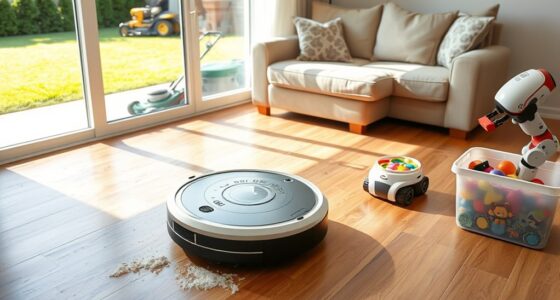
Robotic cleaners have advanced quickly, handling routine tasks efficiently and reducing your chores. However, they lack the emotional understanding, personal touch, and adaptability that human housekeepers provide. While robots are cost-effective and improve household convenience, they can’t replace the emotional support, cultural sensitivity, and personal care humans offer. If you’d like to explore how the future may blend these roles seamlessly, there’s plenty more to contemplate.
Key Takeaways
- Robotic cleaners excel at routine, quick tasks but lack emotional intelligence and personalized care provided by human housekeepers.
- Advances in sensors and navigation improve robot efficiency, but they still struggle with deep cleaning and cluttered spaces.
- Robots are cost-effective and accessible, reducing household labor but may lead to job displacement for human cleaners.
- Human housekeepers offer emotional support, cultural sensitivity, and adaptability, which robots cannot replicate.
- Combining robots for routine chores with human presence for personalized care creates an optimal, balanced household environment.
The Evolution of Robotic Cleaning Devices
The development of robotic cleaning devices has progressed rapidly over the past few decades, transforming the way we maintain cleanliness. Early models faced significant integration challenges, as they struggled to adapt to diverse home layouts and obstacles. Over time, advancements in sensors and navigation systems helped robots better understand their environment, making them more effective. However, you still need to consider their maintenance requirements, which can be more involved than traditional cleaning tools. Regularly cleaning sensors, replacing worn parts, and updating software are necessary to keep these devices functioning at their best. Despite these challenges, continuous innovation has made robotic cleaners more reliable and user-friendly. As a result, they’re steadily becoming a practical addition to your home, easing your cleaning routine without replacing human oversight entirely.
Capabilities and Limitations of Modern Robotic Cleaners

Modern robotic cleaners are great at covering large areas quickly, but their cleaning scope can be limited by their design and sensors. You’ll notice they navigate efficiently in open spaces but struggle with complex obstacles. Understanding these strengths and weaknesses helps you decide when they’re the right tool for the job.
Cleaning Efficiency and Scope
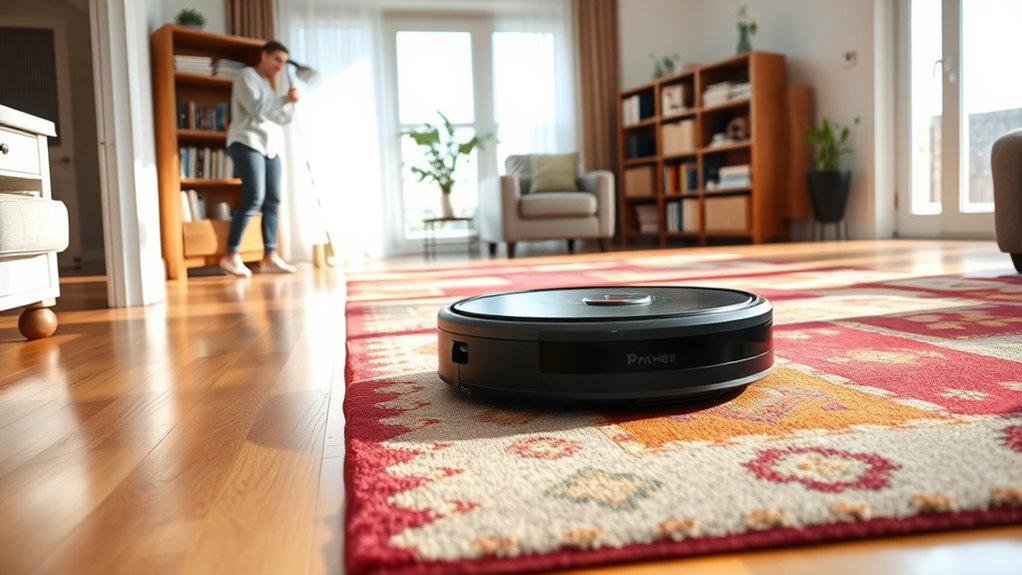
Robotic cleaners have revolutionized the way we approach household chores by offering automated solutions that can operate with minimal supervision. When it comes to cleaning efficiency, they excel in cleaning speed, quickly covering designated areas without fatigue. Most models are designed to handle specific tasks like vacuuming or mopping, which allows for consistent performance. However, their area coverage is often limited by battery life and cleaning patterns, meaning they might miss spots or need multiple passes for thoroughness. While robotic cleaners can handle regular maintenance, they still fall short in deep cleaning or tackling cluttered spaces. Overall, they provide a convenient, effective option for routine chores but currently lack the scope to replace comprehensive human cleaning efforts.
Navigation and Obstacle Handling
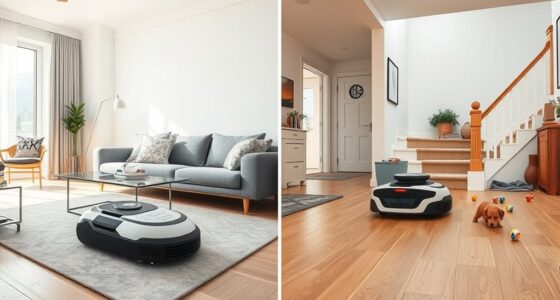
While robotic cleaners have advanced considerably in navigation technology, their ability to maneuver through complex environments remains limited. Navigation challenges often arise in cluttered spaces or irregular layouts, causing the bots to miss areas or get stuck. Their obstacle detection systems help identify objects in real time, but they can still struggle with small or transparent items, leading to unintended collisions or missed spots. Sharp corners, uneven surfaces, and cords can trip up these devices, reducing efficiency. Despite improvements like mapping and sensor integration, robots can’t yet fully adapt to dynamic changes or unexpected obstacles like moving pets or clutter. As a result, their navigation and obstacle handling remain a significant limitation compared to human cleaners, who can easily navigate complex environments and respond flexibly to obstacles.
The Role of Human Intuition and Personal Touch
Human cleaners bring a level of intuition and personal touch that robots cannot replicate. Your emotional intelligence allows you to read the room, sense when someone feels uneasy, or needs reassurance. Cultural sensitivity guides you to respect traditions and preferences, creating a more personalized experience. Robots lack this depth, making human interaction more meaningful.
| Human Touch | Robotic Efficiency |
|---|---|
| Understands emotional cues | Operates based on programming |
| Adapts to individual needs | Follows fixed protocols |
| Builds trust and comfort | Maintains consistent performance |
This personal touch fosters trust and comfort, something no machine can fully replace. Your empathy and cultural awareness create an environment where cleanliness meets genuine care.
Cost-Effectiveness and Accessibility of Automated Solutions
Automated cleaning solutions are becoming increasingly appealing because of their affordability and widespread availability. You’ll find that pricing strategies vary, making it easier to choose options that fit your budget. Many robotic cleaners are now offered at competitive prices, often lower than hiring human cleaners over time. Market accessibility has also improved, with devices available through online retailers and in-store outlets worldwide. This broad availability means you don’t need specialized skills to purchase and set up a robotic cleaner. Plus, ongoing advancements tend to reduce costs further, enhancing affordability for a wider range of households. As a result, automated solutions are not only cost-effective but also more accessible, making them an attractive alternative for those seeking efficient cleaning options without breaking the bank.
Impact on Employment and Household Dynamics
The rise of robotic cleaners is reshaping household routines and employment patterns in significant ways. You might notice fewer cleaning jobs available locally, leading to job displacement for some workers. Meanwhile, household dynamics evolve as families rely more on technology, changing daily interactions and responsibilities. To understand the impact, consider this:
| Effect | Description | Example |
|---|---|---|
| Job Displacement | Fewer cleaning roles for human workers | Reduced housekeeper positions |
| Household Routines | Increased automation influences daily chores | Less time spent on cleaning |
| Family Dynamics | Shifts in responsibilities and interactions | More family time or role reassignments |
These changes challenge traditional employment and alter the way households function.
Technological Advances Shaping the Future of Cleaning
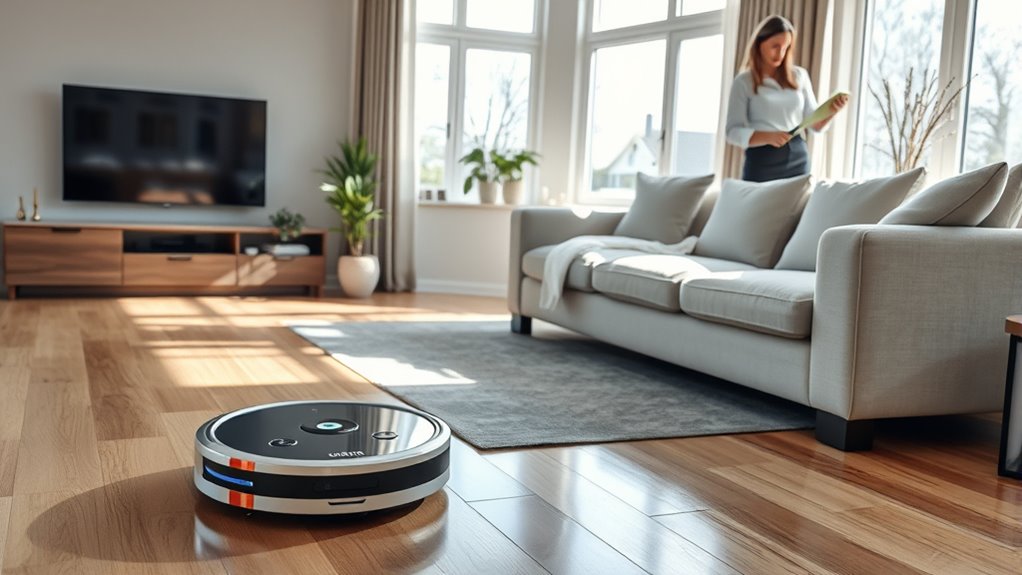
Advancements in technology are rapidly transforming how cleaning tasks are performed, making appliances smarter and more efficient. These innovations include sensors, AI, and machine learning, which enable robotic cleaners to navigate spaces and adapt to different environments. As robots become more integrated into households, robotic ethics come into play—questions about privacy, safety, and decision-making arise. While these devices excel at routine tasks, they lack human empathy, which is vital for understanding emotional needs or handling delicate situations. Future cleaning tech may continue to improve functionality, but it won’t replace the compassionate touch humans provide. Instead, these advances will likely complement human efforts, creating a more seamless, efficient cleaning experience that respects ethical considerations while recognizing the limits of robotics in empathetic interactions.
User Experience: Satisfaction and Trust in Robots
As robotic cleaners become more common in households, how satisfied you feel and whether you trust these devices greatly influence their adoption. Users often develop emotional attachment to their robots, especially when the device personalizes experiences through user customization. Trust builds when robots consistently perform well, and satisfaction increases with smooth interactions. To boost user experience, consider these points:
- Regular updates improve performance and reliability
- Customizable settings allow tailored cleaning routines
- Clear feedback fosters transparency and trust
- Positive interactions enhance emotional attachment
When you can personalize your robot’s functions and feel confident in its reliability, satisfaction rises. Trust and emotional attachment are key to integrating robotic cleaners into everyday life, making them feel less like tools and more like helpful companions.
Ethical and Privacy Concerns With Robotic Cleaners
Have you ever considered the ethical and privacy implications of robotic cleaners in your home? These devices often collect data to optimize cleaning, but that raises concerns about privacy invasion. You might not realize how much information these robots gather, from your daily routines to sensitive areas. Data security becomes vital to prevent breaches that could expose personal details. There’s also the question of consent—are you fully aware of what data is being recorded and how it’s used? As convenient as robotic cleaners are, you need to stay vigilant about protecting your privacy. Manufacturers should prioritize transparency and strong security measures to guarantee your data remains confidential. Otherwise, you risk compromising your personal space and trust in these smart devices.
The Complementary Role of Robots and Human Housekeepers
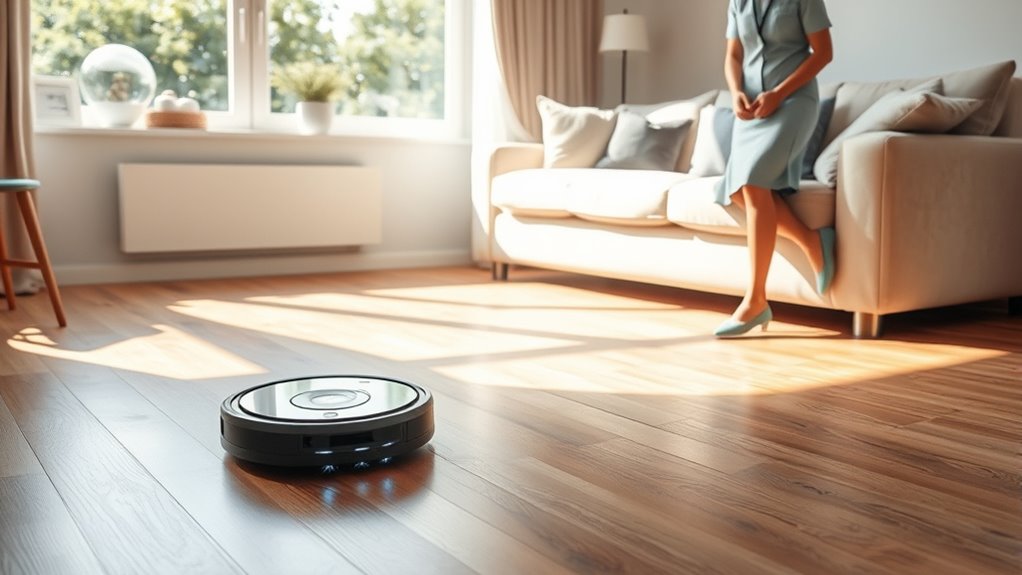
Robotic cleaners and human housekeepers each bring unique strengths to maintaining a tidy home, and combining them often yields the best results. Robots excel at quick, efficient cleaning, while human housekeepers provide emotional support and personalized care that robots can’t match. Together, they create a balanced environment where technology handles routine tasks and humans offer comfort and tailored attention.
Consider these points:
- Robots handle repetitive chores, freeing up time for personal interactions.
- Humans provide emotional support, strengthening household bonds.
- Personalized care from housekeepers addresses individual needs.
- Collaboration guarantees a cleaner, more comfortable home overall.
Frequently Asked Questions
How Do Robotic Cleaners Adapt to Different Types of Household Messes?
Robotic cleaners adapt to different household messes by using sensors and smart technology to detect issues like pet hair or dirt on carpets. When they encounter pet hair, they switch to stronger suction modes or specialized brushes. For carpet cleaning, they adjust their height and cleaning patterns automatically, ensuring thorough cleaning. You’ll find they become more efficient over time, handling various messes without needing human intervention.
What Safety Features Are Incorporated in Modern Robotic Cleaning Devices?
Modern robotic cleaning devices include safety features like hazard detection sensors that identify stairs, obstacles, and drop-offs, preventing accidents. They incorporate safety protocols such as auto-shutoff when lifted or encountering unexpected objects, and boundary markers to avoid restricted areas. These features guarantee safe operation around children, pets, and delicate items, giving you peace of mind while the bot efficiently cleans your home without risk.
Can Robotic Cleaners Replace Human Interaction in Household Management?
Think of robotic cleaners as your household’s diligent but silent partners—they can handle chores but can’t replace human interaction. While they efficiently manage cleaning, they lack the emotional support and social companionship you get from talking with a housekeeper. Robots can assist, but they don’t offer empathy or understanding. So, for meaningful connection and emotional needs, human presence remains irreplaceable in household management.
How Do Cultural Differences Influence Acceptance of Robotic Housekeepers?
Cultural perceptions greatly influence your acceptance of robotic housekeepers, as some societies view automation positively, embracing technological progress, while others see it as a threat to tradition and personal service. Acceptance barriers arise when cultural norms emphasize human interaction or distrust machines. Understanding these differences helps you navigate varying attitudes, making it easier to adapt or introduce robotic cleaners in diverse households without causing discomfort or resistance.
What Are the Environmental Impacts of Widespread Robotic Cleaning Deployment?
You’ll find that widespread robotic cleaning can positively impact the environment through increased energy efficiency and waste reduction. These robots often use less power than traditional cleaning methods, lowering energy consumption. Plus, they generate less waste because they’re designed to last longer and require fewer disposable supplies. As a result, embracing robotic cleaners could help you reduce your ecological footprint, making your household more sustainable and eco-friendly.
Conclusion
As you consider the future, realize that robotic cleaners won’t fully replace human housekeepers anytime soon. For example, a busy family might rely on a robot vacuum for daily dirt but still turn to a professional cleaner for deep cleaning and personalized care. Ultimately, combining technology with human touch offers the best balance, enhancing your home’s cleanliness and comfort without sacrificing the warmth and intuition only a person can provide.