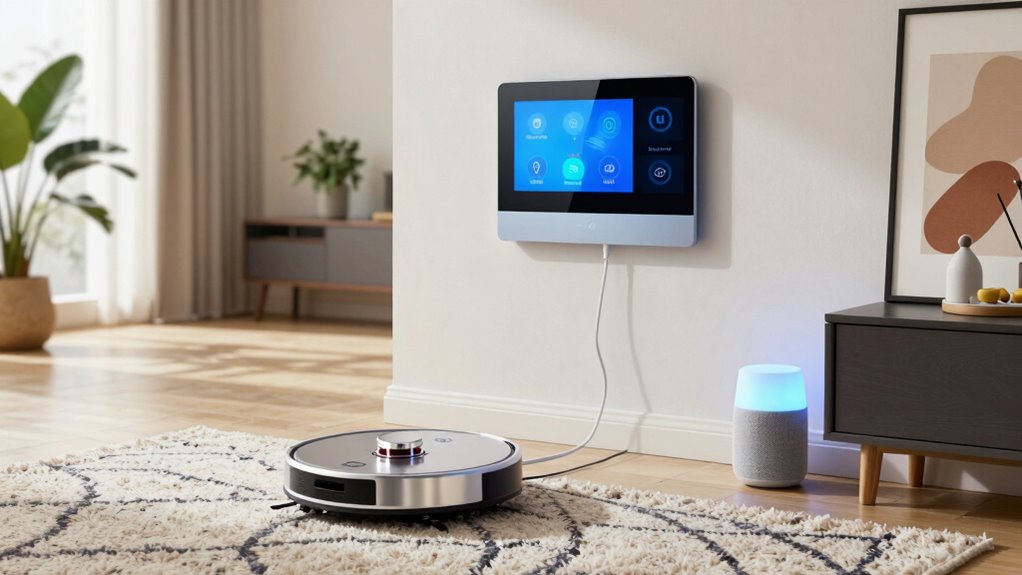
A smart home setup can make your cleaning robots much more useful by enabling voice control, automating routines, and coordinating with other devices. You can schedule cleanings during off-peak hours, monitor energy use, and have your robot work seamlessly with security systems and smart sensors. This interconnected system saves you time, reduces effort, and boosts efficiency. Keep exploring to discover how these smart features can transform your home maintenance experience even further.
Key Takeaways
- Voice command integration allows hands-free control, making cleaning robots more accessible and convenient to operate.
- Energy optimization features enable scheduling and adaptive routines, enhancing efficiency and reducing costs.
- Interoperability with other smart devices ensures coordinated cleaning based on occupancy and household activity.
- Automation and routine customization enable smarter, context-aware cleaning schedules for improved household management.
- Remote monitoring and control increase flexibility, ensuring cleaning robots adapt to changing household needs.
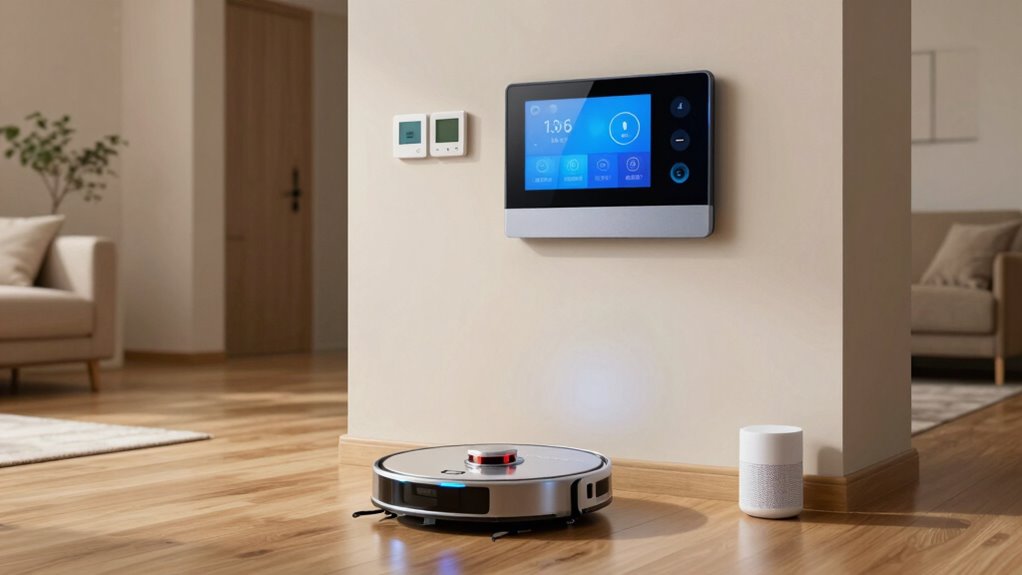
Smart home setups have revolutionized how you manage everyday tasks, especially with the rise of cleaning robots. These setups make it easier to control and coordinate your devices, seamlessly integrating your cleaning routine into your daily life. One of the most significant advantages is voice command integration, allowing you to start, pause, or stop your robot with simple voice instructions. Instead of fumbling with buttons or apps, you can say, “Hey, vacuum, clean the living room,” and your smart system takes care of the rest. This hands-free approach saves you time and effort, making your cleaning schedule more flexible and responsive. Plus, voice commands often sync across multiple devices, so you can control your robots from different rooms or even when you’re away from home, adding an extra layer of convenience.
Another way smart home setups boost the usefulness of cleaning robots is by optimizing energy consumption. When your system is connected, it can learn your routines and adjust the robot’s cleaning schedule accordingly. For example, it might run the vacuum during off-peak hours when energy costs are lower or avoid unnecessary cleaning cycles when you’re not home. Smart setups also enable you to monitor energy usage in real time, giving you insight into how much power your robot consumes and helping you make more eco-friendly choices. This not only reduces your environmental impact but can also lower your utility bills over time. Additionally, some smart home systems can automatically turn off or put the robot into low-power mode once cleaning is complete, preventing unnecessary energy drain. Incorporating smart device integration enhances the overall efficiency and convenience of your cleaning routines. Moreover, system interoperability ensures that your various smart devices work together smoothly, creating a more cohesive and efficient home automation experience. As technology advances, the interconnectedness of these devices continues to evolve, making automation more intuitive and reliable.
Furthermore, smart home setups encourage better coordination among your devices. When your cleaning robot is integrated into your overall smart system, it can work in harmony with other appliances and sensors. For instance, if your smart security system detects that no one’s home, it can trigger the robot to start cleaning or pause it if someone enters. This level of automation is supported by the advanced connectivity offered by many modern smart home ecosystems, which allows different devices to communicate seamlessly. The integration of home automation also enables you to create customized routines that improve the overall functionality of your household. You also gain the ability to schedule cleaning sessions based on occupancy or specific times, ensuring your robot works only when needed, further conserving energy.
voice control smart home devices
As an affiliate, we earn on qualifying purchases.
As an affiliate, we earn on qualifying purchases.
Frequently Asked Questions
How Secure Are Smart Home Networks for Cleaning Robot Integration?
Smart home networks can be fairly secure for cleaning robot integration if you focus on data encryption and minimizing network vulnerabilities. You should guarantee your Wi-Fi uses strong encryption, like WPA3, and update firmware regularly. Avoid using default passwords, and segment your network for IoT devices. These steps help protect your cleaning robots from hacking or unauthorized access, making your smart home setup safer and more reliable.
Can Cleaning Robots Be Customized for Specific Home Layouts?
Imagine your home as a canvas, ready for tailored cleaning routines. Yes, cleaning robots can be customized for specific layouts, adapting to furniture, rooms, and surfaces. Robot customization allows you to set cleaning parameters, ensuring every nook and cranny gets attention. This personalization makes your cleaning routines more efficient, saving time and effort. With the right adjustments, your robot becomes a perfect fit, effortlessly maintaining your home’s cleanliness.
What Are the Energy Consumption Differences With Smart Home Setups?
Smart home setups typically boost your cleaning robot’s power efficiency, leading to notable energy savings. By integrating smart schedules and sensors, you prevent unnecessary operation, reducing energy use. Automated adjustments based on room occupancy or dirt detection optimize robot activity, conserving power. Overall, smart home setups make cleaning robots more energy-efficient, helping you save on electricity bills while maintaining effective cleaning routines.
How Do Smart Home Setups Impact Cleaning Robot Maintenance?
Your smart home setup can dramatically reduce cleaning robot maintenance, making it feel like you’ve got a superpower. By using robot scheduling, you guarantee your robot runs efficiently, and regular sensor calibration keeps it performing at peak. This reduces the chances of breakdowns and extends its lifespan. Overall, smart setups make maintenance simpler, saving you time and effort, and keeping your robot in top shape for longer.
Are There Compatibility Issues Between Different Brands of Cleaning Robots?
Compatibility issues can arise between different brands of cleaning robots, especially if their smart home systems don’t support diverse devices. You might encounter problems with brand compatibility, where some robots don’t seamlessly connect or operate within your setup. Regular firmware updates are essential—they guarantee your cleaning robots stay compatible with your smart home ecosystem, fixing bugs and adding features. To avoid issues, choose brands known for broad compatibility and consistent updates.
smart home energy monitoring system
As an affiliate, we earn on qualifying purchases.
As an affiliate, we earn on qualifying purchases.
Conclusion
By weaving smart home setups into your daily routine, you turn cleaning robots into trusted allies, transforming your space into a symphony of seamless efficiency. With a well-orchestrated system, you’re not just maintaining cleanliness—you’re conducting a ballet of automation where every device moves in harmony. Ultimately, a smart home doesn’t just make cleaning easier; it elevates your entire living experience, turning mundane chores into a graceful dance of innovation and convenience.
interoperable smart home automation hub
As an affiliate, we earn on qualifying purchases.
As an affiliate, we earn on qualifying purchases.
As an affiliate, we earn on qualifying purchases.