
To build a better pool maintenance routine with a robot, start by regularly checking and balancing your water’s chemistry, ensuring pH, chlorine, and alkalinity stay within ideal levels. Inspect your equipment often for wear and clogs, and run your robot frequently to keep the pool clean. Incorporate water quality monitoring tools and stay updated on new technology to optimize your efforts. Keep these tips in mind, and you’ll discover how to make your pool effortlessly pristine.
Open a free Amazon Business account
Business pricing, bulk buying and tax-exempt orders.
As an affiliate, we earn on qualifying purchases.
Key Takeaways
- Schedule regular robot cleaning alongside routine chemical checks for optimal water quality.
- Maintain and inspect robot components, filters, and pool equipment weekly to prevent malfunctions.
- Use water quality monitoring tools to ensure pH, chlorine, and alkalinity stay within ideal ranges.
- Keep spare parts and filters on hand to minimize downtime and maintain consistent cleaning.
- Integrate automated cleaning with traditional maintenance practices for a comprehensive pool care routine.
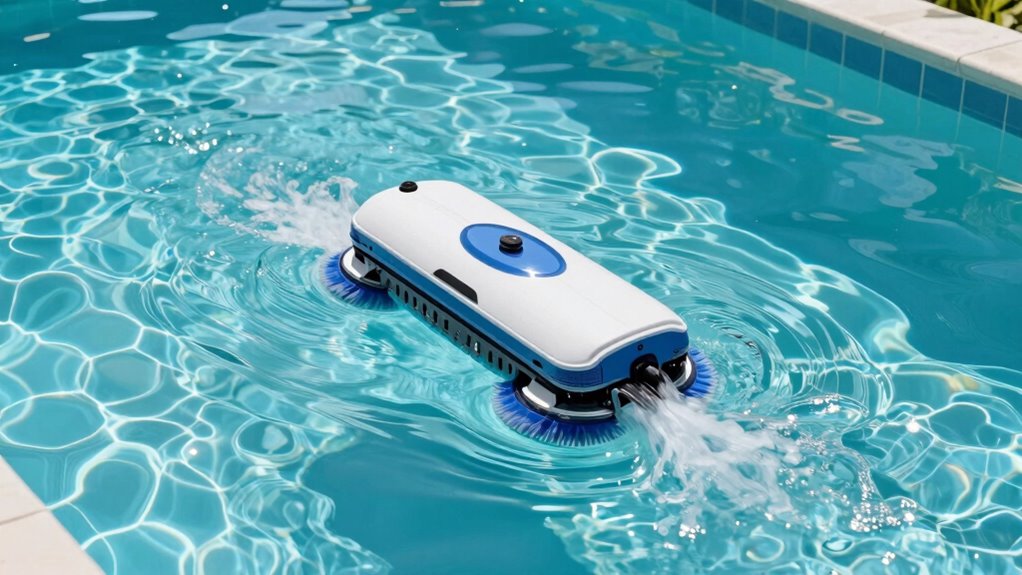
Building a better pool maintenance routine starts with understanding the essentials, and integrating a smart robot can make all the difference. To get the most out of your automated helper, you need to focus on two key aspects: chemical balancing and equipment inspection. These elements guarantee your pool remains inviting, safe, and in top condition.
First, consistently monitoring and maintaining proper chemical levels is vital. Even with a robot doing the cleaning, neglecting chemical balancing can lead to cloudy water, algae growth, or bacteria buildup. Use test kits or digital sensors to check pH, chlorine, alkalinity, and stabilizer levels regularly. Adjust these parameters as needed, aiming for ideal ranges—pH around 7.4 to 7.6, chlorine between 1 and 3 ppm, and alkalinity around 80-120 ppm. When your robot is running daily, it helps keep debris and dirt from accumulating, but chemical balancing addresses the invisible threats that cloud your water and threaten your health. Incorporating water quality monitoring can further optimize your routine.
Consistently monitor chemical levels to keep water clear and safe, even with a robotic cleaner in use.
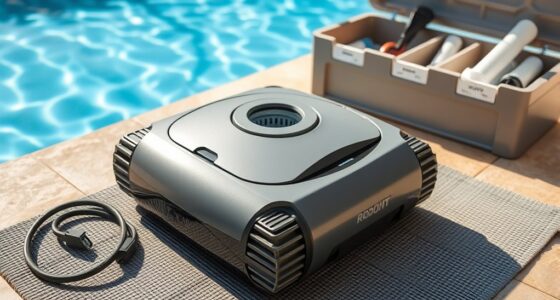
Next, don’t forget about equipment inspection. Regularly check your robot’s components, such as brushes, filters, and sensors, to guarantee everything functions smoothly. A quick inspection helps catch issues early—like worn brushes or clogged filters—that could diminish cleaning efficiency. Also, examine your pool’s pump, skimmer baskets, and hoses for blockages or leaks. Proper equipment operation directly affects your robot’s effectiveness and the overall health of your pool. Staying informed about emerging trends in pool technology can help you adopt innovative solutions that improve efficiency and water quality. Additionally, understanding the mythology-inspired names of your equipment or tools can add an interesting, memorable touch to your maintenance routine. Regularly updating your knowledge about pool maintenance best practices can help you stay ahead of potential issues and ensure your routine remains effective.
Creating a routine that combines automated cleaning with proactive chemical and equipment maintenance yields the best results. Schedule weekly checks for chemical levels, and perform visual inspections of your robot and pool equipment. Run your robot daily or every other day, depending on pool usage, to keep dirt at bay. Keep spare filters and parts handy to avoid downtime if maintenance issues arise. By staying vigilant with chemical balancing and equipment inspection, you reduce the workload on your robot and extend its lifespan, guaranteeing it continues to work efficiently.
Ultimately, building a smarter pool maintenance routine means leveraging technology alongside traditional care. A robot can handle the routine cleaning, but your attentiveness to chemical balance and equipment health guarantees your pool stays sparkling and safe. With consistency and a proactive approach, you’ll enjoy a beautiful, hassle-free pool all season long.
As an affiliate, we earn on qualifying purchases.
Frequently Asked Questions
How Often Should I Run My Pool Robot?
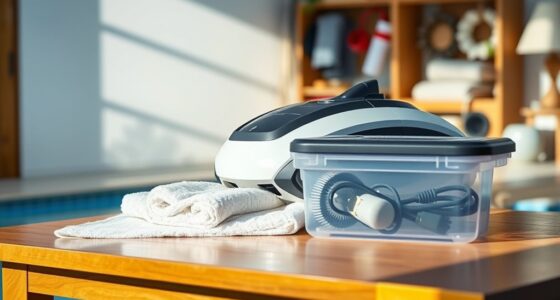
You should run your pool robot at least once a week to keep your pool clean and clear. Adjust frequency based on usage, weather, or debris. When storing your pool robot, make sure it’s dry and in a safe, cool spot to prevent damage. Incorporate this into your maintenance schedule, checking for wear and tear regularly, so your robot works efficiently and prolongs its lifespan.
Can Pool Robots Handle Algae and Heavy Debris?
Pool robots can handle algae control and heavy debris, but their effectiveness depends on the model. Most advanced robots are equipped with brushes and filters that target algae buildup and can pick up leaves, dirt, and other debris. However, for persistent algae, you might need to pre-treat the pool. Regularly running your robot guarantees better cleanliness, but manual intervention may still be necessary for stubborn algae or large debris.
Are Pool Robots Suitable for All Pool Types?
Pool robots are suitable for many pool types, but you should check their features first. Look for models designed for your pool’s shape and surface, whether it’s in-ground or above-ground. Maintenance tips include regularly cleaning the robot’s filters and inspecting its brushes to keep it functioning efficiently. Using the right pool robot guarantees thorough cleaning, saves time, and helps maintain a pristine swimming environment.
Do I Need to Supervise the Robot During Cleaning?
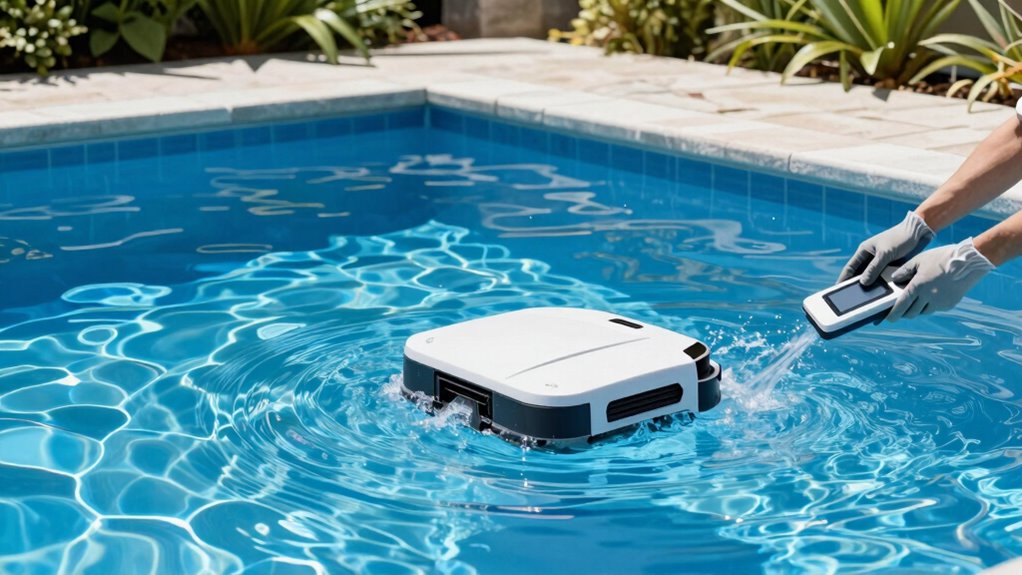
You don’t need to hover over your robot constantly, but supervision is essential for safety precautions and robot maintenance. It’s like having a guardian angel for your pool; a quick check ensures the robot operates correctly and prevents mishaps. While many robots are autonomous, occasional oversight helps spot potential issues early, saving you time and money. So, stay nearby during cleaning to keep everything running smoothly and safely.
How Long Does a Typical Pool Robot Battery Last?
A typical pool robot’s battery lifespan ranges from about 1 to 3 years, depending on usage and maintenance. You’ll usually need to recharge it after each cleaning session, with charging frequency varying from a few hours to overnight. To maximize battery life, avoid letting it completely drain and follow the manufacturer’s charging instructions. Regularly cleaning the robot’s filters also helps guarantee the best performance and longer battery longevity.
As an affiliate, we earn on qualifying purchases.
Conclusion
By integrating a pool robot into your routine, you might find that maintaining your pool becomes easier than ever—almost like it was always meant to be. Sometimes, the best solutions appear just when you least expect them, transforming what once felt like a chore into a simple, automated task. So, next time you reach for your cleaning supplies, remember that a smart robot could be the surprise upgrade your pool’s been waiting for.
As an affiliate, we earn on qualifying purchases.
As an affiliate, we earn on qualifying purchases.
NFL season / tailgating Picks
team gear
As an affiliate, we earn on qualifying purchases.