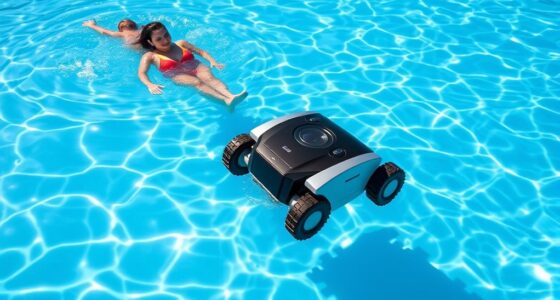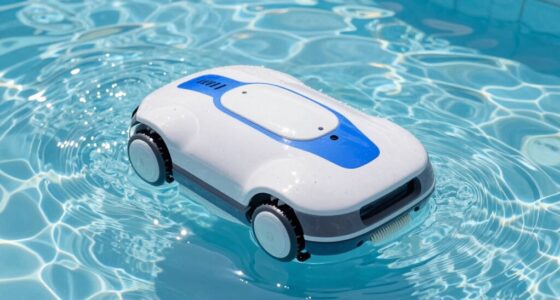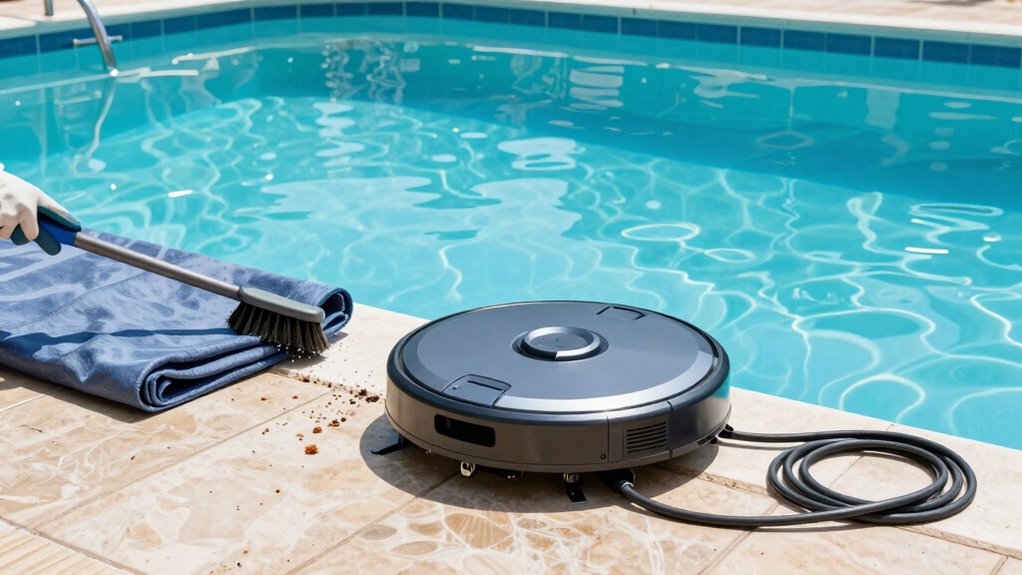

Before running your robotic cleaner, make certain your pool water is properly balanced by testing and adjusting chemicals like chlorine, pH, and alkalinity. Remove large debris from the surface and sides using a net, then run the pump to clear out any remaining debris. Check and clean the filter or debris compartment of the robot, and inspect brushes and wheels for wear. Washing your robot beforehand helps it work efficiently and lasts longer—continue for more expert tips to get your pool spotless.
Key Takeaways
- Balance water chemistry, including chlorine, pH, alkalinity, and stabilizer levels.
- Remove surface and side debris with a net to prevent clogging.
- Clean and inspect the robotic cleaner’s filters, brushes, and wheels for optimal performance.
- Run the pool pump to improve water circulation and debris removal.
- Check equipment and ensure proper water flow for efficient cleaning.
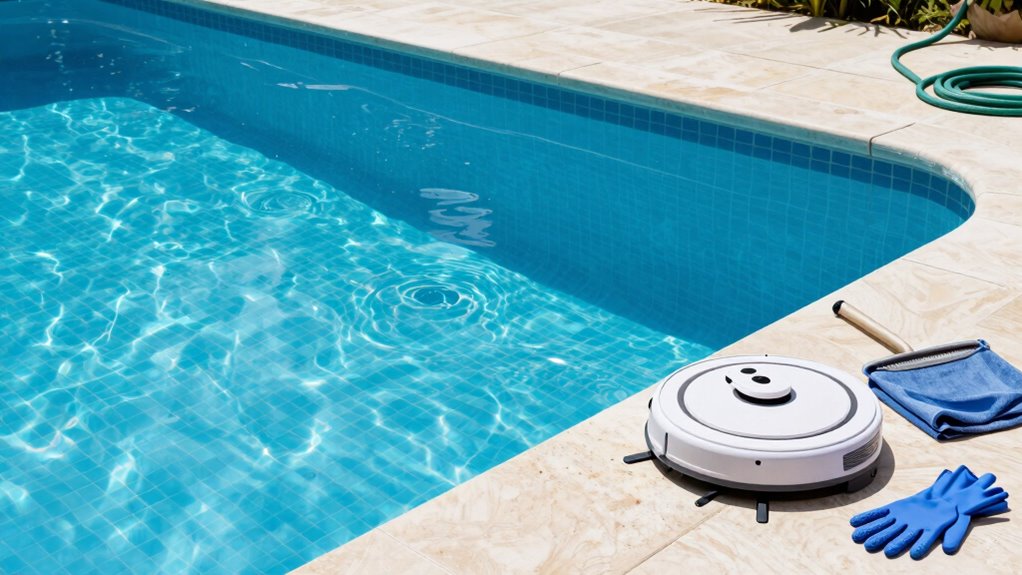
Have you ever wondered how to get your pool ready for the season? Preparing your pool before running a robotic cleaner is a pivotal step to guarantee it works efficiently and keeps your water crystal clear. The first thing you need to focus on is balancing the pool chemicals. Proper chemical levels are fundamental because they help disinfect the water, prevent algae growth, and maintain the right pH balance. Test the water using a reliable kit and adjust chlorine levels if necessary, aiming for around 1-3 ppm. If the pH is too high or low, add the appropriate pH increaser or decreaser. Alkalinity and stabilizer should also be within recommended ranges, so check those as well. When the chemicals are balanced, you create an environment where your robotic cleaner can perform at its best without spreading algae or bacteria. Understanding chemical calibration can further optimize your pool’s water quality. Additionally, maintaining proper water chemistry reduces chemical imbalances, which can cause corrosion or scaling on pool equipment. Regular testing and adjustment ensure your pool remains safe and healthy throughout the season. Proper water chemistry also helps prevent damage to your pool’s surface and equipment, saving you costly repairs later on.
Next, you want to guarantee good water circulation. Good circulation keeps chemical levels evenly distributed and prevents debris from settling on the pool floor. Start by cleaning the skimmer baskets and pump strainer to remove leaves, bugs, and other debris that could block water flow. Turn on your pool pump and run it for several hours to promote circulation. This step makes sure that the chemicals you added are well-mixed throughout the water, which is essential before starting the robotic cleaner. If your pool has multiple jets or return inlets, adjust their direction to maximize flow and reach all areas of the pool. Proper circulation also helps in breaking down oils, lotions, and other contaminants, making your water clearer and healthier. Regular water testing can help you monitor and maintain optimal chemical balance over time. A well-circulated pool not only improves water quality but also enhances the efficiency of your robotic cleaner.
Once you’ve balanced the chemicals and confirmed your water circulation is ideal, give the pool a quick visual inspection. Remove any large debris from the surface and sides using a net. This prevents the robotic cleaner from getting clogged or overwhelmed early on. It’s best to run the pump for a few more hours after cleaning to ensure debris is thoroughly moved out of the pool. Proper circulation also minimizes the risk of bacterial growth, ensuring that your pool stays hygienic. When everything looks good, you can confidently place your robotic cleaner into the water. Make sure the robot’s filter or debris compartment is clean and properly installed. Starting with a clean robotic cleaner allows it to operate more effectively, covering the entire pool surface without hindrance. Additionally, inspecting the robot’s brushes and wheels beforehand can improve its cleaning performance and longevity.

Poolmaster 22260 5-Way Swimming Pool or Spa Water Chemistry Test Kit with Case, Essential Collection
- Water Chemistry Testing: Tests Chlorine, Bromine, pH, Acid Demand, Alkalinity
- Clear-View Test Block: Includes transparent round test block with color chips
- Solution Set: Contains 1oz solutions of #1-#3 and 1/2oz solutions of #4-#5
As an affiliate, we earn on qualifying purchases.
As an affiliate, we earn on qualifying purchases.
Frequently Asked Questions
How Often Should I Run My Robotic Pool Cleaner?
You should run your robotic pool cleaner at least once a week for ideal pool maintenance. During peak swim seasons or after heavy storms, consider increasing the cleaning frequency to twice a week. Sticking to a consistent cleaning schedule keeps your pool crystal clear, reduces algae buildup, and minimizes chemical use. Regular use guarantees the cleaner works efficiently and prolongs its lifespan, making your pool maintenance easier and more effective.
Can I Use the Cleaner in a Heated Pool?
Yes, you can use your robotic cleaner in a heated pool. Just keep in mind that heated pool maintenance is vital, as high temperatures may speed up debris buildup and algae growth. Make certain your robotic cleaner is compatible with heated pools, checking the manufacturer’s guidelines. Regularly monitor and clean the filter, and avoid leaving the cleaner in the water for extended periods to keep it functioning flawlessly and prolong its lifespan.
What Chemicals Should I Add Before Cleaning?
Before cleaning, you should check your pool’s chemical balance and adjust the water pH if needed. Add appropriate amounts of chlorine or other disinfectants to ensure the water is sanitized, and stabilize the pH to around 7.2-7.6 for ideal cleaning. Proper chemical balancing prevents algae growth and keeps your robot functioning efficiently. Always test the water first, then add chemicals gradually, allowing them to circulate before starting the cleaner.
How Do I Troubleshoot if the Cleaner Isn’t Moving?
If your robotic cleaner isn’t moving, first check if the pool cover is properly removed, as it can obstruct movement. Next, verify the water temperature isn’t too cold, which might affect the cleaner’s motor. Also, inspect for tangled cords or debris caught in the brushes. Adjust the cleaner’s position, clear any obstructions, and restart it. Keeping these factors in mind helps your robotic cleaner operate smoothly.
Is It Safe to Leave the Cleaner in the Pool Overnight?
Yes, it’s safe to leave your robotic cleaner in the pool overnight, especially if you follow proper pool maintenance and cleaning schedules. Many cleaners are designed for continuous use, but make certain your device is waterproof and well-maintained. Regularly check for any damage, and keep the filter clean. This way, your pool stays tidy, and you don’t have to worry about running the cleaner too often, saving you time and effort.

Blaster 1000 Automatic Pool & Spa Cartridge Filter Cleaner
- Compatible with filters up to 20 inches: Cleans large filters efficiently
- Automatic rotation and water spray: Rotates and sprays to clean pleats
- Horizontal design for debris removal: Prevents dirt lodging for thorough cleaning
As an affiliate, we earn on qualifying purchases.
As an affiliate, we earn on qualifying purchases.
Conclusion
Now that you’ve prepped your pool, you’re ready to plunge into a cleaner, clearer swim. Clear out debris, check your equipment, and balance the water—each step is a brushstroke in your masterpiece of pristine perfection. As the robotic cleaner glides smoothly, imagine the sparkling surface, the crisp, invigorating water, and the inviting feel of a backyard oasis. With your preparation complete, relaxation awaits—your perfect pool experience begins now, seamless and serene.

ARM & Hammer Clear Balance pH Maintenance Tablets, 24 Count
- Number of Tablets: 24 tablets for pool maintenance
- Easy Water Clarity: Maintains ideal alkalinity and pH levels
- All-Season Balance: Supports balanced pH, alkalinity, and chlorine
As an affiliate, we earn on qualifying purchases.
As an affiliate, we earn on qualifying purchases.

Swimables 8" Pool Skimmer Basket for Inground Pools – Compatible with Pentair U-3 Skimmer Basket 08650-0007 & Hayward SP1070, SPX1070E Pool Basket with Built-in Brass Weight, Handle & Rubber Grip
- Heavy Duty Construction: Rugged design withstands extreme weather
- High Debris Capacity: Holds up to 30 lbs of debris
- Compatibility: Fits Pentair U-3 and Hayward SPX1070E
As an affiliate, we earn on qualifying purchases.
As an affiliate, we earn on qualifying purchases.