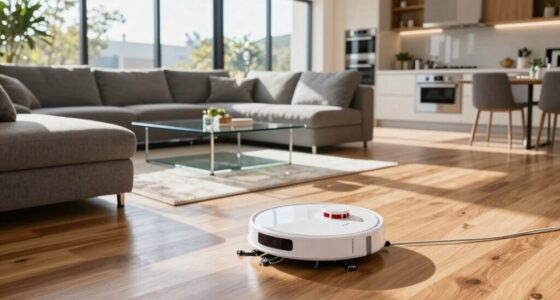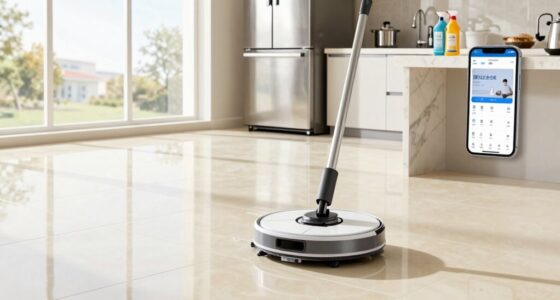
After robot mopping, your floors usually dry within 15 to 30 minutes, but drying time can vary based on your environment and how much water the robot uses. Factors like humidity, flooring type, and maintenance also influence how quickly the floor dries. If you keep your space well-ventilated and maintain your robot properly, drying may be faster. Want to know how to speed things up further? Keep exploring for more useful tips.

Get home appliances delivered free — and shop member deals
- Fast, free delivery on millions of items
- Access to Prime Big Deal Days deals on October 6–7
- Prime Video, Amazon Music and more included
Key Takeaways
- Floors typically dry within 15 to 30 minutes post-mopping, depending on humidity and water usage.
- The type of flooring and amount of water dispensed influence drying speed.
- Proper ventilation or fans can significantly reduce drying time, especially in humid environments.
- Regular robot maintenance prevents over-wetting, ensuring quicker drying.
- Consistent cleaning and optimal environmental conditions help keep drying times short.
After a robot mop finishes cleaning, understanding how long it takes for your floors to dry is essential for safety and convenience. The drying time can vary depending on several factors, including the type of flooring, the amount of water used during mopping, and the efficiency of your robot. Generally, you can expect floors to dry within 15 to 30 minutes, but it might take longer if the environment is humid or if the robot used a lot of water. Keeping an eye on this drying process ensures you don’t walk on damp surfaces, which could cause slips or damage.
One key aspect influencing drying time is your cleaning frequency. If you mop frequently, the floors tend to stay cleaner and drier, reducing the need for excessive water or scrubbing. Regular cleaning prevents dirt buildup, which means the robot works more efficiently and doesn’t need to use extra water to tackle stubborn grime. This not only shortens the drying period but also prolongs the lifespan of your floors by avoiding unnecessary moisture exposure. Additionally, maintaining a consistent cleaning schedule helps your robot stay in top condition, ensuring it functions optimally and avoids issues that could delay drying, like incomplete cleaning cycles or clogs.
Robot maintenance also plays a crucial role in how quickly your floors dry after mopping. Regularly checking and cleaning the robot’s brushes, water tank, and sensors ensures it operates smoothly. If the robot’s components are dirty or blocked, it might not dispense water evenly or could leave excess moisture on the floor, extending the drying time. Properly maintaining your robot according to the manufacturer’s instructions prevents malfunctions that could lead to over-wetting or inefficient cleaning, both of which impact drying time negatively. Keeping the water tank clean and filled with the right amount of water, and replacing parts as needed to ensure optimal performance, are essential steps for effective robot operation. Regular robot maintenance can also help identify issues that might cause over-wetting, further reducing drying times. Additionally, understanding the importance of regular maintenance can help prevent issues that prolong drying times and ensure your robot functions effectively.
Using proper ventilation or fans can significantly speed up the drying process, especially in rooms with high humidity levels.
As an affiliate, we earn on qualifying purchases.
Frequently Asked Questions
Does the Type of Flooring Affect Drying Time?
Yes, the type of flooring affects drying duration. For example, tile and vinyl dry faster because they’re less absorbent, while hardwood and carpet take longer as they hold more moisture. Your robot mop’s drying time varies accordingly, so expect faster drying on non-porous surfaces. To speed up the process, guarantee good ventilation and avoid walking on the floor until it’s fully dry, especially with more absorbent floor materials.
Can I Walk on the Floor Immediately After Robot Mopping?
You shouldn’t walk on the floor immediately after robot mopping, as it needs time to dry completely. After floor cleaning, give the area at least 30 minutes to dry, especially on smoother surfaces. For safe robot maintenance, guarantee the floor is dry before walking on it. This prevents slipping and protects your flooring. Always check the robot’s drying indicator before resuming regular foot traffic to keep your floors in top condition.
How Does Humidity Impact Drying Time?
Humidity levels directly impact your floor’s drying time by influencing moisture retention. High humidity causes your floors to take longer to dry because the moisture in the air slows evaporation. Conversely, lower humidity speeds up drying, letting your floors dry faster after robot mopping. To reduce drying time, consider improving ventilation or using a dehumidifier, especially in damp environments. Keep in mind, higher humidity means more moisture stays on the surface longer.
Do Different Robot Mop Brands Have Varying Drying Speeds?
Coincidentally, the brand of robot mop you choose can influence how quickly your floors dry. Some brands excel in efficient Robot mop maintenance, which includes quick-drying features, while others may have longer drying times due to less advanced technology. Battery life also plays a role; longer-lasting batteries enable more thorough mopping cycles, potentially affecting drying speed. Researching different brands helps you find one that balances effective cleaning with faster drying times.
What Are Signs the Floor Is Still Wet?
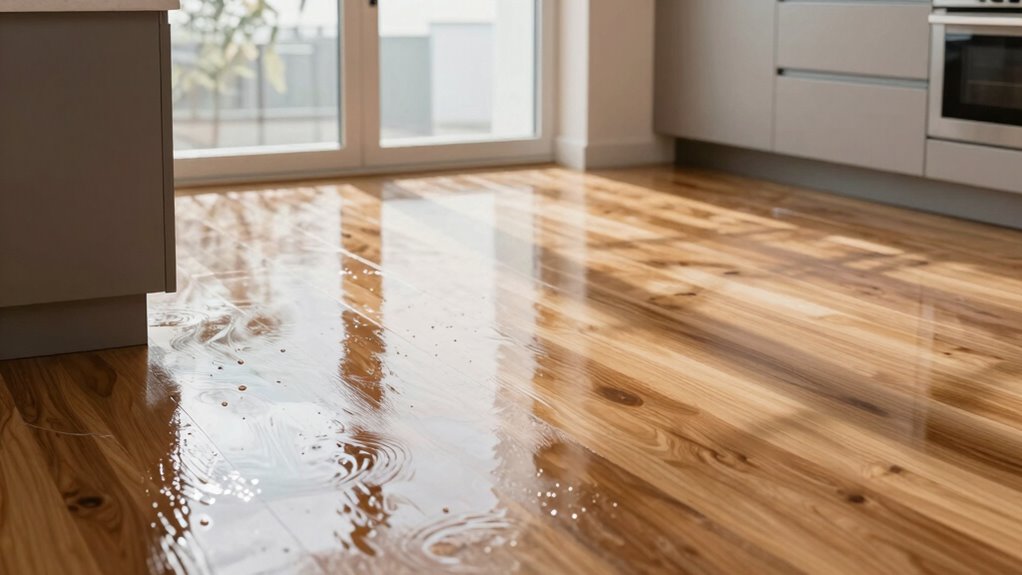
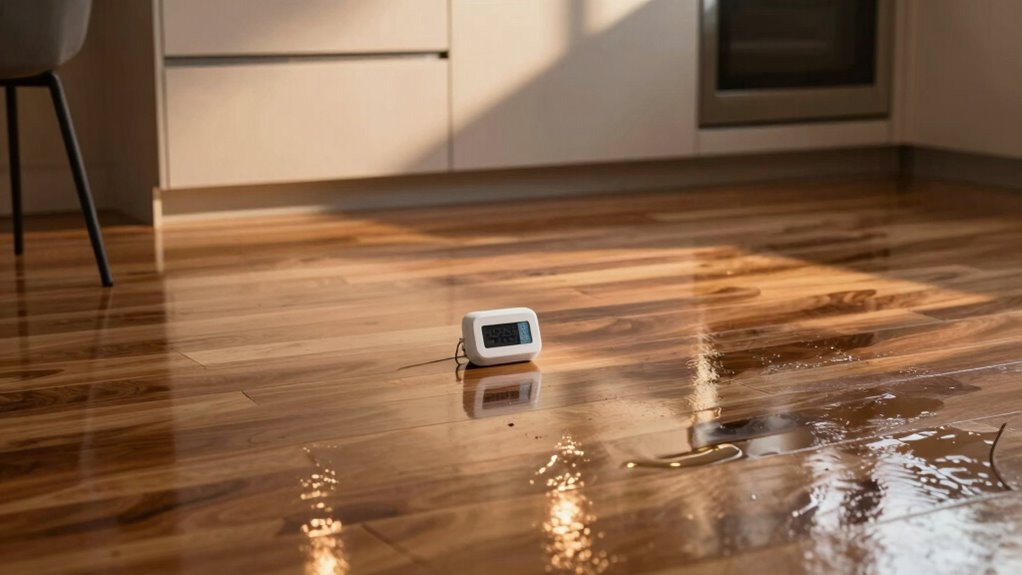
You’ll notice the floor is still wet if it feels damp to the touch or leaves streaks when you walk on it. Check for shiny patches or water pooling, which indicate excess moisture. Different cleaning methods and floor finishes affect drying time; for example, high-gloss or sealed floors tend to dry faster. Wait until the surface feels dry and no longer leaves marks before resuming regular activity, ensuring proper cleaning and avoiding damage.
As an affiliate, we earn on qualifying purchases.
Conclusion
Just like a painter’s brushstrokes fade into a masterpiece, your floors will dry in their own time, typically within 30 minutes to an hour. Patience is key, as rushing can invite streaks or dampness. Trust in the process—soon, your floors will gleam like a polished gem, ready for your next step. Remember, even the most perfect symphony needs its quiet pause before the grand crescendo.
As an affiliate, we earn on qualifying purchases.
As an affiliate, we earn on qualifying purchases.
NFL season / tailgating Picks
team gear
As an affiliate, we earn on qualifying purchases.