To clean your Roomba filters and brushes properly, start by removing the filter and washing it under cold water if it’s washable, then let it dry completely. Flip your Roomba over to access the brushes, removing hair and debris by hand or with scissors, and then scrub the bristles with a small brush. Don’t forget to clean the side brushes and check their attachments. Keep all components debris-free for peak performance—more tips are just ahead.
Open a free Amazon Business account
Business pricing, bulk buying and tax-exempt orders.
As an affiliate, we earn on qualifying purchases.
Key Takeaways
- Remove and wash washable filters with cold water every 1-2 weeks, then let them air dry completely before reinserting.
- Turn off the Roomba, flip it over, and carefully remove brushes to clear hair, debris, and dust using a small brush or scissors.
- Use a brush cleaning tool to loosen tangled hair on brushes and check for debris in bearings and axles regularly.
- Remove and clean side brushes similarly, ensuring all attachment points and bearings are free of debris for smooth rotation.
- Regularly inspect and clean filters and brushes to maintain suction power, prevent buildup, and prolong your Roomba’s lifespan.

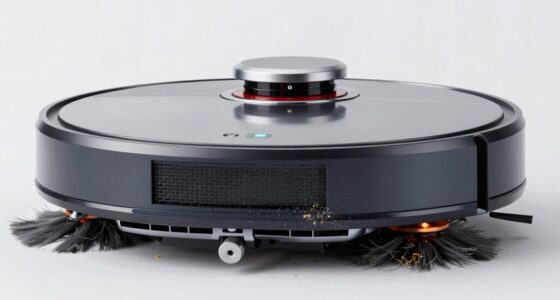
Regularly cleaning your Roomba’s filters and brushes is vital to keep it performing at its best. Proper filter maintenance guarantees peak suction power, while well-maintained brushes help pick up dirt and debris effectively. Neglecting these tasks can lead to reduced cleaning efficiency, increased battery drain, and potential damage to your device. To keep your Roomba operating smoothly, you need to develop a routine for cleaning the filters and brushes thoroughly and efficiently. When it comes to filter maintenance, start by removing the filter from your Roomba. Most models have washable filters, so you can rinse them under cold water to remove dust and debris. Be sure not to use soap or any harsh chemicals, as these can damage the filter material. After rinsing, let the filter air dry completely before reinserting it into the robot. This drying process is vital because a damp filter can cause mold growth or clog the airflow, reducing suction. Depending on how often you use your Roomba, aim to clean the filter once every one to two weeks to maintain peak performance. Regular filter cleaning is especially important for natural pools where air quality and water filtration are crucial. Brush cleaning techniques are equally important. First, turn off your Roomba and flip it over to access the brushes. Remove any hair, string, or large debris wrapped around the brushes using your fingers or a pair of scissors. Many models come with a brush cleaning tool that helps loosen tangled hair, making it easier to remove. After clearing tangles, use a brush cleaning tool or a small, sturdy brush to scrub away dust and dirt from the bristles. Check the brush bearings and axle for debris, and clean those areas as needed. Regularly inspecting and cleaning the brushes prevents buildup that can hinder rotation, ensuring your Roomba captures dirt effectively. In addition to cleaning the brushes, also check the brush bearings and axles periodically. Keep these parts free of hair and debris to guarantee smooth rotation. If your Roomba has side brushes, remove and clean them similarly, paying attention to the brush attachment points. Once everything’s clean, reassemble the brushes securely, and your robot will be ready for its next cleaning session.
Roomba washable filter replacement
As an affiliate, we earn on qualifying purchases.
As an affiliate, we earn on qualifying purchases.
Frequently Asked Questions
How Often Should I Replace My Roomba Filters?
You should replace your Roomba filter every 2 to 3 months, depending on the filter’s lifespan and your usage. Regular filter replacement helps maintain peak suction and cleaning performance. Keep an eye on signs like reduced airflow or increased dust buildup, which indicate it’s time for a new filter. For best results, follow the manufacturer’s recommended replacement frequency and replace the filter more often if you have pets or allergies.
Can I Use Cleaning Products on Roomba Brushes?
Did you know that using the wrong cleaning solutions can damage your Roomba brushes? You shouldn’t use harsh chemicals or cleaning products on them, as they can cause chemical damage. Instead, stick to gentle soap and water, or manufacturer-recommended cleaning methods. This guarantees your brushes stay in top condition and keep your vacuum functioning properly without risking damage from inappropriate cleaning solutions.
Is It Necessary to Wash the Brushes or Filters?
Yes, it’s necessary to wash your Roomba brushes and filters regularly. Proper filter maintenance guarantees peak suction, while regular brush cleaning removes hair and debris, preventing clogs. You should wash filters when they appear dirty or clogged, and clean brushes weekly or more often if needed. Use water and avoid harsh chemicals to keep them in good condition. Consistent cleaning keeps your Roomba working efficiently and extends its lifespan.
What Signs Indicate My Roomba Needs New Filters?
If your Roomba’s filter isn’t living its best life, it’s time for a change. Signs include reduced suction, persistent allergies, and visible dirt buildup—like it’s been on a dirt diet. Usually, filters reach their filter lifespan after a few months, losing their allergen removal superpowers. Don’t wait for your robot to start acting like a dust magnet; replace the filter to keep your home fresh and your Roomba happy.
How Do I Prevent Brushes From Tangling?
To prevent brushes from tangling, you should regularly perform brush maintenance by removing hair, string, and debris after each cleaning session. Check for tangled fibers and cut them away carefully. Use a brush cleaning tool if needed. Also, avoid picking up large or sticky objects that can cause tangling. Consistent maintenance helps keep your Roomba’s brushes functioning smoothly and extends their lifespan, ensuring efficient cleaning every time.
As an affiliate, we earn on qualifying purchases.
Conclusion
Regularly cleaning your Roomba’s filters and brushes keeps it running smoothly and extends its lifespan. Did you know that a clogged filter can reduce cleaning efficiency by up to 50%? By following simple maintenance steps, you guarantee your robot vacuum performs at its best, saving you time and effort. Make cleaning your Roomba part of your routine, and enjoy a cleaner home with less hassle. Proper upkeep truly makes a difference!
As an affiliate, we earn on qualifying purchases.
As an affiliate, we earn on qualifying purchases.
Flea & tick season Picks
flea and tick prevention
As an affiliate, we earn on qualifying purchases.