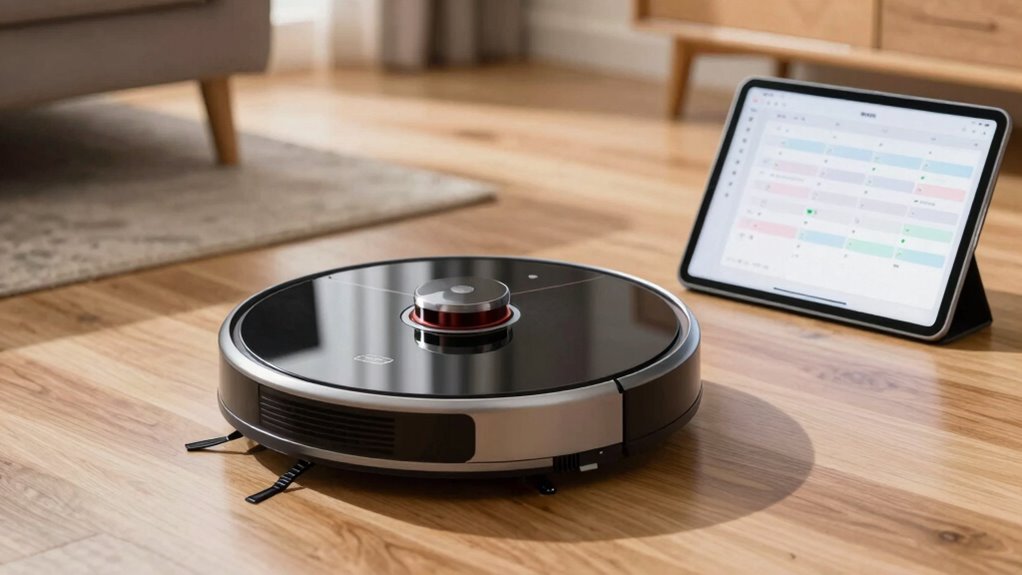

To create a robot vacuum schedule that truly makes sense, plan frequent cleanings—daily or every other day—for pet hair and allergens. Focus on high-traffic zones and set specific times when your household is empty to avoid disruption. Use zone targeting to prioritize areas like bedrooms and living rooms, adjusting based on activity. Sync the schedule with your routines and consider air quality sensors for better allergen control. Keep investigating for more tips to optimize your home cleaning plan.
Open a free Amazon Business account
Business pricing, bulk buying and tax-exempt orders.
As an affiliate, we earn on qualifying purchases.
Key Takeaways
- Schedule daily or every other day cleaning for pet-heavy households to prevent hair buildup and allergens.
- Automate cleaning during times when the house is unoccupied to reduce disruption and noise.
- Use zone targeting to focus on high-traffic or pet-dense areas for efficient cleaning.
- Sync vacuum routines with household schedules and routines for seamless, automated maintenance.
- Maintain a regular cleaning schedule to reduce deep cleaning frequency and improve indoor air quality.
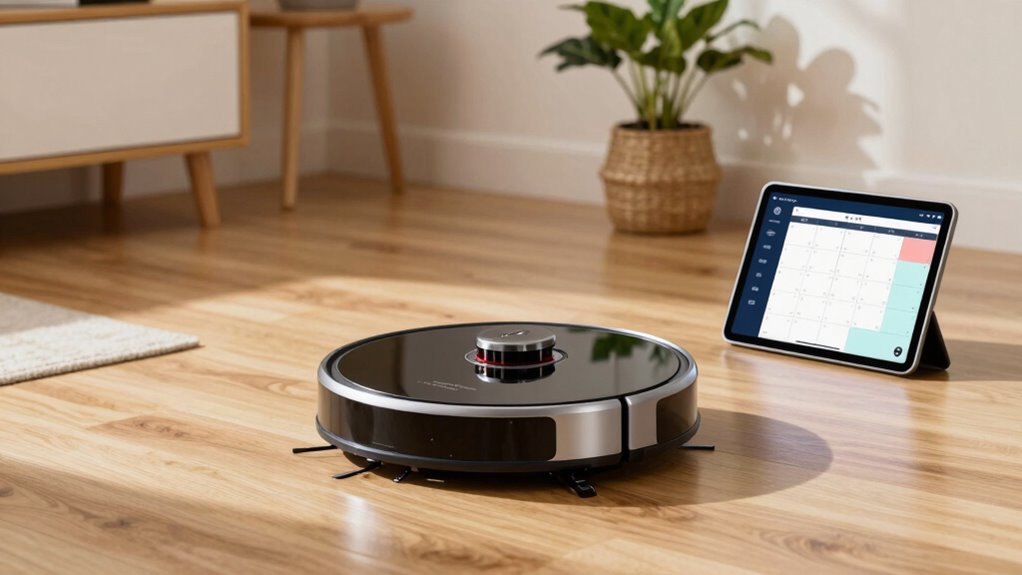
Have you ever wondered how to keep your home consistently clean without sacrificing your free time? Setting up a smart cleaning schedule with your robot vacuum can make a huge difference, especially if you’re dealing with pet hair and allergy control. Pets shed constantly, and their fur often gets embedded deep into carpets and upholstery, making it tough to keep things tidy with just manual vacuuming. By establishing a routine, your robot vacuum can handle these tasks regularly, preventing pet hair from piling up and reducing allergens that can trigger allergies.
The key is to schedule your robot vacuum to run frequently enough to keep pet hair at bay without overdoing it. For example, setting it to clean daily or every other day during times when you’re not home ensures that pet fur doesn’t accumulate into thick layers. This steady routine not only keeps your floors looking clean but also minimizes the amount of allergen particles in the air, which is *vital* for allergy control. You’ll notice fewer sneezing fits and less dust settling on surfaces, making your living environment healthier and more comfortable.
To make your schedule work effectively, consider your household’s routine. If you have pets that shed heavily, a twice-a-day cleaning might be ideal—once in the morning and once in the evening. For lighter shedding, a daily or every-other-day schedule may suffice. Many robot vacuums allow you to customize different cleaning zones or set specific times for certain days, so you can focus on high-traffic areas or rooms where your pets spend most of their time. This targeted approach ensures pet hair and allergens don’t become overwhelming, especially in bedrooms or living rooms where you relax. Additionally, utilizing smart scheduling features can help optimize cleaning times based on your household’s activity patterns. Incorporating effective pet hair removal techniques can further enhance the cleaning process and reduce allergens more efficiently.
Another smart move is syncing your robot vacuum with your home’s schedule. For instance, you can set it to run during your work hours or while you’re out running errands. This way, you come home to a clean space without the noise or disruption. Regular cleaning not only keeps floors free of pet hair but also prevents dust and dander from becoming airborne, which is *essential* for allergy control. Implementing air quality monitoring can help you track and improve indoor air conditions, supporting better allergen management. Additionally, using features like home air quality awareness can help you monitor and improve indoor air conditions, further supporting allergy management.
Over time, this routine reduces the need for deep cleaning and helps maintain a healthier home environment. In short, creating a logical, consistent schedule for your robot vacuum is one of the best ways to keep your house clean, manage pet hair, and control allergies. It’s an investment in your comfort and health, freeing up your time and energy while ensuring your home stays fresh and allergen-free. With a little planning, your robot vacuum becomes an invaluable tool in your household routine, working tirelessly to keep your space spotless.
As an affiliate, we earn on qualifying purchases.
Frequently Asked Questions
How Do Robot Vacuums Detect Dirty or High-Traffic Areas?
Your robot vacuum detects dirty or high-traffic areas through advanced sensor technology and dirt detection features. It uses sensors to map your space and identify areas with more debris or foot traffic. When dirt is detected, the vacuum automatically concentrates more cleaning time there. This smart system guarantees thorough cleaning by prioritizing dirtier spots, making your home cleaner without you having to manually guide the vacuum to specific areas.
Can Schedules Be Customized for Different Rooms or Zones?
A stitch in time saves nine, and customizing your schedule proves it. Yes, you can set room-specific or zone customization for your robot vacuum, ensuring it cleans where needed most. You simply program different times or frequencies for each zone, making your cleaning routine more efficient. This way, high-traffic areas get more attention, while less-used rooms are cleaned less often, saving you time and energy.
Do Robot Vacuums Learn and Adapt Over Time?
Yes, robot vacuums learn and adapt over time. They use machine learning and adaptive algorithms to recognize your home’s layout, obstacles, and cleaning patterns. As you use the vacuum, it improves efficiency by adjusting its routes and avoiding obstacles more effectively. This ongoing learning process helps the vacuum clean better, saves battery life, and guarantees your floors stay consistently tidy without manual intervention.
How Do Battery Life and Charging Affect Scheduling?
Imagine your robot vacuum gliding smoothly across your floor, but its battery life influences when it can clean. Battery life and charging routines directly impact your schedule — a full charge guarantees thorough cleaning, while low battery signals a recharge break. To optimize performance, set regular charging routines and monitor battery health. This way, your vacuum stays ready, and your cleaning schedule remains seamless, avoiding unexpected power drops mid-clean.
Are There Safety Features to Prevent Accidents During Cleaning?
Yes, safety features like safety sensors help prevent accidents during cleaning. These sensors detect obstacles, stairs, and drops, guiding the robot away from danger. When the sensors recognize potential hazards, the vacuum stops or changes direction, ensuring safety for you and your pets. By incorporating accident prevention technology, manufacturers make robot vacuums safer and more reliable, giving you peace of mind while your device navigates your home efficiently.
smart robot vacuum with scheduling
As an affiliate, we earn on qualifying purchases.
As an affiliate, we earn on qualifying purchases.
Conclusion
Just like a well-tuned orchestra, a thoughtful cleaning schedule keeps your home in harmony. When you plan your robot vacuum’s routines carefully, you’re conducting a symphony of cleanliness that works seamlessly, day after day. No more chaos, no missed spots—just the steady rhythm of a tidy space. Embrace this harmony, and let your robot do the work while you enjoy the serenity of a perfectly cleansed home, as if by magic.
robot vacuum with zone targeting
As an affiliate, we earn on qualifying purchases.
As an affiliate, we earn on qualifying purchases.
robot vacuum with air quality sensors
As an affiliate, we earn on qualifying purchases.
As an affiliate, we earn on qualifying purchases.
NFL season / tailgating Picks
team gear
As an affiliate, we earn on qualifying purchases.