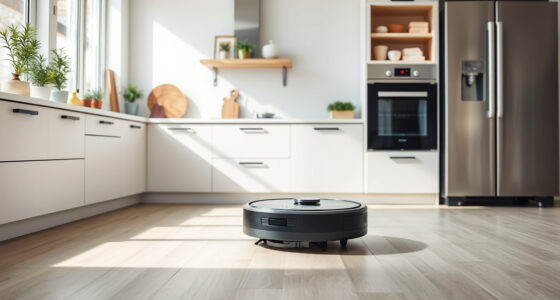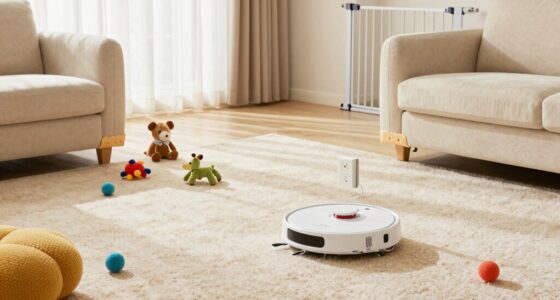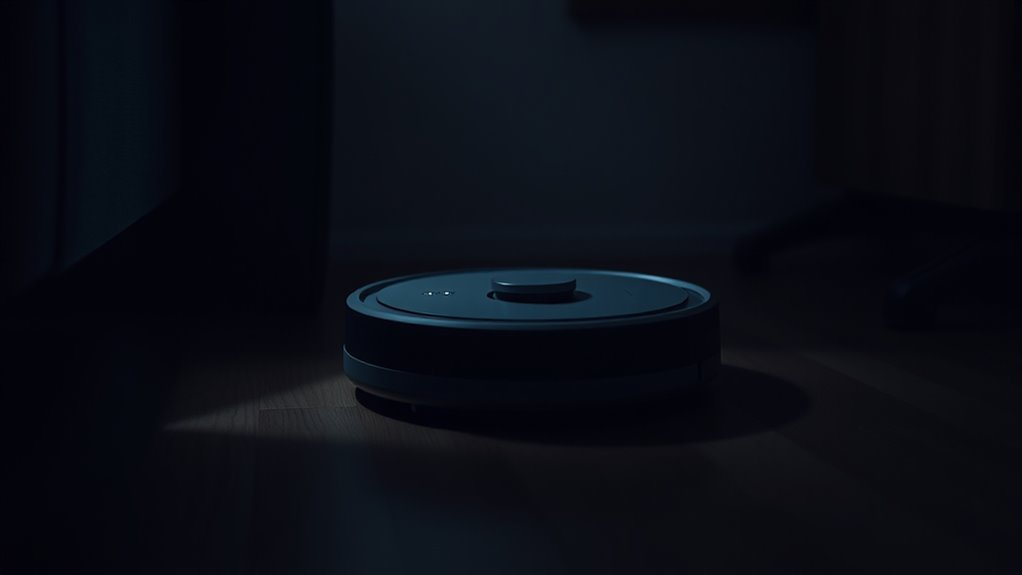

Robot vacuums don’t need light to work because they rely on sensor technologies like infrared, ultrasonic, and laser systems that operate independently of ambient lighting. These sensors help detect obstacles, navigate your home, and clean efficiently, even in complete darkness. Unlike older models with visual cameras, modern vacuums are designed for reliable performance without relying on light. Keep exploring to discover how these smart devices adapt to any lighting environment effortlessly.
Key Takeaways
- Most modern robot vacuums operate using sensor navigation and do not rely on ambient light.
- Infrared, ultrasonic, and LIDAR sensors enable effective cleaning in darkness.
- Obstacle detection and avoidance work independently of lighting conditions.
- Older models with visual cameras may struggle in low-light environments, but newer ones do not.
- Users can confidently operate robot vacuums anytime, including at night or with lights off.

Robot vacuums have revolutionized home cleaning, but many users wonder how light affects their performance. The truth is, most modern robot vacuums rely heavily on sensor navigation and obstacle detection rather than on ambient light. These devices are designed with sophisticated sensors that allow them to operate efficiently in various lighting conditions, including darkness. So, you don’t need to worry about turning on the lights for your robot to do its job effectively.
Sensor navigation is the cornerstone of how robot vacuums move around your home. Instead of relying on cameras or visual cues like human eyes, these vacuums use a combination of infrared sensors, ultrasonic sensors, and laser-based systems. Infrared sensors emit light that detects objects in the vacuum’s path, while ultrasonic sensors send out sound waves to measure distance. Laser-based systems, such as LIDAR, are particularly precise in mapping out rooms. Because these sensors don’t depend on external light, your robot vacuum can navigate seamlessly in the dark, avoiding furniture, walls, and other obstacles with ease. Additionally, many models incorporate advanced sensor technology that enhances their ability to operate in low-light or dark environments.
Obstacle detection plays a critical role in ensuring your robot vacuum doesn’t bump into things or get stuck. When the vacuum encounters an obstacle, its sensors immediately recognize it and adjust its path. This process works equally well whether it’s daytime or midnight. In fact, obstacle detection is often more reliable in low-light conditions because the vacuum isn’t trying to interpret visual images but instead relies on direct sensor feedback. This means your vacuum can efficiently detect and dodge objects without needing any light to “see” them.
Some older models that used only optical cameras or visual navigation systems might struggle in the dark, but most recent designs have moved away from this approach entirely. Instead, they focus on sensor navigation and obstacle detection that operate independently of light. This shift allows you to run your robot vacuum at any time — even when the lights are off or if you’re not around — and still get a thorough cleaning.

Tikom Robot Vacuum and Mop, 6000Pa Robotic Vacuum Cleaner with Self-Emptying Base, 90 Days Capacity, LiDAR Navigation, Home Mapping, Ideal for Pet Hair, Hard Floors, Carpet (L8000 Plus)
- Long-Lasting Self-Emptying Dustbin: 90-day hands-free cleaning with 3L dustbag
- Powerful Suction: 6000Pa suction lifts debris and pet hair
- Adaptive Suction Power: Increases suction on carpets automatically
As an affiliate, we earn on qualifying purchases.
As an affiliate, we earn on qualifying purchases.
Frequently Asked Questions
Can Robot Vacuums Operate Without Any Light Source?
Yes, robot vacuums can operate without light because they mainly rely on visual navigation and obstacle detection sensors. These vacuums use infrared or ultrasonic sensors to detect obstacles and map your space, so darkness doesn’t hinder their cleaning. You don’t need to turn on lights; they’ll navigate efficiently in the dark, making cleaning convenient and effective regardless of lighting conditions.
Do Robot Vacuums Use Infrared Sensors or Cameras?
Think of your robot vacuum as a silent guardian, using infrared sensors instead of cameras. It relies on sensor calibration to detect obstacles, steering your home efficiently even in darkness. Infrared sensors emit beams that bounce back, helping your vacuum recognize objects and avoid collisions. Unlike cameras, they don’t need light, making your cleaning process seamless. You get smarter obstacle detection without worrying about lighting conditions.
How Do Robot Vacuums Navigate in Complete Darkness?
Robot vacuums navigate in complete darkness using advanced mapping and obstacle avoidance technologies. They rely on infrared sensors, LIDAR, or cameras to create detailed maps of your space, allowing precise movement without light. These systems help the vacuum detect obstacles and avoid collisions, ensuring thorough cleaning even in complete darkness. So, you don’t need to worry about turning on lights; your robot vacuum handles dark rooms effortlessly.
Are There Any Models Specifically Designed for Dark Environments?
Yes, some robot vacuums are designed for dark environments, featuring advanced night vision and sensor technology. These models use infrared sensors and cameras that work in low light, so you don’t need to worry about cleaning in the dark. Even if you think your space is too dark, these vacuums can navigate efficiently, making them perfect for nighttime cleaning or dimly lit areas.
Does the Absence of Light Affect Cleaning Efficiency?
The absence of light doesn’t substantially affect your robot vacuum’s cleaning efficiency because it relies mainly on sensors like infrared and ultrasonic, not ambient lighting. These sensors detect obstacles, edges, and dirt regardless of light conditions. As long as your space is well-lit enough for ambient lighting to assist sensor function, your vacuum will clean effectively in the dark, ensuring thorough results without needing additional light sources.

Goodsby Replacement Cliff Drop Infrared Side Sensors for Shark IQ Robot Vacuums RV1001AE RV912S RV913S RV1000S QR1000SG AV1002AE AV1010AE AV911S QR1000SB UR1000SR UR1005AE RV1101ARUS UR1105ARUS
- Compatibility: Fits specific Shark IQ Robot models
- Model Check Reminder: Verify your vacuum model before ordering
- Compatibility Note: Not compatible with 7xx, 8xx, 20xx series
As an affiliate, we earn on qualifying purchases.
As an affiliate, we earn on qualifying purchases.
Conclusion
So, do robot vacuums need light to do their job? Not really. Most rely on sensors and cameras, which work just fine in the dark. As long as your robot has the right technology, it can clean efficiently without any light. Isn’t it great to have a device that works around your schedule, day or night? Rest assured, you don’t need to keep the lights on for your robot to keep your floors spotless.

DREAME L40s Ultra CE Robot Vacuum and Mop Combo with Self-Emptying Dock, 13,000Pa Suction, Mop Self-Cleaning and Auto-Raising, Ultrasonic Carpet Sensing, Ideal for Pet Hair, Carpet and Hard Floors
- High Suction Power: 13,000Pa for deep cleaning
- Self-Emptying Base: Automatic dust disposal and maintenance
- Long-Lasting Dust Capacity: Holds up to 100 days of dust
As an affiliate, we earn on qualifying purchases.
As an affiliate, we earn on qualifying purchases.

ROPVACNIC Robot Vacuum Cleaner Robot Vacuum and Mop Combo with 5200Pa Suction, Personalized Cleaning Adjustments, Self-Charging Robotic Vacuum Cleaner, Advanced Obstacle Avoidance
- 2-in-1 Vacuum and Mop: Advanced electronic mopping technology with adjustable water tank
- Smart Control & Voice Commands: Multiple cleaning modes, app control, Alexa, Google Assistant
- Powerful 5200Pa Suction: Strong suction with 3-point cleaning system for thorough dirt removal
As an affiliate, we earn on qualifying purchases.
As an affiliate, we earn on qualifying purchases.