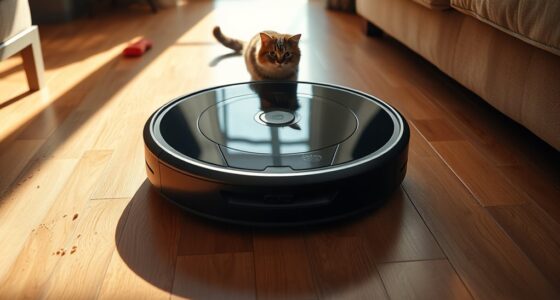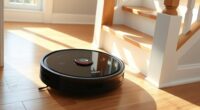
Robot vacuums can scratch hardwood floors if they use stiff or aggressive brushes, but many models with soft, silicone, or rubber brushes are designed to protect your wood surfaces. Choosing a vacuum with adjustable or soft brushes, along with features like sensors for delicate areas, helps prevent damage. If you want to make certain your floors stay pristine while enjoying the convenience of a robot vacuum, there’s more to consider to keep your wood surfaces safe.

Get home appliances delivered free — and shop member deals
- Fast, free delivery on millions of items
- Access to Prime Big Deal Days deals on October 6–7
- Prime Video, Amazon Music and more included
Key Takeaways
- Soft, silicone, or rubber brushes in robot vacuums reduce the risk of scratching hardwood surfaces.
- Adjustable or soft brush settings help prevent excessive contact pressure on delicate wood floors.
- Vacuums with bumper sensors and soft-touch features offer additional protection against surface damage.
- Regular maintenance of brushes prevents debris buildup that can scratch or gouge hardwoods.
- Choosing models designed for hardwood floors ensures safer cleaning without damaging wood surfaces.

Robot vacuums have become a popular solution for keeping hardwood floors spotless with minimal effort. They’re convenient, efficient, and designed to handle daily cleaning without much input from you. However, many hardwood floor owners worry about potential damage, especially scratches caused by the vacuum’s brushes. Understanding how brush types and floor sensitivity affect your wood surfaces can help you choose and use a robot vacuum safely.
One of the key factors that influence whether a robot vacuum will scratch your hardwood is the type of brushes it uses. Most models come with either bristle brushes, silicone or rubber brushes, or a combination of both. Bristle brushes, while effective at picking up dirt and debris from carpets, can sometimes be too harsh on delicate wood surfaces. Over time, aggressive bristles may cause tiny scratches, especially if they are stiff or if debris becomes embedded in them. Conversely, silicone or rubber brushes tend to be gentler, gliding smoothly across the floor’s surface without causing damage. These softer materials reduce the risk of scratching and are often recommended for hardwood floors, particularly if your wood is finished with a sensitive or matte coating.
Bristle brushes can scratch hardwood; silicone or rubber brushes are gentler options.
Floor sensitivity is another vital aspect to take into account. Hardwood floors vary in finish and hardness, making some more prone to scratches than others. For floors with a softer finish or those that are older and more delicate, you’ll want a robot vacuum that’s gentle by design. Many models now include adjustable or soft brush settings, which help minimize contact pressure and reduce potential harm. Additionally, some vacuums are equipped with sensors that detect areas with more vulnerability, slowing down or avoiding contact altogether. Paying attention to your floor’s specific sensitivity level can guide you toward a vacuum with appropriate brush types and settings, protecting your wood surfaces over time. Moreover, choosing a vacuum with soft-touch features can further reduce the risk of scratches and ensure safe cleaning for delicate hardwoods.
To further safeguard your floors, look for robot vacuums that feature bumper sensors or soft-touch skirts, which prevent the brushes from pressing too hard against the surface. Regular maintenance, like cleaning the brushes and ensuring they aren’t clogged with debris, also prevents scratching. When choosing a robot vacuum, prioritize models that explicitly mention compatibility with hardwood floors and have soft or adjustable brushes. Using a vacuum with the right brush type and understanding your floor’s sensitivity ensures you keep your hardwood looking pristine without risking scratches or damage.
robot vacuum for hardwood floors
As an affiliate, we earn on qualifying purchases.
As an affiliate, we earn on qualifying purchases.
Frequently Asked Questions
Are Robot Vacuums Safe for All Types of Hardwood Finishes?
Robot vacuums are generally safe for most hardwood finishes if you check their vacuum compatibility with your floor type. You should choose models with soft brushes and gentle suction to prevent scratches or damage. Always verify your vacuum’s specifications against your floor finish to guarantee compatibility. Regularly clean the brushes and filters to maintain ideal performance, and avoid overly aggressive cleaning modes for delicate wood surfaces.
How Often Should I Clean My Robot Vacuum’s Brushes?
Think of your robot vacuum’s brushes as the heart of its cleaning power. You should clean the brushes weekly to prevent dirt buildup and maintain efficiency. Regular maintenance tips, like removing hair and debris, keep the brushes functioning smoothly. Replace the brushes every six months or sooner if they show signs of wear. This routine keeps your vacuum working *effectively* and protects your hardwood floors from scratches caused by debris or worn bristles.
Can Robot Vacuums Damage Delicate or Antique Wood Floors?
Robot vacuums generally won’t damage delicate or antique wood floors if you choose models with soft brushes and gentle suction. However, excessive vacuum noise or debris caught in brushes can cause scratches over time. To protect your floors and battery longevity, regularly clean the brushes, avoid high suction settings, and monitor the vacuum’s operation. This way, you preserve your antique surfaces and keep your vacuum running smoothly.
Do Robot Vacuums Work Well on Uneven or Textured Hardwood Surfaces?
You know what they say—”a smooth sea never made a skilled sailor,” and the same applies to vacuum navigation. Robot vacuums handle uneven or textured hardwood surfaces well if they have advanced sensors to detect surface irregularities. Their navigation adapts to uneven terrains, ensuring thorough cleaning without scratching. Just choose models with good obstacle detection, and you’ll keep your floors protected while enjoying a hassle-free clean.
What Features Should I Look for to Prevent Scratches on Wood Floors?
To prevent scratches on your wood floors, look for a robot vacuum with a soft brush and bumper sensors. The soft brush gently cleans without scratching, while bumper sensors help the vacuum navigate smoothly around furniture and walls, avoiding collisions that could cause damage. These features work together to protect your hardwood floors, ensuring a safe, effective clean without risking surface damage.
As an affiliate, we earn on qualifying purchases.
Conclusion
Just as Daedalus crafted wings to navigate the skies without harm, you can choose a robot vacuum that respects your hardwood floors. With proper care and the right features, your floors stay pristine, free from scratches and damage. Think of your floors as a canvas—delicate yet resilient. By selecting wisely, you guarantee your home’s foundation remains as timeless as the myths that remind us of the importance of craft and caution.
robot vacuum with bumper sensors
As an affiliate, we earn on qualifying purchases.
As an affiliate, we earn on qualifying purchases.
vacuum with adjustable brush settings
As an affiliate, we earn on qualifying purchases.
As an affiliate, we earn on qualifying purchases.
Fall yard work Picks
leaf blowers
As an affiliate, we earn on qualifying purchases.