To stop your robot vacuum from pushing around small toys, gather toys in a designated storage bin or remove them from high-traffic areas before cleaning. Regularly clean and calibrate the vacuum’s sensors to improve obstacle detection. Consider upgrading to a model with advanced sensors or camera navigation for better obstacle avoidance. Proper maintenance and smart toy placement help, but exploring more about sensor options will give you even better control over your vacuum’s behavior.

Get home appliances delivered free with Prime
- Fast, free delivery on millions of items
- Prime Video, Amazon Music and more included
- Member-only deals all year
Key Takeaways
- Gather and store small toys in designated bins before running the vacuum.
- Regularly clean and calibrate the vacuum’s sensors for accurate obstacle detection.
- Use models with advanced sensors or camera systems for better obstacle avoidance.
- Remove small objects from high-traffic or cleaning zones to prevent pushing around.
- Update firmware or upgrade to newer models with improved sensor technology.
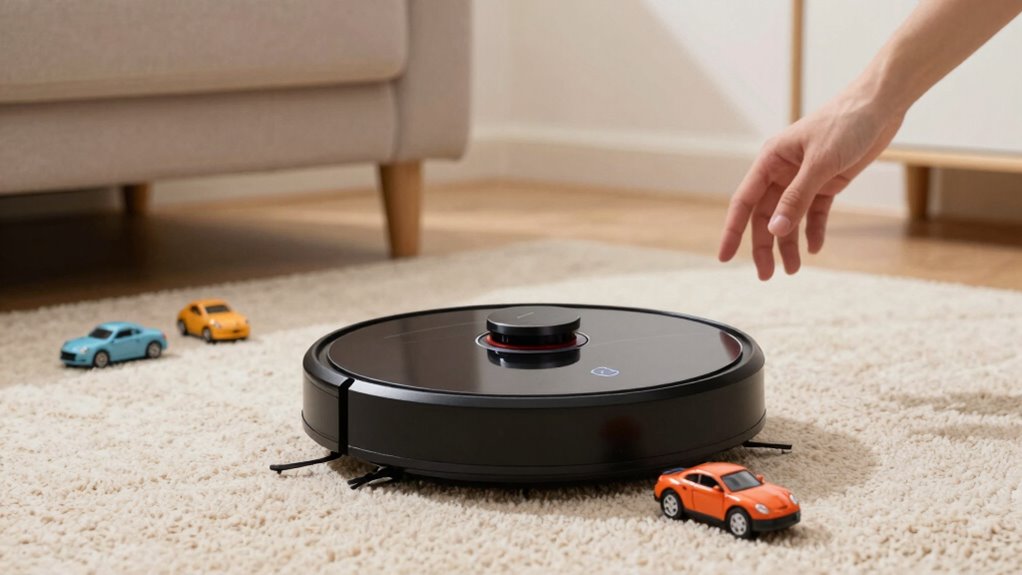
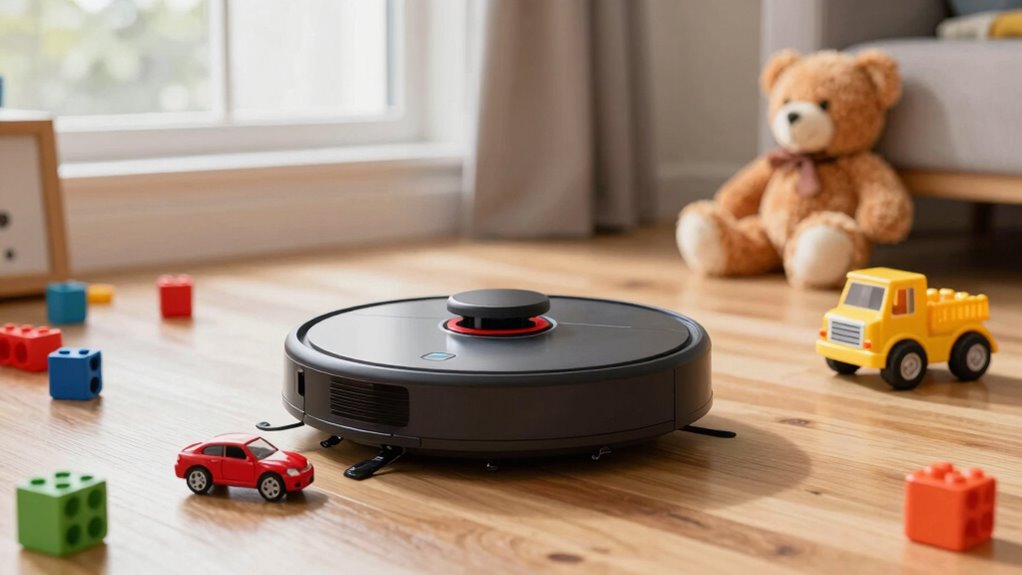
If you’ve noticed your robot vacuum pushing around small toys instead of cleaning around them, you’re not alone. Many robot vacuums rely on sensors to navigate your home efficiently, but these sensors can sometimes misinterpret small objects as obstacles or pathways. When this happens, the vacuum might push toys around instead of avoiding or cleaning near them. To fix this, understanding how robot vacuum sensors work can help you manage the situation better. These sensors include infrared, ultrasonic, and cliff sensors, which detect objects and changes in floor height. If the sensors aren’t properly calibrated or if small objects are in their blind spots, the vacuum might push toys around rather than bypass them.
One of the most effective ways to prevent your robot vacuum from pushing small toys is implementing toy placement strategies. Instead of leaving toys scattered across the floor, gather them in specific areas or containers before running the vacuum. This reduces the chances of toys getting in the way of the vacuum’s sensors and helps it navigate more smoothly. If you have a designated toy box or storage bin, make sure to use it consistently, so toys aren’t left in the vacuum’s path. Additionally, consider removing small items from high-traffic cleaning zones, especially if your vacuum tends to push rather than avoid them. Regular sensor maintenance can also improve obstacle detection and prevent push-around incidents.
Gather toys beforehand and store them in designated bins to prevent vacuum pushing and ensure smooth cleaning.
Adjusting or upgrading your robot vacuum’s sensors can also improve its obstacle detection. Some models allow for sensor calibration through the app or settings menu. Updating the firmware or replacing worn sensors can enhance obstacle recognition, making the vacuum less likely to push toys around. If your model doesn’t have such features, you might want to consider a robot vacuum with more advanced sensors that offer better obstacle avoidance. These models often use a combination of sensors and camera systems to identify and navigate around small objects more intelligently. Understanding the sensor technology in your vacuum can make a significant difference in its performance and your overall experience. Proper sensor calibration can help your vacuum distinguish between small toys and furniture, reducing push-around incidents. Additionally, learning about the sensor types used in your device can help you troubleshoot and optimize its navigation capabilities.
robot vacuum obstacle detection sensors
As an affiliate, we earn on qualifying purchases.
As an affiliate, we earn on qualifying purchases.
Frequently Asked Questions
Can Robot Vacuums Detect and Avoid Small Toys Automatically?
Yes, many robot vacuums now feature toy detection and obstacle avoidance technology that helps them automatically identify and steer clear of small toys. These vacuums use sensors and cameras to detect obstacles in their path, allowing them to navigate around toys safely. By enabling obstacle avoidance, you reduce the chances of your vacuum pushing or trapping small toys, ensuring a smoother cleaning experience and protecting your belongings from damage.
What Accessories Can Help Prevent Robot Vacuum Pushing Small Objects?
Ever wondered how to prevent your robot vacuum from pushing small objects? You can use toy barriers or upgrade its sensors to better detect obstacles. Toy barriers create physical boundaries, keeping tiny items out of the vacuum’s way. Sensor upgrades enhance its ability to recognize and avoid small objects, reducing pushing incidents. These accessories make your cleaning smarter and safer, so you won’t have to worry about tiny toys getting pushed around anymore.
How Often Should I Clean the Robot Vacuum’s Sensors?
You should clean your robot vacuum’s sensors weekly to maintain ideal performance. Regular cleaning prevents dust buildup, which can impair sensor calibration and cause navigation issues. Use a soft, dry cloth to gently wipe the sensors, ensuring they stay free of debris. Proper sensor maintenance helps your vacuum avoid pushing small toys around and keeps it running smoothly, so you can enjoy a cleaner home with less hassle.
Are There Specific Robot Models Better at Handling Small Toys?
Some robot models excel at handling small toys thanks to advanced obstacle detection features. Look for models with good obstacle detection sensors and consider using toy storage solutions to keep small items out of the way. These features help your vacuum navigate more effectively, reducing the chance of pushing toys around. Investing in a model with reliable obstacle detection will make cleaning smoother and prevent toys from interfering with your robot’s operation.
Can Customizing the Robot’s Cleaning Schedule Reduce Toy Displacement?
Customizing your robot’s cleaning schedule can definitely reduce toy displacement. By scheduling cleaning times after you’ve tidied up or secured small toys in toy storage, you minimize the chances of the vacuum pushing them around. Adjust your cleaning routines to avoid times when toys are scattered, and make sure the robot operates in clutter-free zones. This way, you protect your toys and keep your floors cleaner without constant supervision.
best robot vacuum with camera navigation
As an affiliate, we earn on qualifying purchases.
As an affiliate, we earn on qualifying purchases.
Conclusion
To keep your small toys safe, stay vigilant, stay proactive, and stay consistent. Regularly pick up and clear clutter, set boundaries for toy areas, and teach your family to be mindful of the robot vacuum’s path. By doing so, you create a clean, safe, and harmonious space where your toys stay put, your vacuum runs smoothly, and your home feels organized. Embrace these habits, and enjoy a clutter-free, fuss-free environment every day.
robot vacuum sensor calibration kit
As an affiliate, we earn on qualifying purchases.
As an affiliate, we earn on qualifying purchases.
small toy storage bins for robot vacuum
As an affiliate, we earn on qualifying purchases.
As an affiliate, we earn on qualifying purchases.
Cold & flu season Picks
humidifiers
As an affiliate, we earn on qualifying purchases.