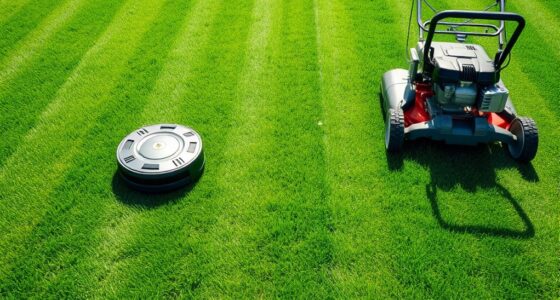
When installing a boundary wire for your robot mower, plan your layout carefully, considering trees, flowerbeds, and slopes to avoid obstacles. Use durable copper wire and secure it with staples every few feet to keep it taut and prevent signal issues. Test the boundary after installation and adjust the mower’s sensors if needed. Regularly inspect and repair the wire to guarantee smooth operation. Keep these tips in mind, and you’ll set up a reliable boundary system with confidence.
Prime for Young Adults — start your free trial
Fast free delivery, streaming and member deals for eligible 18–24 year olds.
As an affiliate, we earn on qualifying purchases.
Key Takeaways
- Plan your boundary layout carefully, considering landscape features and obstacles to ensure complete coverage.
- Choose durable, weather-resistant copper core wire and secure connections with proper connectors.
- Bury the wire taut and securely with staples or landscape pins to prevent movement and signal loss.
- Test the boundary after installation, calibrate sensors, and adjust settings for accurate mower navigation.
- Regularly inspect and repair the wire to prevent damage, interference, and maintain reliable boundary detection.
As an affiliate, we earn on qualifying purchases.
Planning Your Mowing Area and Boundary Layout
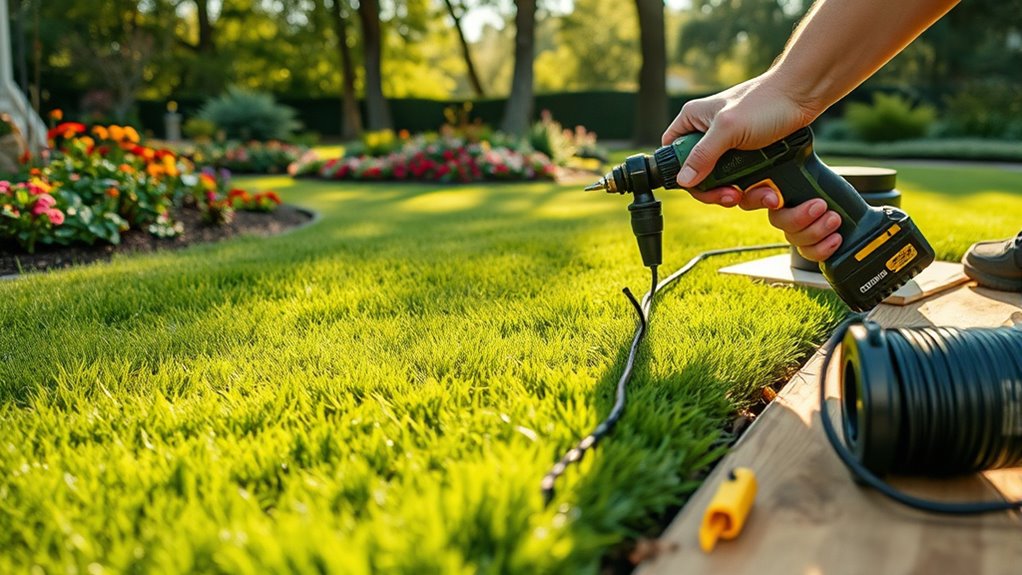
Before installing the boundary wire, you need to carefully plan your mowing area and layout. Start by considering landscape features like trees, flowerbeds, and slopes, which influence your boundary design. Think about how the mower will navigate around obstacles and ensure the space is accessible for maintenance. Measure your yard to determine the total area and decide where to place boundary wires for ideal coverage. Keep in mind that sharp corners or irregular shapes may require extra wire or specific boundary adjustments. Proper planning helps prevent gaps or overlaps, making the mowing process smooth and efficient. By paying attention to landscape considerations and designing your boundary carefully, you set the foundation for a successful robotic mowing system.
weather-resistant copper boundary wire for robotic lawn mower
As an affiliate, we earn on qualifying purchases.
As an affiliate, we earn on qualifying purchases.
Choosing the Right Boundary Wire and Tools

Selecting the appropriate boundary wire and tools is essential for a smooth installation process. The wire material you choose impacts durability and conductivity; copper core wires are popular for their reliability, while aluminum options may be more affordable but less durable. Consider weather resistance if your boundary runs outdoors. Tool selection is equally important—use a wire stripper to prepare the wire ends properly, and choose a sturdy spade or digging tool for burying the wire without damaging it. A good quality wire connector can ensure secure connections, preventing future issues. Make sure your tools match the wire gauge and type you’ve selected. Proper wire material and the right tools make installation easier, reduce errors, and help your robot mower operate smoothly within its boundary.
garden landscape staples for wire securing
As an affiliate, we earn on qualifying purchases.
As an affiliate, we earn on qualifying purchases.
Properly Installing and Securing the Boundary Wire

Once you’ve chosen the right boundary wire and tools, the next step is to carefully install and secure the wire along your designated perimeter. Make sure the wire’s insulation is intact to prevent damage from moisture or soil contact. When laying the wire, keep it taut and avoid crossing over itself to ensure consistent signals. Secure the wire with staples or landscape pins, placing them every few feet to prevent movement. Proper securing minimizes the risk of signal interference caused by loose or exposed wire sections. Be cautious around metal objects or underground utilities, as they can disrupt the signal. Double-check that the wire remains insulated and firmly anchored throughout the installation to maintain a clear boundary for your robot mower’s navigation.
robot mower boundary wire connector
As an affiliate, we earn on qualifying purchases.
As an affiliate, we earn on qualifying purchases.
Testing the Boundary and Adjusting Settings
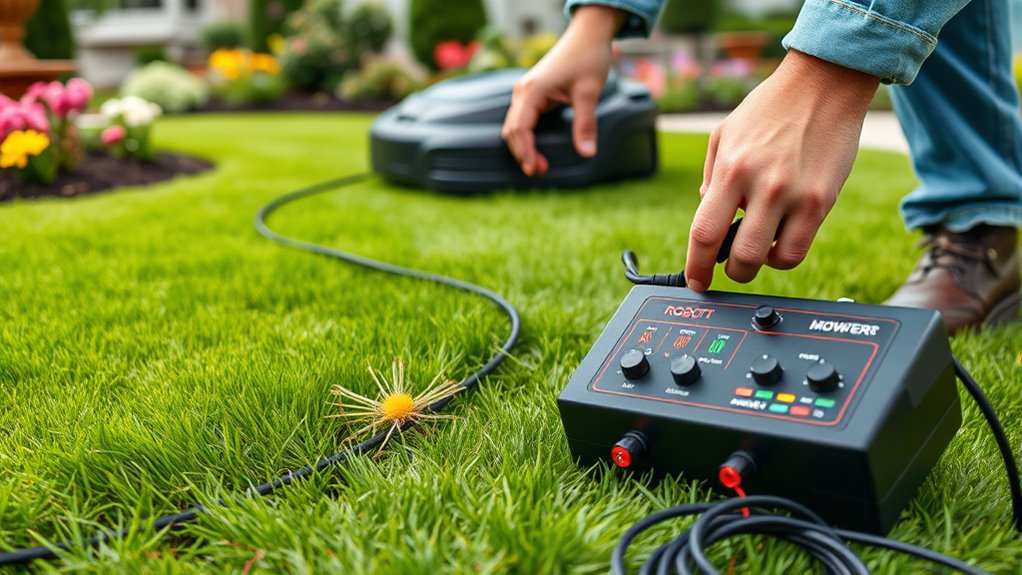
After installing the boundary wire, making sure to test the boundary is essential to confirm your robot mower recognizes the limits correctly. Turn on your mower and observe how it navigates the area. If it fails to stay within boundaries, you may need to calibrate the sensors, ensuring they properly detect the wire signal. Be aware of potential signal interference from nearby electronic devices or thick grass, which can disrupt communication. Adjust the boundary settings or reposition the wire if interference persists. Use the mower’s calibration tools to fine-tune sensor sensitivity, ensuring accurate boundary detection. Testing and adjusting these settings helps prevent the mower from crossing limits or missing boundary cues, ultimately optimizing its performance and ensuring a clean, well-maintained lawn.
Tips for Maintaining and Troubleshooting Your Boundary Wire
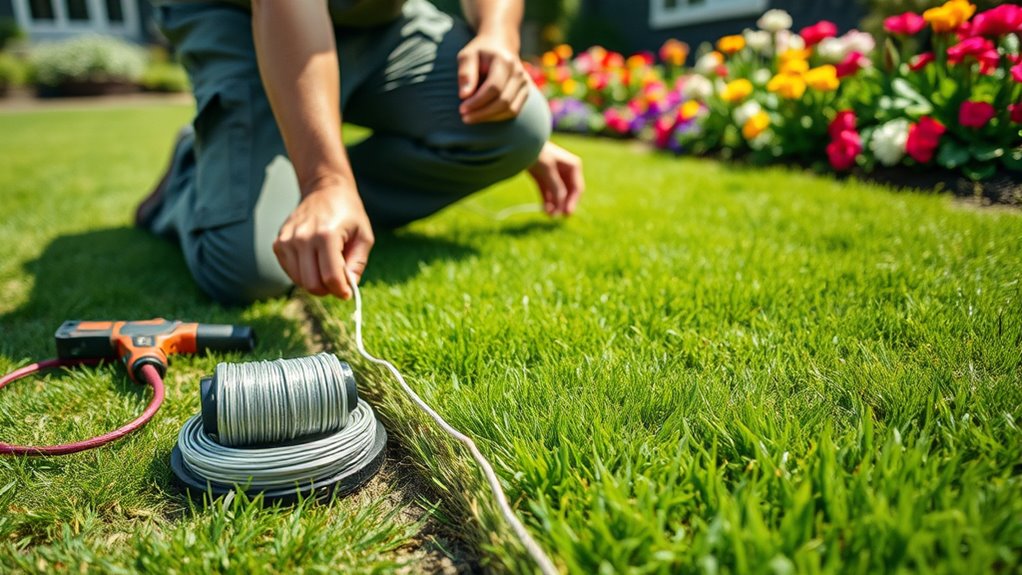
Regularly inspecting and maintaining your boundary wire guarantees your mower stays within the designated area. Check for any signs of wire damage or wear, especially at connection points, to prevent the need for wire repair. Keep the wire buried properly, avoiding areas prone to digging or heavy traffic, which can cause breaks. Signal interference from metal objects, thick vegetation, or electrical devices can disrupt communication, so reposition the wire or eliminate interference sources. If your mower isn’t responding correctly, test the wire with a multimeter for continuity. Repair any breaks immediately using appropriate wire connectors. Staying vigilant with these maintenance routines ensures smooth operation and prevents costly repairs, keeping your lawn neatly mowed and your boundary secure.
Frequently Asked Questions
How Long Does It Typically Take to Install Boundary Wire?
Installing boundary wire usually takes about 2 to 4 hours, depending on your yard’s size and complexity. You’ll need to plan your wire placement carefully, ensuring it follows the perimeter and any obstacles. The process involves laying the wire, securing it, and testing the system. With patience and proper tools, you can complete the installation efficiently, giving your robot mower a clear boundary to work within.
Can Boundary Wire Be Installed Underground or Above Ground?
You can install boundary wire both underground and above ground, depending on your preferences and installation methods. Underground wiring offers better wire durability and is hidden, providing a cleaner look and protection from weather and damage. Above ground wiring is easier to install and adjust but may be more vulnerable to wear. Choose the method that best suits your yard’s layout and your maintenance preferences for a reliable robot mower boundary.
What Type of Terrain Is Best Suited for Boundary Wire Installation?
Think of your yard as a carefully curated garden of Eden. You’ll want well-drained, relatively flat terrain with loose soil conditions for easy boundary wire installation. Avoid rocky or compacted soil that hampers obstacle clearance. Gentle slopes are manageable, but steep inclines might cause issues. Clear away debris and avoid obstacles to guarantee smooth wiring and ideal mower performance. This way, your robot mower can navigate seamlessly, like a modern-day explorer in perfect terrain.
How Do I Prevent Wire Damage From Lawn Equipment?
To prevent wire damage from lawn equipment, make sure to maintain proper equipment clearance around the boundary wire. Use protective wire insulation to shield the wire from accidental nicks or cuts. When mowing or using other equipment, keep blades and tools at a safe distance from the wire. Regularly inspect the wire for any signs of damage and promptly repair any issues to guarantee your robot mower’s boundary stays intact.
Is It Necessary to Hire a Professional for Installation?
You don’t have to hire a professional for your boundary wire installation; many homeowners successfully do DIY setups. Imagine saving hundreds of dollars and gaining a sense of accomplishment as you carefully lay out the wire, avoiding lawn equipment damage. While professional assistance can ensure perfect placement, if you’re comfortable with basic tools and follow clear instructions, a DIY installation works well. Just take your time and be precise.
Conclusion
By following these tips, you’ll guarantee your robot mower’s boundary wire is installed correctly, keeping your lawn perfectly trimmed. Did you know that a well-installed boundary wire can increase your mower’s efficiency by up to 30%? With proper planning and maintenance, you’ll enjoy a lush, well-maintained yard without the hassle. Keep an eye on your boundary wire, and your mower will work flawlessly, giving you more time to relax and enjoy your beautiful lawn.
NFL season / tailgating Picks
team gear
As an affiliate, we earn on qualifying purchases.