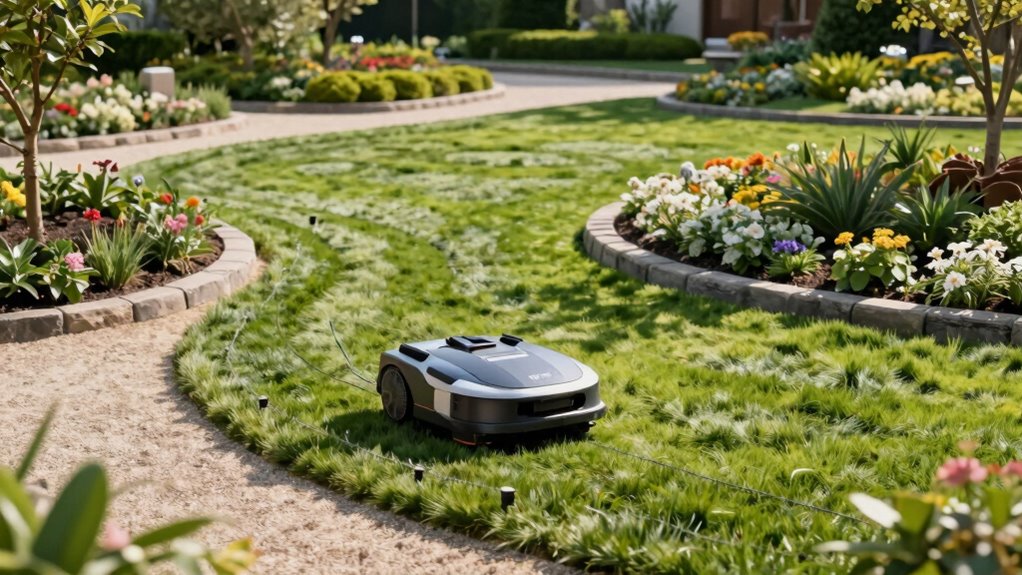

To make your complex lawn easier for a robot mower, start by removing or trimming obstacles like trees, shrubs, and furniture. Install boundary wires to clearly define mowing zones and prevent wandering into unsafe areas. Level uneven ground, add ramps or mats where needed, and create smooth pathways. Regularly maintain sensors and blades for peak performance. With these steps, your lawn becomes safer and easier for your mower to navigate—continue to discover more effective tips.

Get home appliances delivered free with Prime
- Fast, free delivery on millions of items
- Prime Video, Amazon Music and more included
- Member-only deals all year
Key Takeaways
- Clearly define boundaries with boundary wires or barriers to restrict mower movement and prevent it from entering complex or unsafe areas.
- Remove or trim obstacles and overgrown plants to create unobstructed pathways and reduce sensor interference.
- Level uneven terrain and install ramps or mats in difficult spots to ensure smooth traversal and prevent tipping.
- Regularly clean sensors and update software to maintain accurate obstacle detection and navigation.
- Program no-go zones and adjust obstacle sensitivity to customize mower operation around complex or sensitive lawn features.
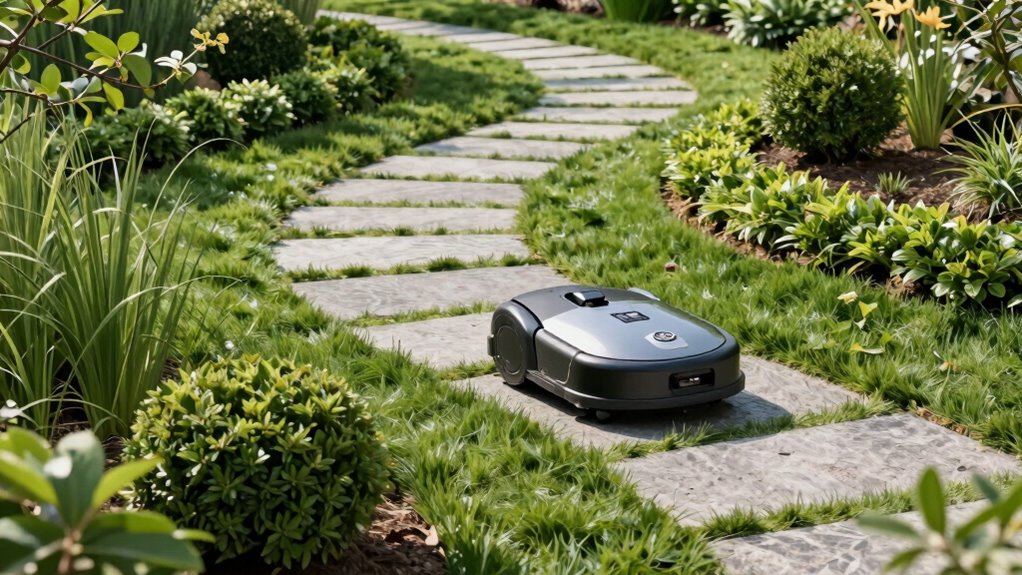
A complex lawn can be challenging for a robot mower to navigate efficiently, but with some strategic planning, you can make the terrain much easier for your device. The key is to focus on robot mower safety and lawn obstacle management. When your mower can safely handle obstacles and avoid hazards, it will work more effectively and reduce the risk of damage or accidents.
Start by evaluating your lawn thoroughly. Identify all the obstacles—trees, flower beds, garden furniture, or uneven patches—that could interfere with the mower’s path. Once you’ve pinpointed these, you can take steps to manage them. For instance, trim back overgrown plants or shrubs that might block the mower’s sensors or cause it to get stuck. Creating clear pathways ensures your mower can move freely without constantly stopping or rerouting, which improves efficiency and prolongs its lifespan.
Installing physical boundaries is also essential. Use boundary wires or artificial barriers to define the mowing area clearly. These barriers help the mower recognize where it can and cannot go, reducing the chances of it bumping into objects or wandering off into unsafe zones. Proper boundary setup is critical for lawn obstacle management because it guides your mower safely around tricky spots, maintaining a safe operating environment—an important aspect of robot mower safety. Additionally, regularly updating the boundary setup as your lawn changes can help prevent the mower from encountering new obstacles unexpectedly.
If your lawn has particularly tricky terrain, such as slopes or uneven ground, consider leveling or grading those areas. Smooth, even surfaces prevent the mower from slipping or tipping over, which not only improves safety but also ensures consistent mowing. For areas that are difficult to modify, you might install ramps or mats to help the mower traverse challenging sections more smoothly. Additionally, researching lawn terrain modifications can provide innovative solutions for difficult areas. Staying informed about sensor technology improvements can also enhance obstacle detection accuracy over time. *Furthermore, using software updates provided by manufacturers can optimize your mower’s obstacle avoidance features.*
Regularly check and maintain your mower’s sensors and blades. Dirty sensors can impair obstacle detection, leading to potential collisions, while dull blades reduce cutting efficiency. Keeping these components in top condition is crucial for both robot mower safety and effective lawn obstacle management. Moreover, consulting manufacturers’ guidelines can help ensure you are following the best practices for maintenance and safety protocols. Additionally, understanding the emerging trends in digital publishing can help you stay informed about innovative tools and techniques to optimize your mower’s performance and yard management strategies.
Finally, consider programming your mower with custom settings suited to your lawn’s complexity. Some models allow you to define no-go zones or adjust obstacle sensitivity. These features help your mower adapt to the unique challenges of your yard, making the entire process safer and more efficient. With these steps, you’ll find your complex lawn becomes much more manageable for your robot mower, ensuring a tidy yard without the usual hassle.
Products Worth Considering

Ring Alarm 8-Piece Kit (2nd Gen) Home Security System

Philips Hue White and Color Ambiance Smart Light Starter Kit with Bridge and 4 A19 Bulbs

Ring Alarm 14-Piece Wireless Security System Kit
As an affiliate, we earn on qualifying purchases.
Frequently Asked Questions
How Does Terrain Slope Affect Robot Mower Performance?
Terrain slope considerably affects your robot mower’s performance by challenging its slope navigation abilities. Steeper slopes can cause stability issues, making it harder for the mower to maintain traction and avoid tipping. To improve performance, choose a mower with strong slope-handling features and reduce terrain challenges where possible. Properly leveling or creating flat zones helps your mower navigate more efficiently, ensuring thorough mowing without risking equipment damage or accidents.
Can Robot Mowers Handle Wet or Muddy Lawns?
Yes, robot mowers can handle wet or muddy lawns, but their navigation may become challenging. Excessive moisture affects lawn moisture levels, making the terrain slippery and increasing the risk of clogging or slipping. You should monitor weather conditions, avoid mowing during heavy rain, and make sure the mower’s sensors stay clean. Proper maintenance and adjusting mowing schedules help your robot mower perform at its best, even when the lawn is damp.
What Safety Features Are Essential for Complex Lawns?
On complex lawns, you need safety features like obstacle detection and boundary setting. Obstacle detection prevents your mower from hitting plants, furniture, or uneven terrain, reducing damage. Boundary setting ensures the mower stays within designated areas, avoiding hazards like ponds or steep slopes. These features work together to make mowing safer and more efficient, giving you peace of mind while maintaining your lawn’s intricate landscape.
How Often Should I Maintenance My Robot Mower?
You should maintain your robot mower every 1 to 2 weeks, depending on usage and lawn complexity. Regular maintenance boosts battery longevity and guarantees ideal cutting height. Check and clean the blades, empty the grass collector, and inspect the wheels for debris. Adjust the cutting height as needed to match your lawn’s terrain. Consistent upkeep keeps your mower running smoothly, extends battery life, and maintains an even, healthy lawn.
Are There Specific Lawn Types Unsuitable for Robot Mowers?
Certain lawn types, especially those with coarse texture or dense obstacles, aren’t ideal for robot mowers. Thick, tall grass can bog down the mower, while lawns with many trees, flower beds, or garden decor challenge navigation. You’ll want smoother, more uniform lawns with fewer obstacles and softer textures for seamless mowing. If your lawn’s rugged or dense, consider manual mowing or clearing obstacles to make robot mowing more manageable.
Conclusion
Think of your complex lawn as a maze that a robot mower is enthusiastic to conquer. With strategic trimming, clear boundaries, and obstacle removal, you’re guiding it through like a seasoned maze runner. When I first simplified my yard, my robot mower cut my mowing time in half—like giving it a clear path to victory. Remember, a well-prepared lawn isn’t just easier for your mower; it’s a winning game for you too.