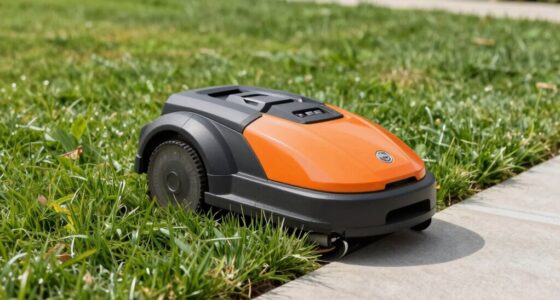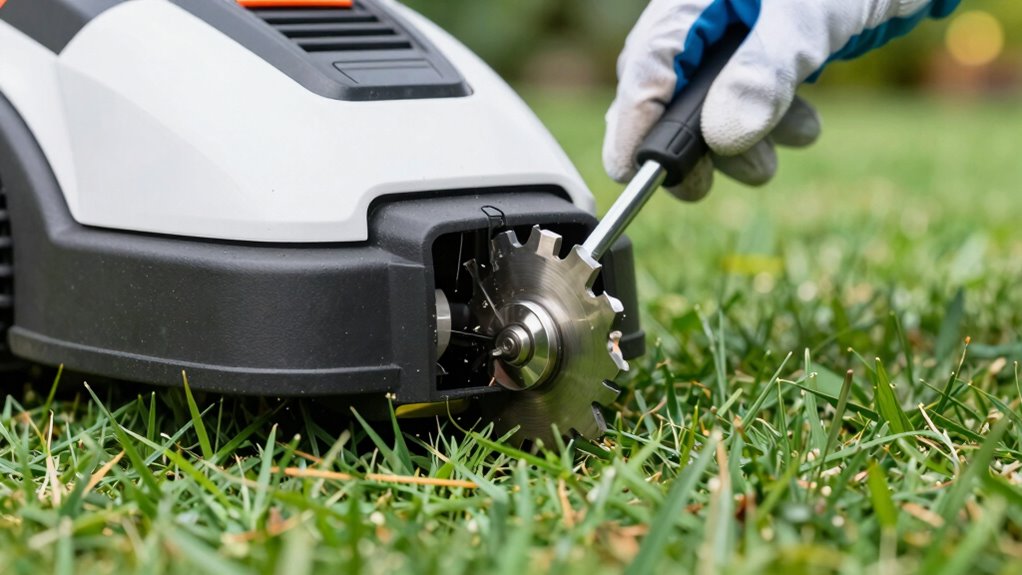

To reduce wear and tear on your robot mower blades, regularly check and sharpen them to guarantee clean cuts and prevent overworking. Clear your lawn of debris and obstacles like rocks or sticks to avoid damage. Don’t mow too frequently or at excessively long grass levels, as this adds stress to the blades. Follow manufacturer guidelines for maintenance and keep an eye on signs of dullness or damage. Stay tuned for more tips to keep your blades sharp and in great condition.
Key Takeaways
- Regularly sharpen blades to maintain clean cuts and reduce strain during mowing.
- Remove debris and obstacles from the lawn to prevent blade damage and dulling.
- Mow at appropriate heights and avoid over-mowing to lessen blade stress.
- Use high-quality, corrosion-resistant blades for durability and longer lifespan.
- Follow manufacturer guidelines for maintenance and monitor for signs of wear or damage.
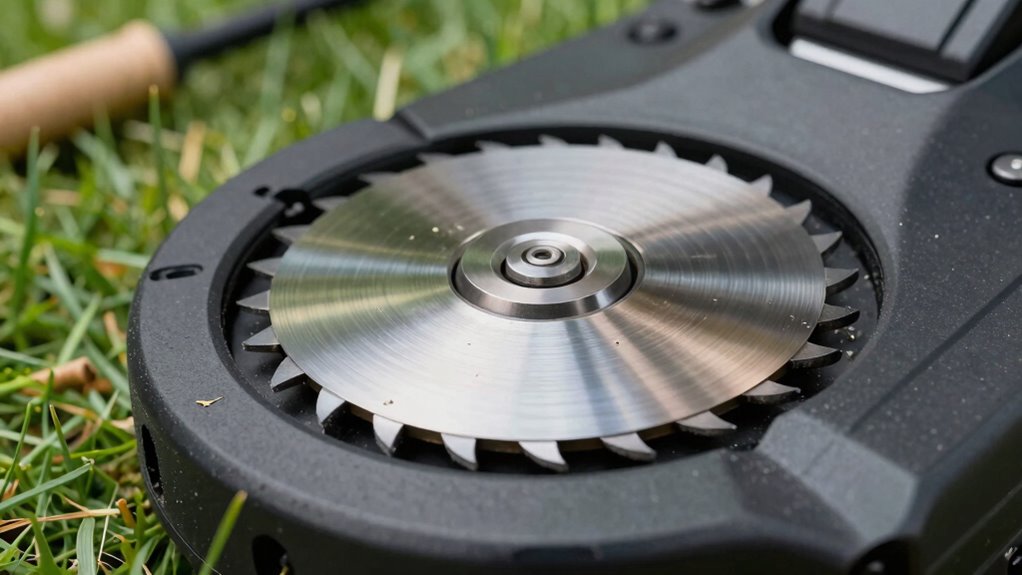
Regularly maintaining your robot mower blades can thoroughly extend their lifespan and guarantee ideal performance. One of the most effective ways to do this is through consistent blade sharpening. Dull blades don’t cut grass cleanly, which forces the mower to work harder and causes unnecessary strain on the blades. Sharp blades slice through grass smoothly, reducing resistance and preventing the blades from becoming chipped or bent. You should check your blades weekly during the peak mowing season and sharpen them as needed, especially if you notice uneven cuts or increased noise during operation. Proper sharpening ensures that you’re not only protecting your blades but also maintaining the health of your lawn by delivering a clean cut that minimizes stress to the grass. Additionally, maintaining optimal contrast ratio in your mower’s lighting or display systems can help you better monitor blade condition and performance, especially in low-light conditions. To further prolong blade life, consider using high-quality blades made from durable materials designed for longevity. Using blades made from corrosion-resistant materials can also help prevent rust and deterioration over time, further extending their usability.
Another key factor in reducing wear and tear is managing your mowing frequency. Cutting grass too often can wear out blades quickly, especially if the mower is chopping through tall, thick patches of grass. Conversely, letting your grass grow too long before mowing can create a heavy load on the blades, increasing the risk of damage and making the mower work harder than necessary. You need to find a balance that suits your lawn’s growth rate—generally, mowing once or twice a week keeps blades sharp and grass healthy. When you mow regularly, the blades don’t have to tackle excessive growth, which lessens the strain on their edges and reduces the frequency of sharpening required. Additionally, mowing at the right height prevents the blades from encountering too much resistance, which can lead to bending or dulling. Maintaining blade sharpness is essential for optimal mower performance and lawn health. To further protect your blades, avoid mowing over rocks, sticks, or other debris hidden in the grass. These objects can cause immediate damage or dull the blades prematurely. Clearing the lawn of debris before mowing is a simple yet effective step toward prolonging blade life. Also, consider adjusting your robot mower’s cutting height; setting it too low can stress the blades, while a slightly higher setting helps them cut more efficiently without excessive force. Using high-quality, sharp blades and monitoring mowing frequency in tandem ensures your robot mower performs at its best and minimizes wear. Regularly inspecting blades for damage and keeping them sharp prevents small issues from escalating into costly replacements. Additionally, referring to manufacturer guidelines can provide specific maintenance tips tailored to your mower model. In the end, a proactive approach to blade maintenance not only extends their lifespan but also keeps your lawn looking its best with a clean, even cut every time.
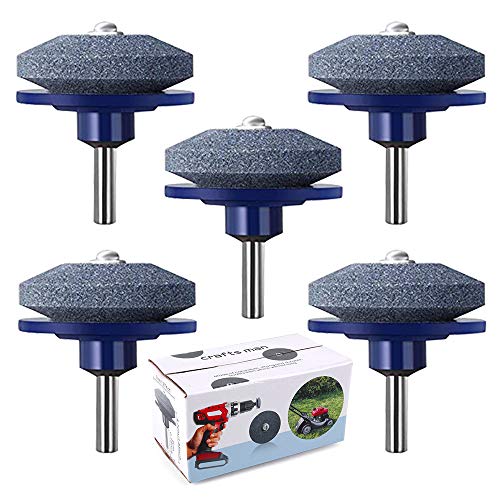
cenoz Crafts Man Lawn Mower Blade Sharpener for Any Power Hand Drill by (5 Packs Blue)
- Material: Made of durable corundum
- Compatibility: Fits most power drills
- Ease of Use: Quick 10-second installation
As an affiliate, we earn on qualifying purchases.
As an affiliate, we earn on qualifying purchases.
Frequently Asked Questions
Can Blade Material Affect Wear and Tear?
Yes, blade material affects wear and tear. You should consider blade coating and material composition when choosing blades, as these factors influence durability. A high-quality coating reduces friction and resists rust, extending blade life. Similarly, blades made from tough, corrosion-resistant materials like hardened steel or composites handle tough grass and debris better, reducing damage. By selecting blades with ideal material composition and coating, you can considerably minimize wear and tear during mowing.
How Often Should Blades Be Sharpened?
You should sharpen your blades every 4 to 6 weeks to keep them in top shape. Regular blade sharpening prevents unnecessary wear, making your robot mower more efficient and prolonging blade life. Think of it as a spa day for your mower’s blades—only this pampering prevents wear and tear. Consistent wear prevention through timely sharpening keeps your mower cutting smoothly and saves you from costly replacements.
Does Grass Type Influence Blade Lifespan?
Yes, grass type influences your blade lifespan. For example, thick, dense grasses with high moisture content, like Kentucky bluegrass, can dull blades faster. Conversely, dry, coarse grasses like Bermuda require less frequent sharpening. Your mowing frequency also impacts wear—more frequent mowing means less stress on blades. Adjust your schedule based on grass composition to minimize wear, ensuring your blades stay sharper longer and last through more mowing sessions.
Are There Specific Blade Maintenance Tools Recommended?
Yes, there are specific blade maintenance tools recommended for your robot mower. You should use a sharpening stone or file designed for mower blades to keep them sharp and efficient. Make certain the tools are compatible with your blade type to avoid damage. Regular blade sharpening ensures clean cuts, reducing wear and tear, and prolongs blade life. Always follow your mower’s manual for proper tool compatibility and maintenance procedures.
How Does Mower Blade Design Impact Durability?
Your mower blade design dramatically impacts durability—think of it as the sword fighting off endless battles with grass. A well-designed blade with sharp edges cuts efficiently, reducing stress and wear. Regular blade sharpening keeps it slicing smoothly, while timely blade replacement prevents damage from dullness. Choosing blades with reinforced edges or optimized angles can withstand tougher conditions, making your mower last longer and perform at its best.

UMONIE 20Pcs 5.9Inch Dia Metal Lawn Mower Blades Trimmer Blades
- Ample Replacement Supply: 20 blades, 5.9 inches diameter
- Universal Compatibility: Fits most mowers and trimmers
- Heavy-Duty Construction: Corrosion-resistant, durable metal
As an affiliate, we earn on qualifying purchases.
As an affiliate, we earn on qualifying purchases.
Conclusion
By following these simple tips, you’ll turn your robot mower blades into unstoppable cutting machines that defy the very laws of wear and tear. Imagine blades so sharp and durable, they could slice through the toughest grass like a hot knife through butter, lasting for years without a single dull moment. Don’t let your mower’s blades become the weak link—supercharge their life and keep your lawn looking flawless with these easy tricks!

Depehelp Lawn Mower Blade Replacement Kit 3 Pack, Stainless Steel Grass Cutter Blades for Compatible Trimmers, Yard Edging Weed Cutting and Lawn Care
- Pack Size: 3 replacement blades
- Material: Stainless steel construction
- Intended Use: Yard edging and weed trimming
As an affiliate, we earn on qualifying purchases.
As an affiliate, we earn on qualifying purchases.
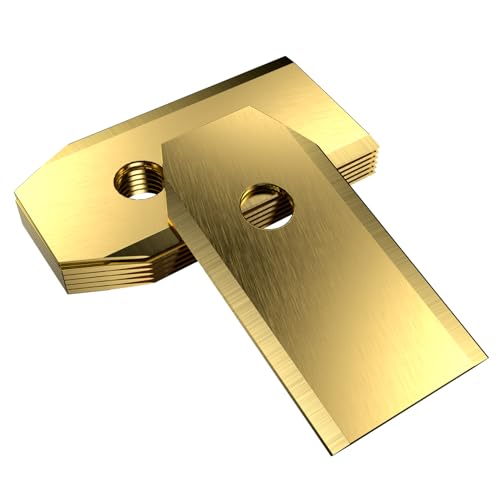
Headley Tools Replacement Robotic Mower Blades (Titanium Coating) for Husqvarna Automower,Gardena Robot Mower, Compatible with Segway Navimow Robotic Mower, Pack of 30
- Durable Titanium Coating: Corrosion-resistant and long-lasting
- Sharp, Clean Cuts: Smooth and precise cutting performance
- Universal Compatibility: Fits various Husqvarna, Gardena, Segway models
As an affiliate, we earn on qualifying purchases.
As an affiliate, we earn on qualifying purchases.