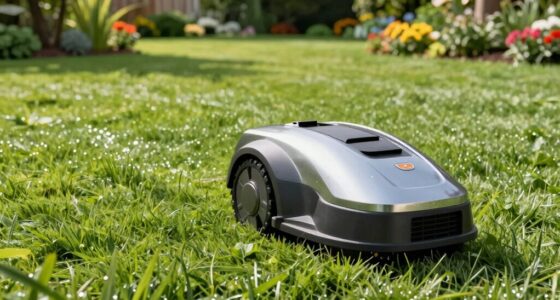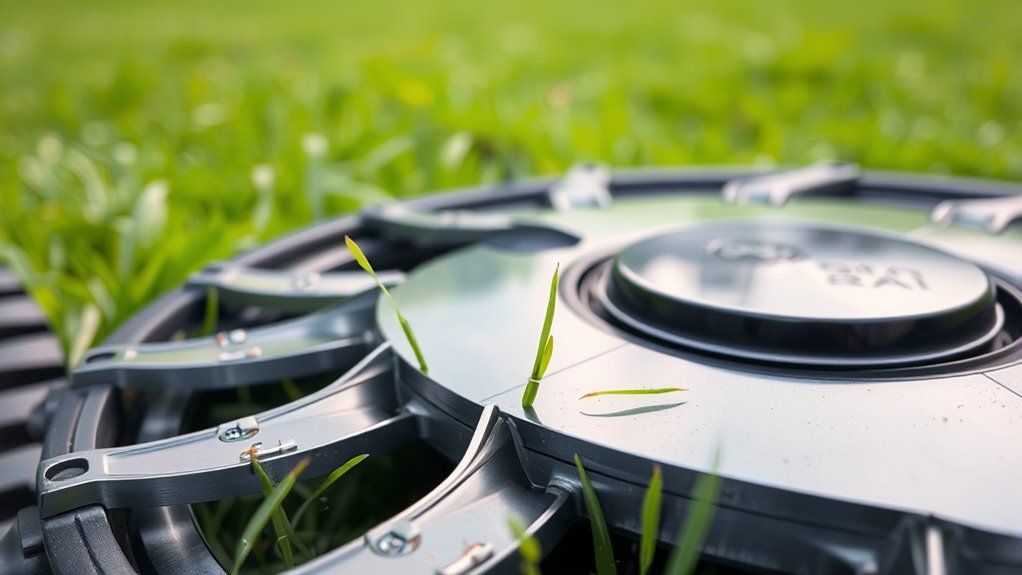

To keep your robot mower cutting cleanly, sharpen blades when you notice ragged or torn grass, uneven patches, or when the cut quality declines. If blades are chipped, cracked, or bent, replace them promptly. Regularly inspect blades after hitting obstacles like rocks or branches. Proper maintenance guarantees your mower performs its best and prevents damage. Continuing with these tips will help you master blade care for a healthy, tidy lawn.
Key Takeaways
- Sharpen blades when grass cuts become ragged or torn, indicating dullness.
- Replace blades if chipped, cracked, bent, or damaged from hitting obstacles.
- Inspect blades regularly after mowing to identify signs of wear or damage.
- Use manufacturer-recommended blades and follow proper removal and installation procedures.
- Maintain sharp blades for a clean cut, improved lawn health, and optimal mower performance.
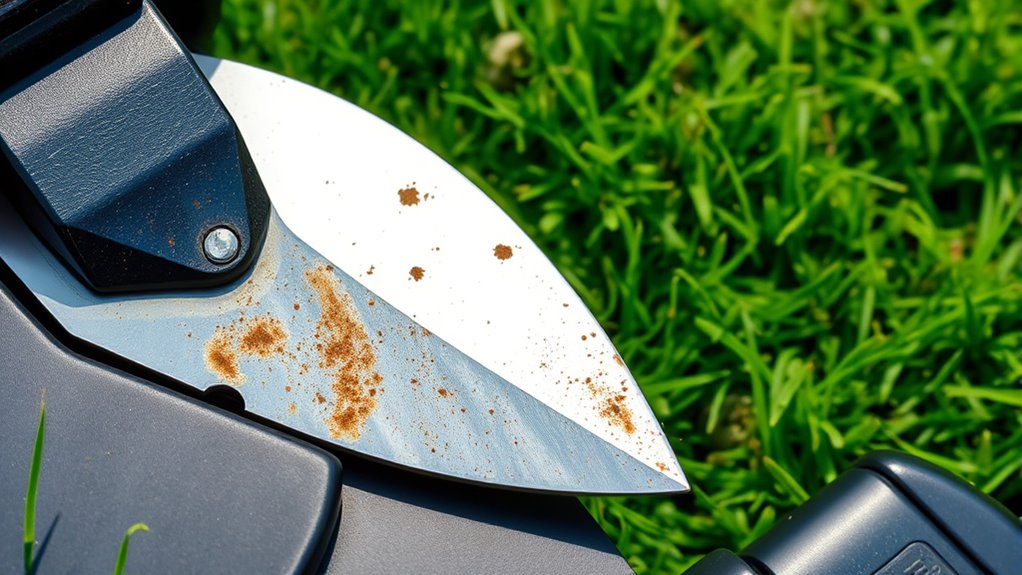
Robot mower blades are vital components that determine how effectively your robotic lawn mower cuts grass. Without sharp, well-maintained blades, your mower can struggle to deliver a clean, even cut, leading to uneven grass growth and an untidy yard. Proper blade maintenance is key to guaranteeing your mower performs at its best, so it’s important to know when to sharpen or replace the blades.
Sharp, well-maintained blades ensure a clean cut and a tidy yard for your robotic mower.
First, understanding the different mower blade types can help you make informed decisions about maintenance. Most robotic mowers use rotary blades, which spin rapidly to cut grass efficiently. Some models feature dual blades or hybrid designs, but the core concept remains similar. Knowing the type of blades your mower uses allows you to follow manufacturer recommendations more accurately and select compatible replacement or sharpening tools.
When it comes to blade maintenance, the first sign you need to sharpen or replace the blades is a noticeable decline in cutting quality. If your grass looks ragged or torn rather than cleanly cut, it’s time to inspect the blades closely. Dull blades tend to tear grass blades rather than cut them smoothly, which can promote disease and weaken your lawn. Also, if you notice uneven patches or the mower seems to struggle more than usual, it’s a clear indication that maintenance is needed.
Sharpening your mower blades is a cost-effective way to restore cutting efficiency, but it’s not a permanent fix. If the blades are chipped, cracked, or bent, sharpening won’t suffice, and replacement becomes necessary. Regularly inspect the blades for damage, especially after hitting obstacles like rocks or thick branches. Keep in mind that some blades are made of steel, which can be sharpened multiple times, while others may be made of composite materials that aren’t designed for sharpening and should be replaced once dull or damaged.
Replacing blades is straightforward but should be done carefully. Ensure you turn off the mower and follow the manufacturer’s instructions for removing and installing blades. Choosing the right mower blade types compatible with your model is vital for peak performance and safety. Always use blades designed for your specific mower to prevent wobbling, uneven cutting, or mechanical issues. Additionally, understanding home theatre projectors can help you appreciate the importance of proper maintenance for optimal performance and longevity.
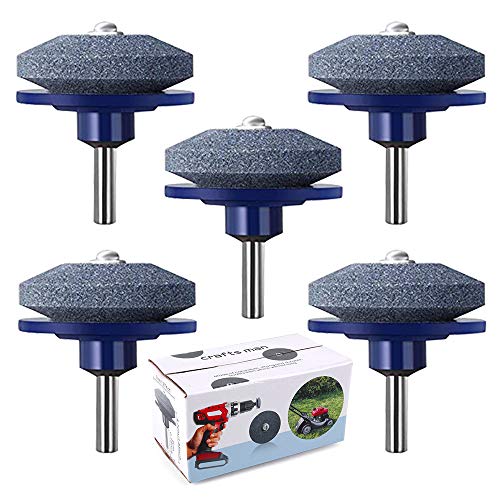
cenoz Crafts Man Lawn Mower Blade Sharpener for Any Power Hand Drill by (5 Packs Blue)
- Material: Made of durable corundum
- Compatibility: Fits most power drills
- Ease of Use: Quick 10-second installation
As an affiliate, we earn on qualifying purchases.
As an affiliate, we earn on qualifying purchases.
Frequently Asked Questions
How Can I Tell if My Blades Are Dull?
You can tell if your blades are dull by inspecting the cut quality; if your mower leaves ragged or uneven patches, it’s a sign. Check the blade material—metal blades dull faster than composite ones—and consider your mower model’s specifications. Also, listen for unusual noise or increased vibration during mowing. Regularly sharpen or replace blades to guarantee a clean cut, especially if you notice these signs or after hitting debris.
What Tools Are Needed to Sharpen Robot Mower Blades?
To sharpen your robot mower blades, you’ll need a file or sharpening stone. Imagine Sarah, who kept her mower cutting smoothly by regularly maintaining her blades. Use sharpening techniques like filing at the correct angle to guarantee a clean cut. A sturdy gloves, safety glasses, and a wrench are also essential tools for safe blade removal and maintenance. Proper blade maintenance keeps your mower running efficiently and prolongs blade life.
How Often Should I Replace Blades for Optimal Performance?
You should replace your robot mower blades every 1 to 3 months for peak performance, depending on blade material and mower model compatibility. If you notice dullness, uneven cuts, or increased strain on the motor, it’s time for a change. Regularly check blades and follow manufacturer recommendations to maintain a clean cut. Using blades suited for your mower’s specific model ensures efficiency and prolongs their lifespan.
Can I Sharpen Blades Without Removing Them From the Mower?
You can sharpen blades without removing them, but it’s not always the best idea. For proper mower maintenance, guarantee blade alignment first, as misaligned blades can cause uneven cuts. Sharpening while still attached is convenient, but it’s harder to get an even edge. Think of it as trying to hit a moving target. For best results, remove blades carefully, then sharpen on a stable surface to maintain peak performance and a clean cut.
Are There Safety Precautions for Replacing or Sharpening Blades?
Yes, there are safety precautions you should follow when replacing or sharpening blades. Always wear safety gear like gloves and eye protection to guard against sharp edges and debris. Handle blades carefully, avoiding contact with cutting edges, and disconnect the mower’s power source before starting. Follow handling precautions to prevent injuries, and work in a well-lit, stable area. Taking these steps guarantees your safety during blade maintenance.
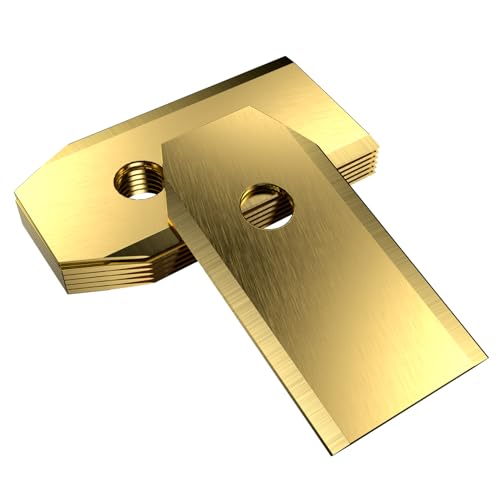
Headley Tools Replacement Robotic Mower Blades (Titanium Coating) for Husqvarna Automower,Gardena Robot Mower, Compatible with Segway Navimow Robotic Mower, Pack of 30
- Durable Titanium Coating: Corrosion-resistant and long-lasting
- Sharp, Clean Cuts: Smooth and precise cutting performance
- Universal Compatibility: Fits various Husqvarna, Gardena, Segway models
As an affiliate, we earn on qualifying purchases.
As an affiliate, we earn on qualifying purchases.
Conclusion
Remember, keeping your robot mower blades sharp or replacing them when needed guarantees a clean, healthy cut. Did you know that dull blades can reduce mowing efficiency by up to 30%? Regular maintenance not only improves your lawn’s appearance but also extends the life of your mower. Stay proactive—check your blades weekly during peak season, and you’ll enjoy a perfectly manicured lawn all year round with less hassle.

Robotic Lawnmower Cleaning Kit – 4-Tool Maintenance Set for Robot Lawn Mower, Blade and Wheel Brush, Scraper and Cleaning Accessories for Garage, Garden and Workshop
- Complete 4-Tool Set: Includes tools for comprehensive cleaning
- Universal Compatibility: Fits most robot lawn mowers
- Blade and Wheel Maintenance: Removes debris for optimal performance
As an affiliate, we earn on qualifying purchases.
As an affiliate, we earn on qualifying purchases.
Headley Tools Replacement Robotic Mower Blades (Titanium Coating) for Husqvarna Automower,Gardena Robot Mower, Compatible with Segway Navimow Robotic Mower, Pack of 30
- Durable Titanium Coating: Corrosion-resistant and long-lasting
- Sharp, Clean Cuts: Smooth and precise cutting performance
- Universal Compatibility: Fits various Husqvarna, Gardena, Segway models
As an affiliate, we earn on qualifying purchases.
As an affiliate, we earn on qualifying purchases.