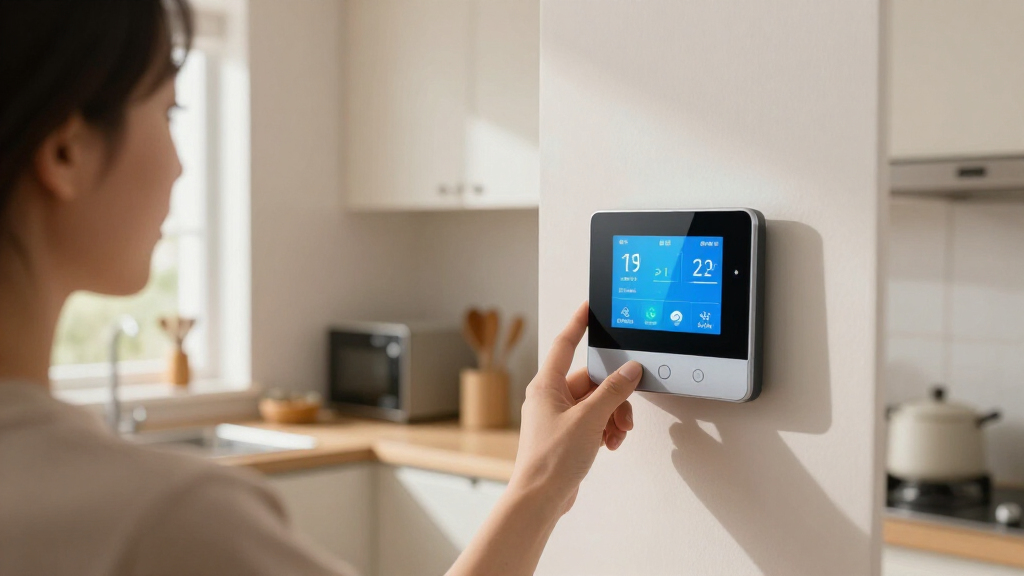

Smart home energy monitors promise to show you exactly where your electricity dollars go — but the gap between the best and worst models is wider than most buyers expect. The Emporia Vue 3 takes my best overall spot for combining real-time whole-home tracking with solid smart home automation support at a mid-range price. If your priority is circuit-level detail, the Refoss EM16P with its 16 sensors and open API edges ahead for Home Assistant users, while budget shoppers can grab a basic dual-channel WiFi monitor for a fraction of the cost. The core tradeoff in this category is simple: more circuit sensors mean better data but harder installation and higher cost, and whole-home convenience often means giving up per-appliance insight. Keep reading for the full ranked breakdown, including which models are worth skipping entirely.

Get home appliances delivered free with Prime
- Fast, free delivery on millions of items
- Prime Video, Amazon Music and more included
- Member-only deals all year
Complete the kit



Key Takeaways
- The Emporia Vue 3 dominated this comparison and appears three times in the lineup from different retailers — the price and bundle differences between those listings mattered more than the hardware itself, so buy the cheapest Vue 3 bundle that includes the sensors you need.
- Circuit-level monitors (Refoss EM16P, Refoss 16×60A, Siemens Inhab) consistently beat single-CT and dual-channel models for finding energy waste, but only the EM16P offers an open API — a dealbreaker difference for Home Assistant users.
- The generic dual-channel and single-CT WiFi monitors landed at the bottom not because of accuracy, but because of weak apps, no smart home integrations, and limited historical data — a pattern worth knowing before chasing the lowest price.
- The Siemens Inhab is the premium pick, but its price premium only pays off if you want polished circuit-level sensing without DIY setup; for everyone else, the Refoss EM16P delivers 90% of the capability for less.
- Installation requirements split this category sharply: every 16-sensor monitor requires opening your electrical panel, so renters and anyone uncomfortable around breaker boxes should stick to plug-in style or professional installation options.
- App quality separated the top tier from the middle more than hardware specs did — Emporia and Refoss apps retain historical data and export it, while most generic monitors only show live readings.
| Emporia Vue 3 Home Energy Monitor – Smart Home Automation Module and Real-Time Electricity Usage Monitor |  | Best Overall | Certification: CE, UL | Included Sensors: 8 circuit sensors | Connectivity: 2.4 GHz WiFi | VIEW LATEST PRICE | See Our Full Breakdown |
| WiFi Home Energy Monitor with 3 80A CT Clamps |  | Best Value for Targeted Appliance Monitoring | Model Number: PW03 | CT Clamps: 3 x 80A | Input Voltage: AC 100–240V | VIEW LATEST PRICE | See Our Full Breakdown |
| Meross Smart Home Energy Monitor, Real-Time Power & Cost Tracking |  | Best for Smart Home Enthusiasts | Certification: ETL, UL 61010 | Max Current: 200A main / 60A branch | Data Storage: Local, up to 5 years | VIEW LATEST PRICE | See Our Full Breakdown |
| Emporia Vue 3 Home Energy Monitor – Smart Home Automation Module and Real-Time Electricity Usage Monitor |  | Best for Starting Small and Expanding Later | Certification: UL Listed, CE Listed | Sensor Capacity: Up to 16 branch sensors (sold separately) | Supported Systems: Single phase, split phase, 2/3-wire, 3-phase, 4-wire Wye | VIEW LATEST PRICE | See Our Full Breakdown |
| Emporia Vue 3 Home Energy Monitor – Smart Home Automation Module and Real-Time Electricity Usage Monitor |  | Best Premium Pick for Full Circuit Coverage | Certification: UL, CE | Included Sensors: 16 x 50A circuit sensors | Ecosystem Compatibility: Smart plugs, EV chargers, home batteries, thermostats | VIEW LATEST PRICE | See Our Full Breakdown |
| SIEMENS Inhab Smart Home Energy Monitor with Circuit Level Sensors |  | Best Premium Pick | Circuit Sensors: 16–50Amp | Main Sensors: 2 x 200Amp | Compatibility: USA and Canada | VIEW LATEST PRICE | See Our Full Breakdown |
| Refoss Smart Home Energy Monitor with 16 60A Circuit Sensors |  | Best for Whole-Home Coverage | Circuit Sensors: 16 (60A each) | Supported Systems: Single-phase, Split-phase, 3-phase 4-wire Wye | Sensor Capacity: Mains up to 200A, branch up to 60A | VIEW LATEST PRICE | See Our Full Breakdown |
| Refoss EM16P Smart Home Energy Monitor with Open API and Home Assistant |  | Best for Smart Home Tinkerers | Main Circuit Sensors: 2 x 200A current transformers | Branch Circuit Sensors: 16 x 60A current transformers | Accuracy: ±1% (2–200A / 1–60A); ±2% at low current | VIEW LATEST PRICE | See Our Full Breakdown |
| Smart Home Energy Monitor 2×80A, Dual-Channel WiFi Electricity Usage Tracker with App Control |  | Best Budget Starter Pick | Channels: Dual-channel, 80A each | Minimum Operating Voltage: 110 volts | Measurement Type: Ammeter | VIEW LATEST PRICE | See Our Full Breakdown |
| Smart Energy Monitor with WiFi and Current Transformer |  | Best Compact Single-Circuit Monitor | Measurement Range: 80A | Voltage: AC 90–250V | Current Transformer: 80A | VIEW LATEST PRICE | See Our Full Breakdown |
| Smart Home Energy Monitor with 16 50A Circuit Sensors, Real-Time Power & Cost Tracking |  | Best for Privacy-Minded Smart Home Builders | Sensor Count: 16 clamp-on circuit sensors | Sensor Current Rating: 50A per sensor | Supported Voltages: 120/240VAC, up to 415Y/240VAC (no Delta) | VIEW LATEST PRICE | See Our Full Breakdown |
| smart home energy monitor | Connectivity | Dimensions | Warranty |
|---|---|---|---|
| Emporia Vue 3 Home Energy Moni | 2.4 GHz WiFi | 10 x 5 x 5 inches | — |
| WiFi Home Energy Monitor with | WiFi (Smart Life / Tuya app) | 4.2 x 2.5 x 1.2 inches | — |
| Meross Smart Home Energy Monit | WiFi, Open API, Web Control | 4.5 x 3.48 x 1.1 inches | 2 years |
| Emporia Vue 3 Home Energy Moni | 2.4 GHz WiFi | 10 x 5 x 5 inches | 1 year |
| Emporia Vue 3 Home Energy Moni | 2.4 GHz WiFi | 10 x 5 x 5 inches | 1 year |
| SIEMENS Inhab Smart Home Energ | WiFi | — | — |
| Refoss Smart Home Energy Monit | Wi-Fi with external antenna | 4.5 x 3.5 x 1.1 inches | 2 years |
| Refoss EM16P Smart Home Energy | Wi-Fi, Open API, MQTT, native Home Assistant | 4.5 x 3.5 x 1.1 inches | 2 years |
| Smart Home Energy Monitor 2×80 | WiFi | — | — |
| Smart Energy Monitor with WiFi | WiFi | 2.3 x 3.5 x 4.69 inches | — |
| Smart Home Energy Monitor with | WiFi 2.4GHz, MQTT (local, no cloud required) | 3.1 x 1.2 x 4.18 inches | 1 year |
More Details on Our Top Picks
Emporia Vue 3 Home Energy Monitor – Smart Home Automation Module and Real-Time Electricity Usage Monitor
The Emporia Vue 3 with 8 circuit sensors earns the top spot because it balances whole-home coverage, safety certification, and price better than anything else in this lineup. The UL listing matters here — several competing monitors skip third-party safety certification entirely, which is not a small thing when a device clips onto live panel wires. Compared with the generic WiFi Home Energy Monitor with 3 CT Clamps, the Vue 3 covers more than twice the circuits while adding solar and net-metering support, so homeowners with panels aren’t left guessing about export versus consumption.
The tradeoff is ecosystem lock-in: data lives in the Emporia app rather than an open platform, and the whole system goes offline without 2.4 GHz WiFi. Still, for most homes this is the most complete package at a mid-tier price.
Pros:- UL listed for safety, unlike many uncertified competitors
- Supports solar and net metering out of the box
- 8 included circuit sensors cover most homes’ key loads
- Detailed historical data retention in the app
Cons:- Requires 2.4 GHz WiFi and an internet connection at all times
- Three-phase systems need an additional sensor
- No open API on this configuration — data stays in the Emporia app
Best for: Homeowners who want whole-home plus circuit-level monitoring with solar support and don’t mind an app-based ecosystem
Not ideal for: Off-grid homes or buyers with no reliable 2.4 GHz WiFi — the device needs an internet connection for real-time data
- Certification:CE, UL
- Included Sensors:8 circuit sensors
- Connectivity:2.4 GHz WiFi
- Solar Support:Yes, with net metering
- Weight:3.36 pounds
- Dimensions:10 x 5 x 5 inches
- Part Number:EMV3A-2P-8
Our verdict“The most well-rounded pick for typical single-family homes that want reliable, safety-certified whole-home monitoring without paying enthusiast prices.”
WiFi Home Energy Monitor with 3 80A CT Clamps
Not everyone needs sixteen circuit sensors. This three-channel monitor makes sense for a narrower job: watching a handful of power-hungry appliances like an HVAC unit, water heater, or well pump. At 80A per clamp, it handles loads that would overwhelm smaller branch sensors, and it adds features the bigger names charge more for — remote ON/OFF control and temperature alerts for the circuits it watches.
Compared with the Emporia Vue 3, the value case is clear: if you only care about two or three specific circuits, paying for eight sensors is wasted money. The flip side is that this gives you a flashlight where the Vue 3 gives you floodlighting — no whole-home picture, no solar support, and no safety certification listed. Wiring into a panel also realistically means hiring an electrician, which eats into the savings.
Pros:- 80A clamps handle high-power appliances like HVAC and water heaters
- Remote ON/OFF control for connected circuits
- Temperature alerts add a safety layer the bigger monitors lack
- Works with the widely used Smart Life/Tuya app ecosystem
Cons:- Hard cap of three circuits limits long-term usefulness
- No listed safety certification, unlike the UL-listed Emporia Vue 3
- Panel wiring realistically requires a qualified electrician
Best for: Budget-minded homeowners who want to monitor and remotely control two or three specific high-draw appliances
Not ideal for: Anyone wanting a whole-home energy picture or solar/net-metering tracking — three circuits won’t cover it
- Model Number:PW03
- CT Clamps:3 x 80A
- Input Voltage:AC 100–240V
- Max Relay Current:15A
- Connectivity:WiFi (Smart Life / Tuya app)
- Dimensions:4.2 x 2.5 x 1.2 inches
- Weight:13.4 ounces
Our verdict“A cheap, focused tool for appliance-level insight and control — buy it for specific circuits, not whole-home coverage.”
Meross Smart Home Energy Monitor, Real-Time Power & Cost Tracking
The Meross stands apart from this lineup for one reason: it treats your data as yours. Local storage of up to five years of history means no cloud dependency and no privacy tradeoff — something neither the Emporia Vue 3 nor the Tuya-based budget monitor can claim. Add an Open API and Home Assistant integration, and this becomes the obvious choice for anyone running a serious automation setup with solar management routines.
Its flexibility on electrical systems is also broader than most here, handling single-phase through 3-phase 4-wire configurations with 200A main and 60A branch capacity. The cost of that openness is setup complexity: this model demands more technical comfort than the plug-and-play app experience of the Vue 3, and there’s no built-in display — everything runs through Home Assistant or the web interface. For tinkerers that’s a feature; for everyone else it’s friction.
Pros:- Local data storage with up to 5 years of history — no cloud dependency
- Open API and native Home Assistant integration
- Handles single-phase through 3-phase 4-wire systems at up to 200A
- ETL and UL 61010 safety certification with a 2-year warranty
Cons:- Technical installation and configuration required
- No built-in display; app and web interface only
- Limited to US home electrical systems
Best for: Home Assistant users and privacy-conscious buyers who want local data control and automation-friendly APIs
Not ideal for: Non-technical buyers who want a polished mobile app experience with zero configuration — the setup curve is real
- Certification:ETL, UL 61010
- Max Current:200A main / 60A branch
- Data Storage:Local, up to 5 years
- Connectivity:WiFi, Open API, Web Control
- Compatible Systems:Single-phase 2/3-wire, 3-phase 4-wire
- Warranty:2 years
- Dimensions:4.5 x 3.48 x 1.1 inches
Our verdict“The enthusiast’s pick — if you run Home Assistant or care about data privacy, its local-first design beats the app-locked alternatives.”
Emporia Vue 3 Home Energy Monitor – Smart Home Automation Module and Real-Time Electricity Usage Monitor
This Vue 3 configuration is the scalable entry point of the roundup: you buy the base unit now and add up to sixteen branch sensors separately as your needs grow. That makes it cheaper upfront than the fully loaded Vue 3 variant with 16 included sensors, while leaving the same ceiling of coverage in place. It also supports an unusually wide range of electrical systems, from single-split phase to 4-wire Wye, matching the Meross for compatibility breadth.
The catch is obvious: sensors sold separately means the real cost climbs as you expand, and a bare unit tells you whole-home usage without circuit-level detail. Compared with the Meross, you trade open APIs and local storage for a friendlier app and solar support. Renters and casual users should also note the 1-year warranty is thinner than Meross’s 2 years.
Pros:- Expandable to 16 branch sensors purchased as needed
- Broad system compatibility including 3-phase and 4-wire Wye
- UL and CE certified with solar and net-metering support
- Cheapest certified entry into the Vue 3 ecosystem
Cons:- Branch sensors sold separately, raising total cost over bundled versions
- Requires WiFi for any real-time data
- Only a 1-year warranty versus Meross’s 2 years
Best for: Budget-limited homeowners who want to start with whole-home data and add circuit sensors gradually
Not ideal for: Buyers who want everything in one box — by the time you add sensors, the 16-sensor bundle costs less overall
- Certification:UL Listed, CE Listed
- Sensor Capacity:Up to 16 branch sensors (sold separately)
- Supported Systems:Single phase, split phase, 2/3-wire, 3-phase, 4-wire Wye
- Connectivity:2.4 GHz WiFi
- Solar Support:Yes, with net metering
- Dimensions:10 x 5 x 5 inches
- Warranty:1 year
Our verdict“The right Vue 3 if you want to spread the cost over time — just know the sensors you’ll inevitably want are not included.”
Emporia Vue 3 Home Energy Monitor – Smart Home Automation Module and Real-Time Electricity Usage Monitor
This is the fully loaded Vue 3: sixteen 50A circuit sensors in the box, which for most homes means every meaningful breaker gets its own data stream. Where the expandable Vue 3 variant makes you buy sensors piecemeal and the 8-sensor version leaves half your panel a mystery, this one delivers complete circuit-level visibility from day one. It also plays nicely with the wider Emporia ecosystem — smart plugs, EV chargers, home batteries, and third-party thermostats — making it the strongest choice for a whole-home energy management setup rather than simple monitoring.
The drawbacks mirror its siblings: dependence on 2.4 GHz WiFi, app-only data access with no local storage like the Meross offers, and some 3-phase installations will still need an extra sensor. And at this price, it’s overkill for an apartment or small condo with a handful of breakers.
Pros:- 16 included 50A sensors cover virtually every circuit in a typical home
- Integrates with Emporia smart plugs, EV chargers, and home batteries
- UL and CE certified with solar and net-metering tracking
- Broad compatibility from single phase to 4-wire Wye systems
Cons:- Highest cost in the Vue 3 family — overkill for small panels
- Requires WiFi and the Emporia app; no local storage option
- Some 3-phase setups need an additional sensor sold separately
Best for: Owners of larger homes who want every circuit monitored immediately and plan to build out an Emporia energy ecosystem
Not ideal for: Small homes or renters — sixteen sensors is more hardware and cost than a modest panel justifies
- Certification:UL, CE
- Included Sensors:16 x 50A circuit sensors
- Ecosystem Compatibility:Smart plugs, EV chargers, home batteries, thermostats
- Supported Systems:Single phase, split phase, 2/3-wire, 3-phase, 4-wire Wye
- Connectivity:2.4 GHz WiFi
- Dimensions:10 x 5 x 5 inches
- Warranty:1 year
Our verdict“The ceiling of this lineup for Emporia-invested households — buy it when partial circuit coverage won’t cut it.”
SIEMENS Inhab Smart Home Energy Monitor with Circuit Level Sensors
Siemens brings institutional-grade engineering to the residential panel, and it shows. This option stands out for true circuit-level measurement across 16–50A branches plus a pair of 200A main sensors, which puts it in the same monitoring class as the Refoss EM16P — but with the backing of a major electrical manufacturer rather than a smart-home startup. Compared with the dual-channel tracker from the same roundup, the Inhab tells you which circuits are costing you money, not just how much the whole panel draws. The tradeoff is weight: this is the most installation-demanding unit here, it assumes you’re comfortable inside a breaker panel, and the app is restricted to the USA and Canada. Still, for homeowners who want peak demand tracking and net metering support for a solar setup, this model justifies its premium positioning.
Pros:- True circuit-level monitoring with 16–50A branch and 2×200A main sensors
- Advanced features like peak demand tracking and net metering support
- Backed by Siemens, a major electrical equipment manufacturer
- Compatible with smart home systems for automation
Cons:- App restricted to USA and Canada only
- Requires panel access and real electrical installation expertise
- No published pricing, which complicates comparison shopping
Best for: North American homeowners with solar or net metering who want manufacturer-grade circuit-level data
Not ideal for: Buyers outside the USA and Canada — the mobile app simply won’t work there
- Circuit Sensors:16–50Amp
- Main Sensors:2 x 200Amp
- Compatibility:USA and Canada
- Connectivity:WiFi
- Included Components:Energy monitor, wire harness, CTs, antenna, wire nuts
- Installation:Inside electrical panel
Our verdict“This pick makes the most sense for US and Canadian homeowners who want professional-grade circuit-level insight and are willing to pay for Siemens engineering.”
Refoss Smart Home Energy Monitor with 16 60A Circuit Sensors
Where the SIEMENS Inhab leans on brand pedigree, this Refoss unit wins on breadth of electrical support: single-phase, split-phase, and 3-phase 4-wire Wye systems are all covered, which matters if your home isn’t wired the standard North American way. With 16 branch sensors at 60A each and mains up to 200A, it matches the Refoss EM16P on channel count while adding five years of on-device data storage — no subscription, no cloud dependency, and full local control through a web UI and API. The automation hooks and appliance-fault alerts translate into practical savings: you’ll know when the water heater elements fail before the bill arrives. The compromises are real, though. Reviews note inconsistent performance across units, and the system limitations mean some households simply can’t use it.
Pros:- Supports single-phase, split-phase, and 3-phase 4-wire Wye systems
- Local web UI and API control with zero cloud dependency
- Stores up to 5 years of usage data on-device
- Smart alerts flag appliance faults early
Cons:- Customer reviews report variability in unit-to-unit performance
- Limited to the specific electrical systems listed
- Requires electrical knowledge for proper installation
Best for: Households on split-phase or 3-phase Wye power who want multi-year local data without cloud fees
Not ideal for: Renters or anyone unwilling to open their electrical panel — installation knowledge is required
- Circuit Sensors:16 (60A each)
- Supported Systems:Single-phase, Split-phase, 3-phase 4-wire Wye
- Sensor Capacity:Mains up to 200A, branch up to 60A
- Connectivity:Wi-Fi with external antenna
- Data Storage:5 years
- Warranty:2 years
- Dimensions:4.5 x 3.5 x 1.1 inches
Our verdict“This model is better suited to owners of non-standard or three-phase electrical systems who want long-term local storage at a mid-range price.”
Refoss EM16P Smart Home Energy Monitor with Open API and Home Assistant
If your smart home runs on Home Assistant, this is the clear choice — and the reason it ranks above its sibling, the Refoss 16-sensor monitor, for tinkerers specifically. The EM16P offers native Home Assistant integration, MQTT, and an open API, all operating locally so your energy data never leaves the home network. That privacy-first, hackable design is something the SIEMENS Inhab can’t match with its app-region lock. Accuracy is strong at ±1% across the normal measurement range, though low-current readings slip to ±2% — meaning small always-on loads like phone chargers may read less precisely. The ETL certification and UL 61010 compliance are reassuring for anything clamped inside a panel, and five years of exportable daily data supports serious solar-optimization analysis. Plan on an electrician unless you’re confident around breakers.
Pros:- Native Home Assistant, MQTT, and Open API support with no cloud required
- Monitors 2 main circuits plus 16 branch circuits with ±1% accuracy
- ETL certified and UL 61010 compliant
- 5 years of exportable daily data with solar automation support
Cons:- Low-current measurements drop to ±2% accuracy
- Panel installation may require professional assistance
Best for: Home Assistant and MQTT enthusiasts who want fully local, privacy-focused energy data
Not ideal for: Casual users who just want an app dashboard — the local-first design and API focus will feel like overkill
- Main Circuit Sensors:2 x 200A current transformers
- Branch Circuit Sensors:16 x 60A current transformers
- Accuracy:±1% (2–200A / 1–60A); ±2% at low current
- Connectivity:Wi-Fi, Open API, MQTT, native Home Assistant
- Data Storage:Up to 5 years daily data with export
- Certification:ETL certified; UL 61010 compliant
- Warranty:2 years
- Dimensions:4.5 x 3.5 x 1.1 inches
Our verdict“This pick makes the most sense for smart home power users who want deep local integration and don’t mind trading a little low-current precision for full data ownership.”
Smart Home Energy Monitor 2×80A, Dual-Channel WiFi Electricity Usage Tracker with App Control
Not everyone needs 16 circuit sensors, and this dual-channel tracker is the lowest-commitment entry point in the lineup. Instead of the whole-panel coverage of the Refoss models, it clamps onto two circuits — enough to watch a heat pump and an EV charger, or a main feed and a solar line. The bi-directional power monitoring is the standout at this price: solar households can track export versus consumption, which the similarly compact WiFi monitor with CT clamp (B0D4PY21BF) also offers but with a single channel only. Tuya and Smart Life app support means Alexa and Google Home work out of the box, and clamp-on installation means no wiring modifications. Be realistic about limits, though: 80A per channel excludes heavy loads, and with no built-in display, everything depends on the app and a working WiFi connection.
Pros:- Bi-directional monitoring for solar and backup power systems
- Clamp-on installation with no wiring modifications
- Works with Tuya, Smart Life, Alexa, and Google Home
- Real-time and historical usage data at a low entry price
Cons:- Only two channels, capped at 80A each
- No built-in display — entirely app-dependent
- Requires stable WiFi for any monitoring at all
Best for: Budget-conscious homeowners or solar users who want to track two specific circuits without a panel overhaul
Not ideal for: Households wanting whole-home or per-appliance breakdowns — two channels won’t get you there
- Channels:Dual-channel, 80A each
- Minimum Operating Voltage:110 volts
- Measurement Type:Ammeter
- Compatible Devices:Tuya devices, Amazon Alexa, Google Home
- Connectivity:WiFi
- Installation:Clamp sensors, no wiring changes
Our verdict“This option stands out for first-time monitors who want solar-aware tracking of two key circuits at minimal cost, and should be skipped by anyone needing full-home detail.”
Smart Energy Monitor with WiFi and Current Transformer
At 9.6 ounces and roughly the size of a deck of cards, this is the most portable and least intrusive option here. It’s a single-phase, single-CT design best used for one job — tracking a solar string, a well pump, or a whole small-home feed — rather than the multi-circuit analysis you’d get from the Refoss EM16P. Compared with the dual-channel tracker above, you sacrifice a second channel but gain a wider voltage window (AC 90–250V), which makes it usable in more regions and on more setups. App-based remote monitoring through Tuya and Smart Life covers the basics: real-time parameters, solar generation versus grid draw, data export, and automation triggers. Two things hold it back: data retention tops out around a month, far short of Refoss’s five years, and the 80A ceiling rules out whole-panel monitoring on larger services.
Pros:- Compact 9.6-ounce form factor fits tight installation spaces
- Wide AC 90–250V input range suits varied setups
- Tracks solar generation and grid consumption separately
- Data export and automation support via Tuya and Smart Life apps
Cons:- Data retention limited to about one month
- Single-phase systems only, capped at 80A
- Requires solid wiring knowledge for installation
Best for: Anyone needing a small, single-point monitor for one circuit, solar string, or sub-panel
Not ideal for: Analysis-minded users who want years of stored history — retention is roughly one month
- Measurement Range:80A
- Voltage:AC 90–250V
- Current Transformer:80A
- Connectivity:WiFi
- App Support:Tuya, Smart Life
- Dimensions:2.3 x 3.5 x 4.69 inches
- Weight:9.6 ounces
Our verdict“This model is better suited to targeted single-circuit monitoring in tight spaces than to whole-home energy analysis.”
Smart Home Energy Monitor with 16 50A Circuit Sensors, Real-Time Power & Cost Tracking
Most monitors in this roundup, like the Emporia Vue 3 and the Meross Smart Home Energy Monitor, funnel your household data through a cloud account and a branded app. This option takes the opposite approach: local MQTT control means your energy data stays inside your network, which is rare at this price and sensor count. With 16 clamp-on 50A sensors, it matches the circuit-level granularity of the Refoss Smart Home Energy Monitor with 16 60A Circuit Sensors, though the Refoss supports higher-amperage circuits for heavy loads like EV chargers or shop equipment.
The tradeoff is real. Where the Emporia works nearly out of the box with a polished app, this model assumes you already run Home Assistant or a similar platform and are comfortable with MQTT configuration. That makes it less of an appliance and more of a component for a self-built smart home — a distinction that will either sell it or disqualify it immediately.
Pros:- Local MQTT operation keeps energy data private with no cloud dependency
- 16 circuit-level sensors cover whole-home plus individual branch circuits
- Broad voltage support (120/240VAC up to 415Y/240VAC) fits most residential panels
- Works with Home Assistant, Android, and Apple for flexible integration
Cons:- Requires technical setup for MQTT and Home Assistant integration
- 2.4GHz-only WiFi with no 5GHz support may limit placement options
- Advanced features need manual configuration rather than a guided app
Best for: Home Assistant users and landlords of rental or shared properties who want circuit-level data without relying on a cloud service
Not ideal for: Anyone wanting a plug-and-play experience with a polished consumer app — the MQTT setup and platform integration demand technical skill the average Emporia or Meross buyer never needs
- Sensor Count:16 clamp-on circuit sensors
- Sensor Current Rating:50A per sensor
- Supported Voltages:120/240VAC, up to 415Y/240VAC (no Delta)
- Connectivity:WiFi 2.4GHz, MQTT (local, no cloud required)
- Compatibility:Home Assistant, Android, Apple
- Dimensions:3.1 x 1.2 x 4.18 inches
- Weight:4.09 pounds
- Warranty:1 year
Our verdict“Buy this if you already run Home Assistant and want private, circuit-level energy data on your own terms — skip it if you expect a consumer app to do the work for you.”
How We Picked
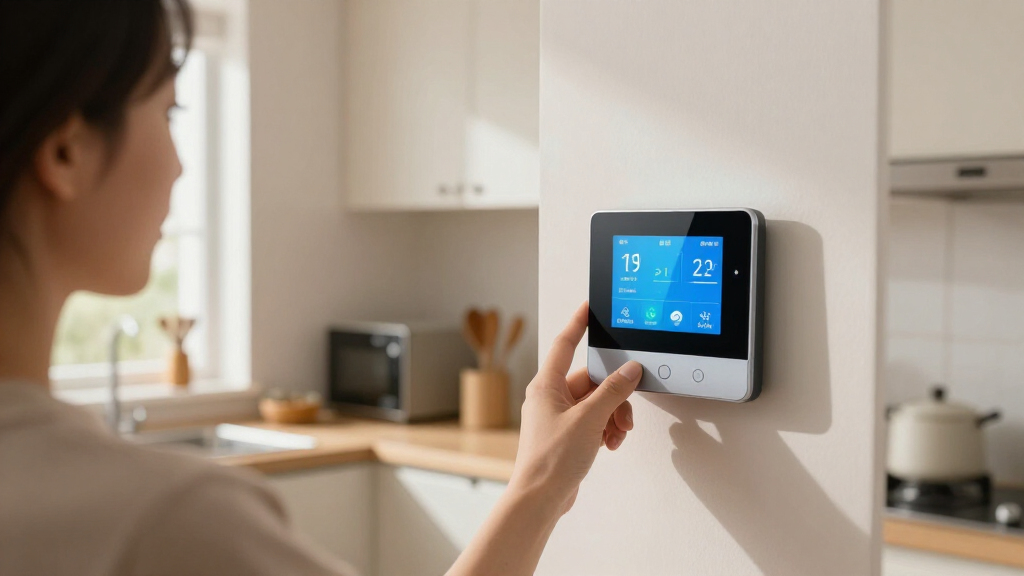
I evaluated each monitor against five buyer-facing criteria rather than raw spec sheets. Data resolution and circuit coverage came first: a monitor that only reads whole-home usage can tell you what you spend, but only circuit-level sensors can tell you why, which is the entire reason most people buy these devices. App quality and data retention ranked second, because a monitor is only as useful as its software — live readings without months of history make it nearly impossible to verify that an efficiency change actually worked. Smart home integrations mattered heavily in the ranking, with open APIs and Home Assistant compatibility earning clear bonuses over closed ecosystems.
From there, I weighed installation burden (how many CT clamps, whether the panel needs opening, electrician requirements), accuracy claims and sensor amperage ratings, and value — total cost including any required hubs or subscriptions. Models were also penalized for missing features that competitors at the same price include as standard, like cost tracking or data export. This logic explains the final order: full-featured ecosystems sit at the top, capable circuit-level monitors fill the middle, and generic hardware with weak software lands at the bottom regardless of how cheap it is.
Factors to Consider When Choosing Smart Home Energy Monitors
Before settling on a specific monitor, it helps to understand the structural choices in this category — because the mistake most buyers make isn’t picking a bad product, it’s picking the wrong type of product for their situation.Whole-Home vs. Circuit-Level Monitoring
The single biggest decision is whether you want two CT clamps on your mains or individual sensors on individual breakers. Whole-home monitoring answers “how much am I using right now?” — great for spotting trends, tracking solar production, or catching phantom loads at the aggregate level. Circuit-level monitoring answers “which device is responsible?” — the difference between knowing your bill jumped and knowing your garage fridge is the culprit. The catch: circuit-level systems cost two to three times more, use up sensor channels fast (most homes have 20+ circuits but most kits include 16), and take far longer to install. A common middle-ground mistake is buying a 16-channel kit and then discovering your two-pole breakers for HVAC, oven, and dryer each consume two channels — leaving you with coverage for far fewer circuits than you expected. Map your panel before buying, not after.
Installation: What You’re Actually Getting Into
Every monitor in this roundup except none — literally all of them — requires attaching CT clamps inside your electrical panel, which means removing the panel cover near live bus bars. For confident DIYers this is a 30-60 minute job; the clamps themselves don’t require cutting any wires. But if you’ve never worked inside a breaker box, budget $150-300 for an electrician, which can double the true cost of a budget monitor and erase the savings over a premium option. Sensor amperage ratings matter too: 50A sensors can’t safely read large appliance circuits, while 80A and 200A-rated clamps handle mains and HVAC. Check whether the kit includes the correct clamp sizes for your panel before comparing prices, because buying additional sensors separately is where these systems quietly get expensive.
App Quality and Data Retention
Hardware is commoditized in this category; software is not. The practical differences show up in three places: historical data retention (some free tiers only keep 30 days, making seasonal comparisons impossible), data export and API access (essential if you want to build dashboards or feed Home Assistant), and reliability of cloud connectivity (a monitor that loses data every time your internet blips is worse than one with local storage). Read recent app store reviews, not launch-week reviews — companies routinely ship great hardware with buggy apps and fix them over a year, or conversely let once-good apps decay. Also check whether features like cost tracking with your actual utility rate are free or gated behind a subscription, because a cheap monitor with a $5/month fee costs more than a premium one within two years.
Smart Home Ecosystem Compatibility
If you run Alexa, Google Home, or Home Assistant, compatibility should filter your shortlist before price does. Home Assistant users should insist on a local API or well-maintained integration — the Refoss EM16P and Emporia both have strong community support, while generic WiFi monitors often have none. Alexa and Google integration is more common but frequently shallow: voice assistants can usually report total usage but rarely expose per-circuit data or trigger automations from it. The most powerful use case — automations driven by energy data, like turning off a water heater when solar output drops — depends entirely on API depth, not app polish. Buyers who skip this check often end up with a monitor that works fine standalone but sits isolated from the smart home they bought it to serve.
Accuracy Expectations and Utility Bill Reconciliation
No CT-based monitor matches your utility meter exactly — expect 1-3% drift in normal conditions, worse if clamps are installed loosely or on crowded wiring. That’s fine for finding waste, but don’t buy one expecting to dispute your utility bill with the data. What does matter: sampling frequency. Monitors that report every second catch short appliance cycles (a well pump, a microwave) that 15-second or minute-level reporting misses entirely, which can misattribute a surprising share of usage. If solar is in your picture, confirm the monitor supports net metering or separate solar channel input — a standard monitor will show your grid draw but not production, making it nearly useless for understanding self-consumption.
Total Cost of Ownership Over Five Years
The sticker price is the beginning of the math, not the end. Add up: extra CT sensors if your panel needs more channels, electrician fees if you’re not DIY-ing, subscription costs (some brands gate historical data or notifications), and the replacement risk for companies without track records — a cloud-dependent monitor from a defunct startup becomes e-waste. Established brands cost more upfront partly because their cloud infrastructure is more likely to still exist in 2031. As a rule of thumb in this roundup: budget dual-channel monitors make sense under $60 all-in, mid-tier 16-channel kits under $150, and anything above that needs to justify itself with ecosystem depth, local control, or professional-grade accuracy.
Frequently Asked Questions
Do any of these monitors work without opening my electrical panel?
No — every monitor in this roundup requires clamping current transformers around wires inside your breaker panel, which means removing the panel cover. Unlike smart plugs, there’s no purely external option that measures whole-home usage, because the current has to be measured at the mains or individual circuits. That said, the physical work is less scary than it sounds: CT clamps snap around cables without cutting or disconnecting anything, and most installations take under an hour. The real safety step is shutting off the main breaker first and treating the incoming service wires as always-live regardless. If that’s outside your comfort zone, an electrician visit costs roughly $150-300, which is worth factoring into your budget comparison between cheap and premium models.
How many circuit sensors do I actually need for my home?
Count your breakers first, then subtract the circuits you don’t care about monitoring — usually smoke detectors, doorbells, and spare slots. A typical home has 20-30 breakers, but a 16-channel kit realistically covers 10-14 circuits once you account for double-pole breakers, which use two channels each for 240V appliances like your dryer, oven, and HVAC. One common shortcut: monitor the big loads at circuit level and let the whole-home mains measurement capture everything else as a residual. That’s why the two-CT kits still have value — combined with a handful of circuit sensors, you can attribute most of your bill. Buy a kit that matches your panel, not the one with the biggest sensor count on paper.
Is the Emporia Vue 3 worth it if it appears three times in this roundup?
Yes, and the repetition actually tells you something useful: the Vue 3 dominates shelf space in this category because it hits the best balance of price, app quality, and ecosystem support. The three listings are the same core product sold through different channels and bundle configurations, so your job is comparing what’s included — sensor counts, amperage ratings of the included clamps, and any bundled smart plugs or expansion modules — rather than treating them as different products. The Vue 3’s real advantages are its mature app with long-term historical data and strong integration support, including Home Assistant. Its main weaknesses compared with pricier options are cloud dependence and plastic CT clamps that feel less durable than the Siemens hardware. If the price is right on any of the three bundles, it’s a safe default choice.
What’s the real difference between the Refoss EM16P and cheaper 16-sensor monitors?
The headline difference is the open API and native Home Assistant support, which the generic 16-sensor kits in this roundup lack entirely. That matters because without an API, your data lives only in the manufacturer’s app — if the company changes its cloud, throttles history, or shuts down, your hardware loses most of its value. The EM16P can push data locally, so your dashboard keeps working even without internet, and you can build automations that react to per-circuit usage. The generic kits often match the raw sensor count and report similar accuracy, and for a buyer who just wants to see live readings in an app, they’re legitimately fine. But for anyone with a smart home hub or long-term data ambitions, the API is the single feature worth paying extra for.
Can one of these monitors help lower my electric bill, or is it just a gadget?
The honest answer is that the monitor finds the waste — you still have to act on it. Where they measurably save money is catching specific fixable problems: a failing appliance drawing double its normal current, a heat pump running at night against your schedule, an old freezer in the garage costing $20 a month, or a well pump cycling from a leak. Users who save the most tend to check per-circuit data for the first month, fix the two or three anomalies they find, and then mostly ignore the monitor afterward. Where they disappoint is as a constant feedback loop — most people habituate to live usage dashboards within weeks. Expect a one-time payoff of $50-300 in found waste rather than ongoing savings, which still pays back a mid-tier monitor within a year.
Conclusion
My recommendations break down cleanly by buyer type. For best overall, the Emporia Vue 3 is the safest bet for most homes — whichever of its three retail listings offers the sensor bundle you need at the lowest price. Best premium goes to the Siemens Inhab, which makes sense for buyers who want polished circuit-level hardware and don’t need an open API. The Refoss EM16P takes best for smart home enthusiasts thanks to its open API and Home Assistant support, and it doubles as my best value among circuit-level monitors. For beginners who just want to understand their usage without a big investment, the Meross monitor offers the friendliest setup-to-insight path among the entry-level picks. And if you’re on a strict budget or only care about whole-home totals, the dual-channel WiFi monitors at the bottom of the list will do the job — just go in knowing their apps and data retention are the tradeoff you’re accepting. Whatever you choose, match the sensor count to your actual panel, and don’t pay for channels you’ll never clamp.
NFL season / tailgating Picks
team gear
As an affiliate, we earn on qualifying purchases.