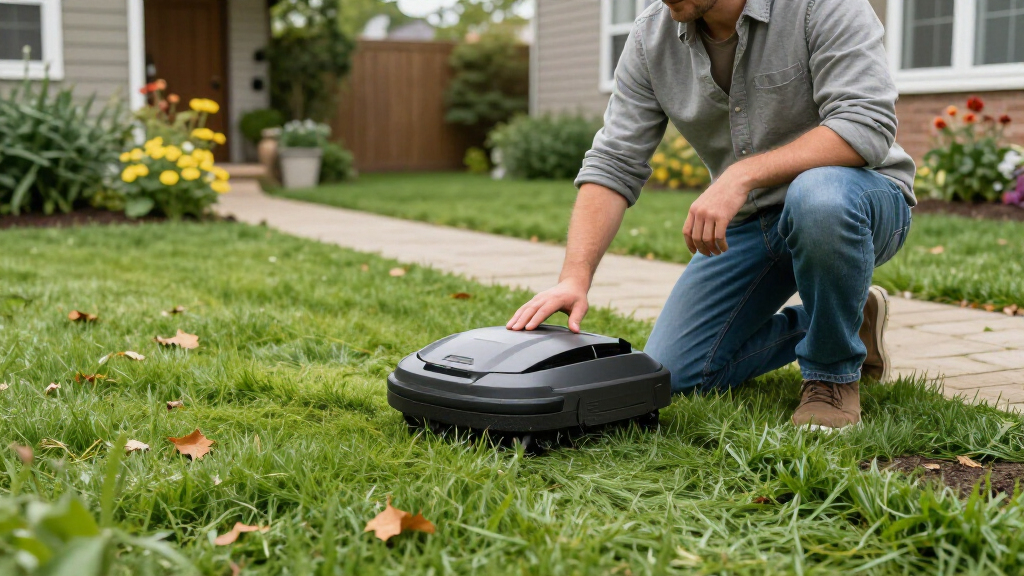
Among these robotic lawn mowers, I rank the MOVA LiDAX Ultra 1000 as the best overall choice for its wire-free approach and balanced fit for routine lawn care. The Mammotion LUBA 3 AWD 3000 stands out for buyers prioritizing all-wheel-drive capability and broader coverage, while the Segway Navimow i105N is a compelling smaller-yard option. The main tradeoffs are coverage capacity, how much setup satellite or vision-based navigation demands, and whether rough or sloped terrain justifies a more specialized model. Wire-free convenience can reduce boundary-wire work, but it does not remove the need to map the yard and check obstacles and coverage claims against your own layout. Continue reading for the full breakdown and help matching a mower to your lawn.

Get home appliances delivered free with Prime
- Fast, free delivery on millions of items
- Prime Video, Amazon Music and more included
- Member-only deals all year
Complete the kit


Key Takeaways
- Wire-free navigation defines this lineup: RTK, LiDAR, and AI vision appear across many picks, but each approach brings different setup and yard-layout considerations.
- Terrain changes the ranking: AWD models such as the Mammotion LUBA 3 AWD 3000 and DREAME A3 AWD 1000 are more relevant for buyers facing slopes or uneven ground than compact-lawn shoppers.
- Coverage labels are not interchangeable: Models span small-area choices such as the LEBOSBO V3 AI Vision at 1,600 sq. ft. through larger-yard options, so match stated capacity to mowable lawn area rather than total property size.
- Product families can hide meaningful differences: The ECOVACS GOAT O1000 RTK, O1000 RTK CARE, and O1000 LiDAR PRO are separate choices; compare navigation and intended coverage instead of relying on the shared O1000 name.
- Premium features only pay off when your yard needs them: Multi-wheel drive, advanced sensing, or cleaning accessories may address specific terrain and upkeep demands, while simpler lawns can favor easier setup and right-sized capacity.
| MOVA LiDAX Ultra 1000 Wire-Free Robot Lawn Mower |  | Best for Wire-Free Setup Without an RTK Station | Lawn coverage: Up to 0.25 acre | Navigation: 360° 3D LiDAR and AI vision; automatic mapping | Boundary setup: Wire-free; no RTK station required | VIEW LATEST PRICE | See Our Full Breakdown |
| ECOVACS GOAT O1000 RTK Wire-Free Robotic Lawn Mower |  | Best for Fast, App-Guided Setup | Lawn coverage: Up to 1/4 acre (10,890 sq. ft.) | Navigation: RTK, vision, and 3D ToF | Obstacle avoidance: AIVI 3D | VIEW LATEST PRICE | See Our Full Breakdown |
| Neomow X SE 360° 3D LiDAR Navigation Robot Lawn Mower for 0.75 Acre | 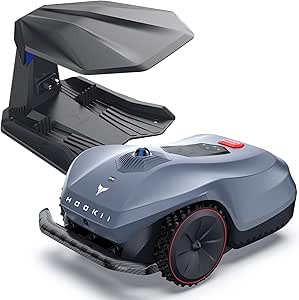 | Best for Larger Lawns Without RTK Infrastructure | Mapping coverage: Up to 0.75 acre | Coverage per charge: Up to 0.17 acre | Navigation: 360° 3D LiDAR and AI vision fusion | VIEW LATEST PRICE | See Our Full Breakdown |
| WORX Landroid Vision Cloud WR320 Robot Lawn Mower for Up to 1/2 Acre |  | Best for Shaded Lawns and Flexible Mowing Patterns | Coverage: Up to 1/2 acre | Navigation: RTK Cloud with V-SLAM sensor fusion | Perimeter wire: Not required | VIEW LATEST PRICE | See Our Full Breakdown |
| Mammotion LUBA 3 AWD 3000 Robot Lawn Mower with Cleaning Stand |  | Best for Steep, Challenging Terrain | Navigation: 360° LiDAR, NetRTK, and dual-camera AI vision | LiDAR range: Up to 230 ft | Obstacle detection: More than 300 types | VIEW LATEST PRICE | See Our Full Breakdown |
| ECOVACS GOAT A2000 LiDAR PRO Wire-Free Robot Lawn Mower |  | Best for Built-In Edge Trimming | Navigation: HoloScope 360° dual LiDAR | Positioning accuracy: 2 cm | Lawn capacity: Up to 1/2 acre | VIEW LATEST PRICE | See Our Full Breakdown |
| Segway Navimow i105N Wire-Free Robotic Lawn Mower |  | Best for Multi-Zone Small Lawns | Lawn coverage: 1/8 acre | Navigation: RTK+Vision (EFLS 2.0) | Boundary setup: Wire-free virtual boundaries with AI-assisted mapping | VIEW LATEST PRICE | See Our Full Breakdown |
| WORX Landroid Vision Cloud 4WD Robot Lawn Mower, WR341 |  | Best for Steep and Uneven Terrain | Drive: Four-wheel drive | Lawn coverage: Up to 1/4 acre | Maximum slope: 84% (about 40°) | VIEW LATEST PRICE | See Our Full Breakdown |
| DREAME A3 AWD 1000 LiDAR Robot Lawn Mower with Cleaning Kit and Replacement Blades |  | Best for All-Wheel-Drive Navigation | Drive: All-wheel drive | Navigation: 360° LiDAR and binocular AI vision | Maximum slope: 80% (38.7°) | VIEW LATEST PRICE | See Our Full Breakdown |
| LEBOSBO V3 AI Vision Robotic Lawn Mower, 1600 sq. ft. |  | Best for Very Small Lawns | Lawn coverage: Up to 1,600 sq. ft. | Navigation: AI vision | Boundary setup: No boundary wires required | VIEW LATEST PRICE | See Our Full Breakdown |
| ECOVACS GOAT O1000 RTK CARE Robot Lawn Mower, Up to 1/4 Acre |  | Best for RTK Setup Flexibility | Coverage: Up to 1/4 acre | Navigation: RTK | Cutting width: 8.66 inches | VIEW LATEST PRICE | See Our Full Breakdown |
| ECOVACS GOAT O1000 LiDAR PRO Wire-Free Robotic Lawn Mower |  | Best for Built-In Edge Trimming | Coverage: Up to 1/4 acre | Navigation: HoloScope 360° dual LiDAR | Positioning precision: 2 cm | VIEW LATEST PRICE | See Our Full Breakdown |
| NovorikX X3 Wire-Free Robotic Lawn Mower with RTK and Dual AI Vision |  | Best for Quiet, Weather-Ready Mowing | Lawn area: Up to 800 m² (1/4 acre) | Navigation: RTK positioning and dual AI vision | Obstacle recognition: Over 200 objects | VIEW LATEST PRICE | See Our Full Breakdown |
| Sunseeker X3 Plus Wire-Free Robot Lawn Mower |  | Best for Larger Lawns in This Group | Lawn capacity: Up to 0.3 acre / 13,000 sq. ft. | Navigation: RTK and VSLAM | Boundary type: Wire-free virtual boundaries | VIEW LATEST PRICE | See Our Full Breakdown |
| robotic lawn mower | Navigation | Cutting width |
|---|---|---|
| MOVA LiDAX Ultra 1000 Wire-Fre | 360° 3D LiDAR and AI vision; automatic mapping | — |
| ECOVACS GOAT O1000 RTK Wire-Fr | RTK, vision, and 3D ToF | 8.66 in |
| Neomow X SE 360° 3D LiDAR Navi | 360° 3D LiDAR and AI vision fusion | 11 in |
| WORX Landroid Vision Cloud WR3 | RTK Cloud with V-SLAM sensor fusion | — |
| Mammotion LUBA 3 AWD 3000 Robo | 360° LiDAR, NetRTK, and dual-camera AI vision | — |
| ECOVACS GOAT A2000 LiDAR PRO W | HoloScope 360° dual LiDAR | 3.6 inches |
| Segway Navimow i105N Wire-Free | RTK+Vision (EFLS 2.0) | — |
| WORX Landroid Vision Cloud 4WD | RTK Cloud with V-SLAM support | — |
| DREAME A3 AWD 1000 LiDAR Robot | 360° LiDAR and binocular AI vision | — |
| LEBOSBO V3 AI Vision Robotic L | AI vision | 6.3 inches |
| ECOVACS GOAT O1000 RTK CARE Ro | RTK | 8.66 inches |
| ECOVACS GOAT O1000 LiDAR PRO W | HoloScope 360° dual LiDAR | 8.66 inches |
| NovorikX X3 Wire-Free Robotic | RTK positioning and dual AI vision | — |
| Sunseeker X3 Plus Wire-Free Ro | RTK and VSLAM | 8 inches |
More Details on Our Top Picks
MOVA LiDAX Ultra 1000 Wire-Free Robot Lawn Mower
I rank the MOVA LiDAX Ultra 1000 highly for buyers who want wire-free mapping without adding an RTK station to the yard. Its 360° 3D LiDAR and AI vision map the lawn and help it avoid more than 300 obstacle types, while automatic recharging and resume mowing reduce the need to manage each session. The 45% slope rating also gives it an advantage over the WORX Landroid Vision Cloud WR320, which is rated for 30% slopes. That said, the MOVA is built for lawns up to 0.25 acre, not larger properties. Its edge-cutting reach can leave a gap of up to two inches, so owners who want a clean finish around borders may still need a trimmer. I’d choose it for modest, sloped lawns where avoiding boundary-wire installation matters more than maximum coverage.
Pros:- Maps without boundary wires or an RTK station
- 360° LiDAR and AI vision identify more than 300 obstacle types
- Handles slopes up to 45%
- Automatically returns to charge and resumes mowing
Cons:- Coverage is limited to 0.25 acre
- Edge cutting can leave up to a two-inch strip
- Maximum obstacle height is 1.6 inches
Best for: Owners of lawns up to 0.25 acre who want automatic LiDAR mapping, strong slope handling, and no boundary wires or RTK station.
Not ideal for: Owners of larger properties or anyone expecting the mower to finish lawn edges without occasional trimming.
- Lawn coverage:Up to 0.25 acre
- Navigation:360° 3D LiDAR and AI vision; automatic mapping
- Boundary setup:Wire-free; no RTK station required
- Obstacle avoidance:More than 300 obstacle types
- Maximum slope:45%
- Cutting height:1.2–3.9 inches
- Maps and zones:Up to 2 maps and 150 zones
- Edge cutting:Within 2 inches
- Warranty:3 years
Our verdict“Choose the MOVA for a modest, sloped lawn where station-free wire-free setup matters more than broad coverage or perfect edge finishing.”
ECOVACS GOAT O1000 RTK Wire-Free Robotic Lawn Mower
The ECOVACS GOAT O1000 RTK is the straightforward pick for buyers who want to get a wire-free mower mapped and scheduled with little setup. Its advertised setup time is about five minutes, and its app supports zones, no-go areas, schedules, and progress checks. Navigation combines RTK, vision, and 3D ToF, giving it several tools for mapping and obstacle avoidance rather than relying on a single sensor type. Compared with the MOVA LiDAX Ultra 1000, it has a shorter listed maximum cutting height and a stated 65-minute runtime, while both are aimed at lawns up to a quarter acre and handle slopes up to 45%. The 2.3-foot minimum passage width is useful, but not a guarantee for tighter bottlenecks. I’d favor this ECOVACS when app control and quick setup matter more than longer listed runtime or taller grass settings.
Pros:- Automatic wire-free mapping with about five minutes of listed setup time
- App controls schedules, mowing zones, no-go areas, and progress
- Combines RTK, vision, and 3D ToF navigation
- Rated for slopes up to 45%
Cons:- Coverage is limited to a quarter acre
- Listed battery runtime is 65 minutes
- Passages must be at least 2.3 feet wide
Best for: Owners of lawns up to a quarter acre who want quick mapping, app-based scheduling, and explicit controls for zones and no-go areas.
Not ideal for: Buyers with very narrow passages, taller cutting-height needs, or a preference for a mower with a longer stated runtime.
- Lawn coverage:Up to 1/4 acre (10,890 sq. ft.)
- Navigation:RTK, vision, and 3D ToF
- Obstacle avoidance:AIVI 3D
- Setup time:About 5 minutes
- Minimum passage width:2.3 ft
- Maximum slope:45% (24°)
- Cutting width:8.66 in
- Cutting height:1.2–3.2 in
- Battery runtime:65 minutes
Our verdict“Pick the GOAT O1000 RTK for a smaller lawn when quick setup and detailed app controls outweigh its limited coverage and 65-minute listed runtime.”
Neomow X SE 360° 3D LiDAR Navigation Robot Lawn Mower for 0.75 Acre
The Neomow X SE is the coverage-focused choice here: its mapping capacity reaches 0.75 acre, three times the listed coverage of the MOVA LiDAX Ultra 1000 and ECOVACS GOAT O1000 RTK. Its 360° 3D LiDAR and vision fusion are designed to work without satellite or network signals, which suits yards under trees or mowing after dark. It also supports up to 40 managed areas and passages as narrow as 2.53 feet. The tradeoff is that its stated continuous runtime is up to two hours, and its maximum slope rating is not provided in the supplied details, so steep terrain buyers should verify suitability before choosing it over the Mammotion LUBA 3 AWD 3000. At 38 pounds, it is also a substantial unit. I’d shortlist it for bigger, divided lawns where RTK-free mapping and wider coverage lead the decision.
Pros:- Maps lawns up to 0.75 acre without boundary wires or an RTK station
- LiDAR and vision navigation are designed to work under trees and at night
- Supports up to 40 areas and customizable no-go zones
- Up to two hours of stated continuous operation
Cons:- At 38 pounds, it is heavier than the listed ECOVACS GOAT O1000 RTK
- Maximum slope capability is not provided in the supplied specifications
- Listed mowing coverage per charge is up to 0.17 acre, so larger lawns require recharging and continued sessions
Best for: Owners of lawns approaching 0.75 acre, especially yards with tree cover, dim conditions, or several mowing areas, who want to avoid boundary wires and RTK stations.
Not ideal for: Buyers with steep slopes who need a stated hill rating, or those seeking a lighter mower for frequent manual handling.
- Mapping coverage:Up to 0.75 acre
- Coverage per charge:Up to 0.17 acre
- Navigation:360° 3D LiDAR and AI vision fusion
- Obstacle avoidance:More than 200 types
- Passage width:As narrow as 2.53 ft
- Cutting width:11 in
- Cutting height:1.18–3.35 in
- Runtime:Up to 2 hours
- Managed areas:Up to 40
Our verdict“Choose the Neomow X SE for a larger, segmented lawn where RTK-free navigation and coverage matter more than a published slope rating or lighter handling.”
WORX Landroid Vision Cloud WR320 Robot Lawn Mower for Up to 1/2 Acre
The WORX WR320 fills the middle ground between quarter-acre wire-free mowers and larger-capacity options: it is rated for up to 1/2 acre and supports unlimited mowing zones. Its RTK Cloud navigation with V-SLAM sensor fusion is designed to maintain positioning in shaded areas, a useful distinction for lawns where tree cover can complicate navigation. App-controlled mowing patterns add flexibility that the more setup-focused ECOVACS GOAT O1000 RTK does not emphasize in its supplied details. The main compromise is its 30% slope rating, below the 45% ratings listed for the MOVA and ECOVACS models. It also depends on RTK Cloud as part of its navigation, so buyers should weigh that system reliance against the Neomow X SE’s stated ability to work without network or satellite signals. This is a fit for broad, shaded lawns with moderate terrain.
Pros:- Covers up to half an acre without perimeter wire
- V-SLAM sensor fusion is designed to support navigation in shaded areas
- Unlimited mowing zones and app-controlled patterns
- Bluetooth, Wi-Fi, and RadioLink connectivity
Cons:- 30% slope capability is lower than the MOVA LiDAX Ultra 1000 and ECOVACS GOAT O1000 RTK
- RTK Cloud is part of its navigation system
- The supplied specifications do not state runtime or cutting height
Best for: Owners of lawns up to half an acre with shaded sections who want multiple app-controlled mowing patterns and flexible zone setup.
Not ideal for: Buyers with steep terrain or those who want navigation that does not depend on RTK Cloud connectivity.
- Coverage:Up to 1/2 acre
- Navigation:RTK Cloud with V-SLAM sensor fusion
- Perimeter wire:Not required
- Obstacle avoidance:Vision AI
- Connectivity:Bluetooth, Wi-Fi, and RadioLink
- Mowing zones:Unlimited
- Slope capability:30%
- Warranty:3 years
Our verdict“Choose the WR320 for a moderately sloped, partly shaded lawn where half-acre coverage and flexible mowing patterns matter more than steep-hill performance.”
Mammotion LUBA 3 AWD 3000 Robot Lawn Mower with Cleaning Stand
The Mammotion LUBA 3 AWD 3000 is the clear terrain specialist in this group. Its all-wheel drive and 80% slope rating set it apart from the MOVA LiDAX Ultra 1000 and WORX WR320, rated for 45% and 30% slopes respectively. A combined 360° LiDAR, NetRTK, and dual-camera AI vision system handles mapping and obstacle detection, while support for up to 30 zones gives owners room to separate lawn sections and protect no-go areas. The listed runtime reaches 175 minutes per charge, but that figure still means charging breaks can matter across a large property; the Neomow X SE, by comparison, is listed for a broader 0.75-acre mapping area. The LUBA’s strongest case is difficult ground, not a stated coverage advantage. Its cleaning stand is included in the package description, though it ships separately, so delivery timing may differ.
Pros:- All-wheel drive and an 80% maximum slope rating
- LiDAR, NetRTK, and dual-camera AI vision support navigation
- Detects more than 300 obstacle types
- Supports up to 30 mowing zones and no-go areas
Cons:- Runtime is listed as up to 175 minutes per charge
- Cleaning stand ships separately
- The supplied product data does not state maximum lawn coverage
Best for: Owners of steep or uneven lawns who need all-wheel-drive traction, obstacle clearance, and separate mowing zones.
Not ideal for: Buyers with mostly flat lawns who prioritize broad stated coverage, or anyone who needs the cleaning stand to arrive with the mower.
- Navigation:360° LiDAR, NetRTK, and dual-camera AI vision
- LiDAR range:Up to 230 ft
- Obstacle detection:More than 300 types
- Maximum slope:80% (38.6°)
- Maximum obstacle height:50 mm
- Runtime:Up to 175 minutes per charge
- Coverage rate:Up to 500 m²/h
- Mowing zones:Up to 30
- Included accessories:Cleaning stand, charging station, accessories, product guide, and extra set of blades
Our verdict“Pick the LUBA 3 AWD 3000 when steep terrain is the main obstacle and its separate-shipped cleaning stand is acceptable.”
ECOVACS GOAT A2000 LiDAR PRO Wire-Free Robot Lawn Mower
The GOAT A2000 LiDAR PRO stands out for buyers who want a wire-free mower that also tackles lawn edges. Its dual-LiDAR navigation maps without perimeter wire, while the integrated trimmer can reduce the amount of separate edging work after mowing. Compared with the smaller Segway Navimow i105N, this model is aimed at a much larger area, with capacity up to half an acre; the Navimow instead offers management for up to 12 zones and a quieter stated operating level.
The A2000’s about 50-minute recharge helps it return to work sooner, but its stated coverage still sets a firm limit for larger properties. The edge trimmer also depends on replacement line, adding a consumable that simpler mower-only designs avoid. I’d favor it when clean borders matter nearly as much as automated mowing, not when the lawn exceeds its capacity.
Pros:- Dual LiDAR enables wire-free lawn mapping with stated 2 cm positioning accuracy.
- Integrated trimmer addresses grass along lawn edges.
- App supports custom zones, schedules, and no-go areas.
- Recharge time is about 50 minutes.
Cons:- Designed for lawns up to half an acre, limiting its fit for larger properties.
- The integrated edge trimmer requires replacement trimming line.
- Its 3.6-inch cutting width may mean more passes than a wider-cutting mower.
Best for: Owners of lawns up to half an acre who want wire-free mapping and less manual edge trimming.
Not ideal for: Owners of larger properties or buyers who do not want to maintain a separate trimmer line supply.
- Navigation:HoloScope 360° dual LiDAR
- Positioning accuracy:2 cm
- Lawn capacity:Up to 1/2 acre
- Cutting width:3.6 inches
- Battery:3.0 Ah
- Recharge time:About 50 minutes
- Obstacle avoidance:AIVI 3D
- Dimensions:30.24 × 16.99 × 22.83 inches
Our verdict“Choose the GOAT A2000 if wire-free mowing and built-in edge trimming are priorities on a lawn no larger than half an acre.”
Segway Navimow i105N Wire-Free Robotic Lawn Mower
The Segway Navimow i105N is a practical fit for compact, divided lawns where wire-free setup and separate mowing schedules matter more than broad coverage. Its app can manage up to 12 zones, giving owners a way to handle front and back sections or disconnected patches without treating them as one continuous area. RTK positioning paired with vision is designed for obstacles such as trees and narrow corridors, while AI-assisted mapping avoids the perimeter-wire installation that a traditional boundary system requires.
Compared with the ECOVACS GOAT A2000, the Navimow covers less ground—up to 1/8 acre—but it states a 58 dB(A) noise level and includes a three-year warranty. That smaller capacity is a real constraint for larger yards, and anti-theft tracking via 4G requires an optional module. I’d choose this for a modest, segmented lawn rather than a property that needs the A2000’s broader coverage.
Pros:- AI-assisted mapping sets virtual boundaries without perimeter wire.
- App supports scheduling and management of up to 12 zones.
- RTK and vision navigation is designed for trees and narrow corridors.
- Includes a three-year warranty and nine spare blades with bolts.
Cons:- Coverage is limited to 1/8 acre.
- The 4G anti-theft tracking module is an optional add-on.
- The supplied specs do not state cutting width or recharge time.
Best for: Owners of small, divided lawns who want wire-free mapping, quiet operation, and app control across several mowing zones.
Not ideal for: Owners of lawns larger than 1/8 acre or buyers who expect 4G anti-theft tracking to be included.
- Lawn coverage:1/8 acre
- Navigation:RTK+Vision (EFLS 2.0)
- Boundary setup:Wire-free virtual boundaries with AI-assisted mapping
- Obstacle detection:Detects 150+ types of common garden objects
- Multi-zone management:Up to 12 zones
- Noise level:58 dB(A)
- Warranty:3 years
- Included accessories:Charging station, GNSS antenna kit, installation kit, 9 spare blades and bolts, and other listed accessories
Our verdict“Pick the Navimow i105N for a small, multi-section lawn where zone control and a stated low noise level matter more than acreage.”
WORX Landroid Vision Cloud 4WD Robot Lawn Mower, WR341
For sloped, rough ground, the WORX Landroid Vision Cloud 4WD has a clearer case than compact wire-free mowers built around flatter lawns. Its four-wheel drive and terrain-adaptive chassis are rated for slopes up to 84% (about 40°), making traction the defining advantage. RTK Cloud navigation works alongside Vision AI, and V-SLAM support is intended to help in shaded areas where satellite positioning can be less dependable. The app adds zone management, custom paths, no-go areas, and GPS tracking.
Compared with the DREAME A3 AWD 1000, the WORX lists a higher maximum slope and unlimited mowing zones; DREAME, by contrast, specifies a 45-minute charging time and a lawn-coverage range. The WR341 is rated for up to 1/4 acre, and its product details do not state battery runtime or charging time, making scheduling capacity harder to judge. I’d prioritize its traction for challenging terrain, not choose it solely for predictable mowing duration.
Pros:- Four-wheel drive and adaptive chassis are designed for steep, uneven terrain.
- Maximum stated slope is 84% (about 40°).
- RTK Cloud, Vision AI, and V-SLAM support navigation and obstacle recognition.
- App offers unlimited mowing zones, while GPS tracking and remote locking add security controls.
Cons:- Coverage is limited to 1/4 acre.
- Battery runtime and charging time are not specified in the supplied product data.
- Its navigation and app features may be more than a simple, flat lawn requires.
Best for: Owners of lawns up to 1/4 acre with steep slopes, uneven ground, or shaded areas that complicate navigation.
Not ideal for: Buyers who need stated battery runtime and charging times to plan mowing, or who have a lawn larger than 1/4 acre.
- Drive:Four-wheel drive
- Lawn coverage:Up to 1/4 acre
- Maximum slope:84% (about 40°)
- Navigation:RTK Cloud with V-SLAM support
- Mapping and obstacle detection:Vision AI
- Mowing zones:Unlimited
- Security:GPS tracking and cellular connectivity
- Warranty:3 years
Our verdict“Choose the WR341 when steep or uneven ground is the main obstacle and its quarter-acre capacity fits your lawn.”
DREAME A3 AWD 1000 LiDAR Robot Lawn Mower with Cleaning Kit and Replacement Blades
The DREAME A3 AWD 1000 combines all-wheel drive with 360° LiDAR and binocular AI vision, making it a strong option for owners who need obstacle-aware navigation on sloped or uneven ground. It is rated for slopes up to 80% and obstacles up to 2.17 inches, while app controls cover scheduling, monitoring, and theft protection. The included cleaning kit and replacement blades add practical maintenance supplies to the bundle rather than changing how the mower navigates.
Compared with the WORX Landroid Vision Cloud 4WD, the DREAME lists a faster 45-minute charge and a stated lawn range of 0.25–0.5 acre; WORX claims a higher maximum slope and unlimited zones. DREAME’s stated coverage varies across that range, so buyers should confirm it fits their actual lawn. Its edge precision is within 1.97 inches, but an optional trimmer module is sold separately, making it less complete for border cutting than the ECOVACS GOAT A2000.
Pros:- All-wheel drive is rated for slopes up to 80% and obstacles up to 2.17 inches.
- 360° LiDAR and binocular AI vision support wire-free mapping and obstacle avoidance.
- Charging time is stated as 45 minutes.
- Bundle includes a cleaning kit and replacement blades.
Cons:- Advertised coverage varies from 0.25 to 0.5 acre.
- Optional trimmer module is sold separately.
- Edge precision is stated within 1.97 inches, so some hand edging may remain.
Best for: Owners of sloped or obstacle-filled lawns who want all-wheel drive, LiDAR-and-vision mapping, and bundled maintenance supplies.
Not ideal for: Buyers who need a clearly stated coverage limit for their exact setup or want an edge trimmer included.
- Drive:All-wheel drive
- Navigation:360° LiDAR and binocular AI vision
- Maximum slope:80% (38.7°)
- Obstacle clearance:2.17 inches
- Lawn coverage:Up to 0.25–0.5 acre
- Charging time:45 minutes
- Edge precision:Within 1.97 inches
- Connectivity and warranty:Built-in 4G module and Dreamehome app; 3-year warranty with 1 year of free 4G service
Our verdict“Choose the DREAME A3 AWD 1000 for wire-free, all-wheel-drive mowing on challenging ground, provided its variable coverage range suits your lawn.”
LEBOSBO V3 AI Vision Robotic Lawn Mower, 1600 sq. ft.
The LEBOSBO V3 is the small-lawn pick in this group, with capacity up to 1,600 sq. ft. and no boundary-wire installation. AI vision handles navigation, while app controls let owners set schedules, choose modes, and check mower status. The included 32-foot magnetic strip provides a physical way to mark no-go areas, and the adjustable 0.8–2.4-inch cutting height gives some control over the finished grass length.
That compact footprint makes it a different proposition from the ECOVACS GOAT A2000, which is designed for up to half an acre and adds an integrated edge trimmer. The V3 is more suited to a small, uncomplicated patch than a larger or demanding lawn; the supplied data gives no slope rating, battery capacity, or charging time to help judge tougher jobs. Its magnetic strip also means no-go setup is not entirely app-based. I’d consider it for a modest yard where wire-free setup matters more than acreage.
Pros:- No boundary wires are required for setup.
- AI vision supports obstacle avoidance.
- App provides schedules, mowing modes, and mower status.
- Includes a 32-foot magnetic strip for no-go areas and adjustable cutting height.
Cons:- Coverage is limited to 1,600 sq. ft., far below the ECOVACS GOAT A2000’s half-acre capacity.
- No slope rating, battery capacity, or recharge time is provided in the supplied specs.
- No-go zones rely on a magnetic strip rather than only app-based mapping.
Best for: Owners of very small lawns up to 1,600 sq. ft. who want app scheduling and a wire-free setup.
Not ideal for: Owners of larger, steep, or complex lawns who need documented coverage beyond 1,600 sq. ft. or terrain capability.
- Lawn coverage:Up to 1,600 sq. ft.
- Navigation:AI vision
- Boundary setup:No boundary wires required
- No-go zone strip:32 ft. magnetic strip
- Cutting width:6.3 inches
- Adjustable cutting height:0.8–2.4 inches
- Power and charger:Battery powered; 18V charger
- Dimensions:17 × 14 × 8.6 inches (D × W × H)
Our verdict“Pick the V3 for a small lawn where wire-free setup and app scheduling matter more than broad coverage or documented slope handling.”
ECOVACS GOAT O1000 RTK CARE Robot Lawn Mower, Up to 1/4 Acre
I’d choose the GOAT O1000 RTK CARE when a small lawn suits RTK navigation and flexible antenna placement is useful. It maps automatically, manages multiple zones, follows app schedules, and returns to recharge, so routine mowing needs less hands-on direction. The CARE bundle’s RTK extension cable gives more options for placing the antenna, while 36 spare blades provide a ready supply of replacements.
Compared with the GOAT O1000 LiDAR PRO, this model uses RTK rather than dual LiDAR and lacks that mower’s built-in edge trimmer. Its 90-minute average battery life and quarter-acre coverage also make it a better fit for a modest property than a large, demanding lawn. I’d skip it if minimizing edge trimming or avoiding RTK-based positioning matters more than the included accessories.
Pros:- Wire-free RTK navigation supports precise positioning and systematic coverage.
- Automatic mapping and multi-zone management reduce manual lawn setup.
- CARE bundle includes 36 replacement blades and an RTK extension cable.
- Automatically returns to recharge.
Cons:- Coverage is limited to a quarter acre.
- Average battery life is 90 minutes.
- No built-in edge trimmer is listed, so some edge work may remain manual.
Best for: Owners of lawns up to a quarter acre who want automatic multi-zone mowing and extra flexibility in RTK antenna placement.
Not ideal for: Buyers who need coverage beyond a quarter acre, want a built-in edge trimmer, or prefer a mower that does not rely on RTK positioning.
- Coverage:Up to 1/4 acre
- Navigation:RTK
- Cutting width:8.66 inches
- Adjustable cutting height:1.2–3.2 inches
- Average battery life:90 minutes
- Noise level:62 dB
- Item weight:44.5 pounds
- Included accessories:36 replacement blades; RTK extension cable
Our verdict“Choose this ECOVACS if your lawn fits its quarter-acre limit and the antenna-placement cable and spare blades are useful to you.”
ECOVACS GOAT O1000 LiDAR PRO Wire-Free Robotic Lawn Mower
The GOAT O1000 LiDAR PRO stands out for combining wire-free mapping with a built-in TruEdge trimmer. That edge-cutting feature can reduce the separate trimming work left by many robotic mowers, while dual LiDAR maps the yard without a perimeter wire or RTK antenna. App controls support schedules, zones, and no-go areas, and the mower can navigate paths as narrow as 0.8 m.
Compared with the GOAT O1000 RTK CARE, this version favors LiDAR navigation and edge trimming over an RTK extension cable and a bundle of spare blades. Its AI vision and 3D ToF LiDAR detect many obstacles, but setup and fine-tuning may take adjustment; complex corners, narrow gaps, and raised edges can still need manual work. With coverage capped at a quarter acre, I’d pass if the lawn is larger or has difficult edges throughout.
Pros:- Dual LiDAR maps the yard without perimeter wires or an RTK antenna.
- Built-in TruEdge trimmer is designed to reduce manual edge work.
- AI vision and 3D ToF LiDAR detect more than 200 types of obstacles.
- App supports mowing schedules, zones, and no-go areas.
Cons:- Coverage is limited to a quarter acre.
- Complex corners, narrow gaps, and raised edges may need manual trimming.
- Initial setup and fine-tuning may require adjustments.
Best for: Owners of lawns up to a quarter acre who want wire-free mapping and less routine trimming along accessible lawn edges.
Not ideal for: Buyers with larger lawns or yards full of raised edges, complex corners, and tight gaps that still require substantial manual trimming.
- Coverage:Up to 1/4 acre
- Navigation:HoloScope 360° dual LiDAR
- Positioning precision:2 cm
- Obstacle detection:AI vision and 3D ToF LiDAR; detects over 200 types
- Minimum path width:0.8 m
- Cutting width:8.66 inches
- Maximum adjustable cutting height:3.6 inches
- Built-in edge trimmer:TruEdge
Our verdict“Pick the LiDAR PRO over the RTK CARE if built-in edge trimming and antenna-free mapping matter more than RTK accessories.”
NovorikX X3 Wire-Free Robotic Lawn Mower with RTK and Dual AI Vision
The NovorikX X3 pairs RTK positioning with dual AI vision, giving it wire-free mapping alongside obstacle recognition for more than 200 objects. Its 58 dB(A) noise level is lower than the 62 dB listed for the ECOVACS GOAT O1000 RTK CARE, making the X3 the stronger fit for buyers who want quieter scheduled mowing. Rain detection, IPX6 water resistance, and automatic charging and resume add useful support for routine outdoor operation.
It also lists a 35% maximum slope and multiple work zones, features that suit yards with varied terrain better than a simple, flat-lawn setup. However, its coverage is still limited to 800 m², or about a quarter acre, and operation depends on its RTK and vision systems rather than perimeter wire. I’d choose it over the Sunseeker X3 Plus for the stated slope and noise specs, but skip it if you want a built-in edge trimmer.
Pros:- RTK positioning and dual AI vision support wire-free mapping and obstacle avoidance.
- Recognizes more than 200 objects and supports multiple work zones.
- Automatically returns to charge and resumes mowing.
- 58 dB(A) noise level, rain detection, and IPX6 water resistance.
Cons:- Coverage is limited to 800 m², or about a quarter acre.
- Reliable operation depends on the RTK and vision systems.
- No built-in edge trimmer is listed.
Best for: Owners of lawns up to 800 m² who want quieter wire-free mowing, multi-zone support, and a stated 35% slope capability.
Not ideal for: Buyers with lawns larger than 800 m², or those who prefer a perimeter-wire system or need a built-in edge trimmer.
- Lawn area:Up to 800 m² (1/4 acre)
- Navigation:RTK positioning and dual AI vision
- Obstacle recognition:Over 200 objects
- Maximum slope:35%
- Cutting height:0.98–2.36 inches
- Noise level:58 dB(A)
- Water resistance:IPX6
- Warranty:3 years
Our verdict“Choose the X3 if quiet operation, rain detection, and its stated slope capability suit your quarter-acre lawn better than edge-trimming features.”
Sunseeker X3 Plus Wire-Free Robot Lawn Mower
Among these four picks, the Sunseeker X3 Plus has the largest stated lawn capacity: up to 0.3 acre, compared with a quarter acre for the ECOVACS and NovorikX models. RTK and VSLAM navigation manage virtual boundaries and mowing zones, while camera and ultrasonic sensing help it detect obstacles. Its offset blade is intended to cut closer to edges, giving it an edge-focused design without the GOAT O1000 LiDAR PRO’s separate built-in edge-trimmer feature.
The tradeoff is a narrow cutting-height range of 1.6–3.2 inches with only two positions. That leaves less flexibility than the ECOVACS GOAT O1000 LiDAR PRO, which lists a maximum adjustable height of 3.6 inches. I’d favor the Sunseeker when its extra stated capacity and offset blade suit the yard, but skip it if you need fine control over cutting height or a larger-area mower.
Pros:- Largest stated lawn capacity among these four products, at up to 0.3 acre.
- RTK and VSLAM support wire-free virtual boundaries and planned coverage.
- Camera and ultrasonic sensors provide obstacle detection.
- Offset blade is designed to cut closer to lawn edges.
Cons:- Cutting height has only two positions.
- Maximum stated coverage is 0.3 acre.
- Does not list the built-in edge trimmer offered by the ECOVACS GOAT O1000 LiDAR PRO.
Best for: Owners of lawns up to 0.3 acre who want wire-free virtual boundaries, zone scheduling, and a blade designed to cut close to edges.
Not ideal for: Buyers who need coverage beyond 0.3 acre or several cutting-height choices for different lawn conditions.
- Lawn capacity:Up to 0.3 acre / 13,000 sq. ft.
- Navigation:RTK and VSLAM
- Boundary type:Wire-free virtual boundaries
- Obstacle detection:Camera and ultrasonic sensing
- Cutting width:8 inches
- Adjustable cutting height:1.6–3.2 inches
- Cutting height positions:2
- Warranty:2 years
Our verdict“Choose the Sunseeker if you need more stated coverage than the quarter-acre picks and can work with just two cutting-height positions.”
How We Picked
I ranked these robotic lawn mowers by how well their stated features address real yard-care decisions: coverage fit, navigation approach, terrain capability, setup demands, and ongoing upkeep. I gave more weight to a balanced fit for common residential lawns than to a single headline feature. Wire-free operation matters, but the navigation method must suit the yard’s shape, obstacles, and likely signal conditions. I also treated stated area limits as a starting point, not a guarantee of performance in every lawn.
The order reflects the breadth of buyer needs each model appears positioned to serve, then separates specialist options by their clearest use case. Models with AWD or larger stated coverage rise for demanding terrain or bigger properties; compact and narrowly specified options are better matches for smaller lawns. When product names share a family, I distinguish them by the listed navigation or coverage details rather than assuming they perform identically. Since the supplied product information does not establish comparative test results, I avoid claiming measured cutting speed, reliability, or real-world superiority.
Factors to Consider When Choosing Robotic Lawn Mowers
Choosing among robotic lawn mowers starts with the yard, not the feature list. I would work through these factors before treating wire-free navigation or a premium drivetrain as an automatic upgrade.
Match Capacity to the Lawn You Actually Mow
Measure the grass area the mower must maintain, not the lot size shown on a property record. Paths, beds, patios, and wooded sections can make a large property a relatively small mowing job, while a simple open lawn can be demanding if its area approaches the model’s stated limit. Leave headroom rather than buying to the exact advertised maximum, especially if the yard has many narrow sections or separate zones. A mower that is undersized may need more operating time to keep up, while an oversized model can add cost and complexity without helping a modest lawn. Check whether the product’s capacity refers to lawn area and confirm that its schedule fits your household’s preferred mowing hours.
Wire-free mowers can use satellite positioning, LiDAR, cameras, or combinations of sensors, and the label alone does not tell you which will suit your property. Open lawns may make satellite-guided mapping attractive, while trees, walls, and tight passages can affect signal reception or make visual detection more relevant. Before buying, identify areas where a mower could lose a clear view of the sky, encounter reflective or low-contrast surfaces, or need to pass through a narrow corridor. Ask how the system handles map edits, no-go zones, and recovery after a boundary changes. A little planning around these conditions can matter more than adding another navigation feature.
Treat Slopes and Obstacles as Separate Challenges
A yard’s steepest section is only part of its terrain story: wet grass, uneven ground, edging, roots, and narrow turns can also affect mobility. AWD is most relevant when traction and uneven terrain are recurring problems, not merely because a model has a more elaborate drivetrain. Measure slopes where the mower will actually travel and compare them with the manufacturer’s stated limits; do not assume a general terrain label covers every surface. Check for low branches, toys, hoses, and garden edges that could obstruct a mower or complicate its route. If most of the lawn is flat, prioritize mapping and coverage before paying extra for specialized traction.
Plan for Setup, Mapping, and Boundary Changes
Wire-free does not mean setup-free. The first map may require walking the mower around the lawn, placing or configuring a reference device, or defining zones through an app, depending on the navigation system. Consider who will handle that work and whether the yard is likely to change after landscaping, fencing, or planting. A mower that is easy to remap may be a better household fit than one with a more advanced sensor package but a less convenient setup routine. Check how the mower behaves when a mapped route is blocked and whether you can manage separate mowing areas. These practical details often determine whether automation stays useful after the first season.
Compare Maintenance Beyond Blade Replacement
All robotic mowers need periodic attention, but the workload can differ with the cutting system, terrain, and accessories. Ask how often blades need inspection, how easy they are to replace, and whether the wheels and underside can be cleaned without awkward disassembly. Mud, damp clippings, and debris can build up faster on a mower working through rough or wet areas. A cleaning stand or kit may help with a routine, but it does not remove the need to check the manufacturer’s cleaning instructions and water limits. Include consumables and storage needs in your comparison so a feature-rich model does not become a chore to maintain.
Pay More Only for a Problem the Mower Solves
Premium navigation, AWD, or larger coverage is useful when it addresses a real constraint: a complex boundary, difficult terrain, or a lawn too large for a smaller model. On a compact, open, mostly flat lawn, those upgrades may add setup steps and features you rarely use. Conversely, choosing solely by a low-area label can be a false economy if the mower cannot keep pace with your lawn or manage its layout. Compare the cost of ownership through replacement blades, upkeep, and any required accessories, not just the initial feature list. Write down your two hardest yard problems and favor the mower that directly addresses them.
Frequently Asked Questions
Will a wire-free robotic mower work under trees or beside tall buildings?
It depends on the mower’s navigation system and how much of the route is blocked from satellite signals or visual reference. Dense tree cover, tall walls, and narrow side yards can be challenging for some mapping methods, while LiDAR or camera-based sensing may suit particular obstacles better. None of those labels guarantees uninterrupted coverage in every yard. Map the shaded and enclosed areas before buying, then check the maker’s guidance for signal requirements and recovery behavior. If a large part of the lawn has obstructed reception, favor a model and navigation approach specifically suited to that layout.
How much capacity should I leave beyond my measured lawn area?
I would avoid choosing a mower whose stated maximum exactly matches the lawn measurement. The actual workload can rise with separate zones, narrow passages, frequent obstacles, or a schedule that limits mowing hours. Measure the mowable grass and note how much of it the mower can reach without carrying it between areas. Then compare that layout with the manufacturer’s capacity and scheduling information, rather than applying one universal percentage buffer. If the lawn is close to a model’s limit, stepping up a capacity class can reduce the risk of a mower that struggles to keep the grass maintained.
Is AWD worth choosing for a lawn that is mostly flat?
Usually, a mostly flat lawn does not make AWD the first feature I would pay for. It can be helpful where the mower must handle recurring slopes, uneven ground, or traction challenges, but it may not improve the main job on a straightforward yard. Check the steepest route, surface condition, and any trouble spots rather than judging the entire property by its most dramatic-looking section. Also compare the model’s stated slope limits with the actual areas it must mow. If traction is not a current problem, coverage fit and navigation setup may be better priorities.
What should I check before relying on AI vision to avoid obstacles?
Look for clear information on the kinds of obstacles the system detects, how it responds when an object is missed, and whether detection works in the lighting and grass conditions common in your yard. AI vision is not a substitute for removing hoses, toys, or other items that should not be in the mowing path. Check whether the mower lets you define no-go areas around ponds, delicate planting, or other hazards. If children or pets use the lawn, keep the maker’s operating and supervision guidance in view rather than treating object detection as a safety guarantee. Good mapping and a tidy mowing area still matter.
Should I choose an RTK, LiDAR, or camera-based mower?
Choose by yard conditions and setup preference, not by the sensor acronym alone. RTK-based models may suit open areas where satellite positioning is practical, while LiDAR and cameras can be relevant for sensing boundaries and nearby objects in different ways. Hybrid systems may combine methods, but they can also add configuration choices. Check requirements for reference equipment, network or satellite visibility, map editing, and enclosed areas before deciding. If your yard has both open lawn and difficult passages, favor the system whose documented limitations best match the hardest parts of your property.
Conclusion
For a broad residential fit, I would start with the MOVA LiDAX Ultra 1000 as best overall, then confirm its stated capacity and navigation fit against the yard. Buyers with larger or more demanding terrain should look first at the Mammotion LUBA 3 AWD 3000 as best premium, while the Segway Navimow i105N makes more sense for a smaller lawn where a right-sized footprint matters. I would treat the WORX Landroid Vision Cloud WR320 as a value-oriented candidate when its stated coverage and vision-led approach fit the property; compare setup and capacity before deciding it is the best value for your needs. For beginners, choose the model whose mapping and maintenance routine seems easiest to manage rather than assuming any wire-free mower is effortless. For steep or uneven ground, focus on AWD picks such as the Mammotion or DREAME; for a small, clearly bounded lawn, compare compact-capacity choices like the LEBOSBO V3 and Segway. The best match is the mower that fits your lawn’s area, terrain, and layout without making you pay for capability you will not use.
NFL season / tailgating Picks
team gear
As an affiliate, we earn on qualifying purchases.