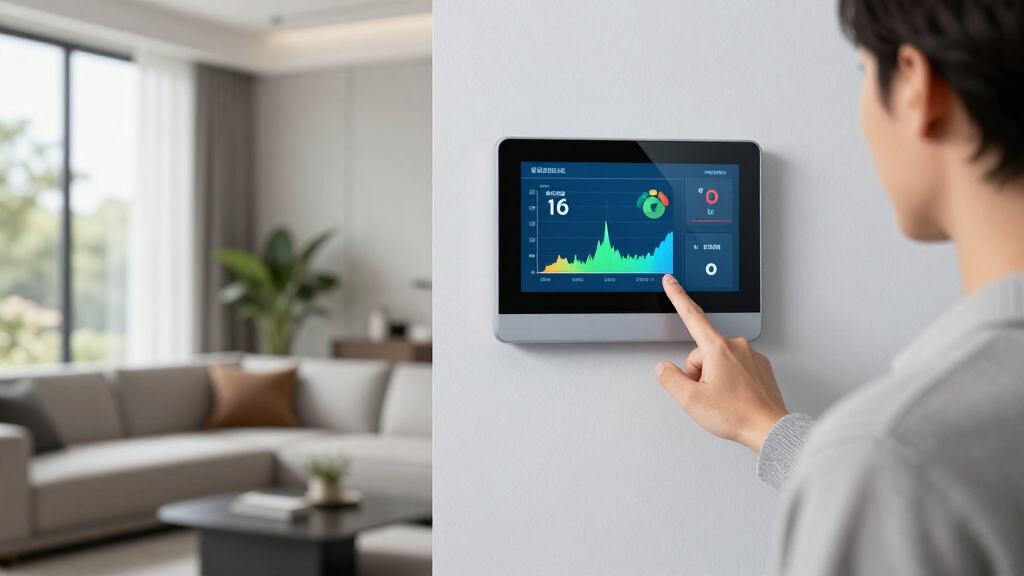

Smart home energy monitors help you understand and optimize your electricity use, saving money and reducing waste. The Emporia Vue 3 stands out as the best overall thanks to its accurate real-time data and extensive sensor support. For those seeking simplicity, the Meross Smart Home Energy Monitor offers straightforward setup and integration, while the SIEMENS Inhab is ideal for comprehensive circuit-level monitoring. Each option balances features against cost and complexity, creating tradeoffs between ease of use, customization, and price. Keep reading for a detailed comparison to find the best fit for your home and needs.
Complete the kit


Key Takeaways
- Top-performing monitors blend real-time data accuracy with broad sensor support for comprehensive insights.
- Ease of setup and integration can vary significantly, influencing suitability for beginners versus advanced users.
- Open API and local control features are more common in higher-end models, appealing to tech-savvy buyers.
- Sensor count and circuit compatibility are key factors, especially for larger or more complex homes.
- Price often correlates with features—more sensors and automation support typically mean a higher cost.
| Emporia Vue 3 Home Energy Monitor – Real-Time Electricity Usage and Power Consumption Meter |  | Best Overall | Certification: UL Listed | Installation: Circuit panel with clamp-on sensors | Supported Systems: Single phase, split phase, 2-wire, 3-wire, 3-phase, 4-wire Wye | VIEW LATEST PRICE | See Our Full Breakdown |
| SIEMENS Inhab Smart Home Energy Monitor with Circuit and Main Sensors |  | Best for Professional-Grade Monitoring | Circuit Level Sensors: 16-50 Amp | Main Sensors: 2-200 Amp | Compatibility: USA and Canada | VIEW LATEST PRICE | See Our Full Breakdown |
| Meross Smart Home Energy Monitor, Real-Time Power & Cost Tracking, Supports Home Assistant, No Subscription, 16×60A CT Sensors |  | Best for Privacy-Conscious Automation Enthusiasts | Sensor Support: 16×60A CT sensors | Compatibility: Supports Home Assistant, Open API | Wiring Systems: Single-phase, 2-wire, 3-phase | VIEW LATEST PRICE | See Our Full Breakdown |
| Emporia Energy Monitor with 16 Sensors and 4 Smart Plugs Bundle |  | Best for Whole-Home Control & Solar Integration | Sensors: 16 sensors | Smart Plugs: 4 Wi-Fi smart plugs | Compatibility: iOS, Android, Alexa | VIEW LATEST PRICE | See Our Full Breakdown |
| Emporia Vue 3 Home Energy Monitor – Smart Home Automation Module and Real-Time Electricity Usage Monitor |  | Best for Automation-Ready Homes | Certification: UL Listed | System Support: Single phase, split phase, 2-wire, 3-wire, 3-phase, 4-wire Wye | Sensors: Sixteen 50A branch sensors | VIEW LATEST PRICE | See Our Full Breakdown |
| Refoss Smart Home Energy Monitor with 16 60A Circuit Sensors |  | Best Overall for Customizable, Privacy-Focused Monitoring | Number of sensors: 16 | Sensor capacity: 60A per sensor | Supported systems: Single-phase, Split-phase, 3-phase 4-wire Wye | VIEW LATEST PRICE | See Our Full Breakdown |
| Smart Home Energy Monitor with 16 50A Circuit Sensors, Real-Time Power & Cost Tracking, Compatible with Home Assistant |  | Best for Tech-Savvy Users and Rental Properties | Sensor Count: 16 | Sensor Current: 50A | Voltage Support: 120/240VAC, three-phase up to 415Y/240VAC | VIEW LATEST PRICE | See Our Full Breakdown |
| Emporia Vue 3 Home Energy Monitor – Real-Time Electricity Usage and Power Consumption Meter |  | Best for Certified Reliability and Broad Compatibility | Certification: UL Listed | Supported Systems: Single phase, single-split phase, 2-wire, 3-wire, 3-phase, 4-wire Wye | Connectivity: 2.4 GHz WiFi | VIEW LATEST PRICE | See Our Full Breakdown |
| Refoss Smart Home Energy Monitor with Open API, Home Assistant, No Cloud, 16 Circuit Sensors, 60A |  | Best for Privacy-Focused, Solar-Optimized Homes | Model: EM16P | Number of Circuits: 16 | Main Circuit Sensors: 2 (200A each) | VIEW LATEST PRICE | See Our Full Breakdown |
| smart home energy monitor | Warranty | Certification |
|---|---|---|
| Emporia Vue 3 Home Energy Moni | 1 year | UL Listed |
| SIEMENS Inhab Smart Home Energ | — | — |
| Meross Smart Home Energy Monit | 2 years | — |
| Emporia Energy Monitor with 16 | — | — |
| Emporia Vue 3 Home Energy Moni | 1 year | UL Listed |
| Refoss Smart Home Energy Monit | 2 years | ETL |
| Smart Home Energy Monitor with | 1 year | — |
| Emporia Vue 3 Home Energy Moni | 1 year | UL Listed |
| Refoss Smart Home Energy Monit | 2 years | ETL, UL 61010 |
More Details on Our Top Picks
Emporia Vue 3 Home Energy Monitor – Real-Time Electricity Usage and Power Consumption Meter
The Emporia Vue 3 stands out for its comprehensive support of various electrical systems, including three-phase setups, making it suitable for larger or more complex homes. Compared with the SIEMENS Inhab, it offers more detailed real-time data and remote management capabilities, although it relies heavily on Wi-Fi connectivity and requires sensors for 3-phase systems. Its UL certification provides peace of mind on safety and reliability, but some data features are limited when the app isn’t actively open. This monitor is ideal for users who want detailed, flexible energy insights and are comfortable with a slightly more involved installation process. For smaller homes or those with simple electrical setups, the additional complexity might not be justified.Pros:- UL certified for safety and reliability
- Supports various electrical system configurations including three-phase
- Real-time data with cloud storage and remote management
- Supports solar and net metering
Cons:- Requires Wi-Fi connection for full functionality
- Additional sensors needed for some three-phase systems
- Limited data access unless the app is actively open
Best for: Homeowners with complex electrical systems or solar installations who want detailed, real-time monitoring and automation.
Not ideal for: Renters or users with basic single-phase systems who prefer plug-and-play solutions without circuit panel installation.
- Certification:UL Listed
- Installation:Circuit panel with clamp-on sensors
- Supported Systems:Single phase, split phase, 2-wire, 3-wire, 3-phase, 4-wire Wye
- Connectivity:2.4 GHz Wi-Fi
- Data Retention:Minute data 7 days, hourly data indefinite, 1-second data when app is active
- Warranty:1 year
Our verdict“This pick is best suited for users seeking detailed, flexible energy management in larger or complex homes who are comfortable with installation and connectivity requirements.”
SIEMENS Inhab Smart Home Energy Monitor with Circuit and Main Sensors
The SIEMENS Inhab offers straightforward, real-time energy tracking at the main and circuit levels, making it a great choice for those who want to monitor energy use with minimal fuss. Unlike the more feature-rich Emporia Vue 3, it focuses on core data and alerts, with a simpler installation process at the electrical panel—though it’s limited to the US and Canada, requiring professional help for some setups. Its CE and UL standards give confidence in safety, but it lacks advanced automation features. This monitor is ideal for homeowners who want reliable, clear energy data without the need for extensive customization or cloud reliance. Those outside North America or seeking advanced automation may find it too limited.Pros:- Real-time energy monitoring with mobile app
- Supports personalized alerts and energy management
- Easy installation at electrical panels
- UL and CE certified for safety
Cons:- Limited to US and Canada
- Installation may require professional help
- Lacks advanced automation or integration features
Best for: Homeowners or small business owners in the US or Canada seeking reliable, professional-grade energy monitoring with straightforward installation.
Not ideal for: International users or those wanting extensive automation features or integration beyond basic alerts.
- Circuit Level Sensors:16-50 Amp
- Main Sensors:2-200 Amp
- Compatibility:USA and Canada
- Standards:CE marked, UL Listed
Our verdict“This monitor suits users who prioritize straightforward, reliable energy data with professional-grade standards, primarily in North America.”
Meross Smart Home Energy Monitor, Real-Time Power & Cost Tracking, Supports Home Assistant, No Subscription, 16×60A CT Sensors
The Meross Smart Home Energy Monitor offers detailed circuit-level monitoring with no cloud subscription, making it attractive for privacy-focused users. It supports integration with Home Assistant, enabling automation and customization beyond basic features, unlike the Emporia Vue 3 that relies more on its app. While installation is simplified with clamp-on sensors, it’s limited to US wiring standards and doesn’t specify mobile app alerts or real-time notifications, which may matter to some users. This model is ideal for those with existing smart home setups who want detailed data without cloud dependency, but it may be less suitable for users unfamiliar with DIY integrations.Pros:- Supports detailed circuit-level monitoring
- No subscription or cloud lock-in, ensuring privacy
- Supports integration with Home Assistant
- Easy clamp-on installation
Cons:- Limited to US electrical wiring standards
- No detailed info on mobile app alerts or notifications
- Requires compatible wiring for installation
Best for: Home automation enthusiasts who want detailed circuit data and value privacy without cloud subscriptions.
Not ideal for: Average users seeking plug-and-play solutions or those outside US wiring standards who may face installation challenges.
- Sensor Support:16×60A CT sensors
- Compatibility:Supports Home Assistant, Open API
- Wiring Systems:Single-phase, 2-wire, 3-phase
- Main Circuit Capacity:200A
- Warranty:2 years
- Certifications:ETL, UL 61010
Our verdict“This monitor is ideal for DIY smart home users who want detailed, local control and value privacy over out-of-the-box simplicity.”
Emporia Energy Monitor with 16 Sensors and 4 Smart Plugs Bundle
This bundle from Emporia combines comprehensive home monitoring with smart device control, making it suitable for users who want an all-in-one energy management setup. The 16 sensors provide detailed data on various circuits, while the 4 Wi-Fi smart plugs enable remote control and automation of individual devices. Compared to standalone monitors like the Refoss, this bundle offers more integrated control, but setup and app configuration can be complex for beginners. It also depends heavily on Wi-Fi and the Emporia app, which may not satisfy users seeking local-only control. This option makes the most sense for those wanting to oversee entire home energy flows and automate appliances, despite the initial complexity.Pros:- Provides detailed real-time home energy monitoring
- Includes 4 Wi-Fi smart plugs for automation
- Supports solar net metering
- Flexible for various home sizes and setups
Cons:- Setup and configuration can be complex
- Relies on Wi-Fi and app connectivity
- Initial cost is higher due to bundle components
Best for: Homeowners seeking a comprehensive, integrated energy management system with device control and solar support.
Not ideal for: Users seeking simple plug-and-play solutions or with minimal technical comfort who prefer dedicated standalone monitors.
- Sensors:16 sensors
- Smart Plugs:4 Wi-Fi smart plugs
- Compatibility:iOS, Android, Alexa
- Supports Solar:Yes
- Monitoring Type:Real-time
- App Support:Emporia app
Our verdict“This bundle is best suited for homeowners wanting an integrated, controllable energy system with solar compatibility, despite its setup complexity.”
Emporia Vue 3 Home Energy Monitor – Smart Home Automation Module and Real-Time Electricity Usage Monitor
The Emporia Vue 3 with automation modules elevates energy management by combining detailed, real-time monitoring with smart automation capabilities. It supports solar and net metering, similar to the standard Vue 3, but adds integration options for automating circuits based on thresholds or schedules. While it provides extensive data and supports various system types, the need for Wi-Fi and additional sensors for some configurations can be hurdles. Compared to the SIEMENS Inhab, it offers more automation flexibility but requires a more involved setup process. This choice is ideal for tech-savvy users eager to integrate energy data directly into their home automation routines.Pros:- Supports comprehensive energy management and automation
- Includes multiple sensors for critical load monitoring
- Real-time data accessible via app
- Supports solar and net metering
Cons:- Requires Wi-Fi for real-time data and automation
- Additional sensors needed for some configurations
- Data retention limited when app is closed
Best for: Smart home users wanting to automate energy use and integrate detailed monitoring into their existing systems.
Not ideal for: Basic users who prefer simple, out-of-the-box energy monitoring without automation features or complex setup.
- Certification:UL Listed
- System Support:Single phase, split phase, 2-wire, 3-wire, 3-phase, 4-wire Wye
- Sensors:Sixteen 50A branch sensors
- Connectivity:2.4 GHz Wi-Fi
- Data Retention:7 days minute data, hourly data indefinite
- Warranty:1 year
Our verdict“This system is best for homeowners eager to combine detailed energy insights with automation, provided they are comfortable with a more involved setup.”
Refoss Smart Home Energy Monitor with 16 60A Circuit Sensors
This model stands out for its comprehensive real-time monitoring across multiple circuits, especially suited for households with complex electrical setups or solar integration. Unlike the Emporia Vue 3, which relies on cloud services, the Refoss offers local control via a web UI and open API, prioritizing data privacy. While installation requires a professional, its support for various electrical systems and long-term data storage makes it a strong choice for dedicated energy enthusiasts. The absence of a built-in display means users must access data through the app, which could be a drawback for those seeking instant readouts. Compared with simpler monitors, this device’s flexibility and privacy focus are clear advantages, though it involves more setup effort.
Pros:- Provides detailed real-time energy monitoring for multiple circuits
- Local control with no cloud dependency ensures data privacy
- Supports solar energy optimization and long-term data analysis
- Easy setup with backward sensor calibration
Cons:- Requires professional installation for accurate setup
- Limited to specific electrical systems (single-phase, 3-phase Wye)
Best for: Homeowners with complex electrical systems, solar setups, or those prioritizing data privacy and long-term analysis.
Not ideal for: Casual users or renters who prefer plug-and-play solutions without professional installation.
- Number of sensors:16
- Sensor capacity:60A per sensor
- Supported systems:Single-phase, Split-phase, 3-phase 4-wire Wye
- Data storage:5 years
- Warranty:2 years
- Certification:ETL
Our verdict“This pick is ideal for energy-conscious homeowners seeking detailed, private monitoring with extensive customization options.”
Smart Home Energy Monitor with 16 50A Circuit Sensors, Real-Time Power & Cost Tracking, Compatible with Home Assistant
This monitor makes installation straightforward with clamp-on sensors and is especially suited for users who want detailed, real-time data without reliance on cloud services. Unlike the Refoss, it emphasizes local control via MQTT and Home Assistant, making it perfect for tech enthusiasts managing multiple properties or rental units. Its support for various phases and appliances allows flexible usage, but setting up MQTT and integrating with home automation platforms could be challenging for non-technical users. The absence of a built-in display means data access depends on the app or automation system, which might be inconvenient for quick checks. Compared to the Emporia Vue 3, which has a longer warranty and slightly broader system support, this device excels in customization and privacy.
Pros:- Easy clamp-on installation in most circuit panels
- Real-time energy and cost data for better management
- Supports local control via MQTT without cloud reliance
- Ideal for rental or shared properties
Cons:- Requires technical setup with MQTT and Home Assistant
- Limited to specific multi-phase configurations
Best for: Tech-savvy homeowners or property managers comfortable with MQTT and home automation setups.
Not ideal for: Users seeking a simple, plug-and-play energy monitor without technical configuration.
- Sensor Count:16
- Sensor Current:50A
- Voltage Support:120/240VAC, three-phase up to 415Y/240VAC
- Connectivity:WiFi 2.4GHz, MQTT
- Warranty:1 year
- Monitoring Range:Now, day, week, month, year
Our verdict“This is the best choice for DIY-enthusiasts and property managers who want detailed, private energy data and automation flexibility.”
Emporia Vue 3 Home Energy Monitor – Real-Time Electricity Usage and Power Consumption Meter
The Emporia Vue 3 earns its spot as a reliable, UL-certified option with broad system support, including solar and net metering. It offers real-time data and cost insights that are suitable for homeowners looking to improve efficiency without complex setups. Compared with the Refoss models, the Vue 3 is more straightforward to install and has a longer data retention period for hourly data. However, its reliance on WiFi means continuous internet access is essential, and additional sensors sold separately can increase overall costs. The 1-year warranty and reputable certification make it a safer choice for those prioritizing safety and ease of use, though it may not offer the same level of customization or privacy as local-control options.
Pros:- UL-certified for safety and reliability
- Real-time energy monitoring and cost insights
- Supports multiple systems and appliances with additional sensors
- Easy installation in circuit panels
Cons:- Requires active WiFi connection for real-time data
- Additional sensors sold separately, increasing total cost
Best for: Homeowners seeking a reliable, certified system that balances ease of installation with detailed monitoring.
Not ideal for: Power users wanting advanced automation integrations or extensive long-term data without additional sensors.
- Certification:UL Listed
- Supported Systems:Single phase, single-split phase, 2-wire, 3-wire, 3-phase, 4-wire Wye
- Connectivity:2.4 GHz WiFi
- Data Retention:Minute data: 7 days; Hour data: indefinite; 1 sec data: active when app is open
- Sensor Capacity:Supports up to 16 branch sensors
- Warranty:1 year
Our verdict“This pick suits homeowners who prioritize safety, certification, and straightforward setup for effective energy management.”
Refoss Smart Home Energy Monitor with Open API, Home Assistant, No Cloud, 16 Circuit Sensors, 60A
This model is tailored for users who want strong local control, especially in solar-equipped homes, with its open API, MQTT support, and seamless Home Assistant integration. Compared with the Emporia Vue 3, it emphasizes privacy and customization, supporting high-accuracy measurements with ±1% precision. While installation involves clamp-on sensors and some technical setup, it enables automation that can maximize self-consumption and energy savings. Its data storage capacity of up to 5 years and two-year warranty make it suitable for long-term monitoring. However, setup complexity and the need for technical configuration might deter casual users. This device’s focus on local control and automation makes it ideal for advanced energy managers and solar owners.
Pros:- Local control and data privacy with no cloud dependence
- Supports seamless integration with Home Assistant and OpenClaw AI
- High accuracy with ±1% measurement precision
- Supports solar energy automation for max self-consumption
Cons:- Requires technical setup for open API and MQTT
- Installation may be complex for less experienced users
Best for: Solar homeowners and automation enthusiasts comfortable with open APIs and MQTT setup.
Not ideal for: Users seeking simple, plug-and-play monitors without technical configuration or long-term customization needs.
- Model:EM16P
- Number of Circuits:16
- Main Circuit Sensors:2 (200A each)
- Branch Sensors:16 (1–60A each)
- Accuracy:±1%
- Data Storage:Up to 5 years
- Certification:ETL, UL 61010
- Installation:Clamp-on, non-invasive
- Warranty:2 years
Our verdict“This is the ideal choice for energy-savvy users wanting full automation control and privacy, especially in solar applications.”
How We Picked
These products were evaluated based on accuracy of data, ease of installation, compatibility with smart home systems, and overall value. We prioritized models with broad sensor support and adjustable monitoring options, as these are crucial for comprehensive energy insights. Cost-effectiveness was also considered, ensuring that buyers can find options suitable for different budgets. The ranking reflects a balance between advanced features for experienced users and straightforward setups for beginners, aiming to guide a wide range of consumers.| smart home energy monitor | Certification |
|---|---|
| Emporia Vue 3 Home Energy Moni | UL Listed |
| SIEMENS Inhab Smart Home Energ | — |
| Meross Smart Home Energy Monit | — |
| Emporia Energy Monitor with 16 | — |
| Emporia Vue 3 Home Energy Moni | UL Listed |
| Refoss Smart Home Energy Monit | ETL |
| Smart Home Energy Monitor with | — |
| Emporia Vue 3 Home Energy Moni | UL Listed |
| Refoss Smart Home Energy Monit | ETL, UL 61010 |
Factors to Consider When Choosing Smart Home Energy Monitors
Choosing the right smart home energy monitor involves more than just features; it requires understanding your home’s size, existing smart system, and your specific goals. Some monitors excel at detailed circuit analysis, while others focus on user-friendly interfaces or automation. Considering these factors will help you avoid common pitfalls, like overspending on unnecessary sensors or buying a device incompatible with your smart home ecosystem.Sensor Compatibility and Circuit Support
Assess how many circuits you need to monitor and whether the device supports the electrical load of your home. Larger households or those with multiple appliances benefit from models with higher circuit counts and current ratings. Failing to match the sensor capacity to your home’s wiring can result in incomplete data or device overload, so carefully check specifications before purchasing.
Ease of Installation and Use
Consider your comfort level with electrical work and smart home setup. Some monitors require professional installation, especially if they involve wiring into the main panel, while others are plug-and-play. User interface matters too: a clear app, straightforward setup, and good customer support make a big difference in long-term satisfaction.
Compatibility With Smart Home Ecosystems
Check if the monitor integrates with your existing smart home platform, such as Home Assistant, Google Home, or Alexa. Devices with open APIs and local control options offer more flexibility and privacy, reducing reliance on cloud services. Compatibility considerations prevent frustration and ensure your energy data feeds into broader automation routines seamlessly.
Data Accuracy and Reporting Features
Accurate real-time data is key for making informed decisions about energy use. Look for monitors with proven measurement precision and useful reporting tools—like historical charts or cost estimates. Beware of models with vague or delayed data, as they diminish the value of continuous monitoring and automation.
Price and Long-Term Value
While budgets vary, investing in a monitor with features aligned to your goals offers better long-term value. Cheaper models may lack critical sensors or automation support, forcing upgrades later. Conversely, premium options often include extensive support and integrations, which might be unnecessary for casual users but invaluable for tech enthusiasts.
Frequently Asked Questions
Do I need a professional to install a smart home energy monitor?
It depends on the model and your electrical skills. Some monitors are designed for DIY installation, typically those with plug-and-play features or simple sensor setups. However, models that require wiring into your main electrical panel or circuit breaker often benefit from professional installation to ensure safety and compliance with local codes. Investing in professional setup can prevent potential damage or inaccuracies caused by improper wiring.
Can I use a smart home energy monitor without a smart home system?
Yes, many models offer standalone functionality, providing real-time data via their dedicated app without requiring integration with broader smart home platforms. However, connecting your monitor to a smart system enhances automation and data visualization, making it easier to track and manage energy use over time. If you prefer simplicity, look for monitors with local controls and no obligatory cloud dependencies.
How important is sensor count for my home’s monitoring needs?
The number of sensors determines how many circuits or appliances you can monitor simultaneously. Larger homes with multiple circuits benefit from higher sensor counts, offering detailed insights into specific areas or devices. For smaller apartments, fewer sensors may suffice, and overpaying for excessive capacity can be unnecessary. Matching sensor count to your home’s complexity ensures you get relevant data without overspending.
What should I prioritize: price, features, or compatibility?
Prioritization depends on your goals. If budget is a concern, focus on models that provide essential features like real-time data and basic circuit support. For tech-savvy users or those seeking automation, compatibility and advanced features like open APIs become more critical, even at a higher price. Balancing these factors will help you select a device that offers good value and fits your home setup.
Will a smart home energy monitor save me money?
In many cases, yes. By providing detailed insights into your energy consumption, these monitors can highlight inefficient appliances or usage habits, enabling you to make informed adjustments. While the device itself is an investment, the savings on electricity bills over time can offset the initial cost. Effectiveness depends on how actively you analyze and act on the data provided.
Conclusion
For most users, the Emporia Vue 3 remains the best overall choice thanks to its detailed monitoring and broad sensor support. Those seeking budget-friendly, straightforward solutions should consider the Meross Smart Home Energy Monitor for easy setup and real-time tracking. Tech enthusiasts or homeowners with complex wiring will benefit from higher-end options like the Refoss Open API Model for maximum customization. Beginners or casual users should prioritize simple, plug-and-play devices, while experienced users should look for models with extensive integration options to build out a comprehensive energy management system.