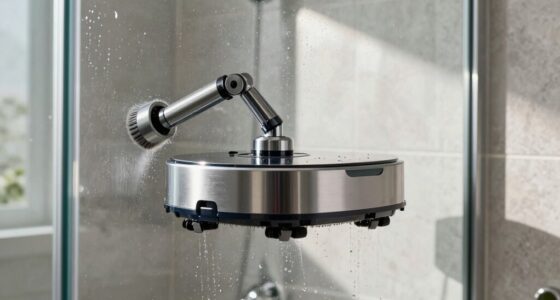
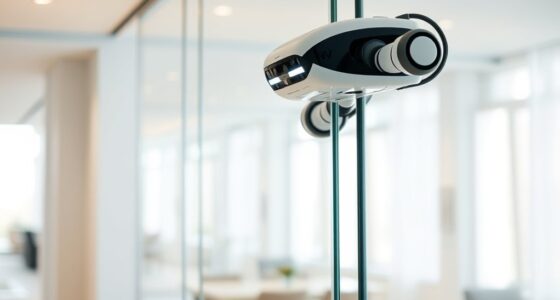
To keep your window robot’s suction strong, regularly clean the suction pads and brushes with a soft, damp cloth, and check for cracks or tears in the cups. Make certain the window surface is clean and dry before placing the robot, and avoid dirt or moisture that can weaken adhesion. Inspect sensors for dust and debris, and take action if safety alerts pop up. Maintaining ideal environmental conditions also helps. Stick with these tips to maximize performance and durability.
Key Takeaways
- Regularly clean and inspect suction pads and cups for dirt, cracks, or damage.
- Keep window surfaces clean, dry, and free from dust or grime before operation.
- Ensure environmental conditions like humidity and temperature are within optimal ranges.
- Check for loose or worn parts that may weaken suction and replace as needed.
- Follow manufacturer guidelines for maintaining and replacing suction components periodically.

Maintaining strong suction performance on your window robot is essential for effective cleaning and safety. When your robot’s suction weakens, it struggles to stay attached, which can lead to incomplete cleaning and potential falls. To keep it performing at its best, you need to pay attention to both its battery life and safety features. A healthy battery ensures consistent power, preventing dips in suction that can occur when the battery runs low. Regularly check your robot’s battery status and recharge it fully before each use. Avoid letting the battery drain completely, as this can shorten its lifespan over time. If your robot has a removable battery, consider replacing it periodically to maintain optimal power levels. For non-removable batteries, follow manufacturer guidelines for charging cycles to maximize longevity.
Safety features are equally important in maintaining suction and overall performance. Most window robots come equipped with sensors and safety mechanisms designed to prevent falls or accidents if the robot encounters unexpected obstacles or if suction weakens. Regularly inspect these sensors for dust or debris, and clean them gently to ensure they function properly. Many models include safety alarms or alerts that notify you if suction drops below a safe threshold. Pay attention to these indicators and take prompt action—like cleaning the suction pads or replacing worn parts—to restore full adhesion. Using the correct cleaning solutions and accessories recommended by the manufacturer also helps preserve safety features, preventing damage to the suction system. Additionally, understanding the importance of contrast ratio can help you optimize your environment for better visibility and safer operation of your robot. Proper maintenance of the suction pads and brushes directly impacts the robot’s ability to cling to windows. Dirt, dust, and grime can diminish the grip of the suction cups, so clean them regularly with a soft, damp cloth. Make sure the suction cups are free from cracks or tears; damaged cups compromise the vacuum seal and reduce suction strength. For best results, keep the window surface clean and dry before starting your robot, as dirt or moisture can interfere with adhesion. Additionally, check that the robot’s weight is evenly distributed and that no parts are loose, which could affect its ability to maintain suction. Performing routine cleaning and maintenance checks, including inspecting the suction pads and sensors, helps ensure the robot’s safety features operate effectively, providing peace of mind during cleaning sessions. Regularly maintaining the suction system can prevent performance issues and extend the lifespan of your device. Moreover, environmental conditions like temperature and humidity can influence the adhesion performance, so monitoring these factors can help achieve optimal results.

Dqkhoicvf Robot Vacuum Cleaner Accessories 7 Series Window Treasure Suction Cup W830/833/850/83S/836/860/880
- Model Compatibility: W830/833/850/83S/836/860/880
- Efficient Debris Pickup: Large suction port with high-efficiency filter
- Easy Maintenance: Disassemble and clean easily
As an affiliate, we earn on qualifying purchases.
As an affiliate, we earn on qualifying purchases.
Frequently Asked Questions
How Often Should I Replace the Suction Cups?
You should replace the suction cups when they show signs of wear, damage, or lose their grip. Typically, check them during your regular cleaning schedule, about every 3 to 6 months. Pay attention to the suction cup material, as rubber or silicone can degrade over time. Regularly cleaning the suction cups helps maintain their effectiveness, but replacement guarantees your window robot continues to function at its best.
Can I Use Household Cleaners on the Suction Pads?
You shouldn’t use household cleaners on the suction pads because cleaning agents can damage their surface compatibility, reducing their grip. Instead, gently wipe the suction cups with a damp cloth and mild soap if needed. Avoid harsh chemicals or abrasive scrubbers, as they can degrade the material. Keeping the suction pads clean and free of debris helps maintain peak suction performance and extends their lifespan.
Does Temperature Affect the Suction Performance?
Temperature effects can impact your window robot’s suction performance by affecting suction durability. When temperatures are too high, the suction pads may soften, reducing their grip on glass surfaces. Conversely, cold temperatures can make the pads harden, decreasing their ability to create a secure seal. To maintain ideal suction, keep your robot within the recommended temperature range, and avoid exposing it to extreme heat or cold, ensuring consistent suction durability.
How Do I Troubleshoot Loss of Suction During Cleaning?
Think of troubleshooting like fixing a leaky faucet—you need to identify the problem first. Check your robot’s battery maintenance to make sure it’s fully charged; a weak battery can cause suction loss. Clean the wheels and sensors regularly, as dirt can hinder performance. Also, adjust your cleaning frequency to prevent buildup. If suction still drops, reset the device or consult the manual, guaranteeing efficient operation.
Are There Specific Surfaces Better Suited for Window Robots?
You’ll find smooth, non-porous surfaces like glass, ceramic, or certain polished metals work best for window robots. Surface texture and material compatibility are essential; rough or textured surfaces can reduce suction and cleaning efficiency. Before use, check your robot’s specifications to make sure it’s compatible with your surface type. For peak performance, stick to surfaces with minimal texture and avoid materials that might damage the robot’s suction system.
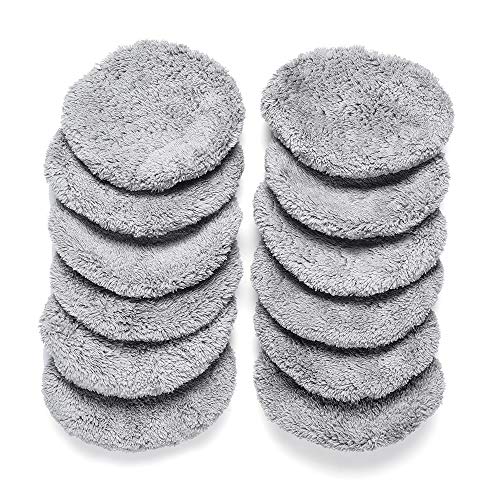
Replacement Pads for Window Cleaning Robot, Compatible with Model W5 W2 X5 X6 X7 X8 HC-09 HC-07 HC-11 HC-18, Washable and Reusable Microfiber Cloth -12pcs/6 Sets
- Compatibility: Fits Tosima and round window robots
- Package Quantity: Includes 12 microfiber pads in 6 sets
- Reusable Design: Washable and reusable microfiber pads
As an affiliate, we earn on qualifying purchases.
As an affiliate, we earn on qualifying purchases.
Conclusion
To keep your window robot’s suction at peak performance, regularly clean its sensors and suction pads, and guarantee the surface is spotless. Avoid harsh chemicals that can damage the pads and check for damage or debris frequently. When properly maintained, your robot’s suction power can outlast even the fiercest storms, keeping your windows crystal clear. Stay vigilant, and your robot will be unstoppable, transforming your cleaning routine into a breeze you’ll barely notice!

Tosima X1 Window Cleaning Robot – Dual-Nozzle Ultrasonic Water Atomization, 85 ml Visible Water Tank, Automatic Window Cleaner for Large & Small Windows
- Effective Cleaning with Dual Nozzles: Ultrasonic water atomization for streak-free results
- Visible Water Tank: 85ml capacity with viewing window
- Long-Lasting Battery Backup: 25-minute power outage safety feature
As an affiliate, we earn on qualifying purchases.
As an affiliate, we earn on qualifying purchases.

HUTT E+ Portable Battery for Window Cleaning Robots, 5000mAh Cordless Power Supply with Secure Fit for A1/S7/W9 Models, Ultra-Lightweight 990g
- Model Name: HUTT E+
As an affiliate, we earn on qualifying purchases.
As an affiliate, we earn on qualifying purchases.