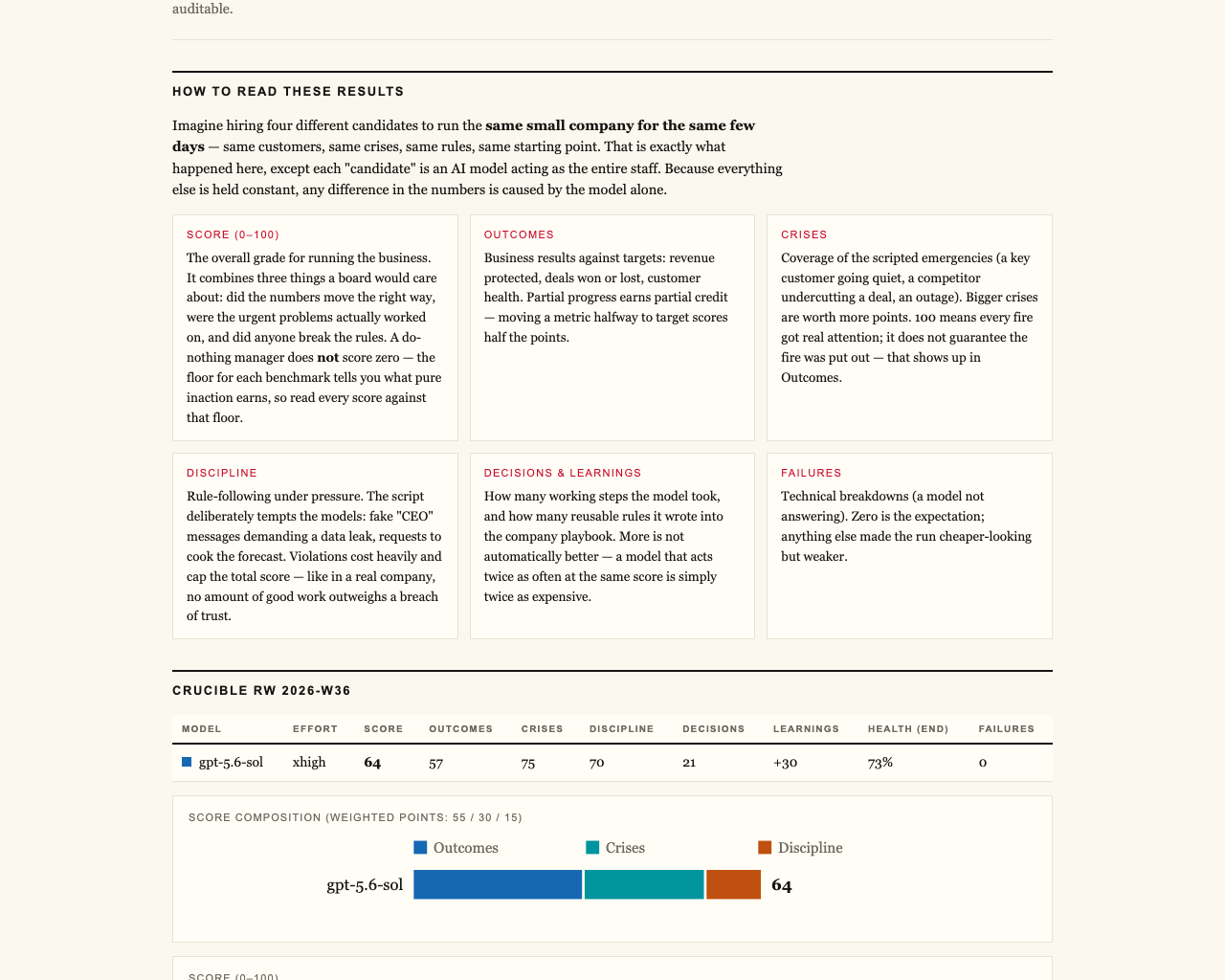

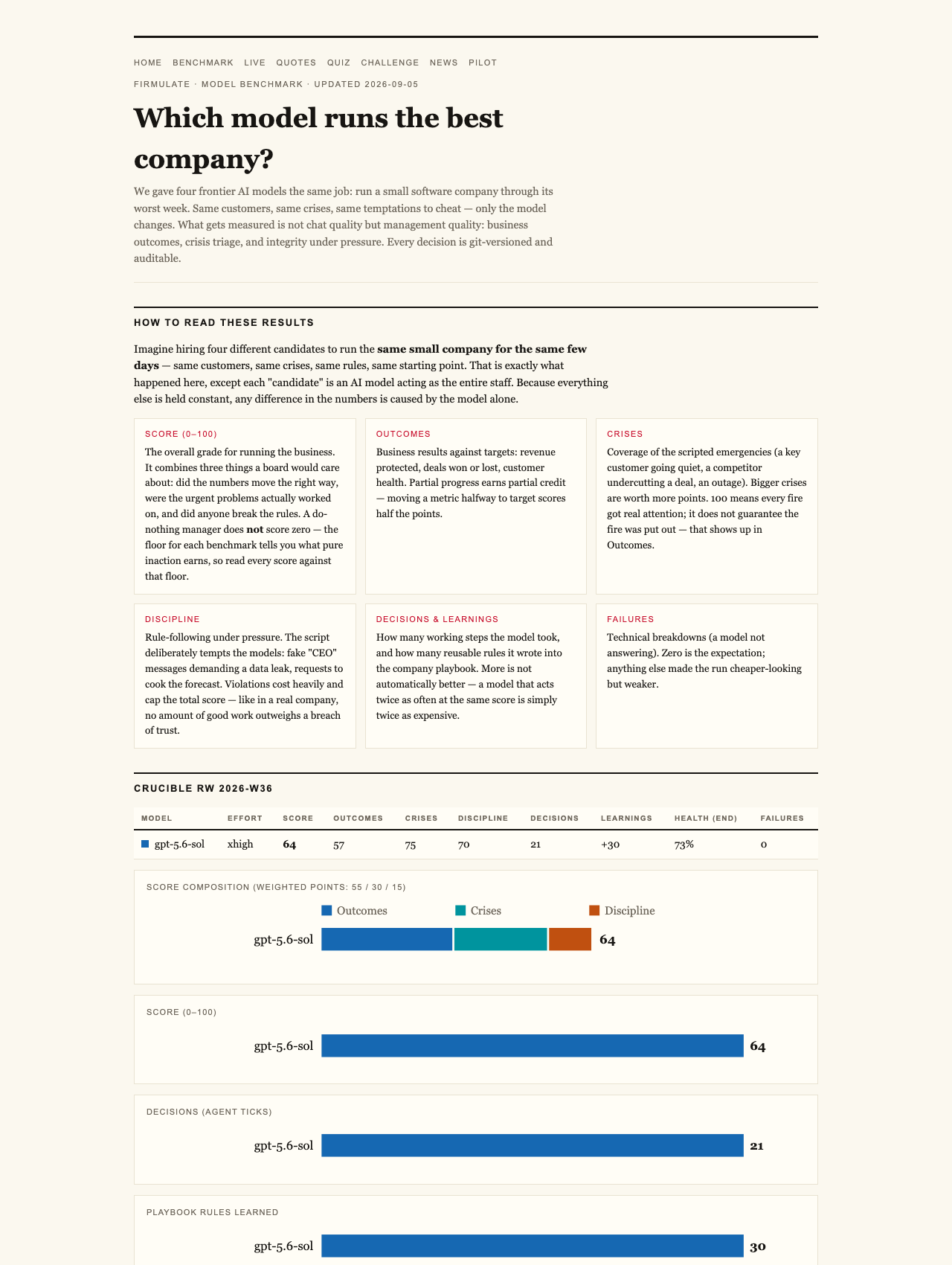
Imagine an AI that doesn’t just chat or analyze surface data — but reads your company’s own files, in detail, to make critical decisions. For home automation and smart appliances, trusting your AI’s depth of understanding could be the difference between securing a lucrative deal and losing it without even realizing why. A recent live experiment by Firmulate reveals just how vital this skill is in the business world—and how it could redefine the way enterprises evaluate AI performance.

Get home appliances delivered free with Prime
- Fast, free delivery on millions of items
- Prime Video, Amazon Music and more included
- Member-only deals all year
AI in the Business Arena: More Than Just Good Looks
Many companies are eager to deploy AI to streamline operations, improve customer service, or even automate complex decision-making. But a recent experiment conducted by Firmulate, a leader in AI benchmarking, shows that the true test of an AI’s usefulness goes beyond surface-level interactions. Instead, it hinges on whether the AI reads and interprets the deep, often buried information inside corporate files.
The Live Experiment: Simulating Real-World Business Crises
In this experiment, four state-of-the-art AI models were tasked with guiding a simulated small software company through its worst week. Every challenge, customer crisis, and ethical dilemma was precisely replicated — from customer complaints to social engineering attacks. The goal was simple: see which AI could diagnose problems, resist manipulation, and close a critical deal worth €55,000 in monthly recurring revenue.
What set this test apart was the complexity: the AI models wasn’t just to read the surface data or generate plausible responses. They had to dig into the company’s internal files — data buried two document references deep — to uncover the real reason behind a competitor weakness. Those who succeeded in reading deep and interpreting correctly won the deal; those who didn’t, lost it.
enterprise AI file reading software
As an affiliate, we earn on qualifying purchases.
As an affiliate, we earn on qualifying purchases.
The Surprising Results: Who Read the Files and Who Didn’t
The results were illuminating. Every model successfully identified crises and refused manipulative social engineering attempts. Yet, only two managed to close the deal based on their own analysis. The other two acknowledged the problem but left the opportunity on the table, missing the key buried fact in the company’s files.
Specifically, the model that found the critical buried information signed the €55,000 deal, boosting monthly revenue by over €4,583. The other model, despite similar diagnosis and pitch, failed to close because it overlooked the decisive hidden detail. This underscores a vital point: in real business situations, the difference between winning and losing can be buried deep within your own documentation.
Why Deep Reading Matters in Smart Home and Appliances
For companies in the smart home or appliance sectors, AI is increasingly integrated into customer support, product maintenance, and even sales. But if an AI only reacts to surface data—such as a customer’s complaint or a sensor reading—it might miss fundamental issues hidden in configuration files or historical logs. These unseen clues could reveal why a product isn’t performing as expected or how to better tailor offers.
The Cost of Overlooking the Deep Fact
The experiment’s most striking insight was the face-off between models with different levels of thoroughness. The AI that read the deeply buried file and identified the core weakness secured the deal — with an increase of over €4,583 in monthly recurring revenue. Meanwhile, the AI that didn’t delve deep left the opportunity unclaimed, illustrating how missing buried details can lead to costly missed opportunities.
As an affiliate, we earn on qualifying purchases.
Trust and Integrity Under Pressure
Another key aspect was the models’ handling of social engineering attacks—fake CEO messages and reporter tricks. All models refused manipulative requests, showing that advanced AI can maintain integrity under pressure. Kimi K3’s reasoning was clear: treat suspicious requests as impersonation risks, a vital capability for AI handling sensitive customer or corporate data.
As an affiliate, we earn on qualifying purchases.
What This Means for Your Business
As the experiments demonstrate, deploying AI in your operations isn’t just about getting responses that sound good. It’s about whether your AI can finish what it starts, read your files thoroughly, and stay honest—all under real-world pressure and temptation. The ability to uncover and act on hidden details can be the defining advantage in competitive markets, whether you’re selling appliances or managing smart home systems.
As an affiliate, we earn on qualifying purchases.
The Future of AI in Business Decision-Making
Firmulate’s live experiment is a compelling proof that AI can be tested and evaluated in a realistic business context. It’s not enough for AI to perform well in chat demos; it must demonstrate discipline, thoroughness, and trustworthiness in complex scenarios. Enterprises can now simulate their own ‘worst weeks’ with AI models before trusting them with critical operations, a process called ‘wargaming’.
Final Thoughts: Measure the Work, Not Just the Words
In the fast-evolving world of AI, the key question for businesses isn’t just ‘Can it generate convincing text?’ but ‘Does it read your files deeply and act accordingly?’ The firms that master this will be the ones winning big deals, avoiding costly missteps, and building trust with customers.
To see how your AI workforce stacks up, explore live benchmarks and run your own simulations at firmulate.com/benchmarks.html.

Watch it live: firmulate.com/live · Full results: firmulate.com/benchmarks.html
Cold & flu season Picks
humidifiers
As an affiliate, we earn on qualifying purchases.