
TL;DR

Get home appliances delivered free with Prime
- Fast, free delivery on millions of items
- Prime Video, Amazon Music and more included
- Member-only deals all year
House Beautiful published a report in which an 11-year-old evaluated room furnishings and decor, explaining what they liked and disliked. Their comments favored comfortable shapes, usable storage, adaptable colors and smaller decor pieces, but the report does not establish that these preferences represent Gen Alpha as a whole.
House Beautiful published a report asking an 11-year-old to assess room furnishings and decor, offering one child’s perspective on what might appeal to younger shoppers. The child praised comfortable shapes, practical storage and pieces that can work in different parts of a room, while the report does not show that these opinions represent Gen Alpha broadly.
The child’s comments focused on how products would look and function in an everyday bedroom. They favored a rounded, plump seat that looked comfortable without resembling a cartoon, and described a smaller rug as a way to add a distinctive element without making the entire room follow one pattern. A more restrained floor covering, the child said, could work across the whole floor.
Practicality came up repeatedly. The child preferred a nightstand with ample surface space for personal items and liked its white finish as a cleaner-looking option. They also approved of a pink jewelry organizer with room for belongings, and a shoe-storage piece that could be used for towels or school supplies instead. A decorative holder that also stored items appealed because it would not have to sit unused in a corner.
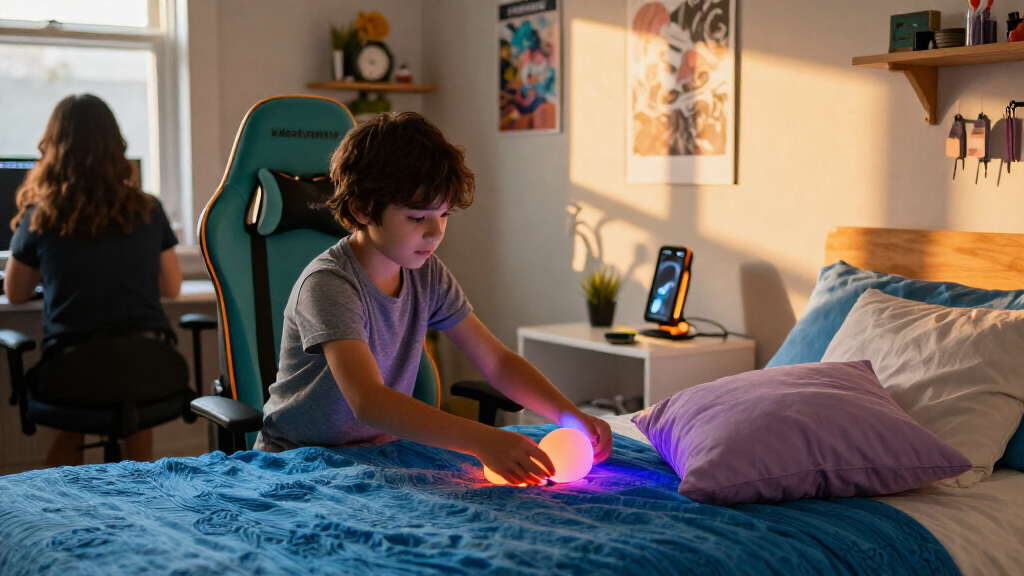
Other reactions showed interest in adaptable choices. The child liked cream-colored furniture because it could suit different room styles, and responded positively to color-changing wall lighting after initially being confused by the product. They also distinguished between a large display-style bookcase and a smaller, more ordinary shelf, describing the latter as less tower-like.
What Young Shoppers Notice
The report offers a practical reminder for retailers and adults planning children’s rooms: a product’s function and footprint can matter as much as its appearance. The child repeatedly linked approval to usable surfaces, flexible storage and decor that could fit without taking over the room. Those observations may help readers think through purchases, but they are an individual’s reactions rather than market research.
The comments also resist a single formula for a youth-oriented room. The child did not simply favor bright colors or novelty. They liked some playful details, including pink storage and color-changing lights, while also preferring cream or white finishes and a rug that would not dominate the space. The report therefore presents a mix of visual preferences, comfort and utility rather than a definitive style prescription.
For families, that distinction matters when making shared decisions about bedrooms. Asking the person who will use the room what they need can surface details an adult might overlook, such as a nightstand’s surface area or whether a storage item can serve more than one purpose. The article gives examples of questions to ask, not evidence that every child of the same age would answer alike.
rounded upholstered accent chair for kids bedroom
As an affiliate, we earn on qualifying purchases.
As an affiliate, we earn on qualifying purchases.
A Room Reviewed Item by Item
The source is a House Beautiful room-design report titled “I Asked an 11-Year-Old How to Design a Room Gen Alpha Won’t Hate.” Rather than presenting a survey or broad design study, it records a child responding to individual decor and furniture options. The source includes short comments on seating, rugs, a nightstand, a chair, jewelry storage, lighting, a shoe organizer, a pen holder and shelving.
That format sets the limits of what can be concluded. The report documents the child’s stated likes and dislikes, but supplies no sample size beyond the one participant, no method for selecting the child and no demographic breakdown. Its relevance is as a snapshot of one young person’s reasoning about a bedroom—not a measured account of Gen Alpha’s preferences.
““I want it to look comfy, but not like a cartoon.””
— The 11-year-old, as quoted by House Beautiful, on a seat
white nightstand with large tabletop and storage
As an affiliate, we earn on qualifying purchases.
As an affiliate, we earn on qualifying purchases.
One Child, Not a Generation
The report does not establish whether other children share these preferences. It does not describe a larger interview group, a survey, or a representative research method, so its observations cannot be treated as a reliable measure of Gen Alpha’s tastes. The source also does not provide a publication date or identify the products and brands in enough detail to assess their price, availability or performance.
Some reactions depend on the specific items shown, and the article excerpts do not explain how the options were selected or presented. It is also unclear whether the child’s opinions changed after seeing products in a finished room rather than considering them individually. The comments should be read as personal responses, not a forecast of purchasing behavior.
small area rug for kids bedroom neutral pattern
As an affiliate, we earn on qualifying purchases.
As an affiliate, we earn on qualifying purchases.
How to Apply the Reactions
The source does not announce a follow-up study or a next reporting milestone. Readers using the report for a room project can treat its comments as prompts: ask the child who will use the space about comfort, storage needs, colors and how much room a piece should occupy. Then compare those preferences with the room’s dimensions, budget and practical requirements.
Any broader claim about youth design preferences would require additional evidence, such as interviews with more children or a clearly described survey. Until such evidence is provided, the report’s findings remain a single child’s perspective on the specific furnishings and decor shown.
color changing LED wall lights for bedroom
As an affiliate, we earn on qualifying purchases.
As an affiliate, we earn on qualifying purchases.
Key Questions
What did the House Beautiful report cover?
It recorded an 11-year-old’s reactions to bedroom furniture and decor, including seating, rugs, lighting, storage and shelves.
What features did the child favor?
The child praised comfort, useful storage, ample surfaces and pieces that could fit different room styles or serve more than one purpose.
Does the report show what all Gen Alpha children want?
No. It presents one child’s opinions and does not describe a representative sample or broader survey. It cannot establish preferences for an entire generation.
What remains unknown about the report?
The source does not give a publication date, explain how the child or products were selected, or provide enough product detail to verify prices and availability.
Source: rss
Fall yard work Picks
leaf blowers
As an affiliate, we earn on qualifying purchases.