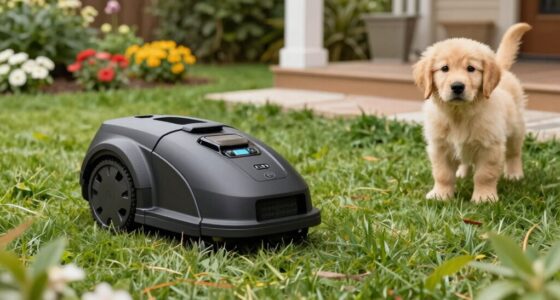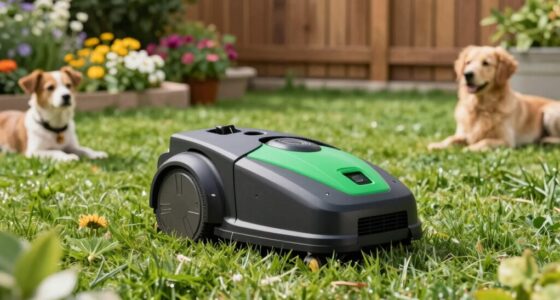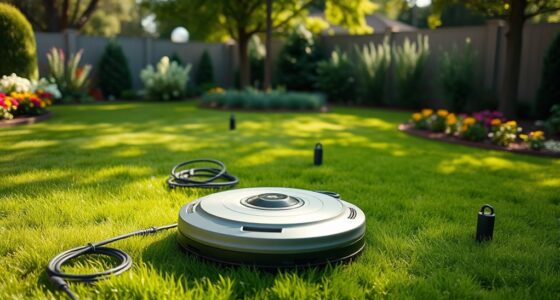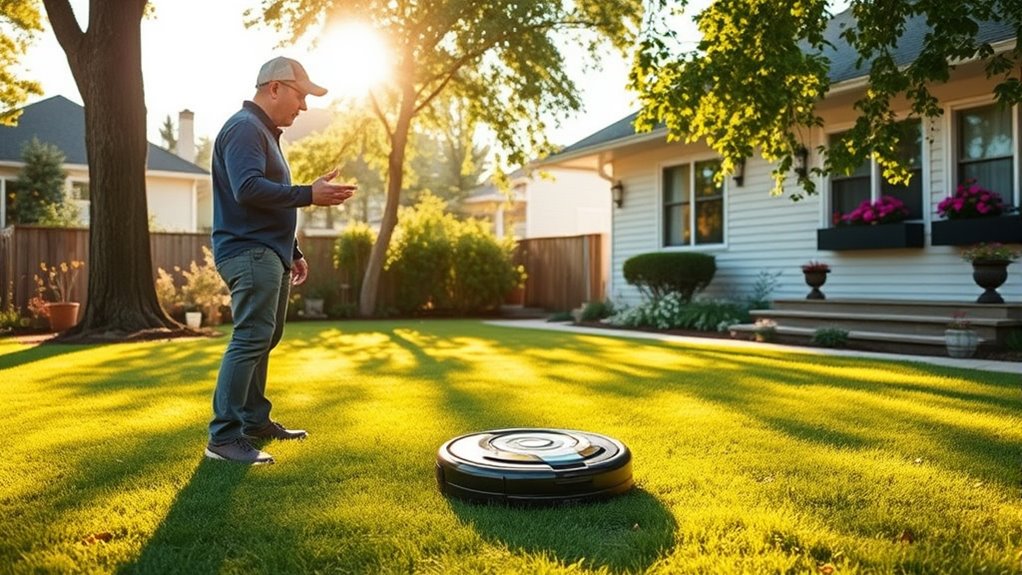

Yes, neighbors can split a robot mower by coordinating schedules, sharing costs, and setting clear agreements on privacy and maintenance. Using smart apps, you can control access and monitor the mower remotely, making shared use easier and secure. Open communication ensures everyone’s needs are met and issues are addressed quickly. If you want to learn more about how to make shared mower setups work smoothly, there’s plenty of useful information you’ll find helpful.
Key Takeaways
- Sharing costs and scheduling requires clear agreements on access, usage times, and responsibilities to prevent conflicts.
- Privacy concerns can be addressed with data privacy agreements and controls over cameras and sensors.
- Control systems like shared apps enable remote operation and monitoring, facilitating equitable yard access.
- Proper planning around maintenance, security, and troubleshooting ensures smooth shared mower operation.
- Open communication and establishing guidelines maximize benefits, affordability, and satisfaction among neighbors sharing a robot mower.
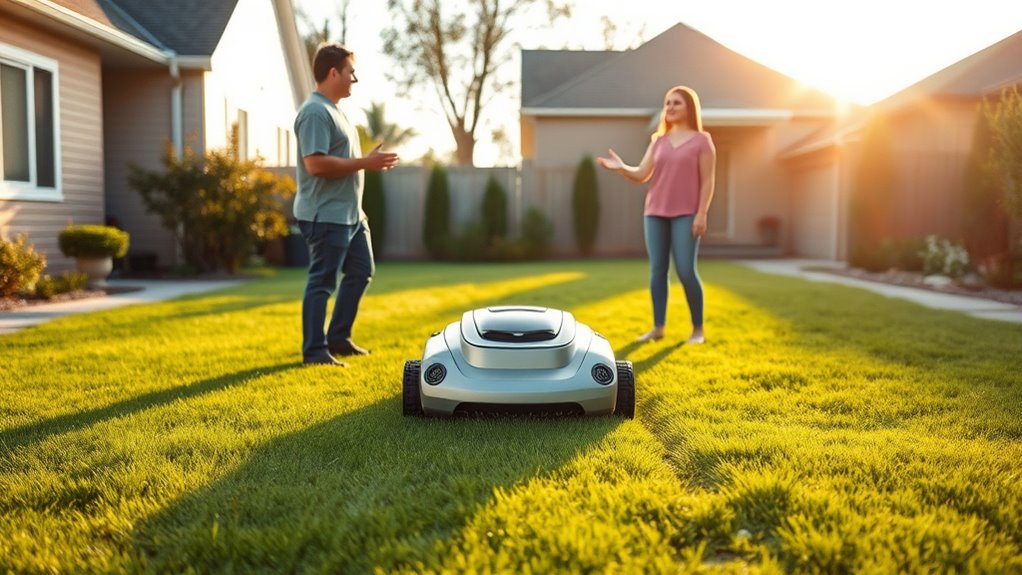
Sharing a robot mower can be a practical way to save money and maximize its use, especially if you live in a community or have multiple properties nearby. Instead of each household investing in a separate mower, you can establish a cost sharing model that divides expenses fairly among neighbors. This approach makes owning a robot mower more affordable and ensures everyone benefits from its convenience. To implement this, you might agree on a fixed monthly fee, or split costs based on yard size or usage frequency. Clear agreements help prevent misunderstandings and ensure that each party contributes their fair share.
However, sharing a mower also introduces privacy concerns that you need to contemplate. A robot mower’s sensors and cameras collect data about your yard, which can raise questions about data privacy and security. You might worry about neighbors accessing footage or information about your property. To address this, establish boundaries and rules about data collection, storage, and access rights. For example, you could agree that the mower’s data stays within your shared system and isn’t shared externally. Some models offer privacy controls that let you disable cameras or limit data collection, giving you peace of mind. Open communication about privacy expectations is essential to maintain trust among neighbors.
Another aspect to consider is scheduling and accessibility. You want to coordinate so that the mower operates at convenient times without disrupting each other’s routines. Setting shared schedules or designated usage times can help manage this. Additionally, you’ll need a plan for maintenance and troubleshooting—deciding who’s responsible if the mower needs repairs or encounters issues. Creating a simple agreement upfront can save headaches later.
When it comes to logistics, decide whether you’ll share the mower physically or digitally. Some communities opt for a communal storage space, while others handle the mower individually but share access via a smart app. Using an app allows you to control the mower remotely, monitor its progress, and schedule cutting times, which can be especially useful if neighbors are geographically dispersed. Just make sure you’re comfortable with the app’s security features and privacy settings. Incorporating high refresh rates into the control system could improve responsiveness during operation, making scheduling more precise and efficient.
Ultimately, sharing a robot mower can be a smart, cost-effective solution if you approach it thoughtfully. Set clear guidelines on expenses, privacy, scheduling, and maintenance, and keep open lines of communication. This way, everyone benefits from the convenience without stepping on each other’s toes or risking privacy breaches. With the right planning, a shared robot mower can be a hassle-free, economical addition to your neighborhood or property portfolio.
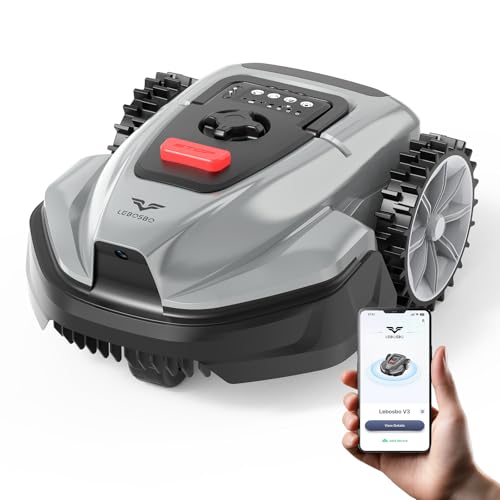
2026 NEW LEBOSBO V3 Robotic Lawn Mower, AI Vision Recognition Robot Lawn Mower with APP Control, Low-Noise Operation, Adjustable Cutting Height, No-Go Zones, for Small Lawns Up to 1600 Sq.Ft.
【AI Vision Obstacle Avoidance】Powered by advanced AI vision technology, the LEBOSBO V3 robotic lawn mower intelligently detects obstacles,…
As an affiliate, we earn on qualifying purchases.
As an affiliate, we earn on qualifying purchases.
Frequently Asked Questions
How Do Neighbors Coordinate Mowing Schedules Effectively?
To coordinate mowing schedules effectively, you should establish clear neighbor communication from the start. Share your preferred mowing times and listen to theirs to find common ground. Use a shared calendar or messaging app to avoid scheduling conflicts and keep everyone updated. Regular check-ins help address any issues promptly, ensuring your robot mower runs smoothly without interruptions or disputes. This proactive approach fosters cooperation and keeps your yard well-maintained.
What Safety Measures Are Needed When Sharing a Robot Mower?
When sharing a robot mower, you need to prioritize safety. Make certain everyone understands the mower’s battery life limits and schedules, so it doesn’t run unexpectedly. Set clear maintenance responsibilities to keep the mower in good condition, preventing malfunctions. Always keep the area clear of people, especially children and pets, during operation. Regularly inspect for damage, and communicate any issues promptly to avoid accidents and ensure smooth, safe sharing.
Can Multiple Users Control the Mower Remotely?
Yes, multiple users can control the mower remotely if it supports shared remote access and user permissions. You’ll need to set up secure login credentials for each user, ensuring only authorized people can operate the mower. Make sure the mower’s app allows for user permissions management, so you can control who has access and limit control as needed. This way, everyone can safely monitor and control the mower from their devices.
How Is Turf Damage Prevented During Shared Use?
To prevent turf damage during shared use, you should set clear boundary fencing and control access permissions. Make sure the mower’s boundaries are well-defined to avoid accidental crossings, and only grant access to trusted users. Regularly check the boundary wires and update permissions if needed. Communicate with neighbors about the mower’s schedule and zones, ensuring everyone understands the limits and avoids overlapping areas that could be damaged.
What Are the Legal Considerations for Shared Robotic Lawn Care?
Think of sharing a robot mower as a dance along property boundaries. You need clear agreements to address privacy concerns and define property lines, preventing awkward missteps. Legally, it’s wise to draft a written contract that details usage rights, liability, and boundary clarifications. This keeps everyone in sync, avoiding disputes. Respecting boundaries and privacy guarantees your shared lawn care stays harmonious, just like a well-choreographed routine.

YARDCARE 2026 New M800Plus Robot Lawn Mower, GPS & 3D Vision, with 32.8 ft Magnetic Stripe, Obstacle Avoidance, Auto-Charging, APP Control, Bow-Shaped Mowing for Lawns up to 8611 sq.ft (Dark Black)
Cordless Vision Navigation: The M800Plus robot lawn mower features a GPS & 3D vision system that identifies grass…
As an affiliate, we earn on qualifying purchases.
As an affiliate, we earn on qualifying purchases.
Conclusion
So, you thought splitting a robot mower would save money? Turns out, sharing might just turn into a full-time negotiation. After all, who knew that a tiny robot could cause so much turf tension? Maybe it’s easier to buy your own or stick with traditional mowers. Irony’s alive—what was meant to be a convenient solution might just mow down your neighborly peace. Now, good luck sharing that little yard bot without a battle!

Mammotion LUBA 3 AWD 3000H Robot Lawn Mower with Garage (Ship Separately), 0.75 Acre, 360° LiDAR+NetRTK+AI Vision, All-Wheel-Drive for 80% Slopes, 30 Multi-Zone Management, Cutting Height 2.2"-4.0"
What's in the Box: 1*LUBA 3 AWD 3000H, 1*Garage (Shipped Separately), Extra One Set of Blades, 1*Charging Station,…
As an affiliate, we earn on qualifying purchases.
As an affiliate, we earn on qualifying purchases.
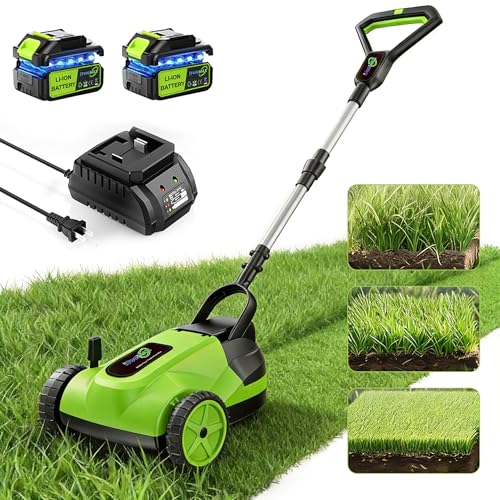
Electric Small Lawn Mower with Auto Shut-Off Sensor, 3 Position Cutting Height, 9.9Lbs Lightweight Cordless Push Mower Battery Powered for Garden/Yard/Farm, Gardening Gifts for Parents, Seniors
【Ultra-Light & Effortless Maneuverability】Say goodbye to the struggle of heavy lawn equipment! Weighing in at just 9.9 pounds,…
As an affiliate, we earn on qualifying purchases.
As an affiliate, we earn on qualifying purchases.