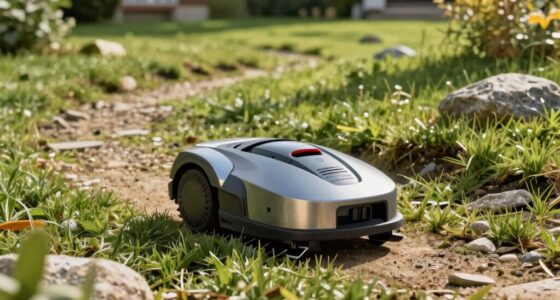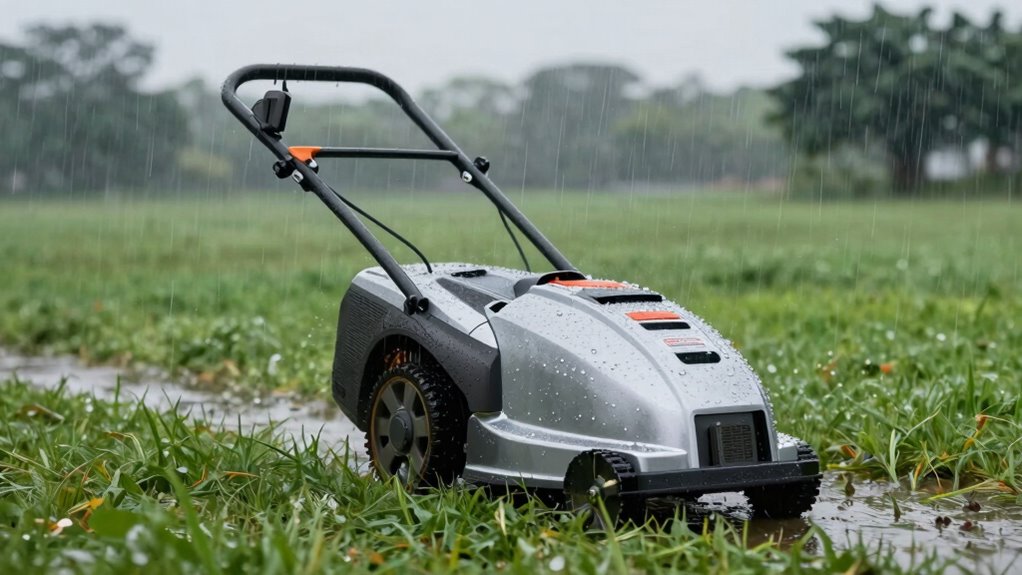

If your robotic lawn mower runs during rain, water can seep into its electrical components, causing short circuits and corrosion. It can also damage the battery, leading to overheating or leaks, which are hazardous. Wet grass and moisture can clog the blades and interfere with sensors, reducing efficiency and speeding up wear. To keep your mower safe and lasting longer, it’s best to avoid operating it in wet conditions—continue to see how you can protect your equipment better.
Key Takeaways
- Water can seep into electrical components, causing short circuits and potential permanent damage.
- Moisture exposure may lead to battery overheating, leakage, or safety hazards.
- Wet grass increases blade clogging, reducing cutting efficiency and accelerating wear.
- Running in rain accelerates corrosion, damaging electronic systems and decreasing mower lifespan.
- Proper waterproofing and avoiding operation during heavy rain prevent significant damage and safety risks.
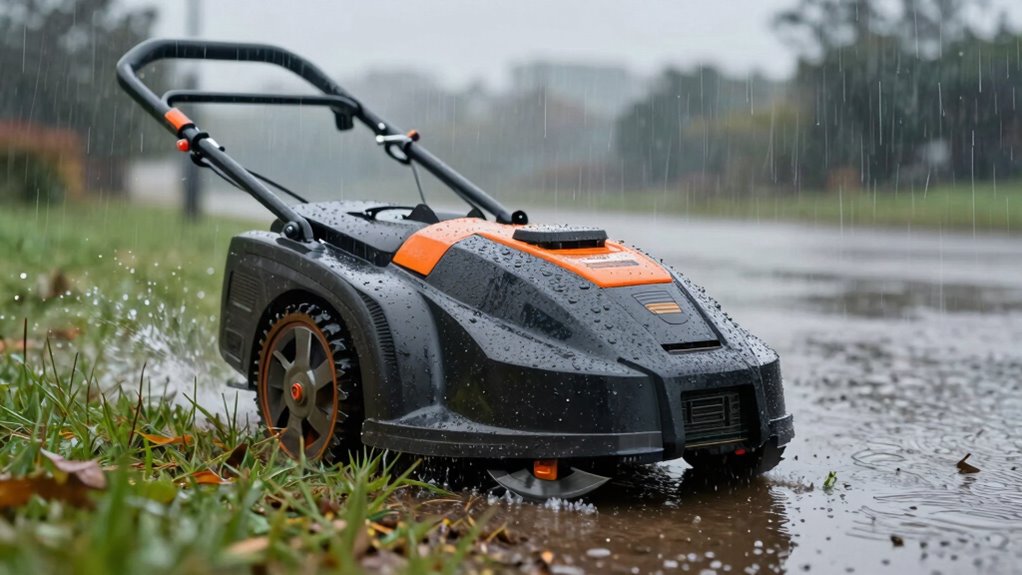
Have you ever wondered if it’s safe to run your robotic lawn mower during rain? It’s a common question among mower owners who want to keep their lawns tidy without waiting for perfect weather. While many robotic mowers are designed with weather resistance in mind, running them in the rain can still pose risks. Understanding what happens when it rains and your mower keeps working can help you make smarter decisions about mower safety and maintenance.
When your mower runs during rain, water can seep into electrical components if it isn’t properly waterproofed. This can lead to short circuits or corrosion, which compromises the mower’s overall function. To prevent this, check your mower’s IP (Ingress Protection) rating before use. A higher IP rating indicates better resistance to water and dust. If your mower isn’t rated for wet conditions, operating it in the rain risks damaging sensitive electronics. This is why battery safety is so vital; exposure to moisture can cause batteries to short-circuit or even become hazardous leaks. Moisture in the battery compartment can lead to overheating, reduced lifespan, or dangerous leaks. Proper mower maintenance—including regular inspections and cleaning—becomes essential if you choose to run your mower in damp conditions. After each use in the rain, wipe down the mower, especially around the battery and motor areas, to remove any residual moisture. Additionally, weather resistance features are crucial in protecting the mower’s electronic systems during wet conditions. Improving your mower’s waterproofing can significantly reduce the risk of damage when operating in wet weather. Ensuring your mower has appropriate waterproofing standards can make a big difference in its durability. Regularly inspecting and maintaining your mower can also help identify potential issues caused by moisture before they become serious problems.
Running your mower in rain risks water damage, corrosion, and battery hazards—check IP ratings and maintain your mower regularly.
Running your mower in the rain can also affect its blades and cutting mechanism. Wet grass tends to be heavier and can clog the blades or cause uneven cuts. Over time, this can lead to increased wear and tear, reducing the mower’s efficiency and lifespan. If your mower has sensors or bumpers, moisture can interfere with their functionality, causing false readings or preventing the mower from operating correctly. It’s a good idea to check and clear debris or grass buildup after mowing in wet conditions to ensure smooth operation next time. Additionally, blade wear can accelerate when working with wet grass, which may lead to more frequent blade replacements. Using the mower in wet conditions without proper precautions can also reduce the mower’s lifespan, so it’s best to operate it during dry weather whenever possible.
Ultimately, while some robotic mowers are built for light rain, it’s best to avoid running them in heavy rain or stormy weather. Doing so not only protects the mower’s electrical systems and battery safety but also prolongs its overall lifespan. Proper mower maintenance, including cleaning and inspecting parts after use in wet conditions, helps keep your mower in top shape. Remember, the goal is to balance convenience with safety—if you’re unsure about your mower’s weather resistance, it’s wiser to wait until the rain stops.

Robot Lawn Mower Cover Waterproof, 420D Heavy Duty Cover for Robotic Mowers
- All-Weather Outdoor Protection: Protects from rain, snow, dust, and sun
- High-Density Waterproof Fabric: Made with durable 420D waterproof material
- Secure Windproof Fit: Reinforced strap, quick buckle, and elastic hem
As an affiliate, we earn on qualifying purchases.
As an affiliate, we earn on qualifying purchases.
Frequently Asked Questions
Can a Robotic Mower Operate Safely in Heavy Rain?
A robotic mower can operate safely in heavy rain if it has a rainproof design and proper mower waterproofing. These features prevent water damage and guarantee safe operation. However, avoid running it in extremely heavy rain or thunderstorms, as excessive moisture can still cause issues. Always check your mower’s specifications and ensure all seals and components are well-protected for peak performance and safety during wet conditions.
Will Rain Damage the Robotic Mower’s Electrical Components?
Rain won’t damage your robotic mower’s electrical components if it has a rainproof design and waterproof features, but only if it’s built to withstand wet conditions. Think of these features as an umbrella shielding your mower’s electronics from a sudden downpour. Without proper protection, water can seep in and cause malfunctions. Always check if your mower’s waterproof features are rated for heavy rain to keep it safe and functioning.
How Does Rain Affect the Mower’s Battery Life?
Rain can negatively affect your mower’s battery life by causing moisture intrusion, which accelerates battery degradation over time. When exposed to moisture, the battery’s internal components may corrode, reducing its capacity and lifespan. To prevent this, make sure your mower is weatherproof or avoid running it during rain. Proper maintenance and storage can help protect the battery from moisture damage, extending its overall life and performance.
Is It Necessary to Dry the Mower After Rain Exposure?
Yes, you should dry your mower after rain exposure. Even with a waterproof design, moisture can cause internal issues over time. Skipping this step might lead to corrosion or electrical problems. Incorporate it into your maintenance routines to guarantee longevity. Carefully dry the blades and body, paying attention to crevices. This simple step keeps your robotic mower running smoothly, avoiding unexpected breakdowns and extending its lifespan.
Do Robotic Mowers Have Rain Sensors to Stop Operation Automatically?
Yes, most robotic mowers come equipped with rain sensors that detect moisture and automatically stop operation to prevent damage. These sensors enhance weatherproofing by protecting internal components from rain exposure. When rain is detected, the mower pauses or returns to its charging station, ensuring it doesn’t run in wet conditions. This feature helps prolong the mower’s lifespan and maintains peak performance, even in unpredictable weather.

YARDCARE V100 Robot Lawn Mower with HD Vision Navigation, Smart Obstacle Detection, Collision Sensors, Adjustable Cutting Height, Low-Noise Operation—Perfect for Small Lawns up to 1,600 sq ft.
- Visual Navigation with AI: Detects obstacles and distinguishes grass
- Obstacle Detection: Identifies up to 150 obstacles
- Automatic Path Adjustment: Adjusts route after collisions
As an affiliate, we earn on qualifying purchases.
As an affiliate, we earn on qualifying purchases.
Conclusion
Running your robotic lawn mower in the rain is like inviting trouble to dance on your lawn. Water can damage the electronics, cause slipping, or even short-circuit the device. To keep your mower safe and your yard pristine, it’s best to pause operations during wet weather. Think of rain as the storm that washes away your mower’s best intentions—so, wait for clear skies and let your mower do its job safely and efficiently.

Robotic Lawnmower Cleaning Kit – 4-Tool Maintenance Set for Robot Lawn Mower, Blade and Wheel Brush, Scraper and Cleaning Accessories for Garage, Garden and Workshop
- Complete 4-Tool Set: Includes tools for comprehensive cleaning
- Universal Compatibility: Fits most robot lawn mowers
- Blade and Wheel Maintenance: Removes debris for optimal performance
As an affiliate, we earn on qualifying purchases.
As an affiliate, we earn on qualifying purchases.

TREND Tool, Blade & Bit Cleaner, 18 fl oz, Resin, Pitch & Rust Remover, Safe Non-Toxic Formula for Workshop Tools, CLEAN/500
- Powerful cleaning formula: Removes resin, pitch, rust, dirt easily
- Rust and corrosion protection: Leaves a protective layer to prevent rust
- Safe for workshop use: Non-toxic, non-flammable, eco-friendly
As an affiliate, we earn on qualifying purchases.
As an affiliate, we earn on qualifying purchases.