To see if your lawn is robot-mower friendly, consider its size, terrain, and obstacles. Ideal lawns are flat, even, and manageable in size—up to a quarter-acre—while uneven ground or complex layouts may require extra setup or manual help. Clear pathways and boundary markings help the mower navigate smoothly, and gentle slopes are okay, but steep ones aren’t. Growth rate matters too; faster grass may need more frequent mowing. Continue exploring to discover how to optimize your lawn for robot mowing success.

Get home appliances delivered free — and shop member deals
- Fast, free delivery on millions of items
- Access to Prime Big Deal Days deals on October 6–7
- Prime Video, Amazon Music and more included
Key Takeaways
- Ensure the lawn size is manageable, ideally up to a quarter-acre, for efficient robot mower coverage.
- Check that the terrain is flat and even, avoiding steep slopes or rocky patches.
- Mark boundary boundaries clearly to prevent collisions with obstacles like furniture or flower beds.
- Consider grass growth rate; fast-growing lawns may require a mower capable of frequent, regular cuts.
- Evaluate the layout for tight corners or narrow passages that match the mower’s turning radius.
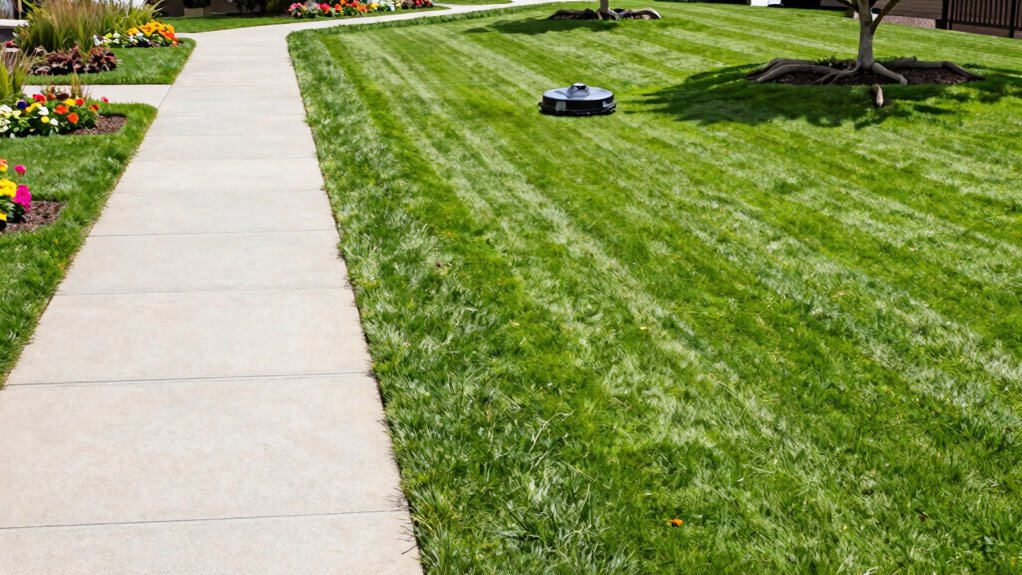
Ever wondered if your lawn is suitable for a robot mower? The idea of letting technology take over your mowing duties sounds appealing, but not every yard is a perfect fit. To determine if your lawn is robot-mower friendly, you first need to assess its size and layout. Robot mowers work best on moderately sized lawns—usually up to a quarter-acre—where they can cover the area efficiently without excessive charging or missed spots. If your yard is sprawling or divided into multiple sections, you might need to consider additional charging stations or boundary setups.
Next, think about your lawn’s terrain. A flat, even surface is ideal because robot mowers rely on sensors and wheels that perform best on even ground. If your yard has uneven terrain, with dips, slopes, or hilly areas, it can hinder the mower’s ability to operate smoothly. Some models are designed to handle gentle slopes, but steep inclines can cause slipping or tipping, which not only damages the mower but also risks uneven cutting. You should inspect your lawn for spots where manual mowing is tricky—these are often marked by thick grass, uneven patches, or rocky areas. If your yard requires frequent manual mowing due to uneven terrain, a robot mower might struggle to maintain a consistent cut and could get stuck or damaged.
Additionally, consider the obstacles present in your yard. Items like garden furniture, flower beds, trees, and lawn ornaments need to be clearly marked or protected with boundary wires to prevent the mower from colliding or causing damage. Clear pathways and minimal clutter make it easier for the robot to navigate and ensure a thorough mow. If your lawn has many tight corners or narrow passages, check if the robot mower’s turning radius can handle these spaces comfortably.
Finally, evaluate your lawn’s grass type and growth rate. Quick-growing grass may mean more frequent mowing sessions, which some robot mowers can handle, but others might require manual intervention. If you’re used to manual mowing, especially on larger or more challenging areas, weigh the convenience of automation against the initial setup and maintenance requirements. When weighing all these factors—size, terrain, obstacles, and grass conditions—you’ll be better equipped to decide whether your lawn is truly robot-mower friendly.
robot lawn mower for quarter-acre yard
As an affiliate, we earn on qualifying purchases.
As an affiliate, we earn on qualifying purchases.
Frequently Asked Questions
Can Robot Mowers Handle Uneven or Sloped Terrain Effectively?
Robot mowers can handle uneven terrain and sloped surfaces, but their effectiveness depends on the model’s features. Look for mowers with robust wheels, adjustable cutting heights, and terrain sensors. These allow the mower to navigate uneven terrain and sloped surfaces safely. Keep in mind that very steep slopes may challenge even advanced models, so check the manufacturer’s specifications for maximum incline ratings before choosing a robot mower for your lawn.
What Types of Obstacles Can Robot Mowers Navigate Around?
Imagine your robot mower gliding smoothly past garden boundaries and around flower beds. It navigates obstacles like garden furniture, trees, and uneven patches thanks to advanced obstacle sensors. These sensors detect objects in its path, preventing collisions. You’ll notice it effortlessly maneuvers around toys, rocks, and lawn ornaments, keeping your yard tidy without manual intervention. This smart navigation makes your lawn care easier and guarantees your mower works seamlessly around various obstacles.
How Much Maintenance Do Robot Mowers Typically Require?
Robot mowers generally require minimal maintenance, but you should check battery life regularly to guarantee peak performance. You’ll need to replace blades periodically, depending on usage, and keep the charging station clean. Noise levels are usually low, making them discreet, but occasional cleaning of sensors and moving parts helps keep your mower running smoothly. Overall, their low-maintenance design makes them a convenient choice for maintaining your lawn.
Are There Specific Grass Types That Are Better Suited for Robot Mowers?
You’ll find that fine, dense grasses like Bermuda or Kentucky Bluegrass work best, fitting within robot mower limits for efficient mowing. Coarser or uneven grasses can challenge the mower’s capabilities, causing uneven cuts or blockages. While some robot mowers handle a variety of grass types, choosing compatible grass guarantees smoother operation. Think of it as pairing the right tool with the right task—your lawn’s health and mower’s efficiency depend on it.
How Do Weather Conditions Affect Robot Mower Performance?
Weather impact considerably influences robot mower performance. During rainy or damp conditions, your mower may struggle with wet grass, causing clogs or uneven cuts. Seasonal variations also matter; in winter, snow can hinder operation or damage the mower, while extreme heat may cause overheating. To keep your robot mower running smoothly, adjust its schedule based on weather forecasts, avoid mowing in heavy rain, and winterize it properly during colder months.
As an affiliate, we earn on qualifying purchases.
Conclusion
Think of your lawn as a playground for a robot mower—if it’s smooth, open, and free of obstacles, it’s ready for action. When you clear away clutter, level uneven patches, and create clear boundaries, you set the stage for a seamless, efficient mow. Just like tuning a musical instrument, prepping your lawn guarantees harmony between your space and your robotic helper. With a little effort, you’ll have a lush, perfectly trimmed yard without lifting a finger.
As an affiliate, we earn on qualifying purchases.
robot mower with gentle slope capability
As an affiliate, we earn on qualifying purchases.
As an affiliate, we earn on qualifying purchases.
Fall Picks
fall essentials
As an affiliate, we earn on qualifying purchases.