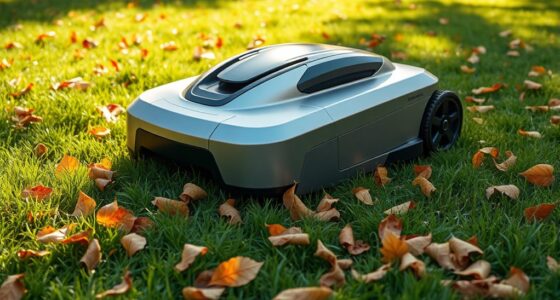
When using your robot mower garage or shelter, guarantee the environment is dry, well-ventilated, and free from moisture to prevent rust and electrical issues. Charge the battery to 50-70% before storing and remove it if possible, keeping it in a cool, dry spot. Regularly check the storage area for hazards and ensure good air circulation to reduce heat buildup. Proper setup and maintenance will keep your mower running smoothly—learn more to optimize your storage strategy.
Get ready for Prime Big Deal Days — try Prime free
Exclusive member deals on October 6–7, plus fast free delivery. Cancel anytime.
As an affiliate, we earn on qualifying purchases.
Key Takeaways
- Ensure the garage or shelter is well-ventilated to prevent moisture buildup and support battery health.
- Keep the area dry and free of humidity to avoid rust and electrical issues.
- Store the robot mower in a clean, secure space away from extreme temperatures.
- Remove or disconnect the battery if possible, and store it separately in a cool, dry place.
- Regularly inspect and maintain the storage environment for hazards like leaks or pests.
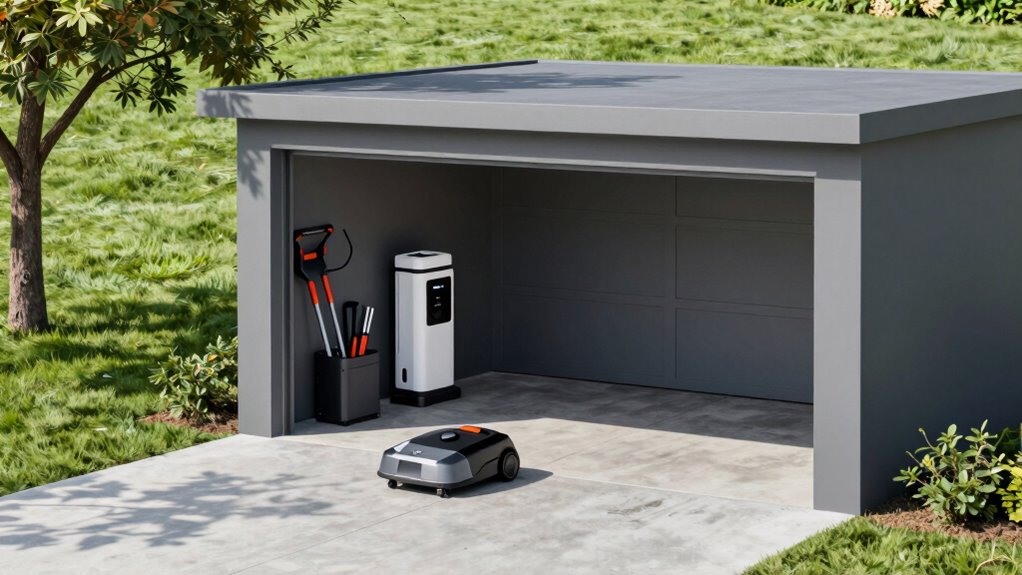
Ever wondered how to protect your robot mower when it’s not in use? Using a dedicated garage or shelter is a smart move, but to get the most out of it, you need to do more than just park your mower inside. Properly managing battery maintenance is vital because a well-maintained battery ensures your mower starts quickly and runs efficiently when you need it. Before storing your mower, make sure the battery is at an ideal charge—usually around 50-70%. Avoid leaving it fully charged or completely drained, as both extremes can harm the battery over time. If your mower has a removable battery, consider taking it out and storing it separately in a cool, dry place. This helps prevent long-term degradation caused by heat or cold. When you’re ready to use the mower again, reinsert the battery and give it a quick check to verify it’s holding a proper charge. Maintaining optimal storage conditions can also help preserve your mower’s overall health and readiness. Shelter ventilation is another essential aspect of storing your robot mower properly. Many garages and shelters tend to be enclosed spaces with limited airflow, which can trap moisture and cause corrosion on the mower’s metal parts or battery terminals. To prevent this, make sure your storage area is well-ventilated. Leave some gaps around doors or windows, or install vents to promote airflow. This helps reduce humidity, which can otherwise lead to rust and electrical issues. If your shelter doesn’t have natural ventilation, consider adding a small fan to circulate air periodically. Proper air circulation also helps dissipate any heat generated by the mower’s motor or battery, especially if it’s stored for an extended period. Keeping proper storage conditions in mind can significantly reduce the risk of corrosion and prolong the lifespan of your mower. Regularly inspecting the storage area for any potential hazards or leaks further ensures your mower remains in top condition. Additionally, understanding the importance of proper storage conditions can significantly extend your mower’s lifespan and performance. Proper storage also involves ensuring that the environment is free from moisture, which is crucial since excess humidity can accelerate rust and electrical issues. When closing up your storage area, ensure the door or lid is secure but not airtight, allowing for some air exchange. By paying attention to battery maintenance and shelter ventilation, you’ll extend your mower’s lifespan and keep it ready to go whenever you need it. Proper storage isn’t just about keeping your mower out of sight—it’s about caring for its parts and guaranteeing it performs at its best season after season.
robot mower garage ventilation fan
As an affiliate, we earn on qualifying purchases.
As an affiliate, we earn on qualifying purchases.
Frequently Asked Questions
Can I Leave My Robot Mower Outside Without a Garage?
You can leave your robot mower outside without a garage, but it’s not ideal. Without proper shelter, your mower’s battery maintenance might suffer from exposure to extreme weather, and poor shelter ventilation can cause overheating or moisture build-up. To protect your mower, consider a well-ventilated shelter that shields it from rain and sun. This way, you guarantee ideal performance and prolong the life of your mower’s battery.
How Often Should I Clean the Shelter or Garage?
You should clean your shelter or garage at least once a month—unless you enjoy the thrill of discovering a mold colony or a dust bunny uprising. Regular shelter maintenance keeps your robot mower happy and running smoothly. Stick to a cleaning schedule to prevent debris buildup, which can cause mechanical issues. Think of it as a spa day for your mower’s home—refresh it monthly, and it’ll thank you with reliable service.
Will a Garage Protect My Mower From Extreme Weather?
Yes, a garage can protect your mower from extreme weather, but it’s vital to implement weatherproofing tips like sealing gaps and insulating walls. Regular shelter maintenance ensures your garage remains effective, preventing moisture buildup and rust. By keeping the shelter in good shape and providing proper ventilation, you safeguard your mower from harsh elements, extending its lifespan and ensuring reliable performance, no matter the weather outside.
Is It Necessary to Charge the Mower Inside the Shelter?
Think of your mower’s battery like a delicate seed needing proper nurturing. You don’t always have to charge it inside the shelter, but good battery maintenance means guaranteeing it’s charged when needed, not left drained. Keep the shelter well-ventilated to prevent heat buildup, which can harm the battery. Charging inside is fine if ventilation is adequate, but avoid it in a stuffy space to prolong your mower’s life and ensure ideal performance.
Can I Upgrade My Existing Shelter for Better Protection?
Yes, you can upgrade your existing shelter for better protection. Focus on adding shelter insulation to regulate temperature and prevent moisture buildup, which can harm your mower. Improving ventilation is also essential—install vents or fans to guarantee proper airflow, reducing humidity and mold. These upgrades help preserve your mower’s condition and extend its lifespan, making your shelter more effective and comfortable for storage and maintenance.
As an affiliate, we earn on qualifying purchases.
Conclusion
Using a robot mower garage or shelter properly is like giving your mower a cozy home away from the storm. It keeps your device safe from the elements, extends its lifespan, and guarantees smooth operation. Just remember to clean and maintain it regularly, so it stays as welcoming as a good neighbor. When you treat it right, your robotic mower will be your loyal lawn companion, ready to tackle the grass and keep your yard looking sharp.
removable battery for robot mower
As an affiliate, we earn on qualifying purchases.
As an affiliate, we earn on qualifying purchases.
As an affiliate, we earn on qualifying purchases.
Fall yard work Picks
leaf blowers
As an affiliate, we earn on qualifying purchases.