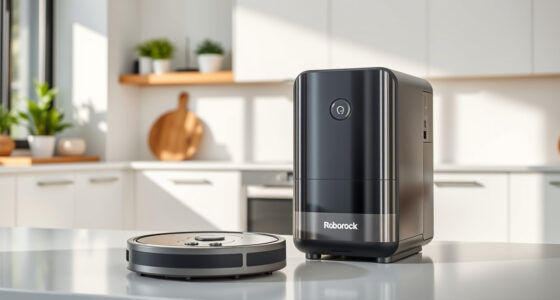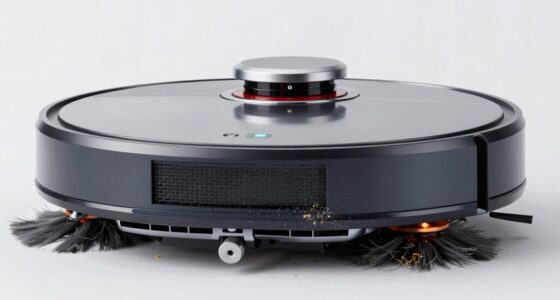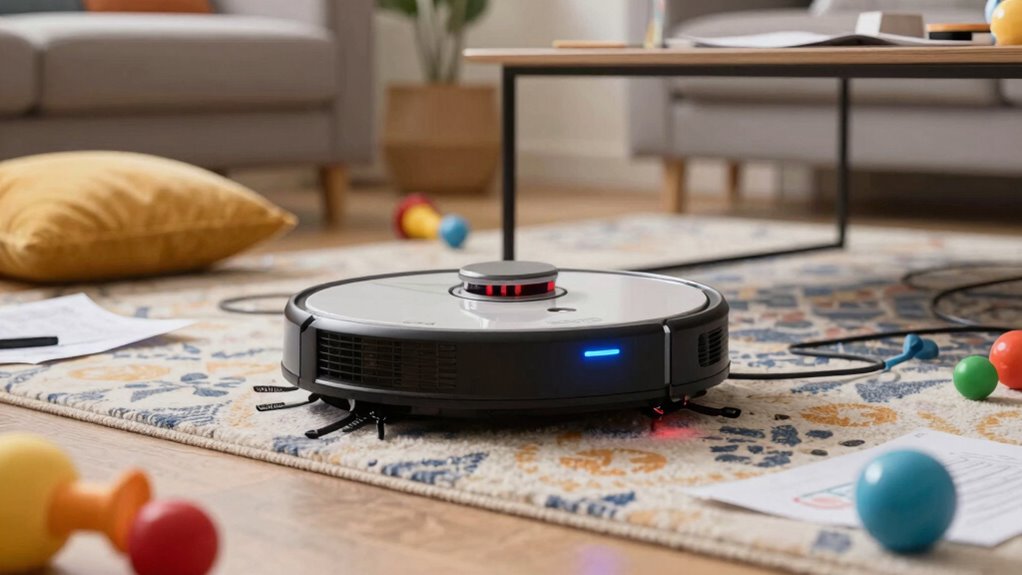
Obstacle avoidance is more important than raw suction because it guarantees your robot navigates efficiently, covering every area without getting stuck or bumping into furniture. Accurate sensors help recognize objects and adapt routes, saving time and preventing damage. Good obstacle detection makes cleaning smoother and more reliable, especially in cluttered or changing environments. Focusing on how your vacuum moves can make a big difference — and there’s more to discover about optimizing its performance.

Get home appliances delivered free with Prime
- Fast, free delivery on millions of items
- Prime Video, Amazon Music and more included
- Member-only deals all year
Key Takeaways
- Effective obstacle avoidance ensures thorough cleaning by preventing missed spots and rerouting, which raw suction alone cannot achieve.
- Reliable sensors enable precise navigation, reducing collisions and damage, thereby maintaining device efficiency and longevity.
- Obstacle detection adapts to changing environments, ensuring consistent performance regardless of lighting or clutter.
- Accurate navigation saves time and energy by minimizing unnecessary maneuvers, making cleaning more efficient than relying solely on suction power.
- Investing in obstacle avoidance technology results in cleaner homes with less manual intervention, surpassing the benefits of raw suction strength.
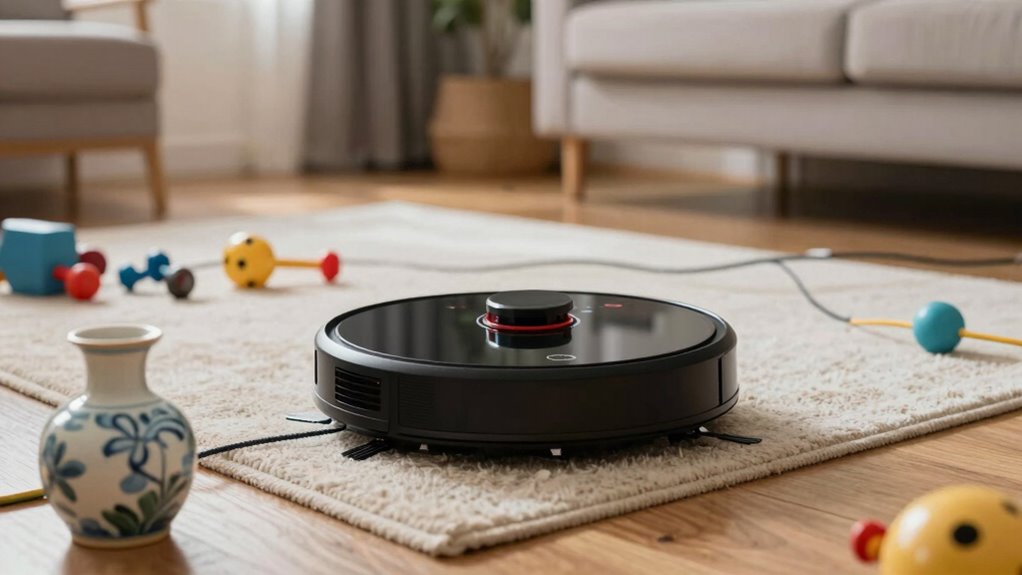
While having strong suction power is important for a vacuum or robotic cleaner, obstacle avoidance technology often makes a bigger difference in cleaning efficiency. The key to a robot’s ability to clean thoroughly isn’t just how much dirt it can pick up, but how well it navigates your space. That’s where navigation accuracy and sensor reliability come into play. If your robot can precisely understand its environment, it’s less likely to miss spots or get stuck. Reliable sensors detect obstacles, changes in floor types, and boundaries with accuracy, helping the robot plan the best route. Without this, even the most powerful vacuum can waste time rerouting or bumping into furniture, reducing overall efficiency.
Imagine a robotic cleaner with excellent suction but poor obstacle detection. It might push dirt around, but it’ll often bump into chairs, fall down stairs, or get trapped in tight corners. These incidents slow down the cleaning process and can leave some areas untouched. On the other hand, a device with advanced sensor reliability and high navigation accuracy can smoothly glide around obstacles, adjusting its path on the fly. It recognizes objects, recalibrates its route, and ensures that it covers every inch of your floor. This prevents unnecessary delays and minimizes the risk of damage or entrapment, making the cleaning process much more effective.
A robot with precise sensors cleans efficiently, avoiding obstacles and covering every inch of your floor with ease.
You should consider how well the robot’s sensors perform in different lighting conditions or cluttered environments. Good sensor reliability means the robot won’t get confused by shadows or misplaced objects. It can distinguish between furniture legs, cables, and small debris, avoiding false alarms that might cause it to stop or change course unnecessarily. When navigation accuracy is high, the robot creates a detailed map of your space, remembering where it has already cleaned and where it needs to go. This memory allows for systematic coverage, saving you time and energy compared to random cleaning patterns. Additionally, sensor reliability plays a vital role in maintaining consistent performance over time, especially in complex or changing environments. A robust sensor system is crucial for ensuring the robot can operate effectively in various conditions without frequent manual intervention. Regular calibration and environmental adaptation further enhance sensor performance, ensuring the robot can handle diverse scenarios reliably. Furthermore, consistent performance relies on sensor calibration, which helps maintain accuracy over the lifespan of the device.
Ultimately, obstacle avoidance technology isn’t just a fancy feature; it’s essential for efficient cleaning. When your robotic cleaner can accurately interpret its surroundings through reliable sensors, it operates smarter. It spends less time bumping around and more time doing the job you need it to do—cleaning thoroughly and efficiently. Raw suction power is important, but without precise navigation and dependable sensors, your robot’s efforts are limited. That’s why investing in a model with superior obstacle avoidance capabilities ensures you get a cleaner home with less hassle.
robot vacuum obstacle avoidance sensor
As an affiliate, we earn on qualifying purchases.
As an affiliate, we earn on qualifying purchases.
Frequently Asked Questions
How Does Obstacle Avoidance Improve Cleaning Efficiency?
Obstacle avoidance improves your cleaning efficiency by enabling your device to navigate seamlessly around furniture and obstacles. With advanced navigation algorithms and accurate sensors, it detects obstacles early, preventing collisions and missed spots. This smart system guarantees thorough cleaning without wasting time rerunning over the same area or getting stuck, making your cleaning faster, more effective, and less stressful.
Can Obstacle Avoidance Technology Reduce Robot Vacuum Damage?
Obstacle avoidance technology can considerably reduce robot vacuum damage. By using advanced sensor calibration, your vacuum detects obstacles more accurately, preventing collisions. Routing algorithms help it plan safer paths, avoiding delicate furniture or walls. This synergy minimizes impact and wear, ensuring your device lasts longer. So, with proper sensor calibration and smart routing, your vacuum’s chances of damage decrease, saving you repair costs and keeping your home protected.
What Types of Obstacles Can Vacuum Sensors Detect?
Obstacle detection in your vacuum is like a well-trained guard dog, alert and precise. Your sensors detect objects like furniture, cables, and stairs, preventing collisions and falls. Proper sensor calibration guarantees accuracy, so it can distinguish between a sock and a pet. This technology helps your vacuum navigate efficiently, avoiding obstacles and protecting both your belongings and the device, making cleaning safer and more effective.
Does Obstacle Avoidance Affect Battery Life?
Obstacle avoidance can slightly affect your vacuum’s battery life. When the sensors detect obstacles, your device uses extra power for power management and route planning adjustments, leading to increased battery drain. However, this energy use is generally minimal compared to the benefits of efficient cleaning and avoiding collisions. Properly designed obstacle avoidance systems balance power management, ensuring your vacuum maintains good battery life while effectively maneuvering your space.
Are Obstacle Avoidance Features Standard in All Robot Vacuums?
Not all robot vacuums come with obstacle avoidance features, but many do, especially higher-end models. These features enhance navigation accuracy by using advanced sensors, which rely on sensor durability for consistent performance over time. If obstacle avoidance isn’t standard, you might miss out on smoother cleaning and fewer bumps. To guarantee reliable navigation, look for models with durable sensors designed to handle various household obstacles effectively.
As an affiliate, we earn on qualifying purchases.
Conclusion
So, next time you’re choosing a robot vacuum, remember that obstacle avoidance is essential—it’s what keeps your device efficient and prevents mishaps. Notably, studies show that vacuums with advanced obstacle detection clean 30% more effectively and avoid frequent trips to the repair shop. It’s clear that smart navigation beats raw suction power in the long run. Prioritize obstacle avoidance for a smarter, safer, and more thorough clean—your floors will thank you.
robot vacuum with advanced obstacle detection
As an affiliate, we earn on qualifying purchases.
As an affiliate, we earn on qualifying purchases.
best robot vacuum for cluttered homes
As an affiliate, we earn on qualifying purchases.
As an affiliate, we earn on qualifying purchases.
Cold & flu season Picks
humidifiers
As an affiliate, we earn on qualifying purchases.