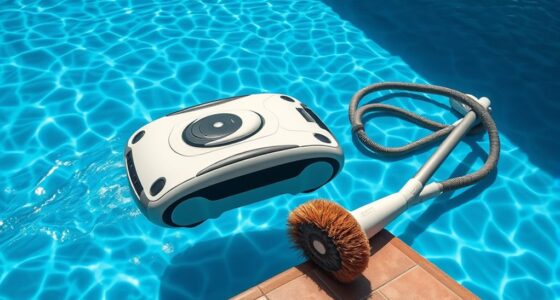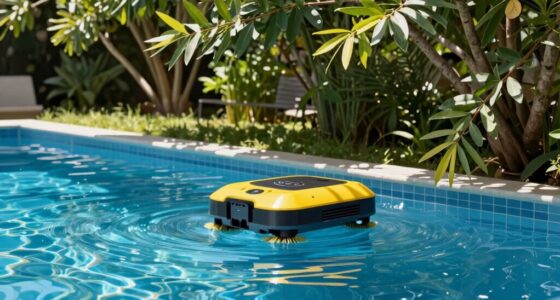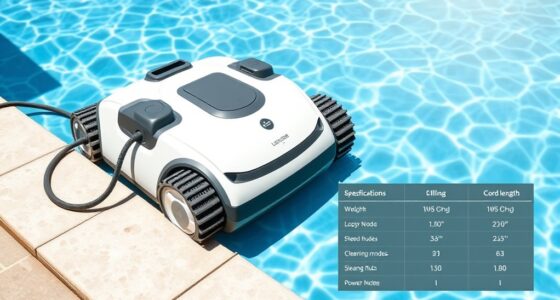
Inground and above-ground pools need different robotic features because their sizes, shapes, and surfaces vary considerably. Inground pools are larger, often with complex shapes and rough surfaces, so they require powerful, multi-brush cleaning and wider paths. Above-ground pools are smaller and simpler, needing quick, surface, and wall cleaners that are easy to use. By choosing the right features, you’ll get a more effective clean tailored to your pool type—keep exploring to learn more.

Get home appliances delivered free with Prime
- Fast, free delivery on millions of items
- Prime Video, Amazon Music and more included
- Member-only deals all year
Key Takeaways
- Larger, complex inground pools require robots with multiple brushes and adjustable suction for thorough cleaning.
- Above-ground pools’ smaller size allows for simpler, lightweight robots focused on surface and wall cleaning.
- Inground pool surfaces like concrete or plaster demand durable brushes and materials to withstand rough textures.
- Surface and construction differences affect robot performance, durability, and maintenance requirements.
- Technology features must adapt to varying pool environments for effective and efficient cleaning.

When choosing a pool, understanding the differences between inground and above-ground options is vital, especially when it comes to their robotic cleaning features. Both types of pools require regular maintenance to stay clean and inviting, but the way you approach pool maintenance varies considerably depending on the pool’s design. Robot cleaning efficiency plays a key role here, as it determines how well your robotic cleaner can handle the unique challenges each pool type presents. Inground pools, with their larger size and complex shapes, demand more advanced robotic features for thorough cleaning. These pools typically have more crevices, steps, and intricate corners that need attention, so a robot designed for inground pools often comes with multiple brushes, adjustable suction power, and wider cleaning paths. Such features guarantee deep cleaning and help maintain water clarity, reducing the frequency of manual intervention. On the other hand, above-ground pools are usually smaller, simpler in shape, and easier to access. Robotic cleaners for these pools tend to be more compact, lightweight, and straightforward, focusing on quick, efficient cleaning of flat surfaces and walls. Their design emphasizes ease of use and quick deployment, making routine pool maintenance less time-consuming for you.
Moreover, the pool’s construction influences the robot’s ability to operate effectively. Inground pools often have rougher surfaces, such as concrete or plaster, which can wear down less durable robots over time. Consequently, selecting a robot with robust brushes and durable materials is vital to maximize robot cleaning efficiency. Additionally, understanding the technology used in robotic cleaners and how it adapts to different pool environments can greatly affect cleaning effectiveness and efficiency. Recognizing the importance of surface types and their impact on robot performance helps in choosing a model that can withstand the specific conditions of your pool. Furthermore, considering the maintenance requirements of the robotic cleaner can ensure long-term performance and durability, especially in harsher environments.
In the end, choosing the right robotic cleaner depends on understanding these differences. While both pools benefit from automated cleaning, the features that optimize robot cleaning efficiency differ based on pool type. Recognizing these distinctions guarantees your robotic cleaner performs at its best, reducing manual effort and keeping your pool sparkling clean with less hassle.
robotic pool cleaner for inground pools
As an affiliate, we earn on qualifying purchases.
As an affiliate, we earn on qualifying purchases.
Frequently Asked Questions
Can One Robot Clean Both Inground and Above-Ground Pools Effectively?
Yes, one robot can clean both inground and above-ground pools effectively if it has versatile features. Look for a robot with adjustable settings to handle different pool depths and shapes. Make sure it’s compatible with various pool covers and has chemical-resistant components to withstand pool chemicals. This flexibility allows the robot to adapt to different pool types, ensuring thorough cleaning without damage or compatibility issues.
How Do Pool Shape Differences Affect Robot Navigation?
Think of your pool like a maze—its shape influences robot navigation. If your pool has varying depths and textured surfaces, the robot needs adaptable sensors to maneuver smoothly. For example, a shallow, textured corner might trip up a robot designed for flat surfaces, just like a maze with unexpected turns. Shape and surface texture directly impact how well your robot can clean efficiently, ensuring every nook gets the attention it needs.
Are There Specific Safety Features Needed for In-Ground Pools?
Yes, in-ground pools need specific safety features for robot compatibility. You should look for robots with secure cable management and obstacle detection to prevent accidents. Pool safety is vital, so choose models with auto-shutoff and gentle cleaning modes to avoid damage or injury. These features guarantee your robot works effectively without risking damage to the pool or harming swimmers, maintaining safety as a top priority during cleaning.
What Maintenance Differences Exist Between Robots for Each Pool Type?
You’ll notice maintenance differences between robots for inground and above-ground pools. Robots for inground pools often need better chemical resistance due to harsher water conditions, and they should be compatible with various pool cover types. Above-ground pool robots typically focus on ease of use and portability. Ensuring the robot’s design matches your pool’s cover compatibility and chemical resistance needs helps simplify maintenance, keeping your pool cleaner with less hassle.
Do Robotic Pools Require Different Filtration or Filtration Systems?
You don’t need a different filtration system for robotic pools, but you do need to optimize your current setup! Robots excel at maintaining chemical balance and energy efficiency, but they rely on your pool’s filtration to do the heavy lifting. For inground pools, a robust filter keeps up with larger debris, while above-ground pools benefit from energy-efficient filters. Keep these systems properly maintained, and your robot will keep your pool sparkling!
As an affiliate, we earn on qualifying purchases.
Conclusion
Understanding the differences between inground and above-ground pools helps you choose the right robot features. Did you know that above-ground pools make up nearly 70% of residential pools in the U.S.? By selecting a robot tailored to your pool type, you guarantee efficient cleaning and longer equipment lifespan. So, take the time to evaluate your pool’s needs—your sparkling, hassle-free pool experience depends on it!
heavy-duty pool brushes for concrete surfaces
As an affiliate, we earn on qualifying purchases.
As an affiliate, we earn on qualifying purchases.
automatic pool vacuum for complex shapes
As an affiliate, we earn on qualifying purchases.
As an affiliate, we earn on qualifying purchases.
Halloween Picks
halloween
As an affiliate, we earn on qualifying purchases.