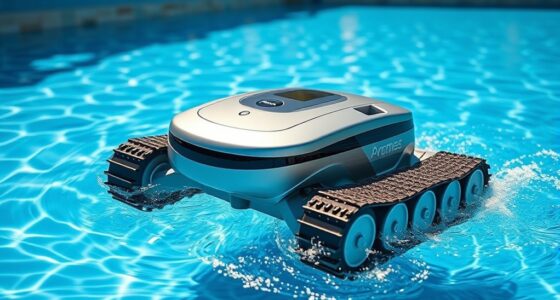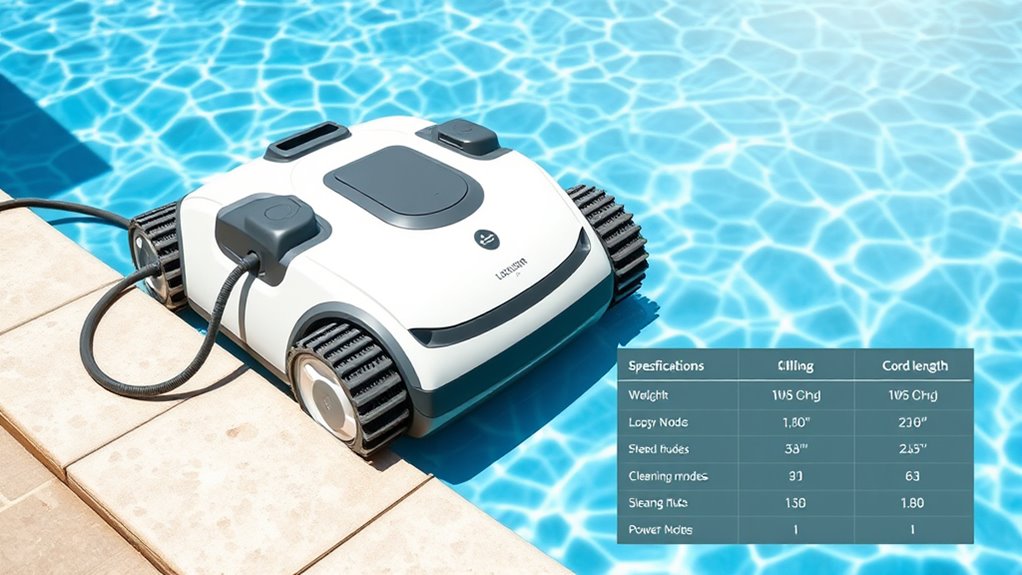

When choosing a pool robot, balance weight for stability and ease of handling, and pick a cord length suitable for your pool size to avoid constant repositioning. Focus on key specs like cleaning path, brush type, and filtration system to guarantee effective debris removal. Energy-efficient features can save you money over time. Keep these factors in mind, and you’ll discover even more tips to select the best pool robot for your needs.

Get home appliances delivered free with Prime
- Fast, free delivery on millions of items
- Prime Video, Amazon Music and more included
- Member-only deals all year
Key Takeaways
- Balance robot weight for stability during operation and ease of handling for maintenance.
- Select cord length based on pool size and shape to ensure full coverage without frequent repositioning.
- Prioritize wide cleaning paths and effective brushes for thorough debris removal.
- Opt for energy-efficient features like programmable schedules to reduce operational costs.
- Regularly clean filters and store the robot properly to enhance longevity and performance.
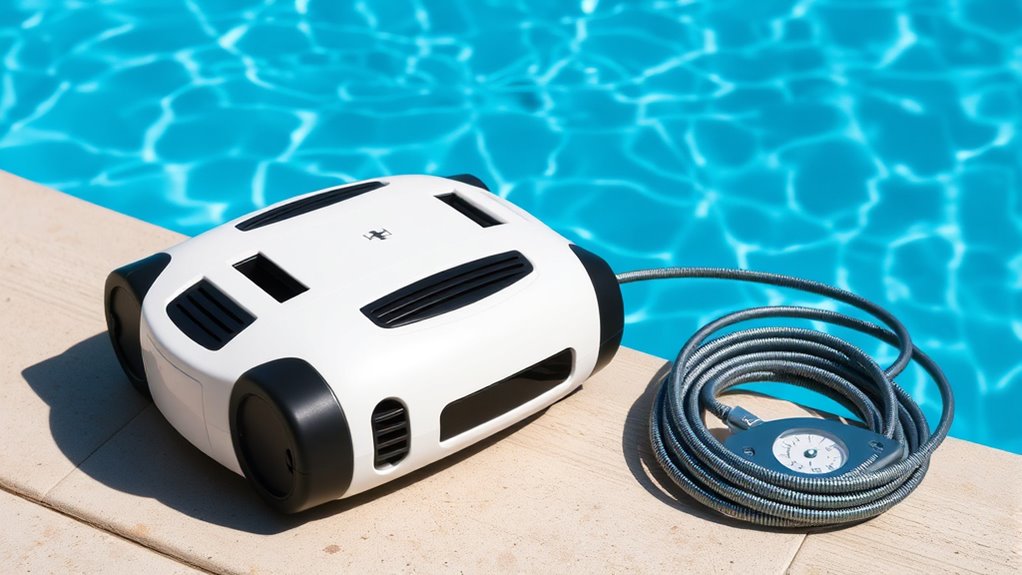
When choosing a pool robot, understanding the key specs can make all the difference in finding the right model for your needs. One of the *vital* factors to *weigh* is the weight of the robot. A heavier model might feel more stable and robust, but it can also be harder to maneuver and lift out of the pool for maintenance. Conversely, a lightweight robot is easier to handle, especially if you need to remove it frequently for cleaning or storage. Think about how often you’ll need to service the robot and whether you have physical limitations that could make heavier units cumbersome. The weight also impacts energy consumption; generally, heavier models may require more power to operate efficiently, so choosing a balanced weight can help *maximize* energy efficiency while *guaranteeing* durability.
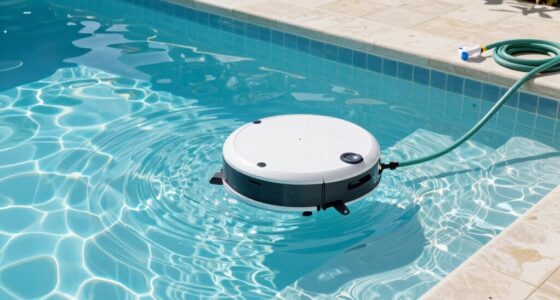
Next, pay close attention to the cord length. The length of the power cord determines how much area your robot can cover without needing to be repositioned or unplugged. A longer cord provides greater flexibility, especially if your pool is large or has an irregular shape. It minimizes the hassle of constantly moving the robot around or unplugging it to reach different sections of your pool. When considering cord length, also look for models with tangle-free cords or swivel features that prevent knots and tangles during operation. This not only makes the cleaning process smoother but also extends the lifespan of the cord, reducing maintenance needs over time. Additionally, choosing a model with a high-quality motor can improve overall performance and longevity.
Choose a pool robot with a long, tangle-free cord for easier, more efficient cleaning coverage.
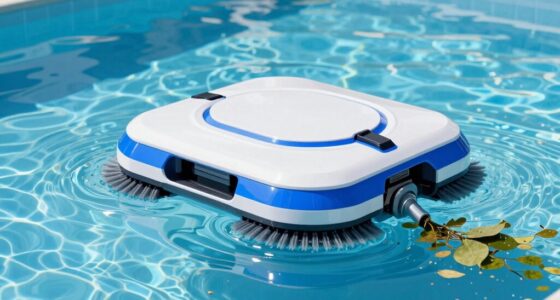
Other specs that matter include the robot’s cleaning path, brush type, and filtration system. These features influence how effectively the robot cleans your pool and how much maintenance you’ll need. For instance, a robot with a *wide-ranging* cleaning path will cover more ground in less time, reducing the overall cleaning cycle. A good filtration system captures debris efficiently, helping maintain water clarity and reducing the frequency of filter cleanings. Speaking of maintenance tips, always rinse the robot after use, clean its filters regularly, and store it in a dry place. Doing so keeps the robot running smoothly and extends its lifespan.
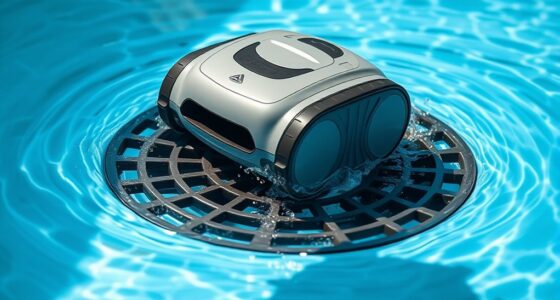
Energy efficiency is another *key* consideration. Look for models with energy-saving features, such as programmable schedules or low power consumption modes. An energy-efficient pool robot not only lowers your utility bills but also minimizes its environmental impact. Combining features like lightweight design, *ideal* cord length, and energy-saving technology ensures you get a model that’s easy to handle, effective at cleaning, and cost-efficient to operate. By paying attention to these specs, you’ll select a pool robot that fits your needs and makes pool maintenance less of a chore.
As an affiliate, we earn on qualifying purchases.
Frequently Asked Questions
How Do I Determine the Best Weight for My Pool Robot?
You should choose a pool robot with a weight that balances stability and ease of use. A heavier robot stays steady during water filtration, while a lighter one is easier to handle. Consider the robot’s battery life, ensuring it can clean your pool effectively without frequent recharging. Also, a well-designed weight distribution supports ideal water filtration, helping the robot reach all areas without tipping or getting stuck.
What Is the Ideal Cord Length for Different Pool Sizes?
For small pools, a cord length of about 30 feet keeps you safe and prevents tangling. Medium pools need around 50 feet, while larger pools benefit from 60-70 feet to cover the entire area effectively. Longer cords promote pool safety by minimizing the risk of accidents and guarantee energy efficiency by reducing the need to reposition the robot frequently. Always choose a cord length matching your pool size for maximum performance.
Do Heavier Robots Clean More Effectively?
Heavier robots often clean more effectively because they stay grounded and exert more pressure on surfaces, reaching dirt hidden in corners. A study shows that models over 10 pounds tend to have better scrubbing power. When choosing a robot, consider how weight impacts maintenance—heavier units might need more care. Trust reputable brands, as their designs balance weight and durability, ensuring your pool stays pristine without frequent repairs.
Can I Upgrade the Cord Length on My Existing Pool Robot?
You can’t typically upgrade the cord length on your existing pool robot because it’s usually built with a fixed cord that isn’t designed for modification. To get a longer cord, you need a cord upgrade compatible with your robot, but compatibility varies by model. Check your robot’s manual or contact the manufacturer to confirm if a cord upgrade is possible and verify any new cord is compatible to avoid damage.
How Does Weight Affect the Robot’s Maneuverability?
The robot weight influence substantially impacts your pool robot’s maneuverability. If it’s too heavy, you might face maneuverability challenges, making it harder to navigate corners and stairs smoothly. Lighter robots tend to move more easily and efficiently across the pool’s surface. Keep in mind that a well-balanced weight helps improve overall performance, ensuring your robot cleans thoroughly without getting stuck or struggling to change direction.
As an affiliate, we earn on qualifying purchases.
Conclusion
Choosing the right pool robot is like finding a trusted partner that dances effortlessly through your backyard oasis. Pay attention to weight, cord length, and specs, but remember, it’s about harmony—finding a device that moves smoothly and cleans deeply. When you pick wisely, your pool transforms into a crystal-clear paradise, inviting you to plunge into serenity. Trust your instincts, and let your new robot be the key to endless summer bliss.
energy-efficient pool cleaning robot
As an affiliate, we earn on qualifying purchases.
As an affiliate, we earn on qualifying purchases.
As an affiliate, we earn on qualifying purchases.
Cold & flu season Picks
humidifiers
As an affiliate, we earn on qualifying purchases.