
To find the best time to schedule your robot lawn mower, consider your lawn’s growth patterns, weather conditions, and neighborhood rules. Mow when grass is dry, typically mid-morning or early afternoon, avoiding early mornings and late evenings. Adjust for seasonal changes, mowing more often during peak growth and less during dormancy. Use smart features or scheduling tools to fine-tune timing, ensuring a healthy lawn without disturbance—continue exploring to learn how to optimize your mower’s performance.
Key Takeaways
- Schedule mowing during dry, sunny periods when the grass is dry to prevent uneven cuts and blade clogging.
- Align mowing times with periods of low neighborhood noise, such as mid-morning or early afternoon, respecting local noise restrictions.
- Adjust mowing frequency based on seasonal grass growth rates, mowing more often in spring and summer, less in fall and winter.
- Avoid mowing during extreme heat, drought, or high humidity to reduce stress and prevent turf damage.
- Use smart sensors and weather data to automate scheduling, ensuring optimal mowing times based on lawn conditions.
Top picks for "robot lawn mower"
Open Amazon search results for this keyword.
As an affiliate, we earn on qualifying purchases.
Understanding Your Lawn’s Growth Patterns

Understanding your lawn’s growth patterns is essential for creating an effective mowing schedule. By observing how quickly your grass grows, you can determine the ideal grass height to maintain. A faster growth rate means you’ll need to mow more frequently, while a slower rate allows for longer intervals between mowings. Pay attention to seasonal changes, as growth speeds up in spring and summer and slows down in fall and winter. Consistently monitoring your lawn helps you identify its natural growth rhythm, preventing over-mowing that can stress the grass and under-mowing that can lead to an unkempt appearance. Knowing your lawn’s unique growth pattern ensures you set a mowing schedule that promotes healthy, lush grass while optimizing your robot mower’s efficiency.
Optimal Times Based on Weather Conditions

Weather conditions directly influence the best times to run your mower. Rain can make your lawn too wet and muddy, while temperature and humidity levels affect grass growth and health. Understanding these factors helps you schedule mowing for ideal lawn care and efficiency.
Rain Effects on Mowing
Rain can substantially impact the timing of your lawn mower’s schedule, as mowing when the grass is wet often leads to uneven cuts and clogs the mower’s blades. Wet grass affects lawn color, making it appear dull or darker, and increases soil moisture, which can damage roots. To optimize mowing time, consider these factors:
| Condition | Effect | Ideal Action |
|---|---|---|
| High soil moisture | Soft ground may cause mower tracks | Wait until soil dries slightly |
| Wet grass | Clumps and uneven cuts | Mow when grass is dry |
| Lawn color | Dull color signals excess moisture | Mow when grass regains healthy hue |
Monitoring soil moisture and lawn color helps you choose the best time, ensuring a healthier, more evenly cut lawn.
Temperature Impact on Grass
Temperature plays a crucial role in determining the best times to mow your lawn, as grass health and growth patterns change with weather conditions. Warm temperatures encourage lush, green grass, but if it gets too hot, grass can become stressed, affecting its color and overall vitality. You’ll notice that healthy grass maintains a vibrant color, signaling it’s ready for mowing. Conversely, soil moisture levels fluctuate with temperature, influencing how easily the mower can cut the grass without damaging roots. During cooler periods, grass tends to grow slowly but remains lush, making it ideal for mowing. On very hot days, it’s best to wait until temperatures moderate, ensuring your mower doesn’t stress the lawn or compromise soil moisture balance. Timing your mow based on temperature helps keep your grass healthy and vibrant.
Humidity and Lawn Health
Humidity levels considerably influence when you should mow your lawn, as high humidity can create conditions that promote fungal growth and stress your grass. When humidity levels are high, your lawn retains more moisture, making it vulnerable to disease and uneven growth. Mowing during these times can damage the grass, especially if it’s wet or overly moist. It’s best to wait until lawn moisture decreases, which usually happens after a rain shower or during cooler parts of the day. By monitoring weather conditions, you guarantee your mower operates when the grass is dry enough to avoid clumping or tearing. Maintaining ideal humidity levels not only helps keep your grass healthy but also reduces the risk of fungal infections, supporting a lush, resilient lawn.
Considering Noise Restrictions and Neighborhood Comfort

Have you ever considered how noise restrictions can impact the scheduling of your robot lawn mower? Many neighborhoods have rules about when loud outdoor equipment can operate, especially early mornings or late evenings. These noise restrictions are designed to maintain neighborhood comfort and prevent disturbances. To stay compliant, you should plan your mowing sessions during quieter times, typically mid-morning or early afternoon. Doing so helps you avoid complaints and ensures a good relationship with your neighbors. Also, check local ordinances or HOA guidelines to understand specific quiet hours. By respecting these restrictions, you keep your lawn tidy without sacrificing neighborhood harmony. Ultimately, balancing your mowing schedule with noise limitations creates a peaceful environment for everyone.
Aligning Mowing Schedule With Your Daily Routine

To make the most of your robot lawn mower, it’s important to schedule mowing sessions that fit seamlessly into your daily routine. By doing so, you can maintain an even lawn color and avoid overgrown patches. Consider mowing early in the morning or late evening when you’re typically home, ensuring the mower runs without interruption. This consistency helps prevent uneven grass growth and makes mower maintenance easier, as you’ll notice fewer debris or grass clippings clogging the blades. Aligning mowing times with your daily activities also reduces the chance of disturbing neighbors. Keep a routine that works for you, and your lawn will stay healthy, vibrant, and well-kept without requiring extra effort on your part.
Best Times to Mow for Lawn Health and Vigor

To keep your lawn healthy, it’s important to mow when conditions are ideal, such as after a rainfall or early in the morning. You should also consider how seasonal growth patterns affect mowing frequency and height. Timing your mowing sessions correctly helps promote strong, vigorous grass growth year-round.
Optimal Mowing Conditions
Choosing the right times to mow your lawn is essential for maintaining its health and vigor. Mowing when the soil composition is moist but not waterlogged helps ensure a clean cut and prevents soil compaction. Avoid mowing during periods of extreme heat or drought, as stress can weaken your grass. Perfect conditions also support pest control; mowing at the right height and frequency reduces pest habitats and discourages infestation. Keep your mower blades sharp to minimize turf damage and promote quick recovery. Stick to the recommended mowing height for your grass type, usually around 2.5 to 3 inches. By mowing under ideal conditions, you encourage lush growth, improve soil health, and create an environment less inviting to pests.
Seasonal Growth Patterns
Understanding your lawn’s seasonal growth patterns helps you determine the best times to mow for ideal health and vigor. During peak growth periods, fueled by warm temperatures and ample sunlight, your lawn benefits from regular mowing to promote dense, healthy grass. Recognizing variations in plant diversity ensures you don’t cut too early or too late, which can stress certain species. Soil composition also influences growth rates; sandy soils may dry out quickly, requiring more frequent mowing, while clay soils retain moisture longer. Mowing at the right times supports root development and overall vigor, especially during active growth seasons. By aligning your mowing schedule with these seasonal patterns, you maintain a lush, resilient lawn that thrives year-round.
Adjusting Schedules for Seasonal Changes

As the seasons change, so does the growth rate of your grass, making it essential to adjust your robot lawn mower’s schedule accordingly. During rapid growth periods, mow more frequently to prevent overgrowth and promote healthy turf. In cooler months, reduce mowing frequency to avoid stressing the grass. Additionally, consider timing fertilizer applications and pest control treatments to align with seasonal growth patterns, ensuring your lawn remains healthy. Proper scheduling also helps in managing thatch buildup and soil health. To optimize your lawn care, keep these ideas in mind:
Adjust your mower schedule seasonally to promote healthy, stress-free lawn growth.
- Increase mowing frequency during peak growth seasons.
- Adjust schedule based on fertilizer timing and pest control needs.
- Reduce mowing in colder months to prevent damage.
Tips for Preventing Over-Mowing and Damage

To prevent over-mowing and damage to your lawn, it’s crucial to set your robot mower with appropriate cutting height and schedule adjustments. Keep the mower’s height suitable for your grass type to avoid scalping and stress. Regularly adjust mowing times based on growth rates, especially after fertilizing or pest control strategies, which can stimulate rapid growth. Over-mowing can weaken grass, making it vulnerable to pests and diseases. Use this table to plan your mowing schedule effectively:
| Growth Stage | Mowing Frequency | Tips |
|---|---|---|
| Rapid growth | Every 2-3 days | Avoid cutting more than 1/3 of grass height |
| Moderate growth | Weekly | Maintain proper height for healthy roots |
| Slow growth | Biweekly | Check for signs of damage or stress |
| Stress period | As needed | Minimize mowing to prevent damage |
Using Smart Features to Automate Scheduling

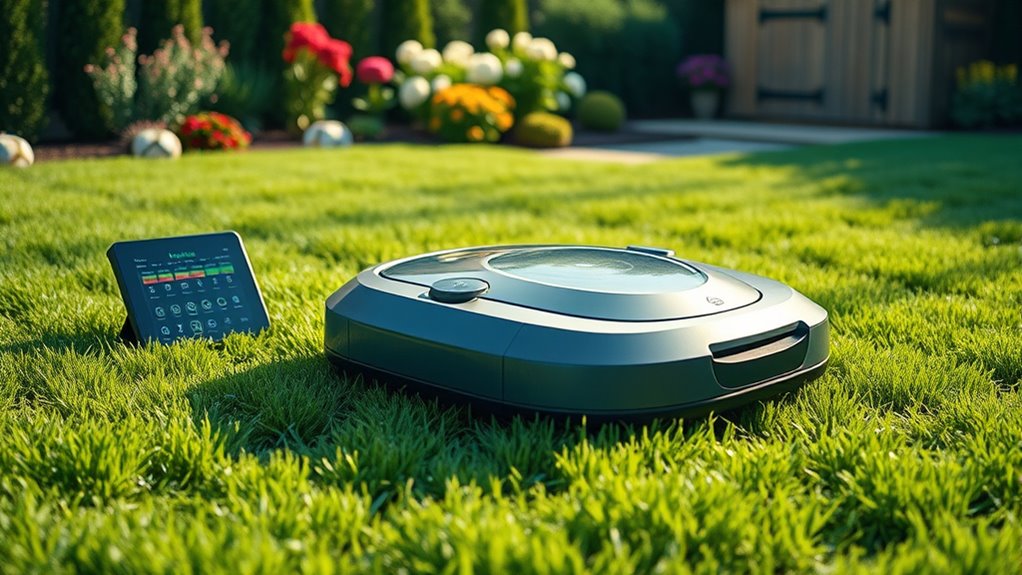
Smart features in robotic lawn mowers allow you to automate scheduling effortlessly, ensuring your lawn gets the right amount of care without constant manual adjustments. You can set mowing times based on weather, grass growth patterns, or your routine, all with minimal effort. These features often include smart sensors that adjust mowing based on lawn conditions, reducing the need for frequent robot sensor calibration. Additionally, some mowers come with automatic alerts for mower blade maintenance, helping you keep blades sharp for ideal performance. To maximize these features:
Automate lawn care with smart sensors and scheduling for effortless, efficient mowing.
- Use scheduling apps to set and modify mowing times easily.
- Enable smart sensors to adapt to lawn growth and weather changes.
- Regularly check and calibrate sensors and blades for smooth operation.
This way, your mower works smarter, not harder.
Monitoring and Fine-Tuning Your Mowing Schedule

Monitoring and fine-tuning your mowing schedule is essential to keep your lawn healthy and your robotic mower running efficiently. Regularly observe how your mower handles different areas, considering your garden design and any uneven terrain. Adjust the schedule if certain spots are over- or under-mowed, ensuring even grass height and preventing damage. Incorporate composting techniques by collecting grass clippings to enrich your soil, which reduces the need for excessive mowing. Keep an eye on weather patterns and growth rates, tweaking mowing times to avoid cutting during wet or extremely hot periods. Consistent monitoring helps you identify patterns and makes your schedule more effective. Fine-tuning ensures your lawn stays lush, healthy, and well-maintained, making your robotic mower an indispensable gardening tool.
Frequently Asked Questions
How Do I Set Boundaries to Prevent My Robot Mower From Crossing Into Neighbors’ Yards?
You set boundaries to keep your robot mower from crossing into neighbor zones by installing boundary wires along your property boundaries. Make certain the wires are properly embedded and follow the edges precisely. Use boundary markers or flags to clearly define your property limits during setup. Regularly check the boundary wire connections and adjust if your mower still crosses into neighbor zones. This ensures your mower stays within your property boundaries and respects your neighbors’ yards.
What’s the Ideal Mowing Duration per Session for Different Grass Types?
For different grass types, aim for a mower runtime of 30 to 60 minutes per session, adjusting based on grass growth. Faster-growing grass needs more frequent, shorter mowings to prevent overgrowth and stress, while slower-growing types benefit from longer, less frequent sessions. Keep an eye on grass growth and adjust mower runtime accordingly, ensuring healthy, well-maintained lawns without overtaxing your robot mower.
How Can I Troubleshoot if My Robot Mower Misses Patches During Scheduled Mowing?
You notice patches missed during your mower’s run—what’s wrong? First, check the sensor calibration; dirty or misaligned sensors can cause blind spots. Then, verify your software is up to date, as updates often fix bugs causing missed patches. If issues persist, reset the mower and observe its path. These simple steps reveal whether calibration or outdated software is silently sabotaging your perfect lawn.
Are There Specific Maintenance Routines to Keep Scheduling Features Working Smoothly?
To keep your robot mower’s scheduling features working smoothly, follow a regular maintenance checklist that includes cleaning the blades, checking for debris, and inspecting the wheels. Also, make certain you keep the software updated; manufacturers often release updates that improve scheduling accuracy and fix bugs. By staying consistent with these routines, you’ll help your mower operate efficiently and mow your lawn on time without missing patches.
How Does Altitude or Slope Affect the Optimal Mowing Schedule?
Think of your yard as a rolling landscape, where altitude effects and slope considerations shape your mower’s dance. Steeper slopes may cause the mower to struggle or tip, so schedule mowings during cooler, less windy times when the grass is drier. Higher altitudes might dry faster, so plan for earlier sessions. Adjust your schedule to match these terrain nuances, ensuring a safe, efficient mow every time, like clockwork.
Conclusion
Now that you know how to time your robot mower perfectly, imagine the endless possibilities—your lawn thriving, neighbors watching in admiration, and all without lifting a finger. But what if the unexpected weather or seasonal shifts throw off your plan? Will you catch it in time or miss the ideal mowing window? Stay vigilant and keep fine-tuning—your lush, healthy lawn depends on it. The right moment is just around the corner. Will you be ready?