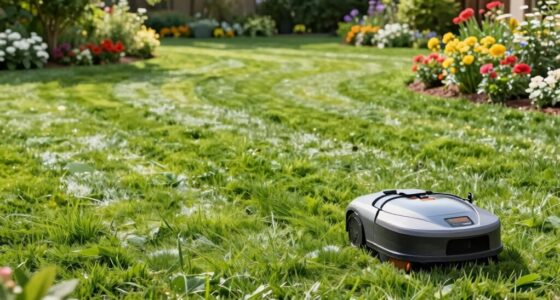
Robot mowers can mulch dry leaves effectively because they’re designed to handle light debris. However, thick or wet leaves may clog the blades, slowing down your mower or causing it to stop. Overloading the mower with heavy foliage increases the risk of clogs and performance issues. To keep your mower working smoothly, guarantee the leaves are dry and light, and regularly clean the blades. Discover more tips to optimize your robot mower’s leaf handling.
Open a free Amazon Business account
Business pricing, bulk buying and tax-exempt orders.
As an affiliate, we earn on qualifying purchases.
Key Takeaways
- Most robot mowers mulch light, dry leaves into fine particles, returning nutrients to the soil effectively.
- Wet or thick leaves can cause clogging, slowing down or halting the mower’s operation.
- Regular maintenance, including blade checks and debris clearing, helps prevent clogging when mulching leaves.
- Some models have specific attachments or settings designed for leaf mulching; others may struggle with heavy debris.
- Increasing mowing frequency and pre-clearing leaves improve mulching efficiency and reduce clogging risks.
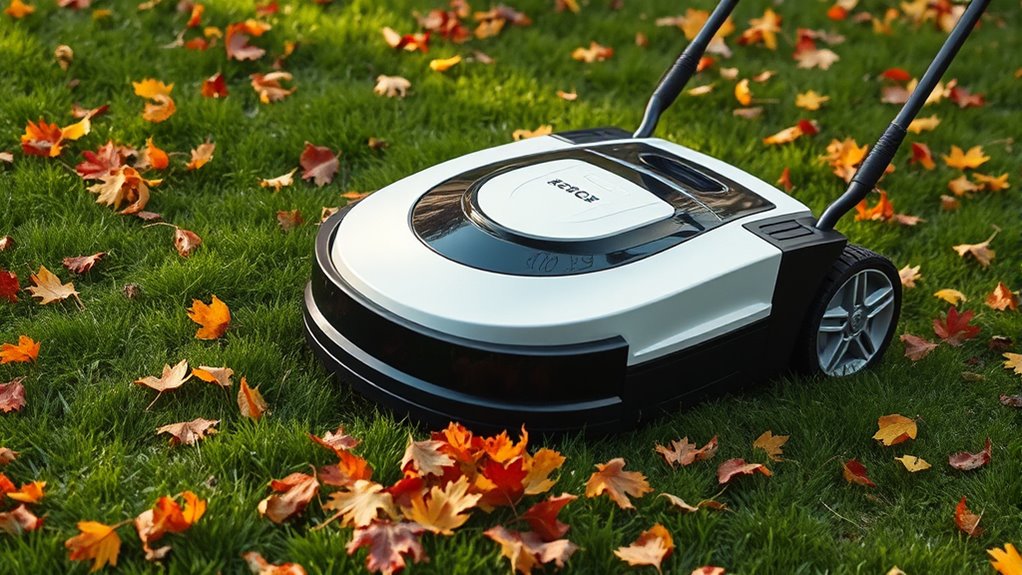
As autumn arrives and leaves begin to fall, many homeowners wonder how their robot mowers will handle the debris. You might be asking whether these machines mulch leaves effectively or if they tend to get clogged with thick piles. The good news is that, in general, robot mowers are designed to handle grass and small debris, but leaves can pose a different challenge. When it comes to leaf collection, most models are equipped with blades that can mulch leaves into fine particles, helping your lawn absorb nutrients back into the soil. However, if the leaves are too thick or wet, your mower may struggle to process them efficiently. To keep your robot working at its best, regular mower maintenance becomes essential during the leaf season. Clearing grass clippings, dirt, or debris from blades and sensors ensures the mower can operate smoothly without interruption. Checking the blades for dullness and replacing them when necessary also helps maintain a clean cut, which is vital for mulching leaves effectively.
You should also consider the capacity of your robot mower’s grass box or collection system. While many models don’t have a dedicated leaf collection bin, some newer versions feature attachments or settings optimized for leaf mulching. When leaves are light and dry, your mower can usually process them without issue. But if the leaves are damp or thick, you might notice the mower slowing down or leaving patches uncut. In those cases, manually raking and removing large piles before mowing can prevent clogging and reduce strain on your device. Proper mower maintenance, like emptying the grass box regularly and inspecting blades, minimizes the risk of buildup that could hinder leaf mulching performance. Additionally, understanding the limitations of robotic mowers can help set realistic expectations for their leaf handling capabilities.
It’s also wise to adapt your mowing schedule during leaf season. Running the mower more frequently prevents leaves from matting or becoming wet and heavy, which makes mulching difficult. A clean, well-maintained mower can handle a certain amount of leaf debris, but overloading it can lead to clogging, overheating, or uneven cutting. If you notice your mower struggling with leaves, it’s best to pause and clear any debris from underneath or around the blades. Some homeowners find that using a leaf blower or rake to pre-clear their lawn simplifies the job, allowing the robot mower to focus on maintaining the grass.
robot mower leaf mulcher attachment
As an affiliate, we earn on qualifying purchases.
As an affiliate, we earn on qualifying purchases.
Frequently Asked Questions
Can Robot Mowers Handle Wet or Damp Leaves Effectively?
No, robot mowers generally don’t handle wet or damp leaves effectively. Wet leaves tend to clog the mower’s blades and mechanisms, making leaf composting difficult and risking damage to mower blade durability. For best results, keep leaves dry before mowing. If you want efficient leaf mulching, clear damp leaves first or consider mulching dry leaves, which allows your robot mower to operate smoothly and prolong its lifespan.
Do Robot Mowers Need Special Blades for Mulching Leaves?
You don’t usually need special blades for mulching leaves, as most robot mowers come with compatible blades designed for mulching technology. These blades are optimized to finely cut leaves into small pieces that decompose quickly, enriching your lawn. Just verify your mower’s blade compatibility matches the mulching functions, and clean the blades regularly to maintain performance. This way, your robot mower handles leaves efficiently without clogging or needing extra equipment.
How Often Should Leaves Be Cleared for Optimal Robot Mower Performance?
You should clear leaves regularly, ideally once a week, to prevent excessive leaf accumulation that can clog your robot mower. Maintaining proper mowing frequency ensures the blades stay sharp and the mower operates smoothly. When leaves pile up, the mower struggles to mulch effectively and may get bogged down. Frequent clearing keeps your lawn healthy, prevents blockages, and allows your robot mower to mulch leaves efficiently without interruption.
Are There Specific Models Better Suited for Leaf Mulching?
Did you know that over 60% of robot mowers now feature leaf mulching capabilities? For best leaf mulching, look for models specifically designed for mower compatibility with thick, moist leaves. These models often have sharper blades and adjustable cutting height, making them more effective. Selecting a mower with dedicated leaf mulching features guarantees your yard stays tidy without clogging or extra effort.
What Maintenance Is Required After Mowing Over Leaves?
After mowing over leaves, you should promptly remove leaf collection debris from your robot mower to prevent clogs and maintain efficiency. Check and clean the blades regularly, especially after leaf mulching, to make sure they stay sharp and free of buildup. Additionally, inspect the cutting deck and blades for damage or wear. Proper blade maintenance and removing leaf debris help prolong your mower’s performance and keep your lawn looking its best.
robot lawn mower blades for leaves
As an affiliate, we earn on qualifying purchases.
As an affiliate, we earn on qualifying purchases.
Conclusion
So, when it comes to robot mowers and leaves, think of them as gentle dancers in your yard’s seasonal ballet. They can handle a light leaf cover gracefully, mulching softly and keeping your lawn tidy. But if the leaf pile gets too thick or sticky, they might need a little help from you, like a gentle nudge. With a little care, your robot mower will keep your yard looking lovely all year round.
robot mower leaf collection system
As an affiliate, we earn on qualifying purchases.
As an affiliate, we earn on qualifying purchases.
automatic leaf mulching robot mower
As an affiliate, we earn on qualifying purchases.
As an affiliate, we earn on qualifying purchases.
Fall Picks
fall essentials
As an affiliate, we earn on qualifying purchases.