
TL;DR

Get home appliances delivered free with Prime
- Fast, free delivery on millions of items
- Prime Video, Amazon Music and more included
- Member-only deals all year
A House Beautiful report recommends reviewing 13 categories of belongings after five years in a home, including unused equipment, expired products and leftover renovation materials. Organizing and design experts quoted in the report advise sorting in small, practical batches and disposing of items such as paint through appropriate local services.
House Beautiful has published a list of 13 categories of belongings that organizing and design experts say homeowners may want to review after living in the same home for five years or longer. The advice focuses on accumulated, unused or expired items—not a rule that every household must discard them—and includes a reminder to handle leftover paint and building materials through local disposal services.
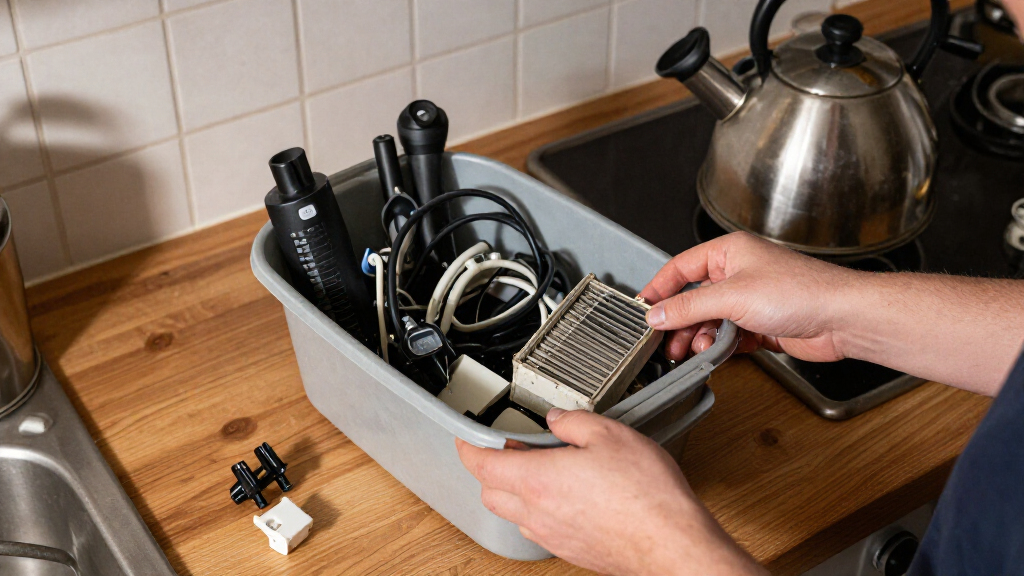
The report’s categories include extra tote bags, water bottles and branded merchandise; manuals and charging cords for devices no longer owned; worn linens; and exercise equipment that has fallen out of use. It also points to craft supplies and appliances saved for a future project, decorative accessories that have become visual clutter, and decor kept from a previous home despite not fitting the current space.
Other suggestions cover leftover paint, tile and renovation materials, kitchen gadgets and duplicate tools, wellness devices no longer used, and furniture that no longer suits a household’s routine. The final categories are expired or unwanted personal-care and cleaning products and unopened boxes. The report does not say all items in these groups should automatically be thrown away; its quoted experts advise keeping what remains useful and finding another home for suitable items.
For hazardous or difficult-to-dispose-of leftovers, organizer Ann Lightfoot recommends using a town hazardous-waste drop-off for excess paint and similar products. The article suggests retaining a small, labeled paint sample for touch-ups and possibly one spare tile, while checking appropriate local disposal options for the rest. It also recommends starting with one drawer, cabinet or closet rather than attempting to clear an entire home at once.
A Five-Year Home Reset
The advice addresses a common practical problem: possessions accumulate while a home’s storage space stays the same. After several years, households may also have different routines, interests or family needs than when they moved in. Reviewing belongings can free storage and make frequently used items easier to access, though the report offers expert guidance rather than research showing a measured effect on wellbeing or home value.
The recommendations also distinguish decluttering from indiscriminate disposal. Items in good condition may be donated, sold or passed along, while some materials require special handling. That distinction matters for products such as paint, which should not simply be treated like ordinary household rubbish without checking local rules.
Products Worth Considering

Philips Hue Smart LED Candle Bulbs, B39, E12, 2-Pack

LG 85-Inch QNED73B Mini LED 4K Smart TV (2026)

Sonos One (Gen 2) Voice-Controlled Smart Speaker, White
As an affiliate, we earn on qualifying purchases.
Why Experts Suggest Reviewing Belongings
The report frames the five-year mark as a useful moment to reconsider what a household actually uses. Ann Lightfoot, cofounder of DDH Home Organizing & Move Management, said the period can mark the end of what she called the “endless storage” honeymoon: belongings have accumulated, while the home’s square footage has not changed.
Laura Kinsella, founder of Urban OrgaNYze, said work, family life, routines and interests can change while stored possessions remain untouched. Kerrie Kelly, CEO and creative director of Kerrie Kelly Studio, described editing a home as choosing intentionally rather than trying to fit in as much as possible. The article recommends sorting by category and making progress in small areas, rather than treating five years as a strict deadline.
“Our careers, families, routines, and interests can change dramatically, but the things we’ve accumulated don’t automatically change with us.”
— Laura Kinsella, founder of Urban OrgaNYze
No One-Size-Fits-All Discard List
The report does not establish that every item in the 13 categories is unnecessary after five years. Whether to keep something depends on its condition, usefulness, sentimental value and the household’s needs; the experts’ comments are recommendations, not a tested five-year standard. The supplied source also does not provide a publication date or independent data on how many households follow this advice.
Disposal requirements vary by location and material. The report directs readers to local hazardous-waste drop-off services for leftover paint and similar materials, but it does not list rules for specific municipalities or every product type. Readers should check local guidance before discarding potentially hazardous items.
Start With One Storage Area
The practical next step in the report is to choose one category or small area, remove its contents, clean the space and return only items the household wants to keep. Usable extras can be considered for donation, sale or reuse; items that are worn out or expired should be handled according to relevant local disposal guidance.
House Beautiful’s article does not announce a follow-up, deadline or formal decluttering program. The decision remains with each household: the five-year mark is presented as a prompt to review belongings, not a requirement to clear all 13 categories.
Key Questions
Does the five-year mark mean I should throw these things away?
No. The report presents 13 categories to review, not a rule to discard every item. Keep belongings that remain useful or meaningful, and consider passing on suitable extras.
Which items does the report suggest reviewing?
Examples include worn linens, unused exercise equipment, old cords and manuals, excess kitchen gadgets, expired products, outdated decor and unopened boxes. The complete list also includes project supplies, wellness devices and furniture that no longer suits the household.
How should I dispose of leftover paint?
The report recommends keeping a small, labeled sample for touch-ups if useful and taking excess paint to a local hazardous-waste drop-off. Check local disposal instructions, since requirements can differ by area.
How should I begin decluttering?
Kelly recommends starting with one drawer, cabinet or closet, sorting its contents and returning only what deserves space. The report advises working by category rather than trying to clear the whole home in one weekend.
Source: housebeautiful.com