
TL;DR

Get home appliances delivered free with Prime
- Fast, free delivery on millions of items
- Prime Video, Amazon Music and more included
- Member-only deals all year
Screen printer Hannah Carvell says she restored her cottage living-room floorboards for under £100 by hiring a sander, buying sanding belts and applying clear oil. The floor became cleaner and free of visible stains and scratches, but the oil darkened the wood more than she expected after she skipped a patch test.
Screen printer Hannah Carvell says she renewed her cottage living-room floorboards for under £100 by sanding the existing wood and applying clear oil, avoiding the cost of replacement flooring and professional installation. In an Ideal Home report, she said the floor was left clean and free of the stains and scratches she had been living with, but the oil made it darker than she expected because she had not tested it on a small area first.
Carvell began redecorating the room after leaving it largely untouched since moving into the cottage. She painted its walls, ceiling, skirting boards, window sills and doors in a chalky sage green. The fresh paint made the condition of the existing floor—dark, varnished, stained and deeply scratched—more obvious. She said replacing it was beyond the project budget, particularly once the cost of removing the old floor and paying someone to lay a new one was considered.
Instead, Carvell hired a floor sander for a day. Her husband did most of the sanding, with Carvell joining him later; the work continued until around midnight. She described the job as very hard work and said it produced far more dust than their dust sheets could contain. During the work, the sander ran over the cord of their vacuum cleaner, which fused with a bang and sparks. She said the sander was not damaged and that the vacuum cord was later repaired, though it had less reach afterward.
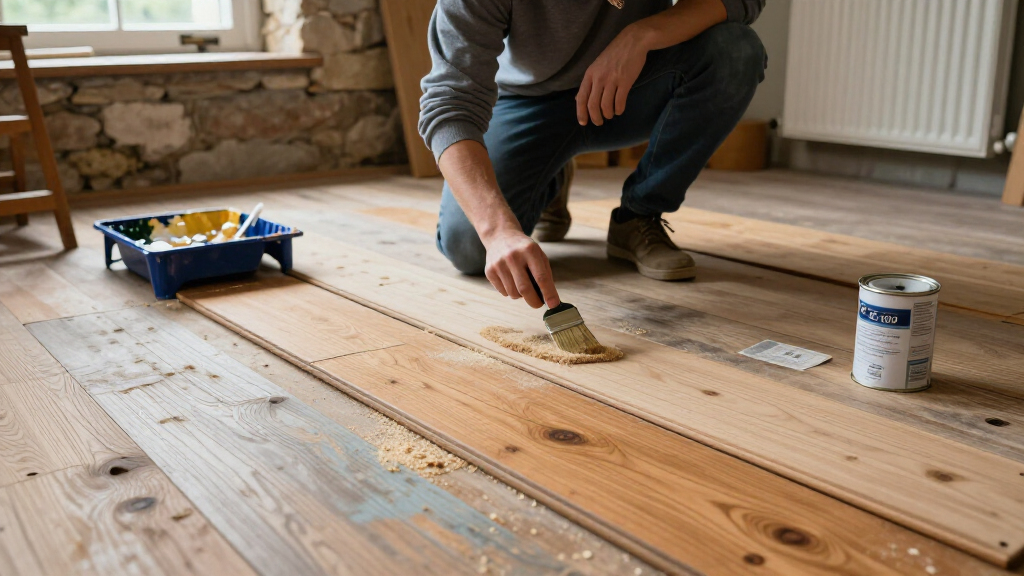
Once the sanding and cleanup were complete, Carvell said the brown varnish, stains and scratches were gone and the wood grain was visible again. She finished the floor with clear Osmo oil. The sander hire cost £35 for the day; sanding belts were charged on a sale-or-return basis, and the oil was an additional cost. Carvell gave the overall project cost as under £100 but did not list the exact price of every item.
A Lower-Cost Alternative to Replacing Wood
Carvell’s account offers a specific example of refreshing existing floorboards instead of buying new flooring, an option that can also avoid removal and installation costs. Her reported under-£100 total is tied to her own project and does not establish what the same work would cost in another home: floor area, timber condition, equipment hire and finishing products can differ.
The result also shows why the preparation and finish matter as much as the sanding. Carvell was pleased with the cleaner, less shiny surface, but said the oil brought back a darker tone than she wanted. Her experience points to a practical risk for people hoping to keep freshly sanded wood pale: a product described as clear can still change how the timber looks, so testing it first can help set expectations.
As an affiliate, we earn on qualifying purchases.
How the Room Project Expanded
Carvell wrote that she had been thinking about redecorating for two years and had not previously tackled the room since moving into the cottage. Her original plan centred on painting it green; she said she had not intended to work on the floor. Once the walls were freshly painted, however, the scratched and stained boards stood out, prompting her and her husband to sand them rather than pursue replacement flooring.
The finished floor also prompted another purchase. Carvell said she bought ready-made olive-green striped blackout curtains from Habitat for £50 a pair after deciding that the fabric she had imagined buying for handmade curtains would be too expensive. That curtain cost is separate from the stated under-£100 floor project. The Ideal Home article presents the account as a first-person home project by one of its Open House contributors, not as a tested cost guide or product comparison.
As an affiliate, we earn on qualifying purchases.
The Final Cost and Finish
The report does not provide a complete itemised bill, so readers cannot verify the exact total or calculate the separate costs of the sanding belts and oil. It also does not specify the room’s floor area, the wood species, the condition beneath the varnish or how much sanding was needed. Those details limit comparisons with other projects.
Carvell wondered whether another product, such as wax, might have preserved a lighter appearance, but she did not test one or identify an alternative finish that would have done so. The article does not establish whether a different oil or application would have produced the colour she wanted. The vacuum incident is her account of what happened during the work; the source does not give further details about the repair or assess the equipment-safety risks.
As an affiliate, we earn on qualifying purchases.
Further Work in the Cottage
Carvell said the room was ready for winter and that she was pleased with how its green paint, floor and new curtains came together. She also mentioned starting work on the fireplace and said she planned to write about that project separately. The source gives no publication date or confirmed schedule for a follow-up.
For readers considering similar work, the immediate takeaway from her account is to check the finish on a small, inconspicuous patch before applying it across the floor. The article does not provide a step-by-step sanding guide, safety specifications or a professional assessment of the boards, so it should not be treated as a substitute for product instructions or advice suited to a particular floor.
As an affiliate, we earn on qualifying purchases.
Key Questions
How much did the floorboard project cost?
Carvell reported spending under £100 in total. She said the sander hire was £35 for one day, with sanding belts and finishing oil adding to the cost, but did not itemise those amounts.
What finish did Carvell use?
She applied clear Osmo oil after sanding. Although she expected to retain a lighter look, she said the oil darkened the wood more than she had anticipated.
Why did the floor turn out darker?
Carvell said she skipped a patch test. After applying the oil, she read its tin and found that it described the wood taking on the colour it would have when wet. The report does not compare other products or establish whether another finish would have stayed lighter.
Did she replace the floorboards?
No. Carvell said she sanded and oiled the existing boards rather than buying and installing replacement flooring, which she considered outside her budget.
Source: rss
Fall yard work Picks
leaf blowers
As an affiliate, we earn on qualifying purchases.