
TL;DR

Get home appliances delivered free with Prime
- Fast, free delivery on millions of items
- Prime Video, Amazon Music and more included
- Member-only deals all year
A Hunker report advises preventing mice from entering garages by finding and sealing openings rather than relying only on traps or chemicals. It cites CDC guidance that mice can fit through gaps about a quarter-inch wide and recommends checking door seals, foundations, vents and utility openings.
A Hunker report recommends inspecting and sealing a garage’s openings to help keep mice out during winter, rather than relying only on chemicals or traps. The advice matters because mice can enter through surprisingly small gaps: the report cites the CDC’s guidance that a mouse can squeeze through an opening about a quarter-inch wide.
The report advises starting an inspection outside the garage, looking for cracks in the foundation and gaps where the ground meets the siding. It also recommends checking around human door frames, windows, vents, rooflines, soffits, exhaust outlets, and places where pipes or wires pass through walls. For brick exteriors, it says to identify weep holes—intentional openings between bricks—rather than treating every one as an accidental gap.
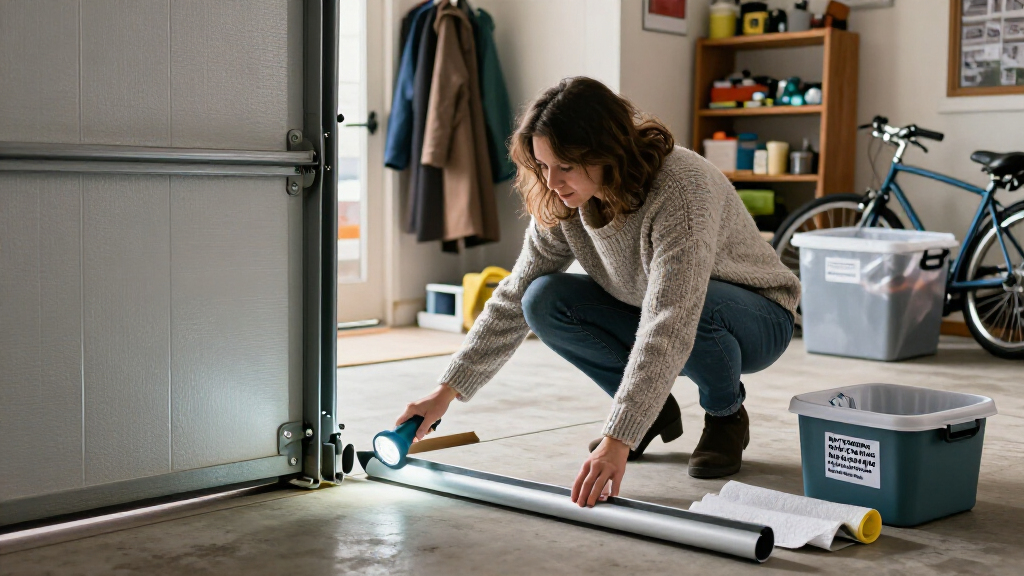
Garage doors need particular attention. The suggested checks include the gap between the bottom seal and the floor, the door’s corners, the spaces beside its metal tracks, and openings along the top frame. The report says an indoor check with the lights off and doors closed may help reveal gaps where daylight comes through. It also recommends checking walls shared with the house, where an opening could provide a route indoors.
For small holes, Hunker recommends using steel wool or copper mesh and securing the material with caulk or expanding foam. Larger openings may call for metal sheeting, hardware cloth or cement. For door gaps, the report suggests reinforced rodent-resistant bottom seals and stainless-steel shields at corners and along side or top openings; a badly worn door may need repair or replacement.
Sealing Routes Into the Home
Keeping mice out of a garage can protect stored items and reduce the chance that rodents will reach adjoining parts of a home. Hunker says mice may use insulation and other materials as nesting supplies, while cardboard, paper and fabrics can also provide nesting material. A small opening may be easy to overlook, but the CDC measurement cited in the report gives homeowners a reason to inspect narrow gaps, not just obvious holes.
The approach is preventive: sealing entry points addresses how mice might get inside, while removing food and nesting materials makes the space less attractive if one does enter. These steps may reduce opportunities for access, but the supplied report does not claim they can guarantee a mouse-free garage or replace other pest-control measures in every situation.
As an affiliate, we earn on qualifying purchases.
Why Small Garage Gaps Matter
The article frames the advice around colder weather, when a garage may offer shelter and materials for nesting. It describes mice as able to enter through small openings and notes that a garage can connect to a home through shared walls. The quarter-inch estimate is attributed to the CDC in the Hunker report; no separate CDC document or additional technical detail was included in the source material.
The report’s recommendations center on physical exclusion: find openings, block them with suitable materials and maintain the garage door seals. It also advises storing pet food, birdseed and other potential food sources in sealed containers and clearing away soft or paper-based materials. Those housekeeping steps are presented as a complement to sealing, not a substitute for it.
“Mice can squeeze through openings just 1/4-inch wide.”
— Hunker report, citing the Centers for Disease Control and Prevention
As an affiliate, we earn on qualifying purchases.
Limits of the Prevention Advice
The supplied material does not give a publication date, identify a pest-control expert who independently reviewed the recommendations, or provide data on how effective the methods are. It also does not specify which sealant or barrier is appropriate for every opening, or how to handle openings that serve a ventilation or drainage purpose. The report notes that weep holes are intentional, but does not detail how to protect them while preserving their function.
These steps are presented as ways to reduce entry opportunities, not as a guarantee that mice will stay out. The source does not address what readers should do if they find an active infestation, nor does it compare exclusion with professional pest-control services.
As an affiliate, we earn on qualifying purchases.
Inspect, Seal and Recheck
The practical next step is to inspect the garage exterior and interior, paying close attention to door seals, corners and utility openings, then choose a barrier suitable for each gap. After sealing, check that door seals sit against the floor and that repairs have not blocked openings intended for ventilation or drainage. Secure food in sealed containers and remove loose nesting materials.
The report sets out no formal follow-up schedule or new policy development. Homeowners can recheck seals and repaired areas as part of routine garage maintenance, especially if they continue to see signs of rodent activity. If an infestation is present or the source of entry cannot be identified, the supplied advice does not establish the right remedy for that situation.
garage wall and foundation sealant
As an affiliate, we earn on qualifying purchases.
As an affiliate, we earn on qualifying purchases.
Key Questions
How small a gap can a mouse fit through?
The Hunker report cites the CDC as saying mice can squeeze through openings about 1/4 inch wide. The article uses that figure to explain why narrow cracks should be checked.
Where should I look for possible garage entry points?
Check the foundation, siding, windows, vents and utility penetrations, as well as the garage door’s bottom seal, corners, tracks and top frame. The report also suggests checking for daylight from inside with the doors closed and lights off.
What can I use to close a small hole?
The report suggests filling small holes with steel wool or copper mesh, secured with caulk or expanding foam. It lists metal sheeting, hardware cloth or cement as possible barriers for larger openings.
Will removing food and cardboard keep mice out by itself?
Not necessarily. Hunker describes storing food in sealed containers and clearing away cardboard, paper and fabrics as ways to make a garage less inviting, but says these steps do not replace sealing entry points.
Source: rss
Cold & flu season Picks
humidifiers
As an affiliate, we earn on qualifying purchases.