
TL;DR

Get home appliances delivered free with Prime
- Fast, free delivery on millions of items
- Prime Video, Amazon Music and more included
- Member-only deals all year
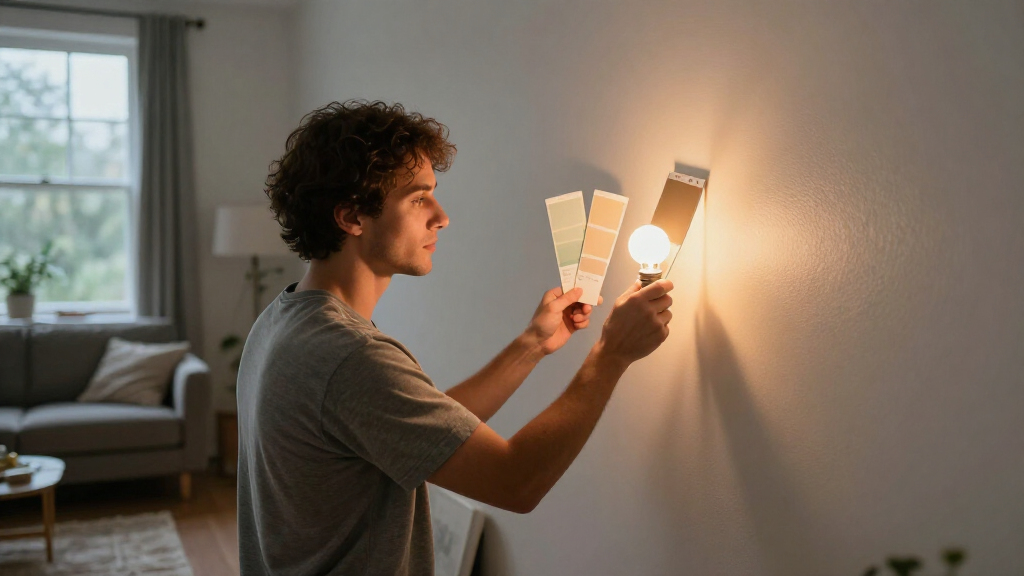
A Livingetc report says warm, relatively dim household bulbs can make wall paint appear different at night than it does in daylight. Designers recommend testing colors in the room’s daytime conditions and adjusting bulb temperature and layered lighting before repainting.
A Livingetc report advises homeowners to check their wall colors under evening lighting before deciding a paint shade looks wrong: warm, dimmer bulbs can change how colors appear compared with daylight. Interior designer Emily Brooks and Pooky lighting creative director Jo Plant say bulb temperature and the placement of lamps and fixtures can affect a room’s perceived color and atmosphere.
Plant says daylight is around 5,000 kelvin, while many household bulbs are between 2,500K and 3,000K. The warmer light can shift the appearance of paint, although the effect depends on the shade and the lighting in the room. Plant says warm blues can appear warmer, while cooler hues may look muddy or flat in evening light.
Brooks explains that people perceive paint color through light reflected from its pigment, so the color and intensity of the light affect how the shade looks. She recommends choosing a paint color in the room’s natural daytime light, then selecting evening bulbs and fixtures to complement it rather than assuming it will look identical throughout the day.
The report recommends using layered lighting instead of relying only on a central ceiling light or downlights. Table lamps and wall lights can distribute light around the room; Brooks also suggests diffusing overhead light with larger, non-clear bulbs. The source does not specify a single bulb temperature or fixture layout that will suit every paint color.
Lighting Changes the Room’s Color
The advice matters to people choosing paint or trying to diagnose why a familiar wall shade looks different after sunset. A color judged in daylight may read warmer, flatter or otherwise altered under the bulbs used in the evening. That difference can affect the room’s perceived mood as well as a homeowner’s confidence in the paint choice.
It also offers a practical step before a costly repaint: review the color under the room’s actual lighting and adjust the bulbs or fixture mix first. The report does not promise that lighting changes will make every shade look the same at all hours; it presents bulb selection and layered light as ways to shape the evening appearance.
Products Worth Considering

Philips Hue Large Smart Light Tube, Black – White and Color Ambiance LED Color-Changing Light – 1 Pack

Philips Hue Festavia Globe Outdoor String Lights, 32 Bulbs, 91 ft

Philips Hue Bridge Pro Smart Lighting Hub
As an affiliate, we earn on qualifying purchases.
Daylight and Evening Bulbs
The Livingetc article frames the issue as a mismatch between how paint is often selected and how a room is later used. Paint colors are commonly assessed in daylight, while living rooms and bedrooms may rely on electric light in the evening. Plant’s cited ranges—about 5,000K for natural light and 2,500K to 3,000K for many home bulbs—illustrate the difference in color temperature, not a universal prescription for every space.
Brooks says color, paint finish and light work together. Her examples are specific to the intended effect: a cooler bulb may bring out pink or purple tones in terracotta, while warmer light can emphasize its yellow base. The report’s broader recommendation is to consider the room’s use, bulb temperature and fixture placement as part of the color decision.
““The color or temperature of the light hitting it, and the strength of that light hugely affect how our eyes perceive the shade.””
— Emily Brooks, interior designer and color consultant
No One Bulb Fits Every Paint
The report does not identify a universally suitable bulb temperature, brightness level or fixture arrangement for a given paint shade. It also does not provide controlled measurements showing how particular colors change under specific bulbs. The examples are expert guidance, and the visible result will depend on the paint, its finish, the light source and the room.
It is also not clear from the supplied article text which exact lighting changes its headline’s “what” refers to beyond the discussion of bulb temperature, diffused overhead fixtures and lamps or wall lights. The article does not establish that a paint color is objectively wrong at night; it describes how the same color can be perceived differently.
Test the Room Before Repainting
For homeowners weighing a change, the practical next step in the report is to view the paint in daylight and again under the room’s evening lights. They can then experiment with bulb temperature and use lamps or wall lights to create a more distributed, diffused light before deciding whether the wall needs repainting.
Livingetc’s report provides general design advice rather than a product test or formal standard. It gives no follow-up testing, specific product recommendation or universal setup; the right combination remains dependent on the individual color and room.
Key Questions
Why can paint look different at night?
Bulbs differ from daylight in color temperature and intensity. The report says those differences affect how the eye perceives paint, so a shade can appear warmer, flatter or otherwise changed in the evening.
What bulb temperatures does the report mention?
Jo Plant cites natural light at about 5,000K and many household bulbs at 2,500K to 3,000K. These are approximate ranges from the source, not a recommendation that every room use a particular bulb.
Should I repaint if my walls look wrong at night?
The report suggests checking the room’s bulbs and lighting arrangement before repainting. It does not say lighting adjustments will resolve every mismatch, but lamps, wall lights and different bulb temperatures may change the shade’s evening appearance.
What lighting setup does the report recommend?
Brooks recommends layered lighting, including lamps and wall lights, rather than relying only on a central ceiling light or downlights. She also suggests diffusing overhead light with larger, non-clear bulbs.
Source: rss