
TL;DR

Get home appliances delivered free with Prime
- Fast, free delivery on millions of items
- Prime Video, Amazon Music and more included
- Member-only deals all year
Moving your rig into a closet can drastically cut noise and reflections, especially when paired with proper ventilation and placement. Acoustic dampening isn’t just foam — it’s about strategic positioning, sealing gaps, and controlling low-end. A well-ventilated closet can become a surprisingly quiet, versatile studio space.
If you think a closet is just a messy storage spot, think again. It can become your best friend for soundproofing and acoustic treatment—if you do it right.
This isn’t about buying a bunch of foam and hoping for the best. It’s about understanding where sound goes, how it bounces, and how to block it at the right spots. Whether you want to record vocals, voiceovers, or just keep your noise from bothering neighbors, this guide will give you practical, no-nonsense tips to turn that tiny closet into a quiet, effective studio.
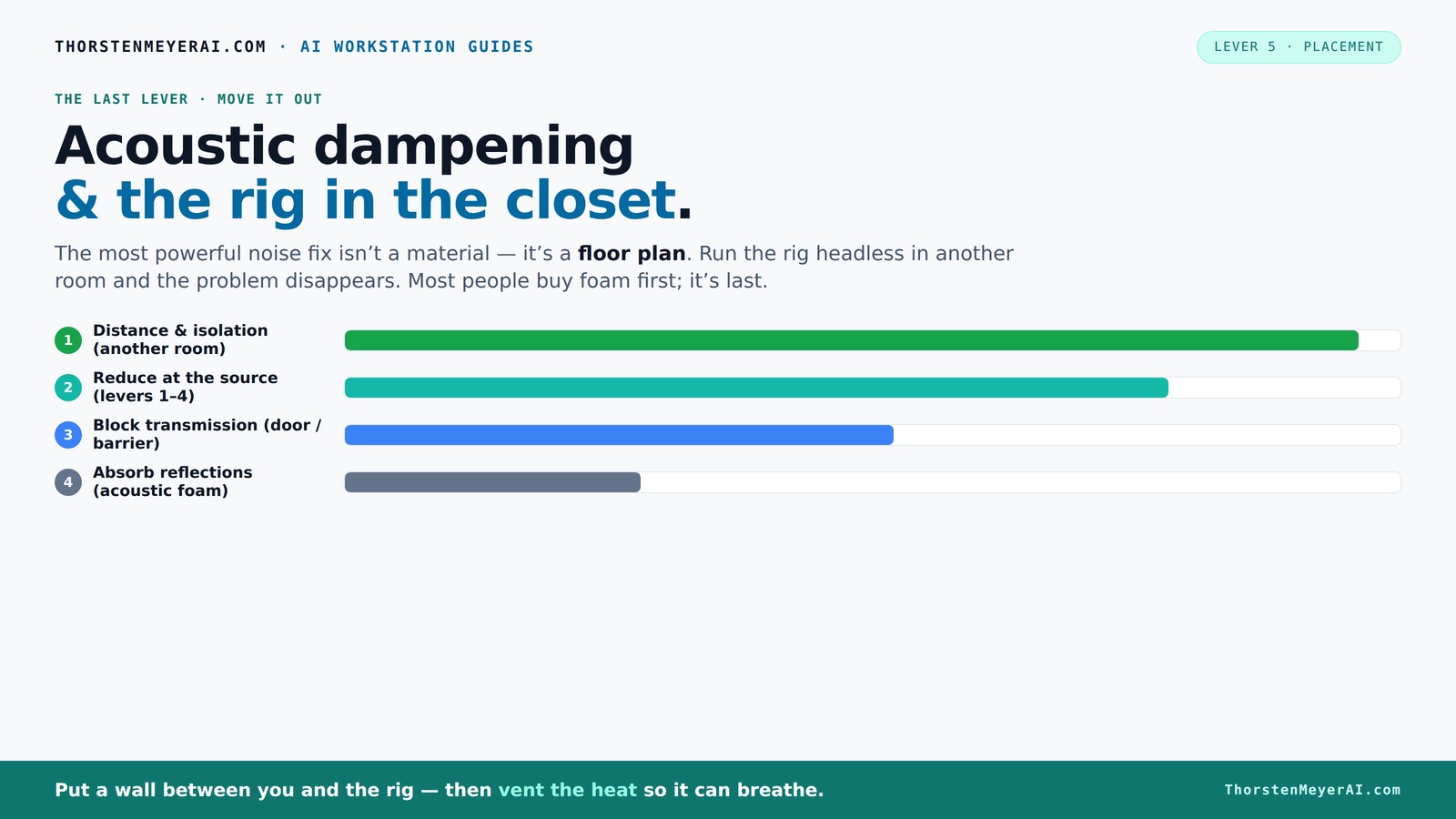
Acoustic dampening
& the rig in the closet.
The most powerful noise fix isn’t a material — it’s a floor plan. A rig you can’t hear because it’s in another room beats any amount of foam. Tap the approaches in Part 1 to see what actually works.
(another room)
(levers 1–4)
(door / barrier)
(acoustic foam)
Contain the noise, not the heat
Key Takeaways
- Prioritize placing your rig in another room or closet to eliminate noise at the source.
- Control reflections inside the closet with targeted placement of absorption panels on the first reflection points.
- Seal gaps around the door with weatherstripping and blankets to block sound leaks effectively.
- Use ventilation—passive vents or quiet fans—to prevent heat buildup and keep your rig cool.
- In small spaces, focus on reflection control and sealing rather than thick, full-room foam coverage.
soundproofing acoustic foam panels for closet studio
As an affiliate, we earn on qualifying purchases.
As an affiliate, we earn on qualifying purchases.
Why Soundproofing in a Closet Is About Reflection, Not Just Noise
Most people think acoustic dampening is just about muffling sound. In reality, it’s mostly about controlling how sound bounces around inside your closet, creating that boxy, echoey sound. You can learn more about acoustic treatment techniques to improve your space.
Think of it like this: in a tiny space, sound waves hit the walls, bounce back, and hit your ears multiple times. That’s what makes vocals sound muddy or boxy. Proper treatment reduces these early reflections, making your recordings clearer and more professional.
For example, placing foam panels on the back wall and ceiling can cut down flutter echo and harshness, transforming a boxy sound into a warm, tight tone. This is why reflection control beats just throwing foam on every surface.
Understanding this is crucial because it highlights that not all foam is equally effective. Strategic placement of panels at reflection points ensures you’re addressing the actual problem areas, rather than wasting material where it has minimal impact. This approach saves money and improves sound quality significantly.
portable vocal booth for small spaces
As an affiliate, we earn on qualifying purchases.
As an affiliate, we earn on qualifying purchases.
Where to Place Acoustic Treatment for the Best Results
Placement is king in a tiny closet. Start by treating the first reflection points: behind the microphone, the side walls, and the ceiling. These spots catch the most sound bouncing back into your mic. For detailed guidance, see tinyhouse43.com on small-space acoustic solutions.
Use a mirror to find these points: sit in your normal recording position, then hold a mirror against the wall. When you see the microphone in the mirror, that’s where you should put absorption panels.
For example, a common setup is a foam panel directly behind the mic, with additional panels on the side walls and ceiling. Don’t forget the door — it’s often the weak link in sound leakage.
Proper placement of panels at these reflection points prevents sound waves from bouncing directly into your mic, which can cause muddiness and reduce clarity. It’s a tradeoff—you might need fewer panels than you think, but positioning them correctly makes all the difference. Over-treating can lead to a dead-sounding space, so aim for a balanced approach that smooths out harsh reflections without dulling your sound.
sound isolation mats for home recording
As an affiliate, we earn on qualifying purchases.
As an affiliate, we earn on qualifying purchases.
How to Block Sound Leaks Through the Closet Door
Soundproofing a closet door is about sealing gaps, not just adding foam. The door is usually the biggest weak point for sound escape. Consider using effective sealing methods like weatherstripping or heavy curtains, which you can read about in this guide.
Apply weatherstripping around the edges, and hang a heavy curtain or moving blanket across the door to dampen noise further. For extra isolation, you can install a door sweep that seals the gap at the bottom.
For instance, a dense moving blanket can cut noise transmission significantly—sometimes by 10-15 decibels—making your closet much quieter.
Sealing gaps effectively prevents sound from leaking out, which is essential if you’re recording in a shared space. The tradeoff here is that overly thick curtains or blankets might slightly muffle your voice or make it harder to hear yourself, so find a balance that reduces sound leaks without overly deadening your sound.
acoustic treatment bass traps for small rooms
As an affiliate, we earn on qualifying purchases.
As an affiliate, we earn on qualifying purchases.
Choosing the Right Material: Foam, Blankets, or Rugs?
In a small space, you don’t need to cover every inch with foam. Focus on the reflection zones. Foam panels are great for high-frequency absorption but don’t block sound transmission. For more tips, visit homeapexgear.com.
Blankets, rugs, and even quilts can absorb sound reflections and are inexpensive DIY options. For example, hanging thick blankets on the walls can drastically reduce echo without a huge investment.
Use a combination: foam for critical reflection points, blankets for broad coverage, and rugs on the floor to tame footstep noise and bass buildup. Keep in mind that each material has its own tradeoffs: foam is effective at high frequencies but less so at low frequencies, while blankets and rugs help with mid to low-frequency issues but might not be as precise for reflection control. Balancing these materials based on your specific needs will give you the best results.
How to Manage Low-End Buildup in a Tiny Closet
Low frequencies are the tricky part in tiny spaces. They tend to accumulate in corners and along parallel walls, creating a boomy, muddy sound. You can find effective low-end management strategies at this resource.
Adding bass traps in the corners can help. But in a small closet, even simple measures work: place thick panels or corner traps at the junctions where walls meet. These can be DIY or purchased.
For example, a 2-inch thick bass trap in each corner can cut low-end buildup by 50%, according to some acoustic tests. But often, focusing on reflection control is enough for voice work.
It's important to note that low-frequency issues are less about the size of your space and more about how sound waves reflect and resonate within it. While bass traps help, over-treating with too many can dull the overall sound. Prioritize treating reflection points first, and use bass traps selectively to prevent muddiness without sacrificing clarity.
Ventilation and Heat: Keeping Your Closet Rig Cool and Quiet
Placing a hot, power-hungry machine in a sealed closet sounds like a recipe for disaster. Without airflow, heat can spike, causing throttling and loud fan noise.
The trick is to add ventilation—passive vents or quiet exhaust fans—to let hot air escape. A small, thermostat-controlled fan can keep things cool without adding noise.
For example, a vent with a built-in fan can keep the temperature in check, preventing the rig from overheating and fans from running at maximum speed.
Proper ventilation ensures your equipment operates efficiently without overheating, which can cause additional noise and potential damage. The tradeoff is designing a system that provides adequate airflow without introducing noise into your recordings. Quiet fans and well-placed vents are key, but they must be chosen carefully to avoid noise contamination.
How to Make Your Closet Setup Flexible and Renter-Friendly
If you’re renting or want a temporary setup, keep it simple. Use removable panels, heavy blankets, and portable acoustic treatments that can be easily taken down or moved.
For instance, using command hooks for foam panels allows you to reposition or remove treatment without damaging walls. A collapsible frame with hanging blankets can turn a closet into a sound booth in minutes.
This approach lets you experiment with different configurations and easily revert to the original space, which is essential if you’re renting or sharing your space. The tradeoff is that temporary solutions might not be as airtight or effective as permanent installations, but they still significantly improve sound quality and are highly adaptable.
Common Mistakes to Avoid in a Closet Recording Setup
Don’t just throw foam everywhere. It won’t solve low-frequency problems or sound leaks. Instead, focus on reflection zones and sealing gaps.
Also, avoid blocking airflow or ignoring ventilation. Over-treating the space without considering heat can lead to equipment shutdowns and noise from fans ramping up.
For example, many DIYers forget to treat the ceiling or door gaps, which leads to persistent leaks and muddy recordings. Think about the entire acoustic picture, not just one piece.
Over-treating can also deaden your sound, making recordings sound unnaturally dull or lifeless. Strike a balance: aim for a space that reduces harsh reflections and leaks but still retains some liveliness and natural sound. Remember, the goal is clarity, not dead silence or complete soundproofing, which is often impractical in small, rental spaces.
Frequently Asked Questions
What’s the difference between acoustic dampening, treatment, and soundproofing?
Acoustic dampening reduces reflections and echo inside a space, making recordings clearer. Treatment involves placing panels and materials to control sound bouncing. Soundproofing blocks sound from leaving or entering a room—it's about sealing gaps and adding barriers.Where should I put foam panels in my closet booth?
Start by placing foam on the back wall behind your microphone, then on the side walls and ceiling at reflection points. Use a mirror trick to find these spots for maximum effectiveness.Do I need bass traps in a tiny closet?
Bass traps can help reduce low-frequency buildup, but in very small spaces, focusing on reflection control often does the job. Corners are good spots for DIY bass traps if you notice muddiness.How do I stop sound leaking through the closet door?
Seal gaps with weatherstripping and hang a heavy blanket or curtain over the door. These simple steps greatly reduce sound escape, making your setup much quieter.Can blankets replace foam for recording?
Yes, thick blankets are a cheap, effective way to absorb reflections inside your closet. Combine them with foam panels at key reflection points for best results.Conclusion
Turning a closet into a quiet, professional-sounding space isn’t about spending a fortune on foam. It’s about smart placement, sealing gaps, and managing heat.
Remember, the best soundproofing is often just stepping back—literally. Move your rig into a closet or another room, and suddenly, the noise problem becomes a non-issue. Your voice, your recordings, and your neighbors will thank you for that simple shift.
Fall yard work Picks
leaf blowers
As an affiliate, we earn on qualifying purchases.