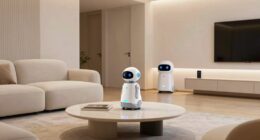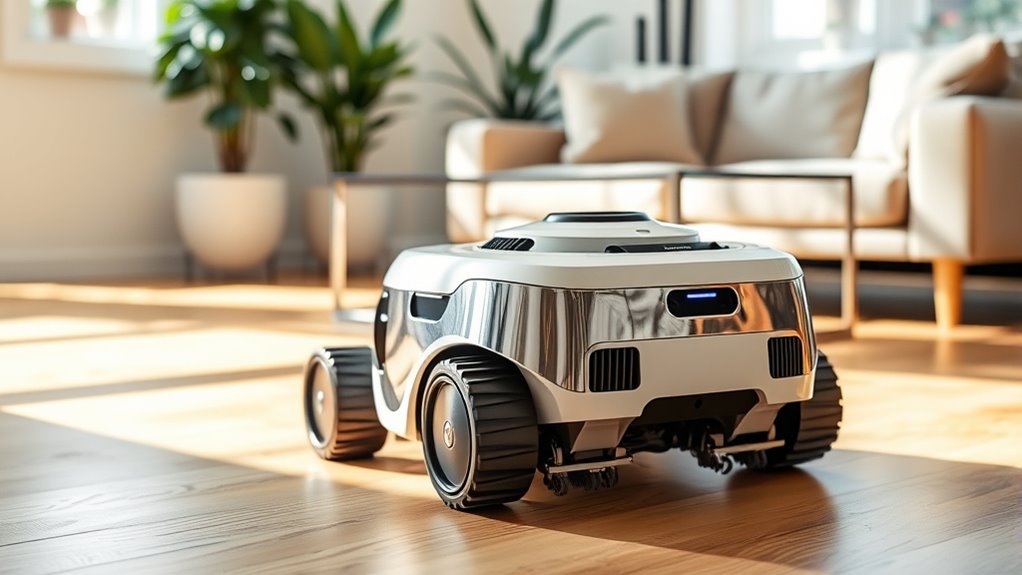
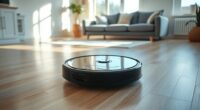
AI-powered cleaning robots learn your home over time by using advanced sensors and mapping technology to understand your space. They create detailed layouts, navigate smoothly around obstacles, and identify areas that get dirtier. As they work, they update their internal maps to reflect any changes, like new furniture. This continuous learning helps them optimize routes and increase efficiency. Keep exploring to discover how these robots keep improving for a spotless home.
Key Takeaways
- They use advanced sensors and mapping technology to create detailed layouts of your home for precise navigation.
- Robots monitor dirtier areas and prioritize cleaning those spots in future routines for efficiency.
- They recognize and update internal maps when furniture or layout changes occur, maintaining effective navigation.
- Route optimization conserves battery life by avoiding unnecessary movements and focusing on targeted cleaning paths.
- Continuous learning through machine algorithms enhances performance, making the robot more effective over time.

Have you ever wondered how artificial intelligence is transforming everyday chores? These days, AI-powered cleaning robots are becoming smarter and more efficient, making household upkeep less of a hassle. One of the key ways they do this is through advanced robot navigation. Instead of blindly wandering around your home, these robots use sophisticated sensors and mapping technology to understand their environment. They create detailed layouts of your space, allowing them to navigate smoothly around furniture, stairs, and other obstacles. This precise navigation means they spend less time bumping into things and more time actually cleaning, which directly boosts cleaning efficiency.
AI cleaning robots use sensors and mapping to navigate precisely, boosting efficiency and reducing unnecessary bumping.
As your robot learns more about your home, it adjusts its routes to optimize coverage. For example, if it notices certain areas tend to get dirtier or accumulate dust faster, it will prioritize those spots in future cleaning sessions. Over time, this learning process ensures that your robot isn’t just performing random sweeps but is strategically targeting problem areas. This continuous improvement in navigation and planning results in fewer missed spots and a more thorough clean overall. You’ll notice that your robot spends less time zigzagging or retracing its steps, and instead, it moves confidently across your floors, covering more ground in less time.
Furthermore, the integration of machine learning allows these robots to adapt to changes in your home environment. If you rearrange furniture or add new items, your robot quickly updates its internal map, adjusting its navigation paths accordingly. This adaptability enhances cleaning efficiency because the robot isn’t confused by new obstacles or layouts. It remains effective even as your living space evolves, ensuring consistent results without you needing to manually intervene.
You’ll also find that this smarter navigation reduces energy consumption, as the robot doesn’t waste battery wandering aimlessly. Instead, it calculates the most efficient routes, saving power and extending its operational time. This means fewer interruptions and more frequent cleanings, keeping your home spotless with minimal effort on your part. The combination of intelligent robot navigation and learning capabilities makes these devices not just tools but active partners in maintaining your home’s cleanliness. You’ll appreciate how seamlessly they integrate into your daily routine, working quietly and efficiently in the background, constantly optimizing their performance.
In short, AI-driven robots are revolutionizing household cleaning by mastering navigation and continuously improving their methods. Their ability to learn your home over time elevates cleaning efficiency, giving you a cleaner environment without the hassle. With each session, they become better at understanding your space, making cleaning smarter, faster, and more effective. This adaptability ensures they remain effective even as your home changes, providing ongoing support for a calm, organized living space.

Shark AV2501S AI Ultra Robot Vacuum, with Matrix Clean, Home Mapping, 30-Day Capacity HEPA Bagless Self Empty Base, Perfect for Pet Hair, Wifi, Dark Grey
- Powerful Suction: Cleans all floor types effectively
- Matrix Clean Navigation: Ensures thorough, precise cleaning coverage
- Self-Emptying Base: Holds up to 30 days of debris
As an affiliate, we earn on qualifying purchases.
As an affiliate, we earn on qualifying purchases.
Frequently Asked Questions
How Do Robots Adapt to Changing Home Layouts?
You’ll find that robots adapt to changing home layouts through sensor calibration and advanced navigation algorithms. When furniture moves or new objects appear, sensors detect these changes, and the navigation algorithms update the robot’s map in real time. This allows the robot to reroute efficiently, avoid obstacles, and clean effectively. Over time, your robot learns your space, adjusting to modifications seamlessly, making your cleaning routine more convenient and thorough.
Can AI Recognize Specific Household Objects or Only General Areas?
Imagine it’s 2099, and your robot vacuum’s just upgraded. It can recognize specific household objects through advanced object recognition technology, not just general areas. This means your robot can identify your favorite mug or TV remote, enabling precise cleaning around them. It combines area identification with object recognition, ensuring thorough, personalized cleaning. With this tech, your robot’s smarter than ever, making your home maintenance effortless and more efficient.
What Privacy Measures Protect User Data Collected by Cleaning Robots?
Your cleaning robot protects your privacy by using data encryption, ensuring your information stays secure during transmission and storage. Manufacturers also require your explicit consent before collecting any data, so you’re aware of what’s being gathered. These measures help prevent unauthorized access and give you control over your personal information, allowing you to enjoy a smart cleaning experience without compromising your privacy.
How Do Robots Handle Unexpected Obstacles or Pets?
Did you know that 85% of pet owners worry about their robot vacuum handling pet interactions? When faced with unexpected obstacles or pets, your robot uses obstacle detection sensors to navigate safely. It detects pets or objects in real-time, adjusting its path to avoid collisions. This smart approach guarantees your pets stay safe, and your home remains spotless without you constantly supervising.
Are There Options to Customize Cleaning Preferences Beyond Basic Settings?
Yes, you can customize your cleaning preferences beyond basic settings. Most robots offer advanced customization options, allowing you to set specific areas to clean or avoid, adjust suction power, and schedule cleanings based on your routines. You can also save user preferences for different rooms or floors, ensuring the robot adapts to your home’s unique needs. This way, you gain greater control over your cleaning experience.

Robot Vacuum and Mop Combo, 90-Day Self Emptying, 10000Pa Strong Suction, dToF Laser Navigation Smart Mapping, 160Min Runtime, Anti-Tangle Robotic Vacuum Cleaner for Hard Floor, Pet Hair, Carpet
- Self-Emptying Dustbin: 3.5L capacity for 13 weeks of debris
- Strong Suction Power: 10,000Pa for thorough cleaning
- Multiple Suction Modes: Power, Standard, Quiet modes
As an affiliate, we earn on qualifying purchases.
As an affiliate, we earn on qualifying purchases.
Conclusion
As you see, AI-powered cleaning robots will keep learning and adapting to your home, making chores easier over time. Imagine a robot that notices your pet shed more fur during winter and adjusts its cleaning schedule accordingly. For example, Sarah’s robot started targeting high-traffic areas more often after a week, saving her time and effort. With these smart devices, your home stays cleaner effortlessly, giving you more time to enjoy what matters most.
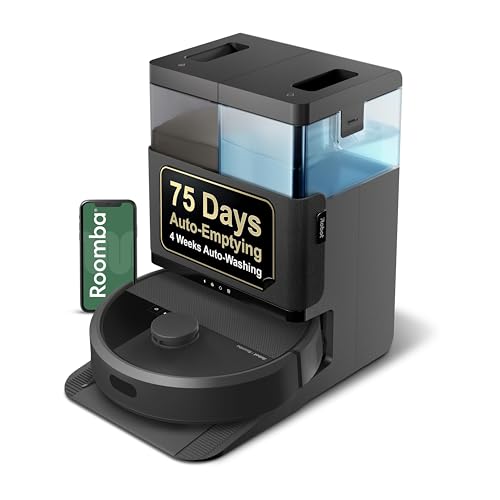
iRobot Roomba Plus 405 (G181) 2in1 Vacuum & Mop Robot with AutoWash Dock – Dual Spinning, Smart & Fast Mapping, Ideal for Pet Hair, Self-Empties 75 Days, Intense Suction, Pad Washing & Drying
- Powerful Suction and Mopping: 70x more suction with dual mop pads
- Enhanced Mopping Performance: Double scrubbing power with SmartScrub
- Advanced Navigation: LiDAR mapping for efficient cleaning
As an affiliate, we earn on qualifying purchases.
As an affiliate, we earn on qualifying purchases.
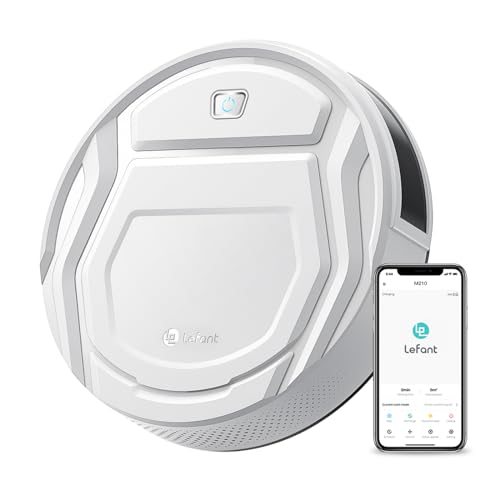
Lefant Robot Vacuum Cleaner, Strong Suction, 120 Mins Runtime, Slim, Low Noise, Automatic Self-Charging, Wi-Fi/App/Alexa Control, Ideal for Pet Hair Hard Floor and Daily Cleaning, M210
- Pet-Friendly Design: Ideal for homes with pets
- App Connectivity: Requires new Lefant app for full features
- Compact Size: 11-inch diameter, 2.99-inch height for tight spaces
As an affiliate, we earn on qualifying purchases.
As an affiliate, we earn on qualifying purchases.