
Robots are increasingly taking over routine cleaning tasks in hospitality, which means some housekeeping jobs may diminish or change. Instead of replacing all jobs, automation often shifts workers to roles overseeing or maintaining robots, or providing personalized guest services. However, lower-skilled cleaning positions might face displacement if workers lack retraining opportunities. As automation grows, skill development becomes key. To understand how this shift impacts your workplace and future prospects, exploring further will give you valuable insights.
Key Takeaways
- Robots are increasingly performing routine cleaning tasks, reducing the need for human housekeeping staff.
- Automation may lead to job displacement but often shifts roles toward overseeing and maintaining robotic systems.
- Human workers can focus more on personalized guest service and complex tasks that robots cannot handle.
- Displaced workers may need retraining for new roles in technology management or customer engagement.
- Overall, automation can complement human workers, but some lower-skilled cleaning jobs are at risk of decline.
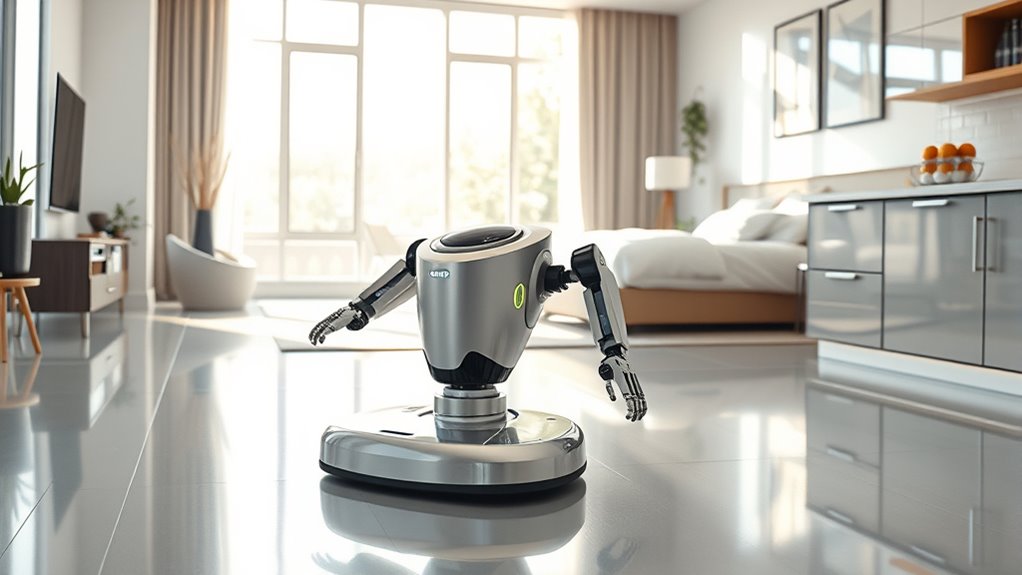
As robots become more advanced, they’re increasingly taking on housekeeping tasks that were once done exclusively by humans. This rise in automation in hospitality is transforming the way hotels, restaurants, and other service providers operate. You might worry that these technological advancements will eliminate your job or reduce opportunities for human workers. While automation streamlines operations and cuts costs for businesses, it also causes significant labor market shifts, prompting questions about the future of cleaning jobs.
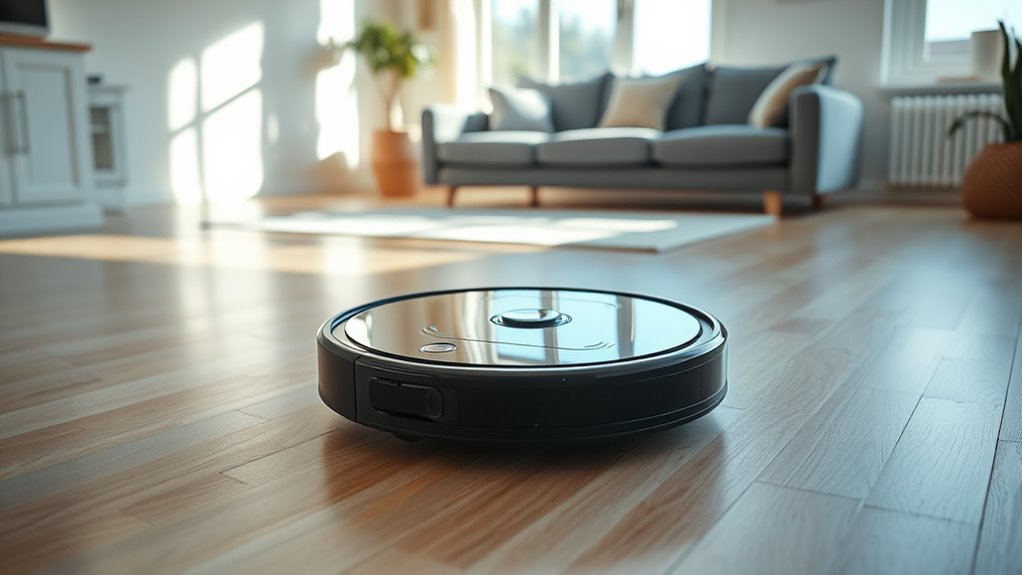
The integration of robots into cleaning routines isn’t happening in isolation. It’s part of a broader trend where automation replaces routine, repetitive tasks. Robotic vacuum cleaners and floor scrubbers can now operate autonomously, efficiently covering large areas without human intervention. These advancements mean that fewer staff are needed for basic cleaning chores, which can lead to layoffs or reassignments. However, it’s essential to recognize that this shift doesn’t necessarily spell complete job loss. Instead, it often results in a redistribution of tasks, with human workers focusing on more complex, personalized, or supervisory roles that robots can’t handle.
As a worker in the hospitality industry, you should prepare for a changing landscape. The adoption of automation in hospitality isn’t about eliminating jobs altogether but about evolving them. Your role may shift from manual cleaning to overseeing robotic systems, troubleshooting technical issues, or providing customer service that requires a human touch. Employers often see robots as tools to enhance efficiency and free up staff to engage more meaningfully with guests. This shift can lead to better working conditions, higher wages, or opportunities to learn new skills related to technology management.
That said, the labor market shifts caused by automation aren’t uniformly positive. Some positions will unquestionably become obsolete, especially lower-skilled roles focused solely on routine tasks. This can create challenges for workers who lack the training or resources to transition into higher-skilled roles. Governments and organizations are increasingly investing in retraining programs to help displaced workers adapt to this new environment. If you’re proactive in acquiring skills related to robotics, maintenance, or customer service, you’ll be better positioned to thrive amidst these changes. Additionally, understanding the role of contrast ratio in visual clarity can be beneficial if you pursue roles involving presentation screens or digital signage in hospitality settings.
As an affiliate, we earn on qualifying purchases.
Frequently Asked Questions
How Will Robots Affect Wages for Cleaning Workers?
Robots could lead to wage suppression for cleaning workers by increasing competition in the labor market. As automation takes over routine tasks, employers might offer lower wages or reduce hours, knowing robots can perform similar work more cheaply. This shift could diminish bargaining power for workers, making it harder to negotiate better pay. Overall, automation risks putting downward pressure on wages, impacting the livelihoods of cleaning professionals.
Are There Regions Where Robot Cleaning Jobs Are More Common?
Regional adoption of robot cleaning services varies, influenced by cultural acceptance and tech infrastructure. In countries like Japan and South Korea, you’ll find higher adoption rates because of their openness to automation and advanced technology. Conversely, regions with limited resources or cultural reservations tend to have lower adoption. If you’re in an area with progressive attitudes toward automation, expect more widespread use of robot cleaners in homes and businesses.
Will Cleaning Robots Create New Job Opportunities?
Cleaning robots will create new job opportunities, especially in robot maintenance and technical support, as automation resistance declines. For example, a 2022 report shows a 20% increase in demand for skilled technicians in automation industries. You’ll find new roles emerging, such as programming, troubleshooting, and servicing cleaning robots. These jobs require specialized skills, offering opportunities for workers willing to adapt and learn, ultimately supporting the evolving cleaning industry.
How Do Cleaning Robots Handle Delicate or Personalized Tasks?
Cleaning robots handle delicate or personalized tasks with advanced sensor technology that enhances their sensitivity. They can detect fragile items and avoid applying too much pressure, ensuring safe cleaning around delicate surfaces. For personalized cleaning, robots can be programmed to follow specific instructions, adjust their routines, and remember preferences. This combination of robot sensitivity and customization allows them to effectively manage delicate tasks, offering a tailored cleaning experience for your space.
What Skills Will Be Needed for Future Housekeeping Jobs?
You’ll need to develop automation skillsets and embrace technology training to thrive in future housekeeping jobs. Think of yourself as a gardener tending to a digital landscape—adapting to new tools and automation systems. Staying current with evolving tech helps you work smarter, not harder. By honing these skills, you become an essential part of the team, guiding the harmony between human touch and advanced technology in cleaning.
As an affiliate, we earn on qualifying purchases.
Conclusion
While robots might take over some cleaning tasks, they won’t replace all housekeeping jobs. Your skills in providing personalized, attentive service and adapting to new technology make you irreplaceable. Embracing these tools can actually make your work easier and more efficient, giving you more time to focus on the human touch that only you can deliver. So, instead of fearing job loss, see robots as allies that help you excel even further.
As an affiliate, we earn on qualifying purchases.
As an affiliate, we earn on qualifying purchases.