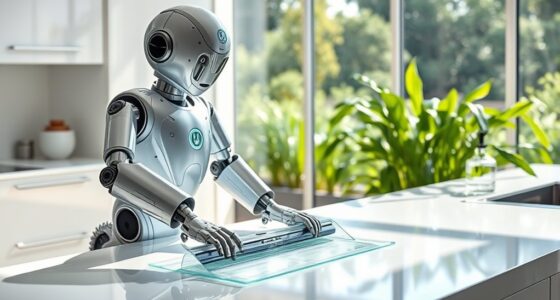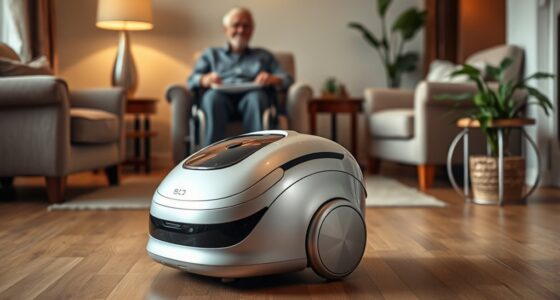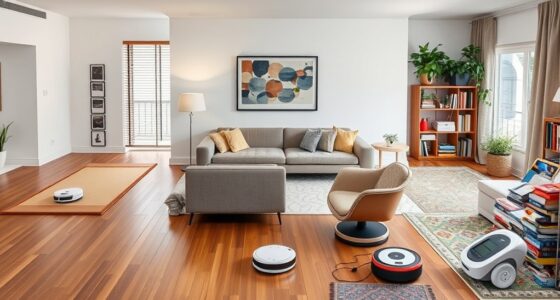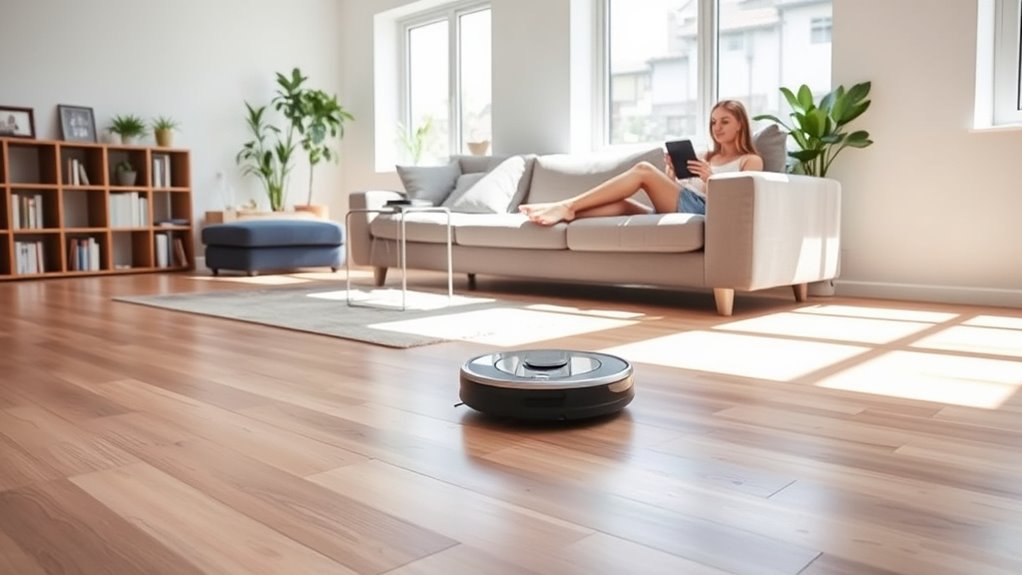

Using cleaning robots and automation makes your daily routines easier, but it also reduces physical effort and incidental movement. Over time, this shift can make you lazier and less active, as tasks that once required effort now happen effortlessly at your command. While convenience is great, it can unintentionally promote a more sedentary lifestyle. If you want to understand how this change impacts your habits and how to maintain activity, there’s more to discover ahead.
Key Takeaways
- Automation reduces physical effort in daily chores, decreasing incidental movement and overall activity levels.
- Relying on cleaning robots fosters a passive approach, diminishing motivation to engage in other physical activities.
- Reduced manual tasks can lead to a mindset of minimal effort, potentially promoting laziness over time.
- Dependence on automation may cause long-term decreases in energy expenditure and reinforce sedentary habits.
- Increased convenience can unintentionally contribute to a more passive lifestyle, impacting overall motivation to stay active.
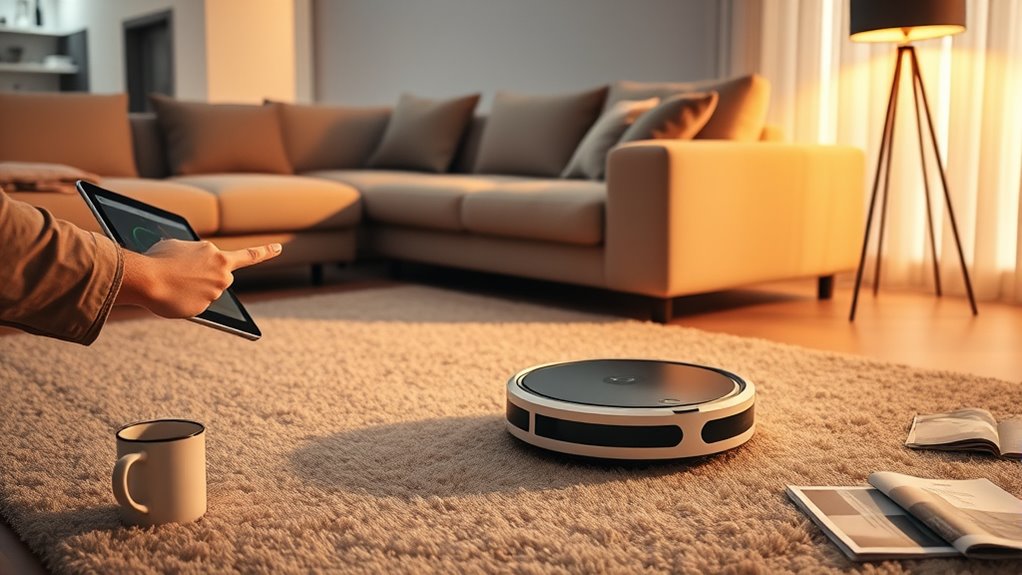
Many people wonder if we’re becoming lazier than previous generations, and there’s some evidence to suggest that modern lifestyles are contributing to decreased physical activity and productivity. One significant factor is technological dependence, which has reshaped your daily routines in ways that often minimize physical effort. Instead of manually cleaning or performing chores, you rely on gadgets like robotic vacuum cleaners or cleaning robots that do the work for you. While these devices save time and effort, they also subtly influence your habits, making movement less necessary in your day-to-day life. As a result, your routines become more passive, and physical activity—once a natural part of daily chores—dwindles.
The convenience of cleaning robots means you no longer need to bend, sweep, or scrub as you might have in the past. Instead, you press a button or schedule a cleaning session, and the robot takes over. This automation simplifies chores, but it also reduces your involvement in physically demanding tasks. Over time, this can lead to a decline in incidental movement, which once contributed to your overall activity levels. Because these devices seamlessly integrate into your routine, you might not even notice how much less you’re moving throughout the day. This shift can have a subtle but significant impact on your energy expenditure, potentially contributing to a more sedentary lifestyle. Reduced physical effort plays a key role in shaping these changing habits.
Furthermore, these technological advances influence your perception of productivity. Tasks that once required effort and physical engagement now seem effortless, which can perpetuate a mindset where minimal effort is enough. You might think, “Why bother sweeping if the robot does it?” This mindset can spill over into other areas of your life, making you less inclined to engage in physical activities or household chores that once kept you active. While embracing these innovations offers undeniable convenience, it also encourages a more passive approach to daily routines, which can reinforce laziness or at least a decline in physical activity.
In essence, your dependence on technological solutions like cleaning robots impacts how you structure your daily routines. They remove the need for effort in routine tasks, leading to less movement and a more sedentary lifestyle. Over time, this decreased physical activity can become a habit, subtly shifting your overall energy expenditure downward. While these devices make life easier, they also challenge you to find ways to stay active and engaged beyond the convenience of automation. Recognizing this influence is key to understanding whether modern technology is making you lazier or simply changing the way you approach daily living.
Frequently Asked Questions
Do Cleaning Robots Replace Human Cleaning Jobs?
Cleaning robots do replace some human cleaning jobs, contributing to robot job displacement in the cleaning industry evolution. While they streamline tasks and improve efficiency, they also reduce the need for certain roles. You might notice fewer cleaning positions available as automation advances. However, new opportunities emerge in robot maintenance and programming, so the industry shifts rather than entirely eliminates jobs, encouraging adaptation and new skill development.
How Do Cleaning Robots Impact Energy Consumption?
Cleaning robots can boost energy efficiency by targeting specific areas and avoiding unnecessary cleaning. However, automation costs might lead you to use them more frequently, increasing overall energy consumption. To minimize this, you should set schedules wisely and choose energy-efficient models. While they save time, be mindful of how often you run them to balance convenience with energy use, ensuring you don’t unintentionally drive up your household’s energy bills.
Are Cleaning Robots Safe for Children and Pets?
Like Pandora’s box, cleaning robots can be safe if you choose the right one. They’re generally designed with child safety and pet safety in mind, featuring sensors that prevent accidents. However, you should keep an eye on them during operation and make certain cords or small parts are out of reach. Proper maintenance and supervision help protect your children and pets, making robotic cleaning a safe, hands-free solution in your home.
Do Cleaning Robots Reduce Overall Cleaning Time?
Cleaning robots definitely reduce your overall cleaning time by taking over manual effort. With these devices handling routine tasks, you don’t need to spend as much time on frequent cleaning. As a result, you can focus on other chores or relax more. They make maintaining a tidy space more efficient, helping you keep up with cleaning frequency without the extra effort. Plus, you get a cleaner home in less time.
How Do Cleaning Robots Influence Our Motivation to Clean?
Cleaning robots can decrease your motivation to clean because you might develop cleaning dependence, relying on them instead of doing it manually. This reliance can lead to motivation decline, as you feel less inclined to take on cleaning tasks yourself. Over time, you may find that your initiative diminishes, and you become more passive about household chores, letting technology handle the work rather than maintaining your own cleaning habits.
Conclusion
As cleaning robots become more common, it’s clear they’re changing our habits. Notably, a 2022 survey found that 65% of users feel they do less household work because of these devices. While they save time, they might also make us lazier. So, as technology takes over chores, ask yourself: are you gaining convenience or losing independence? Staying mindful can help you enjoy the benefits without letting laziness take over.