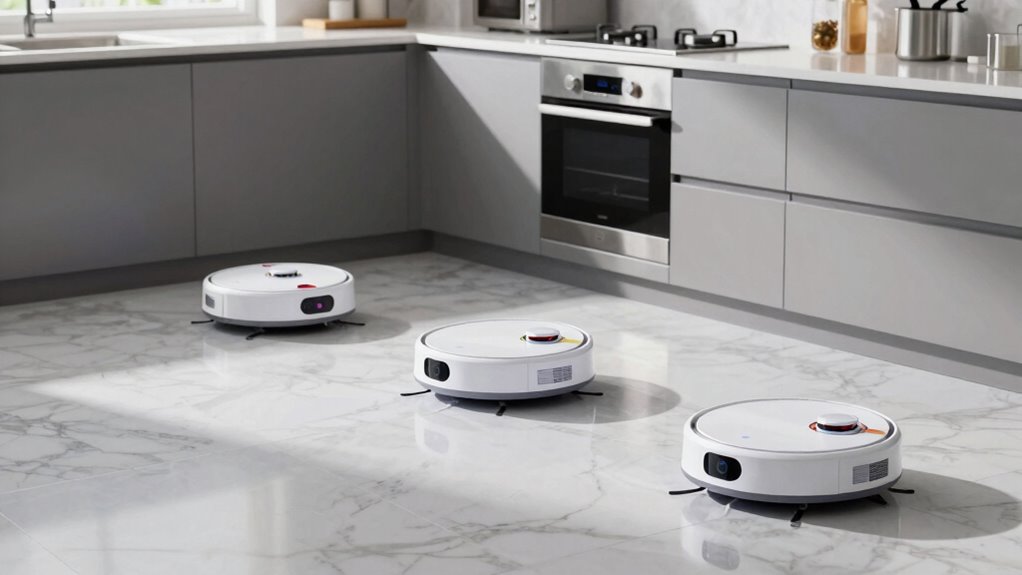

To prevent multiple home robots from getting in each other’s way, you should set virtual boundaries for each device, assigning specific zones or rooms. Enable real-time communication so they can share location data and coordinate movements. Scheduling tasks at different times also helps minimize overlaps. Combining these strategies creates smoother operation and fewer collisions. If you want to explore more ways to optimize your robot setup, keep exploring these smart solutions.

Get home appliances delivered free with Prime
- Fast, free delivery on millions of items
- Prime Video, Amazon Music and more included
- Member-only deals all year
Key Takeaways
- Define virtual boundaries or zones to restrict robot movement to specific areas.
- Enable real-time communication between robots for coordinated navigation.
- Use scheduling features to assign different operation times and avoid overlap.
- Implement dynamic path planning to reroute robots around obstacles and each other.
- Regularly update software to improve obstacle detection and environmental adaptation.
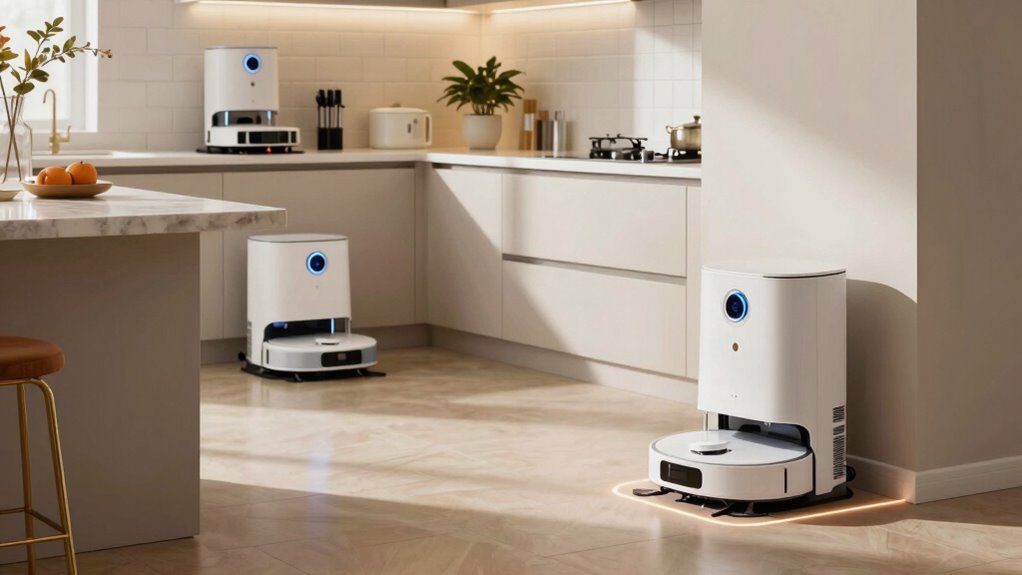
Have you ever wondered how to prevent your home robots from bumping into each other during their daily chores? Managing multiple robots in a shared space can be tricky, but understanding how they navigate and avoid obstacles makes it manageable. Robot navigation is the foundation here. Each robot uses sensors and algorithms to move efficiently around your home, but when multiple bots operate simultaneously, their paths can collide unless you set up proper systems.
Managing multiple home robots? Smart navigation and obstacle avoidance keep them from colliding during daily chores.
To keep your robots from getting in each other’s way, focus on obstacle avoidance strategies. Modern robots are equipped with lidar, cameras, infrared sensors, and bumpers that help them detect objects and other robots nearby. However, relying solely on these sensors isn’t enough—you need a system that coordinates their movements. Many robot models now support some form of multi-robot management, which allows them to communicate and share their real-time locations with each other. This communication prevents overlapping paths and reduces the likelihood of collisions.
A practical step is to predefine virtual boundaries or zones where each robot operates. This way, each robot knows its assigned workspace, minimizing the chances of crossing into another’s territory. For example, you can designate specific rooms or sections and program the robots to only clean or perform tasks within those areas. Some systems even include scheduling features, so each robot runs at different times, further reducing conflicts.
Another tip involves leveraging the robot’s navigation algorithms. Many models utilize simultaneous localization and mapping (SLAM) technology that helps build a map of your home and update it dynamically. Ensuring each robot’s software is up to date improves their obstacle avoidance capabilities, allowing them to adapt to changing environments and avoid each other more effectively. If your robots support it, enabling features like dynamic path planning can help them reroute when they detect another robot in their way. Additionally, understanding robot navigation principles can assist you in optimizing their routes and avoiding conflicts more proactively.
Finally, consider physical solutions such as installing virtual barriers or using docking stations as waypoints. These barriers can act as invisible walls, guiding the robots along designated paths. Docking stations can also serve as central hubs where robots pause or recharge, reducing wandering overlaps.
Ultimately, the key to keeping multiple home robots from getting in each other’s way lies in a combination of smart navigation, obstacle avoidance technologies, and strategic planning. By programming clear zones, enabling real-time communication, and keeping their software updated, you’ll make sure your robots work harmoniously. With these measures in place, your home chores get done efficiently, and your robots coexist peacefully without bumping into each other.
multi-robot home cleaning management system
As an affiliate, we earn on qualifying purchases.
As an affiliate, we earn on qualifying purchases.
Frequently Asked Questions
Can Different Brands of Robots Work Together Without Interference?
Different brands of robots can work together, but it often depends on their interoperability challenges and brand compatibility. You might face issues if the robots use different protocols or software, causing communication problems. To avoid this, choose robots designed for compatibility or support standard communication protocols. Always check the manufacturer’s specifications and compatibility features before combining brands, ensuring seamless operation and minimized interference between your home robots.
How Do I Update Software on Multiple Home Robots Simultaneously?
Ever wondered how to update multiple home robots efficiently? You can usually do this by accessing each robot’s app or control system, then selecting the update option for robot firmware. Many brands allow scheduling updates to avoid conflicts, reducing scheduling conflicts. Check for a “multi-robot update” feature or use a central hub, if available, to streamline the process. This guarantees all your robots stay current without disrupting your routine.
What Safety Measures Prevent Robots From Colliding With Pets?
To guarantee pet safety and collision prevention, you should program your robots with obstacle detection sensors and set virtual boundaries. Keep pet areas off-limits through zone mapping, and enable emergency stop functions. Regularly update the robots’ software to improve their obstacle recognition. Supervise initial robot operations around pets, and use alerts to notify you if a robot approaches a pet. These steps help keep your pets safe while maintaining smooth robot operation.
Do Robots Communicate With Each Other to Coordinate Tasks?
Think of your robots as a team of dancers, each aware of their partner’s moves. They use robot communication to share signals, ensuring smooth task coordination. This real-time exchange helps prevent collisions, overlaps, and chaos, allowing them to work efficiently together. By communicating, your robots stay in sync, much like a choreographed performance, making your home cleaner and more organized without stepping on each other’s toes.
How Can I Customize Robot Schedules to Avoid Overlaps?
You can customize robot schedules through personalized scheduling features in their apps or control systems. Set specific time slots for each robot’s tasks to prevent overlaps, ensuring each robot operates at different times. This method promotes conflict avoidance by clearly defining their routines. Regularly update these schedules based on your household’s changing needs, so robots work efficiently without interfering with each other’s activities.
virtual boundaries for home robots
As an affiliate, we earn on qualifying purchases.
As an affiliate, we earn on qualifying purchases.
Conclusion
Think of your home as a busy cityscape, where each robot is a car steering its own lane. By setting clear boundaries and teaching them to recognize each other’s paths, you create smooth traffic flow, avoiding frustrating jams. With a bit of planning, you turn chaos into harmony, allowing your robotic fleet to dance gracefully around your home. In this well-orchestrated ballet, everyone moves seamlessly, and your smart home runs like a finely tuned symphony.
robot navigation and obstacle avoidance sensors
As an affiliate, we earn on qualifying purchases.
As an affiliate, we earn on qualifying purchases.
robot scheduling and path planning software
As an affiliate, we earn on qualifying purchases.
As an affiliate, we earn on qualifying purchases.
Fall Picks
fall essentials
As an affiliate, we earn on qualifying purchases.