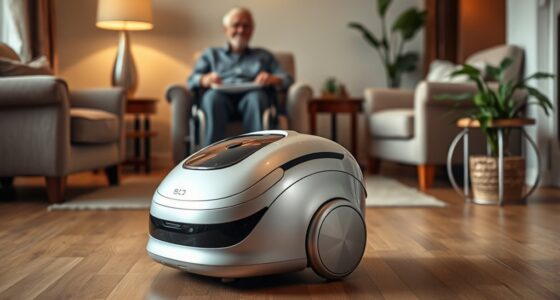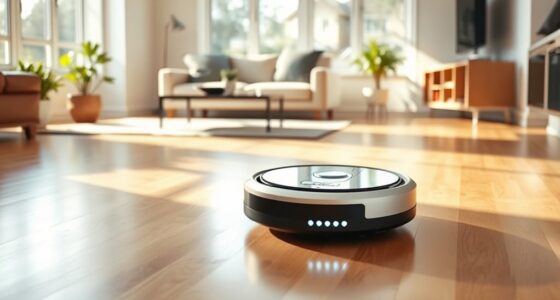

Yes, cleaning robots can markedly reduce chemical and water use by targeting dirt precisely and operating efficiently. Many models utilize advanced sensors and mapping technology to focus only on dirty areas, minimizing unnecessary resource use. Dry vacuuming robots, spray-and-wipe types, and those with minimal water features keep water consumption low while using fewer cleaning chemicals. If you want to see how these innovations work to support eco-friendly practices, there’s more to discover below.
Key Takeaways
- Robots use advanced sensors for targeted cleaning, reducing unnecessary chemical and water application.
- Dry vacuuming robots eliminate water use, supporting eco-friendly cleaning practices.
- Spray-and-wipe models apply minimal water and chemicals, decreasing runoff and environmental impact.
- Precise cleaning algorithms minimize chemical waste and optimize resource use.
- Autonomous scheduling allows cleaning during off-peak hours, conserving resources and reducing chemical runoff.
As technology advances, green cleaning robots are becoming an eco-friendly alternative to traditional cleaning methods. These robots are designed to optimize cleaning efficiency while reducing the need for harsh chemicals and excessive water use. You might wonder, how effective can a robot be compared to manual cleaning? The answer lies in their robot efficiency. Modern cleaning robots utilize advanced sensors and algorithms, allowing them to target dirt and grime precisely, minimizing waste and unnecessary resource use. This precision means they often require fewer cleaning agents, as they can detect where cleaning is truly needed, and avoid over-application of chemicals. Because of their ability to operate consistently and thoroughly, they can clean more effectively in less time, saving both water and chemical resources that would otherwise be wasted in traditional cleaning routines. Additionally, many models are equipped with mapping technology that helps optimize cleaning paths, further enhancing resource conservation.
However, while the benefits are clear, safety concerns do come into play. You need to verify that these robots are safe to operate around humans and pets, especially since they often work in shared spaces. Manufacturers are addressing these safety concerns by incorporating features like obstacle detection, automatic shut-offs, and low-voltage operation, which reduce the risk of accidents. Still, it’s crucial to follow proper guidelines for deployment and maintenance. If not managed correctly, there could be potential issues such as malfunctioning sensors or electrical faults, which may pose safety risks. By choosing reputable brands and keeping the robots well-maintained, you can mitigate most safety concerns and enjoy the benefits of an eco-friendly cleaning process.
The efficiency of these robots also contributes to water conservation. Unlike traditional cleaning methods that often rely on large amounts of water for mopping or rinsing, green cleaning robots typically utilize minimal water, or in some cases, none at all. For example, dry vacuuming robots can remove dust and debris without any water, while spray-and-wipe models use just enough water to clean without excess runoff. This targeted approach not only conserves water but also reduces runoff pollution, making it a better option for environmentally conscious users. Furthermore, since these robots can operate autonomously, they can be scheduled to clean during off-peak hours, ensuring that cleaning occurs without unnecessary resource consumption during busy times.
Frequently Asked Questions
How Do Green Cleaning Robots Compare in Cost to Traditional Cleaning Methods?
Green cleaning robots tend to have a higher initial investment compared to traditional cleaning methods, but their cost comparison over time favors robots. You save on labor, chemicals, and water, which can offset the upfront costs. While the initial investment might seem steep, the long-term savings and efficiency improvements make robots a cost-effective choice for sustainable cleaning. Over time, you’ll likely find they reduce overall expenses considerably.
Are Green Cleaning Robots Effective on All Types of Surfaces?
Green cleaning robots are generally effective on many surfaces, but their cleaning effectiveness depends on surface compatibility. You should check if the robot’s brushes and cleaning solutions suit your specific surfaces, like hardwood, tile, or carpet. While they work well on most, some delicate or uneven surfaces may require manual cleaning. To guarantee ideal results, select a robot designed for your surface type and follow the manufacturer’s guidelines.
What Safety Measures Are in Place for Robots Operating Around Humans?
Imagine a robot gracefully maneuvering a busy corridor, sensors alert to your presence. You’re reassured that human oversight constantly monitors its movements, guaranteeing safety. Emergency protocols are in place, allowing quick shutdowns if needed. Safety measures include obstacle detection, secure zones, and real-time communication systems. These safeguards protect humans, prevent accidents, and guarantee the robot operates smoothly around people, making green cleaning safer and more reliable.
How Often Do Green Cleaning Robots Require Maintenance or Refilling?
You’ll find that green cleaning robots typically need maintenance according to their schedule, often every few weeks or monthly, depending on usage. Refillable components like water tanks or cleaning solutions usually require refilling after each cleaning cycle or when the level drops considerably. Regularly checking the maintenance schedule guarantees ideal performance, and keeping refilling frequency in mind helps you avoid downtime, keeping your cleaning routine efficient and eco-friendly.
Can Green Cleaning Robots Be Customized for Specific Cleaning Environments?
Yes, green cleaning robots can be tailored for specific environments. Imagine having access to a range of customization options that tailor cleaning routines to your space’s needs. From environment-specific features like delicate surfaces to high-traffic areas, these robots adapt seamlessly. This level of customization ensures efficient cleaning while minimizing chemical and water use, making your cleaning process smarter, greener, and perfectly suited to your unique environment.
Conclusion
While it’s tempting to believe robots will drastically cut chemical and water use, the truth is more complex. Some studies suggest they can reduce waste and improve efficiency, but others highlight potential limitations and costs. Ultimately, embracing green cleaning robots could be part of the solution, but only if we carefully evaluate their impact and guarantee they truly promote sustainability. So, stay informed and consider how technology can best serve our planet’s health.